 Get Insights

High-efficiency solar panels: when the extra cost pays back

For financial decision-makers, the real question is not whether Photovoltaic solar panels high efficiency models perform better, but when their premium turns into measurable return. In an era of rising energy costs and tighter capital scrutiny, understanding payback periods, lifecycle savings, and performance stability is essential to making a sound investment decision.
Why do high-efficiency solar panels cost more, and what are you really paying for?
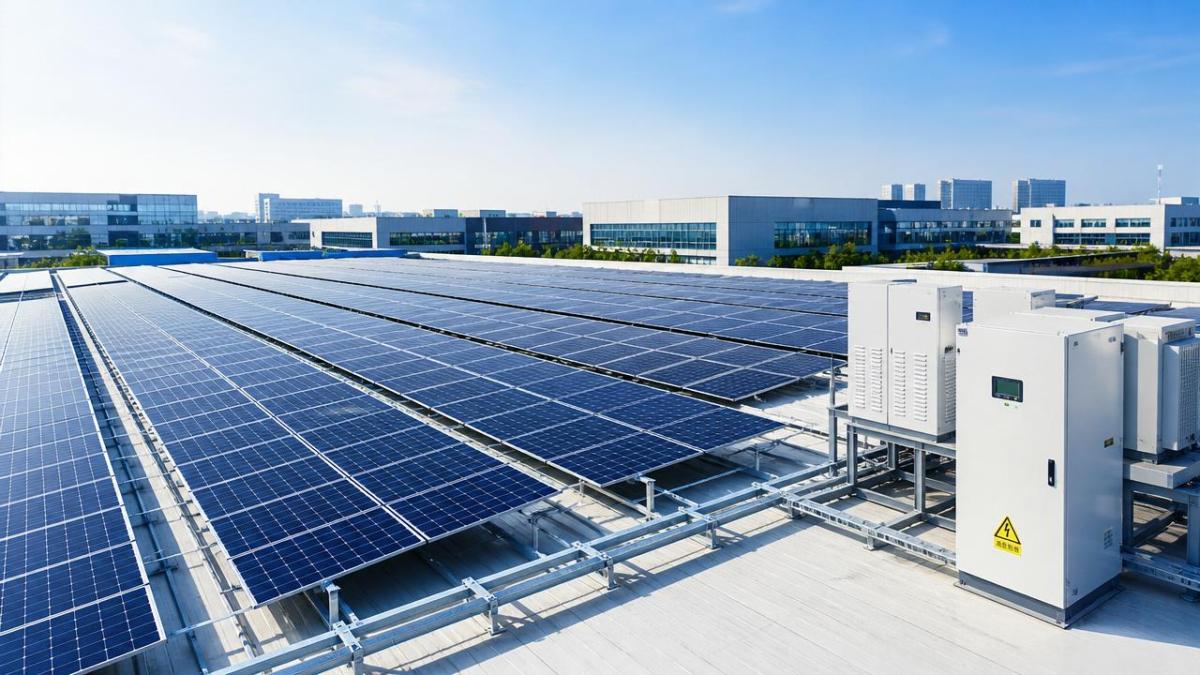
For a finance approver, the extra cost behind Photovoltaic solar panels high efficiency products should never be reduced to a simple price-per-panel comparison. The premium usually reflects tighter cell manufacturing tolerances, lower electrical losses, better temperature behavior, stronger warranty structures, and more output per square meter. In short, you are not only buying watts. You are buying yield density, predictability, and a different risk profile.
That distinction matters even more in healthcare-adjacent infrastructure, laboratories, diagnostic campuses, and mixed-use facilities where roof area is limited, uptime is critical, and utility savings must be documented over time. Capital committees often reject projects not because the technology is weak, but because the proposal fails to translate engineering claims into auditable financial logic.
This is where a technical benchmarking approach becomes valuable. VitalSync Metrics (VSM) applies the same evidence-first discipline used in MedTech and life sciences procurement to energy-related capital decisions: separating brochure language from measurable performance, examining degradation assumptions, and checking whether supplier claims remain credible under real operating conditions.
- Higher conversion efficiency can reduce the number of modules required for a target output.
- Better panel density can lower balance-of-system costs in space-constrained installations.
- Improved long-term output can strengthen the internal rate of return when electricity tariffs are high.
- A stronger quality profile can reduce the probability of underperformance disputes later in the asset life.
The CFO view: premium pricing only makes sense when it compresses risk
A cheaper module can still be the more expensive project if it needs more roof space, more racking, more labor, or delivers weaker output in heat. Financial review should therefore focus on total installed economics and lifecycle yield, not only module invoice price. That is especially true when the project supports facilities that cannot tolerate frequent disruption or unstable long-term energy assumptions.
When does the premium for Photovoltaic solar panels high efficiency actually pay back?
The payback point depends on five variables: local electricity price, available installation area, solar irradiation, system design quality, and long-term degradation. For financial approval, the question is not whether high-efficiency modules are technically superior in abstract terms. The question is whether they create enough additional energy value to recover the upfront premium within an acceptable period.
The table below shows a simplified decision lens that finance teams can use when reviewing Photovoltaic solar panels high efficiency proposals against standard-efficiency alternatives.
The key phrase is “if assumptions are validated.” Many business cases fail because projected annual yield is copied from optimistic sales simulations. A disciplined review should test whether shading, temperature losses, inverter clipping, cleaning intervals, and degradation rates have been modeled conservatively.
Common payback patterns by project context
- If roof space is scarce and electricity prices are high, the premium often pays back faster because every square meter must produce more value.
- If land is abundant and power is cheap, standard-efficiency modules may deliver a better short-term capex outcome.
- If the site operates energy-intensive equipment with long daytime loads, high-efficiency systems can generate stronger self-consumption economics.
- If the organization values resilience, reputation, and carbon reporting, the financial case may include non-tariff benefits, but these should be documented separately from direct payback.
Which technical metrics matter most before approving the budget?
Financial decision-makers do not need to become solar engineers, but they do need a shortlist of metrics that materially change business outcomes. Photovoltaic solar panels high efficiency options should be screened using technical indicators that influence cash flow, maintenance exposure, and forecast confidence.
The table below highlights the most decision-relevant parameters and why they matter beyond engineering teams.
A finance team should ask engineering or procurement to translate these metrics into scenario-based economics. For example, what is the NPV difference if annual degradation is 0.4% instead of 0.7%? What is the tariff-adjusted payback if summer temperatures reduce expected yield more than planned? This kind of questioning improves approval quality far more than negotiating module price in isolation.
Why VSM’s benchmarking mindset matters
VitalSync Metrics (VSM) operates in environments where specification gaps can lead to compliance risk, procurement errors, and long-term cost leakage. That same discipline is valuable when comparing energy infrastructure proposals. Independent technical review helps identify whether quoted efficiencies are supported by realistic test conditions, whether documentation is consistent across suppliers, and whether warranty language aligns with actual operating risk.
What procurement mistakes delay return on investment?
In many organizations, the problem is not choosing the wrong technology category. It is approving the wrong project assumptions. Photovoltaic solar panels high efficiency systems can miss payback targets when the business case ignores execution details that matter in the field.
- Using nameplate output as if it were annual delivered energy, without accounting for temperature, orientation, dust, mismatch, and inverter losses.
- Comparing suppliers only on module cost while ignoring mounting structure, cabling, design support, inspection access, and maintenance burden.
- Assuming all warranties have equal enforcement value, even when supplier financial stability or regional support capability is unclear.
- Failing to evaluate whether the facility load profile actually captures generated power efficiently through self-consumption.
- Treating rooftop constraints as a late design issue instead of a primary driver of technology selection.
For healthcare and laboratory-linked organizations, the cost of poor assumptions can be amplified. Installation windows may be restricted, roof penetrations may require additional validation, and power continuity can affect sensitive environments. In these settings, a seemingly small underperformance issue can carry operational consequences beyond the utility bill.
A practical approval checklist for finance teams
- Request a side-by-side model showing capex, annual yield, degradation, maintenance assumptions, and expected payback for at least two panel efficiency tiers.
- Ask whether the project is space-limited, tariff-driven, sustainability-driven, or resilience-driven. The answer changes the right buying decision.
- Review whether output estimates are based on realistic site conditions rather than ideal standard test assumptions.
- Check if supplier documentation can support auditability, warranty tracking, and future dispute resolution.
- Ensure the proposal includes a commissioning and verification method so real output can be compared with forecast output after installation.
How should finance teams compare standard versus high-efficiency options?
A robust comparison should connect engineering variables to capital allocation logic. The next table provides a simple procurement scoring framework suitable for budget committees evaluating Photovoltaic solar panels high efficiency systems in commercial, institutional, and healthcare-related projects.
A comparison framework like this prevents budget discussions from collapsing into a single line item debate. It also helps procurement teams explain why a higher module cost may still produce a more bankable project under constrained or high-value operating conditions.
What standards, documentation, and validation steps deserve attention?
Although solar procurement differs from MedTech sourcing, the core lesson is the same: trust documentation that can be verified. Finance approvers should confirm that the supplier package includes consistent product data sheets, warranty terms, test references, installation specifications, and traceable project calculations. If an energy proposal will support institutional or healthcare environments, document discipline becomes even more important.
Useful validation points before sign-off
- Check whether the proposal references recognized testing and safety frameworks appropriate to the product and market.
- Confirm that output simulations state their assumptions clearly, including weather data source and system loss factors.
- Review the gap between laboratory ratings and expected operating performance at your site temperature range.
- Require a post-installation measurement and verification plan so savings are not left untested.
- Assess whether the supplier or integrator can support ongoing data transparency for asset management and internal reporting.
VSM’s value in this process is not as a manufacturer making promotional claims, but as an engineering-led evaluator focused on technical integrity. For buyers used to regulatory scrutiny and evidence-based procurement, that distinction reduces uncertainty and improves decision confidence.
FAQ: What do finance approvers most often ask about Photovoltaic solar panels high efficiency?
How much faster do high-efficiency panels pay back?
There is no universal number because payback depends on tariff rates, climate, roof limitations, self-consumption ratio, and project design. In constrained, high-cost electricity environments, the additional yield from Photovoltaic solar panels high efficiency configurations can justify the premium sooner. In low-tariff or land-rich contexts, the benefit may be weaker.
Are high-efficiency solar panels always the best choice for institutional facilities?
No. They are often the strongest choice when roof area is scarce, operational continuity matters, or governance requires robust long-term forecasting. But if the project has abundant space and capex pressure is severe, a standard-efficiency design may produce a more acceptable initial investment profile.
What is the most common evaluation mistake in approval meetings?
The most common mistake is comparing module prices without comparing delivered energy economics. A lower price per panel does not guarantee a lower cost per useful kilowatt-hour over the asset life. Finance teams should ask for lifecycle comparisons, not just procurement quotes.
How should warranties be interpreted?
Look beyond the headline duration. Review what triggers a valid claim, how performance is measured, who bears inspection or replacement cost, and whether the supplier has the operational stability to support claims years later. Warranty value depends on enforceability, not only wording.
Why choose us for evidence-based procurement support?
VitalSync Metrics (VSM) brings a rare combination that matters to financial approvers: engineering rigor, documentation discipline, and a benchmarking mindset shaped by high-stakes healthcare and life sciences procurement. We understand how technical underperformance, unclear specifications, and weak validation can create downstream financial exposure. That is why our work focuses on turning complex performance claims into decision-ready evidence.
If you are evaluating Photovoltaic solar panels high efficiency options and need a more defensible business case, we can help you review parameter assumptions, compare solution paths, challenge unrealistic yield forecasts, and structure procurement questions before final approval.
- Parameter confirmation for efficiency, degradation, thermal behavior, and expected annual output.
- Selection support for comparing standard versus high-efficiency panel strategies under your site constraints.
- Documentation review for warranty language, technical consistency, and supplier claim credibility.
- Implementation planning input covering verification steps, delivery timing concerns, and post-installation performance tracking.
- Quote-stage consultation to clarify cost drivers, lifecycle assumptions, and risk-adjusted return expectations.
For organizations that cannot afford vague assumptions, technical ambiguity, or weak procurement logic, a data-driven review is not an administrative extra. It is part of protecting capital. Contact VSM to discuss parameter validation, option selection, delivery considerations, documentation checks, and a clearer path from technical proposal to financially sound approval.
Recommended News
- 2026.11.10FDA Issues Final Guidance on IVD Validation for Emerging Pathogen EmergenciesDr. Hideo Tanaka (Imaging Systems Analyst)
- 2026.11.10Choosing Minimally Invasive Surgical Instruments in Europe: Key Buying CriteriaDr. Alistair Thorne (Senior Biomedical Engineer)
- 2026.11.09WHO Releases Draft Profile for Wearable Physical Activity MonitorsLydia Vancini (Regulatory Compliance Lead)
The VitalSync Intelligence Brief
Receive daily deep-dives into MedTech innovations and regulatory shifts.