 Get Insights

How to audit an oxygen concentrator factory remotely?
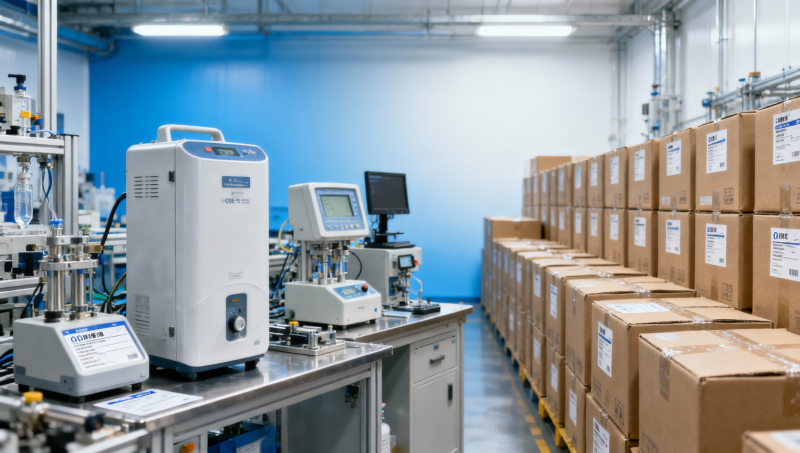
Remote supply chain verification is now essential when evaluating any oxygen concentrator factory, especially for buyers navigating healthcare equipment risks, IVDR certification expectations, and digital integration demands. For procurement teams, operators, and decision-makers, a structured remote audit helps separate marketing claims from measurable healthcare engineering performance—before committing to suppliers across Surgical & Clinical Tech, Laboratory & Life Sciences, or Rehabilitation & Bionics.
A remote audit is no longer a compromise. In many sourcing programs, it is the first screening layer used to reduce supplier risk before an on-site visit, pilot order, or regulatory review. For oxygen concentrators, this matters because product reliability is tied directly to patient safety, uptime, oxygen purity stability, alarm accuracy, and the factory’s ability to maintain controlled manufacturing conditions over time.
For B2B buyers, the goal is not simply to confirm that a factory exists. The goal is to verify whether the manufacturer can consistently produce medical-grade equipment, document process control, respond to nonconformities within defined timelines, and support digital traceability from component intake to final shipment. A disciplined remote factory audit can reveal these points within 5 to 10 working days if the scope is clear and evidence requirements are defined in advance.
What a remote oxygen concentrator factory audit should actually cover
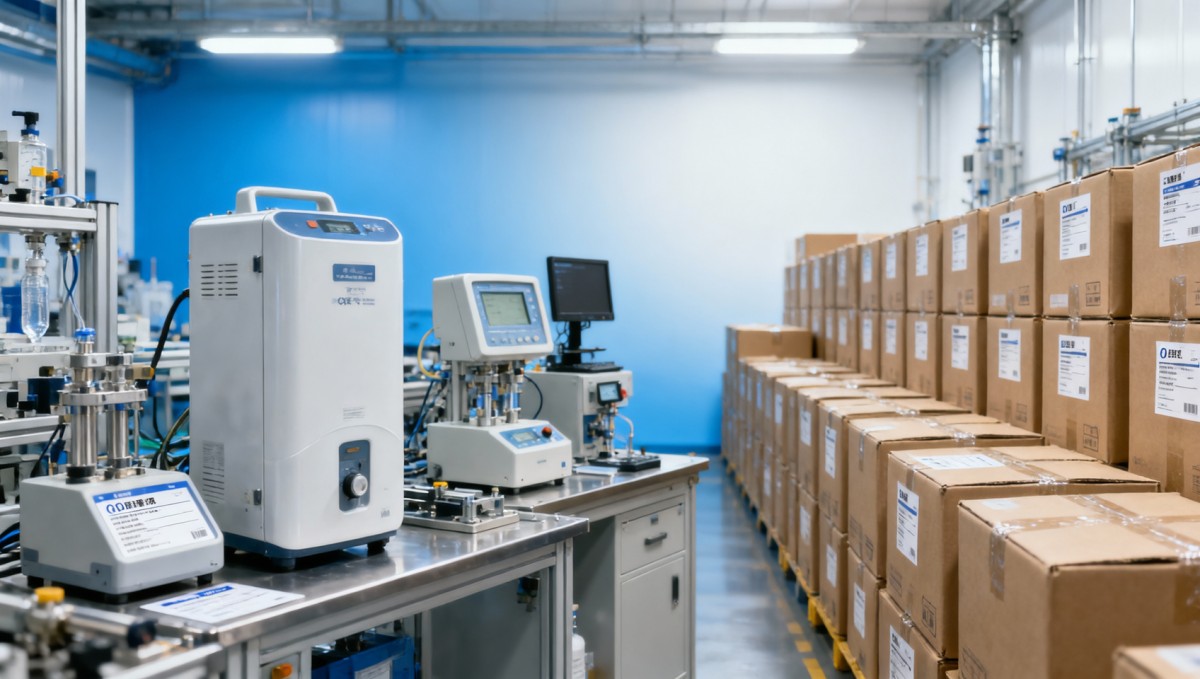
Many buyers make the mistake of treating a remote audit as a video tour plus a document checklist. That approach is too shallow for oxygen concentrator sourcing. A meaningful remote audit should test four layers at minimum: manufacturing capability, quality system discipline, regulatory readiness, and post-sale support capacity. If even one of these layers is weak, procurement risk increases sharply.
In practical terms, the audit should examine the concentrator assembly line, PSA sieve bed handling, compressor sourcing and incoming inspection, PCB traceability, alarm calibration, oxygen purity testing, packaging controls, and service parts planning. For medical procurement teams, it is useful to map findings against a 3-level risk scale: low, moderate, and high impact on deployment.
A remote audit also needs time-bound evidence. For example, asking for one current certificate and one polished presentation deck is not enough. Request production records from the last 3 to 6 months, a recent CAPA log, sample device history records, and at least 2 recent shipment batches. This helps determine whether the factory operates consistently or only prepares for inspections.
From an operator perspective, the audit should also connect factory controls to field usability. A concentrator with acceptable bench performance can still create problems if filters are difficult to replace, alarm thresholds are poorly documented, or spare parts lead times exceed 30 days. Remote verification should therefore include technical files and service documentation, not only production footage.
Core audit domains
- Manufacturing process control: assembly sequence, torque control, leak testing, calibration points, and final inspection pass criteria.
- Quality system execution: nonconformance handling, training records, internal audit frequency, and change control procedures.
- Regulatory and documentation readiness: technical file completeness, labeling consistency, UDI or serial traceability practice where applicable, and complaint handling workflows.
- Supply continuity: component source stability, critical part safety stock, average replenishment cycle, and service part availability for 12 to 24 months.
The table below shows a practical framework buyers can use to define the remote audit scope before requesting documents and scheduling live factory sessions.
A factory that performs well in all four areas is more likely to deliver stable product quality and lower lifecycle cost. A factory that looks strong only in presentations but weak in records or traceability should move into a deeper review stage before any volume purchase decision.
How to verify technical integrity through documents, live video, and sample data
Remote auditing works best when evidence is layered. Start with pre-audit documents, continue with a live video review, and finish with cross-checks using test logs and sample records. This 3-step method reduces the chance of being misled by staged production scenes or selective paperwork. In most sourcing projects, document review takes 2 to 4 days, the live audit 2 to 3 hours, and post-audit clarification another 3 to 5 days.
For oxygen concentrators, technical integrity depends heavily on repeatability. Buyers should ask for oxygen concentration test reports across multiple flow settings, alarm response verification, noise data, electrical safety checks, and burn-in or endurance procedures where used. A single result from one unit is not enough. Ask for records from at least 3 units or 3 lots to observe consistency.
Live video should be structured, not casual. Request that the factory shows receiving inspection, material storage, critical process stations, calibration labels, final testing, packaging, and serialized identification. The camera should zoom in on equipment status labels, operator instructions, and actual record forms. If the connection is unstable, ask the factory to provide timestamped follow-up video within 24 hours.
Cross-verification is where the real value sits. If a factory claims oxygen purity of 93% ±3% at specified flow rates, compare that claim against final inspection records, test instrument calibration, and service manual instructions. If a compressor or molecular sieve is listed as critical, verify supplier qualification records and incoming inspection criteria. These links show whether the factory controls the variables that drive real-world performance.
Recommended evidence sequence
- Request a document index 48 hours before the live audit, including process flow, quality manual sections, sample production records, and test templates.
- Define 8 to 12 mandatory camera checkpoints so the factory cannot skip critical rooms or stations.
- During the live session, assign one team member to observe processes and one to validate records in real time.
- After the call, issue a clarification list with response deadlines of 2 to 5 working days.
What sample data should include
Useful sample data usually includes serial-linked final test records, alarm threshold checks, oxygen purity readings at more than one flow level, and calibration status of the instruments used. If the factory cannot tie results back to a serial number or batch number, traceability is weak and post-market investigation may become difficult.
An effective remote audit does not require access to every confidential engineering detail. It requires enough evidence to prove that design intent, process control, and release decisions are connected. That distinction helps procurement teams get meaningful visibility without demanding impractical disclosure.
Key quality, regulatory, and supply-chain risk indicators to score
Once evidence is collected, the next task is scoring. A remote oxygen concentrator factory audit should produce a decision-oriented scorecard rather than a loose narrative. For procurement use, it is practical to score 5 dimensions on a 1-to-5 scale: manufacturing control, test capability, documentation discipline, supply resilience, and service readiness. This creates a total range of 5 to 25 points and supports clearer supplier comparison.
Documentation discipline often reveals more than polished production footage. For example, if engineering changes are not linked to revision control, a buyer may receive mixed configurations across shipments. If complaint records do not trigger CAPA within a defined period such as 10 working days, recurring failures can remain unresolved. In healthcare purchasing, these gaps translate directly into operational and compliance exposure.
Supply-chain resilience is equally important. Oxygen concentrators rely on components such as compressors, valves, sensors, PCBs, and sieve materials. A factory with only one source for multiple critical parts is more vulnerable to disruption. Ask whether the manufacturer holds 4 to 8 weeks of safety stock for high-risk items, and whether alternate suppliers have been technically evaluated.
For decision-makers, the point is not to eliminate all risk. The point is to understand which risks are manageable, which require contractual control, and which should stop a project. A structured scorecard turns remote observations into sourcing action, whether that means approval, conditional approval, pilot-only approval, or rejection.
Practical scoring table for remote supplier approval
The matrix below can be adapted for hospital procurement, distributor qualification, or OEM sourcing. It is especially useful when comparing 2 to 4 shortlisted factories under similar commercial terms.
As a rule of thumb, a supplier scoring 20 or above may be suitable for pilot or contract negotiation if no critical nonconformities are open. A score below 15 usually indicates that documentation, process control, or support readiness needs corrective action before commercial commitment.
Frequent remote audit red flags
- Factory avoids showing calibration labels or test instruments in close view.
- Batch records appear templated but lack dates, signatures, or serial references.
- Production and warehouse areas do not match claimed monthly capacity.
- Technical documentation describes one configuration while labels or manuals show another.
A step-by-step remote audit workflow for procurement teams and technical reviewers
A remote audit produces better results when procurement, quality, and engineering work from the same workflow. In many organizations, audits fail because teams ask different questions at different times. A shared process keeps commercial urgency from weakening technical review. For oxygen concentrator sourcing, a 5-stage workflow is usually enough to screen a supplier effectively before sample validation or on-site follow-up.
Stage 1 is pre-qualification. Here, collect core company information, product scope, intended markets, production capacity range, and available quality documents. Stage 2 is evidence review, where the team checks process maps, records, and test methods. Stage 3 is the live audit session. Stage 4 is gap closure with deadlines. Stage 5 is decision mapping, linking findings to contract terms, pilot orders, or disqualification.
This workflow should also define who owns each decision. Procurement may own commercial fit and delivery risk, while engineering owns technical sufficiency, and quality owns compliance evidence. When roles are explicit, the audit moves faster and disagreements are easier to resolve. In practice, most remote audits can be completed within 7 to 15 calendar days from kickoff to decision memo.
If the product will enter regulated hospital or laboratory settings, the workflow should include a clear escalation path for documentation gaps. For example, missing service manuals may be a conditional item, while missing traceability records may be a major finding. Not all deficiencies carry equal weight, so the workflow should classify them as critical, major, or minor.
Suggested remote audit workflow
- Define scope and risk level by product type, use environment, and planned order volume.
- Issue a document request list with due dates, file naming rules, and confidentiality boundaries.
- Run a live video audit using a checkpoint script and real-time evidence verification.
- Log findings, classify severity, and assign corrective action deadlines of 5, 10, or 20 working days.
- Translate the audit outcome into purchasing action: approve, approve with conditions, pilot only, or reject.
How to connect audit findings to contract terms
Remote audit findings should not stay in a report alone. If a factory has moderate supply-chain risk, buyers may require buffer stock, alternate component approval rules, or clearer warranty obligations. If service support is weak, a contract can require spare parts coverage for 12 months and response commitments within 24 to 72 hours for technical issues.
This is where independent benchmarking logic becomes valuable. The audit is not only about passing or failing. It is about turning technical observations into measurable sourcing controls that protect uptime, compliance, and total cost of ownership.
Common mistakes, buyer questions, and when remote auditing is enough
Remote auditing is powerful, but it has limits. It works well for supplier screening, risk ranking, document validation, and process visibility. It is less effective when a buyer needs to verify deep manufacturing culture, hidden subcontracting, or nuanced environmental controls that are difficult to observe by camera alone. For high-risk programs, remote auditing should be viewed as the first filter, not always the final one.
One common mistake is overvaluing certificates while undervaluing execution records. Another is judging a supplier by video smoothness instead of evidence consistency. A third is failing to involve service teams, even though oxygen concentrator uptime often depends on replaceable parts, alarm interpretation, and maintenance instructions after installation. A polished audit presentation cannot compensate for weak service infrastructure.
For operators and end users, a key question is whether the factory supports lifecycle reliability. That means access to consumables, filter replacement instructions, troubleshooting guides, and stable part compatibility over time. For enterprise decision-makers, another key question is whether the supplier can scale from a pilot order to repeat shipments without quality drift over 6 to 12 months.
In many cases, remote auditing is enough to eliminate unsuitable suppliers quickly. If severe gaps appear in traceability, testing, or supply resilience, there is little value in moving forward. If the supplier performs well remotely, the next step may be a sample evaluation, a smaller validation order, or a targeted on-site audit focused only on unresolved high-risk points.
FAQ: buyer-focused questions
How long does a remote oxygen concentrator factory audit usually take?
For a single factory, a focused audit usually takes 7 to 15 calendar days from initial document request to final risk summary. The live video portion is commonly 2 to 3 hours, but evidence review and clarification often take longer than the call itself.
What are the most important technical indicators to check remotely?
Priority indicators include oxygen purity consistency, alarm verification method, final inspection records, calibration status of test equipment, serial-level traceability, and critical component control. These six items usually reveal whether product claims are supported by controlled manufacturing practice.
Can remote auditing replace an on-site audit completely?
Sometimes yes for early-stage qualification or lower-risk sourcing, but not always for strategic, high-volume, or highly regulated programs. A good rule is to use remote auditing as the first technical gate, then decide whether sample validation or an on-site visit is required based on the severity of unresolved findings.
What should procurement do if the factory refuses certain evidence requests?
First, clarify confidentiality boundaries and ask for redacted versions where possible. If the factory still refuses basic records such as recent batch data, complaint flow, or test method evidence, treat that as a significant transparency risk. In healthcare sourcing, limited visibility usually increases downstream cost and uncertainty.
A remote audit of an oxygen concentrator factory should do more than confirm supplier presence. It should verify process repeatability, documentation discipline, supply resilience, and support readiness in a way that helps procurement teams make defensible decisions. When evidence is structured, scored, and tied to contract or pilot actions, remote verification becomes a practical decision tool rather than an administrative formality.
For organizations that need deeper technical confidence, VitalSync Metrics can help convert manufacturing signals into clearer sourcing intelligence through structured benchmarking, engineering-oriented review, and decision-ready documentation. To discuss a tailored remote audit framework, compare shortlisted suppliers, or assess healthcare equipment risk before purchase, contact us to get a customized solution and explore the next step with greater confidence.
Recommended News
- 2026.10.08How to Evaluate Compact Biosignal Sensors for Reliable Wearable Vital-Sign MonitoringLydia Vancini (Regulatory Compliance Lead)
- 2026.10.07How Custom Orthotics Technology Can Improve Physical Therapy OutcomesSarah Jenkins (Laboratory Infrastructure Consultant)
- 2026.10.06How to Validate Metal Biocompatibility Testing for Implantable Medical DevicesDr. Julian Rossi (RehabTech Specialist)
The VitalSync Intelligence Brief
Receive daily deep-dives into MedTech innovations and regulatory shifts.