 Get Insights

Medical Technology Benchmarking for Telehealth: Which Metrics Matter Most for Vendor Comparison?
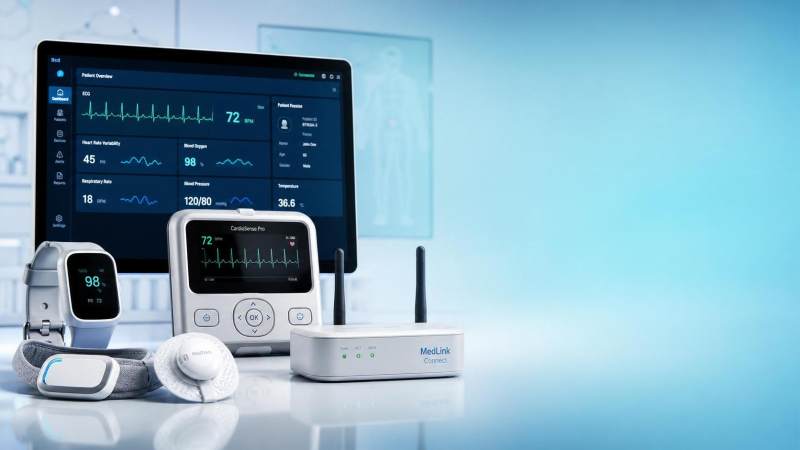
Telehealth has moved from a convenience layer to a clinical delivery channel. That shift makes vendor comparison harder, because polished dashboards and long feature lists say little about measurable performance.
Medical technology benchmarking for telehealth creates a more defensible way to compare platforms, devices, and connected services. It replaces promotional claims with evidence tied to signal quality, integration strength, uptime, security posture, and operational reliability.
For organizations working under value-based procurement, the real question is not who offers the most features. It is which solution can perform consistently in clinical workflows, across networks, regions, and regulatory expectations.
Why benchmarking now carries more weight
Telehealth environments are no longer limited to video consultations. They now include remote monitoring, connected diagnostics, symptom intake, care coordination, and data exchange with hospital systems.
That expansion increases technical risk. A platform can look strong in a demo and still fail under packet loss, integration strain, multi-device usage, or prolonged patient monitoring.
This is where medical technology benchmarking for telehealth becomes useful. It gives decision-makers a structured way to judge clinical-grade readiness instead of surface-level usability alone.
Independent benchmarking groups such as VitalSync Metrics approach this problem through measurable engineering criteria. The value is not branding. The value is turning technical variables into comparable evidence.
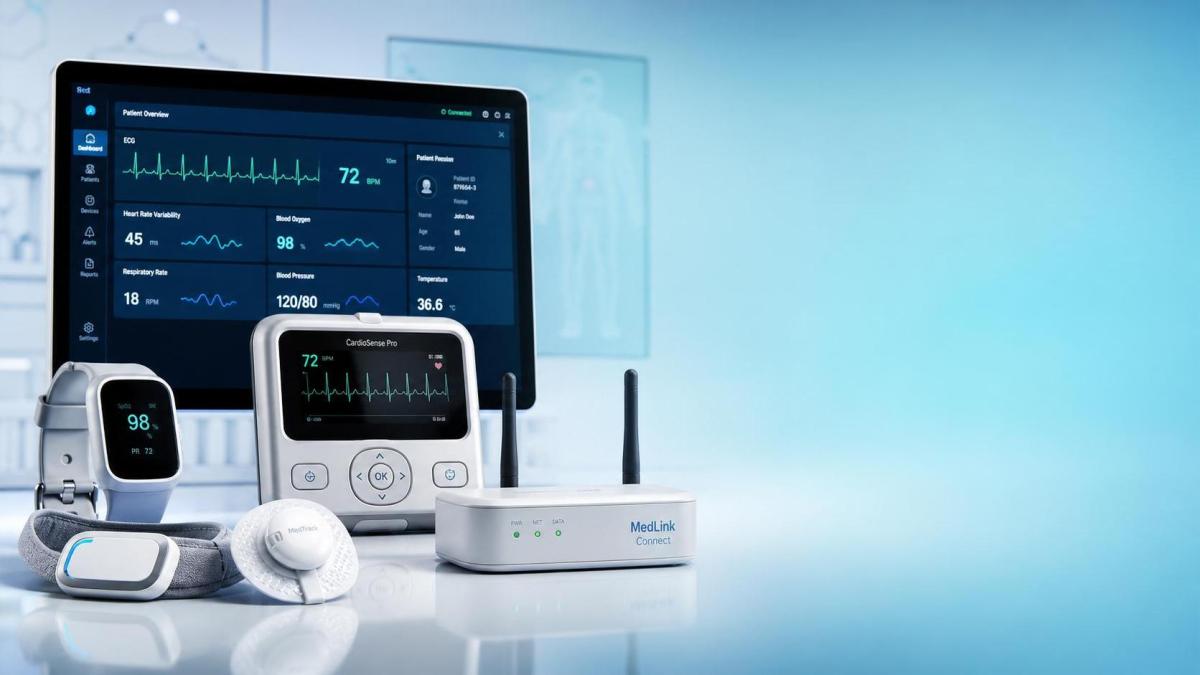
A benchmarking view is especially relevant when procurement must align with MDR, IVDR, cybersecurity expectations, and long-term lifecycle performance rather than initial purchase price alone.
What medical technology benchmarking for telehealth actually measures
At its core, benchmarking compares vendors against consistent technical and operational criteria. The goal is to make unlike products more comparable by testing what matters in actual deployment conditions.
For telehealth, that usually means evaluating both software behavior and connected hardware performance. A video platform, a wearable sensor, and an integration layer may all influence the same clinical outcome.
Useful benchmarking goes beyond pass or fail. It shows tolerance ranges, degradation patterns, interoperability limits, and whether performance remains acceptable as real-world complexity increases.
The difference between features and evidence
A feature tells you what a system claims to do. A benchmark shows how well it performs under defined conditions. That distinction matters when clinical decisions rely on remote data.
For example, “supports remote vital capture” is not enough. The relevant question is how accurate the readings remain across skin tones, motion states, ambient conditions, and unstable connectivity.
The metrics that matter most in vendor comparison
Not every metric deserves equal weight. The strongest benchmarking models prioritize indicators that affect patient safety, workflow continuity, integration cost, and long-term service stability.
Accuracy is not only a device issue
In medical technology benchmarking for telehealth, accuracy should be treated as a chain. Sensor quality matters, but so do compression, transmission latency, alert thresholds, and data presentation.
A strong vendor comparison asks whether the whole chain preserves clinically usable information, not merely whether one component performs well in isolation.
Interoperability often determines hidden cost
Two telehealth vendors may appear similar on paper, yet differ sharply in implementation burden. One may support standards cleanly, while another requires custom mapping and repeated manual reconciliation.
That is why benchmarking should include test cases for EHR connectivity, identity management, alert routing, and structured exports for analytics or reimbursement workflows.
How these metrics play out in real telehealth settings
The relative importance of each metric changes with use case. A virtual urgent care platform has different technical pressure points than a home monitoring program for chronic disease.
- Remote patient monitoring depends heavily on sensor fidelity, data continuity, battery endurance, and alert precision.
- Tele-diagnostics place more weight on image or waveform integrity, transmission stability, and standards-based data exchange.
- Virtual consultations depend on uptime, latency tolerance, identity assurance, and secure documentation flows.
- Cross-border deployments require stronger emphasis on regulatory documentation, hosting controls, and localization of compliance processes.
Usually, weak benchmarking happens when one universal score is used across all scenarios. A more credible model adjusts weighting according to clinical purpose and deployment context.
Where vendor claims most often break down
Many telehealth products perform well in controlled demonstrations. Problems emerge when variability enters the system. Home networks fluctuate. Patients skip charging cycles. Firmware updates create compatibility gaps.
Medical technology benchmarking for telehealth should therefore include stress conditions, not just nominal operation. That means testing under bandwidth loss, device switching, long sessions, and partial integration failure.
Another common gap is documentation depth. A vendor may state compliance readiness, yet provide limited traceability on design controls, validation history, or post-market update discipline.
This is one reason independent benchmarking laboratories matter. Their role is to convert technical assertions into comparable records that can support procurement, risk review, and implementation planning.
A practical framework for comparing vendors
A useful comparison process starts with the clinical workflow, then moves backward into technical requirements. That sequence keeps benchmarking tied to actual use rather than generic specification sheets.
Build the comparison around evidence
- Define the care pathway and failure points before selecting metrics.
- Separate mandatory thresholds from preferred differentiators.
- Request test reports, not only compliance statements.
- Check whether results come from internal claims or independent validation.
- Compare lifecycle support, upgrade governance, and field reliability data.
This approach aligns closely with the role firms like VitalSync Metrics play in the market. Benchmarking is most valuable when it translates engineering variables into sourcing decisions that can survive audit and scale.
Use scoring carefully
Scoring can help, but only if the model is transparent. A composite score without weighting logic often hides trade-offs that matter more than the final number.
A vendor with slightly lower interface polish may still be the stronger option if it shows better uptime, cleaner interoperability, and better documentation discipline over time.
What to examine before moving forward
Medical technology benchmarking for telehealth is most effective when it narrows uncertainty before deployment. The next step is usually to refine the comparison set around non-negotiable operational risks.
That may involve reviewing signal validation methods, testing interoperability in a sandbox, checking regulatory traceability, and examining how vendors handle updates after go-live.
The most reliable decisions come from matching metrics to the intended care model. In practice, that means benchmarking for the environment that will actually exist, not the one shown in a sales presentation.
When the comparison is grounded in evidence, telehealth procurement becomes less about promises and more about measurable clinical fitness. That is the point where vendor selection starts to look like engineering, not guesswork.
Recommended News
- 2026.11.10FDA Issues Final Guidance on IVD Validation for Emerging Pathogen EmergenciesDr. Hideo Tanaka (Imaging Systems Analyst)
- 2026.11.10Choosing Minimally Invasive Surgical Instruments in Europe: Key Buying CriteriaDr. Alistair Thorne (Senior Biomedical Engineer)
- 2026.11.09WHO Releases Draft Profile for Wearable Physical Activity MonitorsLydia Vancini (Regulatory Compliance Lead)
The VitalSync Intelligence Brief
Receive daily deep-dives into MedTech innovations and regulatory shifts.