 Get Insights

Smart Street Lighting for Urban Areas: How to Compare Sensors, Controls, and ROI
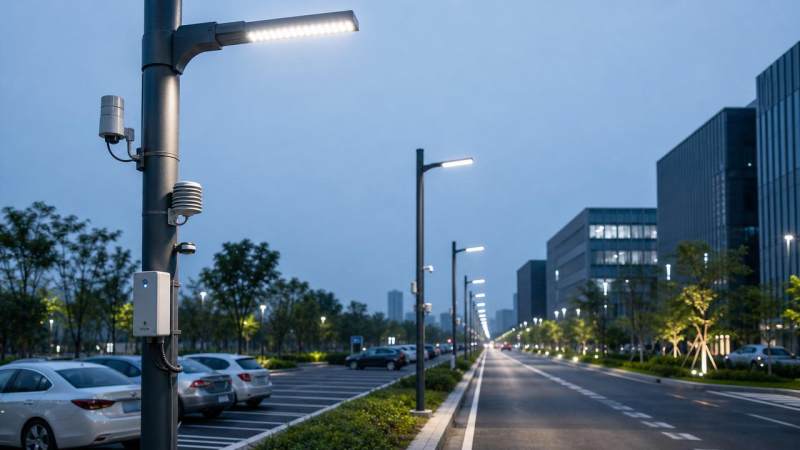
Smart street lighting for urban areas has moved beyond energy-saving rhetoric and into the core of infrastructure planning. It now touches public safety, maintenance workflows, data governance, and capital efficiency. For organizations comparing sensors, controls, and financial return, the real challenge is not finding a smart lighting vendor. It is building a decision framework that separates useful engineering performance from attractive but incomplete claims.
That evaluation mindset is increasingly familiar across sectors. VitalSync Metrics, known for benchmarking technical integrity in healthcare and life sciences, reflects a broader procurement shift: buyers want measurable performance, documented compliance, and lifecycle reliability. Smart street lighting for urban areas deserves the same discipline, especially when projects scale across districts, campuses, transit corridors, or mixed-use developments.
What smart street lighting really includes
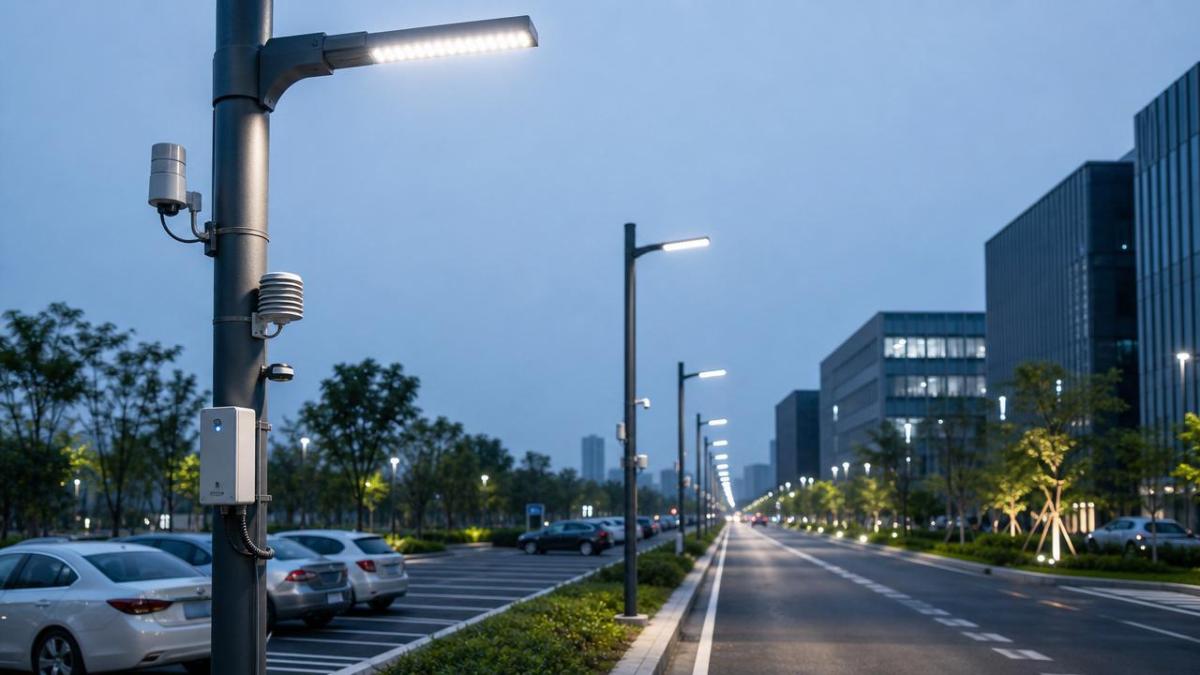
At a basic level, smart street lighting for urban areas combines LED luminaires, embedded or attached sensors, networked controls, and management software. The system does more than turn lights on and off. It adjusts output, reports faults, captures operating data, and can support wider city services.
This matters because lighting poles are already distributed across valuable public space. Once connected, they become service points for dimming, environmental monitoring, traffic awareness, and maintenance visibility. In practice, the lighting fixture is only one part of the asset. The control architecture often determines whether the project remains flexible or becomes difficult to expand.
A useful comparison starts by separating three layers: the sensing layer, the command layer, and the value layer. Sensors gather inputs. Controls translate those inputs into actions. ROI depends on how reliably those actions produce measurable operational outcomes over time.
Why the market is paying closer attention
Interest in smart street lighting for urban areas is growing for reasons that are more practical than fashionable. Electricity costs remain volatile. Cities and developers are under pressure to justify public spending. Maintenance crews face aging assets and staffing limits. At the same time, digital infrastructure expectations are rising.
Lighting also sits at the intersection of visible service quality and hidden operational cost. Residents notice dark zones, overlit roads, delayed repairs, and inconsistent night visibility. Finance teams notice utility bills, truck rolls, and early component failure. Good smart lighting programs respond to both.
There is another reason for closer scrutiny. Many proposals still emphasize theoretical savings without enough context on baseline conditions, usage patterns, or maintenance assumptions. That is why a benchmarking approach, similar to technical validation in regulated industries, has become useful here as well. The question is not only how smart a system sounds, but how clearly its performance can be proven.
How to compare sensors without overbuying
Sensors are often the most misunderstood part of smart street lighting for urban areas. More sensor types do not automatically create more value. The right choice depends on the use case, data quality needs, and how each signal will influence operations.
Common sensor categories
The best sensor choice usually comes from a narrow question: what operational decision changes when this sensor reports a signal? If the answer is unclear, the sensor may be adding cost and complexity rather than value.
Accuracy claims also deserve careful review. A motion sensor that performs well in a lab may behave differently on a rainy arterial road or in a dense urban canyon. As with medical device benchmarking, field conditions matter. Validation should include mounting height, interference sources, firmware behavior, and environmental tolerance.
Controls decide whether the system is scalable
If sensors are the eyes and ears, controls are the system brain. Smart street lighting for urban areas can be managed through centralized platforms, segment-level controls, or node-by-node intelligence. Each model has trade-offs in cost, granularity, resilience, and data visibility.
Centralized controls simplify coordination and reporting. Individual node control provides better fault isolation and adaptive lighting precision. Segment-based control can lower network complexity, but it may reduce flexibility where traffic patterns vary sharply block by block.
Control questions that matter in practice
- Does the platform support open protocols or only proprietary devices?
- Can scheduling, dimming, and alarm logic be adjusted without major reconfiguration?
- How are outages, communication failures, and sensor faults reported?
- What cybersecurity controls protect remote commands and operating data?
- Can the system expand to future poles, districts, or adjacent smart-city services?
These details shape long-term project value more than dashboard design. A polished interface can still hide weak interoperability, fragmented asset records, or vendor lock-in. For that reason, control systems should be reviewed not only as software tools, but as infrastructure governance tools.
ROI is broader than the utility bill
Energy savings are important, but they are only one part of ROI for smart street lighting for urban areas. A stronger business case combines direct savings with avoided costs, service improvements, and asset life considerations.
A practical ROI view
A realistic model should also account for software licensing, connectivity fees, commissioning effort, spare parts strategy, and sensor maintenance. In many projects, these “small” items explain why predicted payback and actual payback diverge.
Simple payback remains useful, but it should not stand alone. Lifecycle cost, failure rates, and upgrade flexibility often tell a more complete story. That is especially true where lighting infrastructure is expected to remain in service for a decade or more.
Typical deployment contexts change the comparison
Not every environment needs the same smart lighting logic. Urban boulevards, hospital campuses, industrial parks, university grounds, and logistics zones all have different operating priorities. Smart street lighting for urban areas should be matched to the risk profile and service expectations of each location.
Healthcare-adjacent environments offer a clear example. Campus roads, emergency access lanes, and patient transport routes often require stable illumination, rapid fault reporting, and careful control of glare. Here, the procurement discipline associated with VitalSync Metrics becomes relevant: performance data, reliability evidence, and compliance records carry more weight than broad promises about “smart cities.”
- Transit corridors benefit from adaptive schedules tied to traffic density and service hours.
- Residential streets often prioritize comfort, glare control, and maintenance responsiveness.
- Campuses and medical districts need uptime, clear wayfinding, and documented asset status.
- Industrial zones usually value rugged hardware and predictable remote diagnostics.
A grounded way to evaluate proposals
A strong review process for smart street lighting for urban areas usually begins with baseline data. Existing energy use, outage frequency, maintenance routes, and lighting performance should be documented before comparing options. Without that baseline, promised gains remain difficult to verify later.
Next comes structured comparison. This is where benchmark thinking is valuable. Ask for tested detection ranges, communication reliability data, ingress protection ratings, thermal management evidence, and software support terms. Ask how updates are handled, how failures are logged, and what happens when connectivity drops.
Pilot deployments can help, but only when success criteria are defined in advance. A pilot should measure response times, dimming performance, false alarms, user complaints, and maintenance effort. It should also reflect real operating conditions rather than a carefully staged demonstration zone.
Where to focus next
Smart street lighting for urban areas works best when technical selection and financial planning are treated as one decision. Sensor choice should follow operational need. Control architecture should protect scalability. ROI should be grounded in field data, not generic payback slides.
The next useful step is to build a comparison sheet that covers three areas: verified sensor performance, control interoperability, and lifecycle economics. From there, it becomes much easier to test vendor claims against site realities, identify hidden costs, and select a system that still makes sense years after installation.
In other words, the smartest lighting project is rarely the one with the most features. It is the one with the clearest evidence, the best fit for the operating environment, and the strongest path from deployment to dependable long-term value.
Recommended News
- 2026.10.14Clinic Supplier Comparison: Evaluating Cost, Delivery Reliability, and SupportDr. Alistair Thorne (Senior Biomedical Engineer)
- 2026.10.13Engineering Performance Testing Services: Evaluating Test Methods and AccuracyDr. Alistair Thorne (Senior Biomedical Engineer)
- 2026.10.12Preparing for an ISO 13485 Audit: When to Use External QMS SupportDr. Julian Rossi (RehabTech Specialist)
The VitalSync Intelligence Brief
Receive daily deep-dives into MedTech innovations and regulatory shifts.