 Get Insights

How to pick a patient monitor PCBA manufacturer?
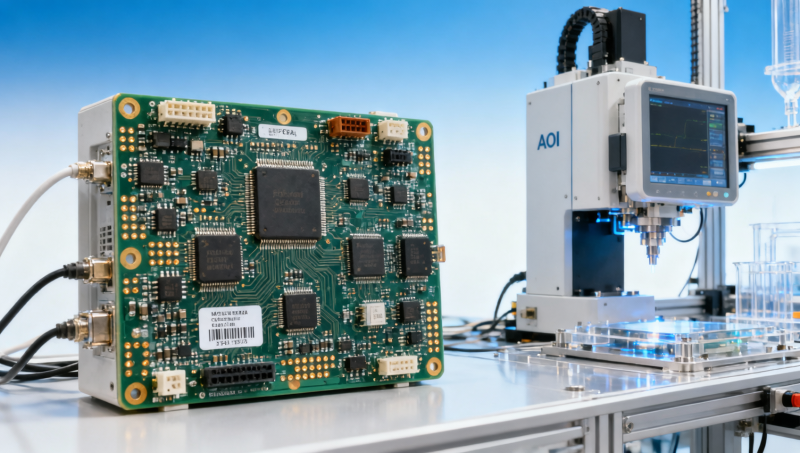
Choosing a reliable patient monitor PCBA manufacturer requires more than comparing quotes. For procurement teams, operators, and MedTech decision-makers, the real priorities are supply chain verification, IVDR certification readiness, and proven healthcare engineering quality. This guide explains how to assess technical integrity, compliance, and long-term performance so you can source healthcare equipment with confidence in an era of digital integration.
In patient monitoring, the printed circuit board assembly is not a hidden commodity. It is the electrical backbone behind signal acquisition, alarm stability, power integrity, connectivity, and long service life. A weak manufacturer may still offer an attractive unit price, yet fail in traceability, component control, electromagnetic compatibility, or design-for-manufacturing discipline.
For hospitals, MedTech startups, and laboratory planners, supplier selection should therefore focus on measurable engineering capability. The right partner should support regulatory documentation, stable volume ramp-up, controlled quality systems, and the practical realities of medical deployment, where uptime, patient safety, and lifecycle support matter over 3–7 years or more.
Why patient monitor PCBA sourcing is a high-stakes decision
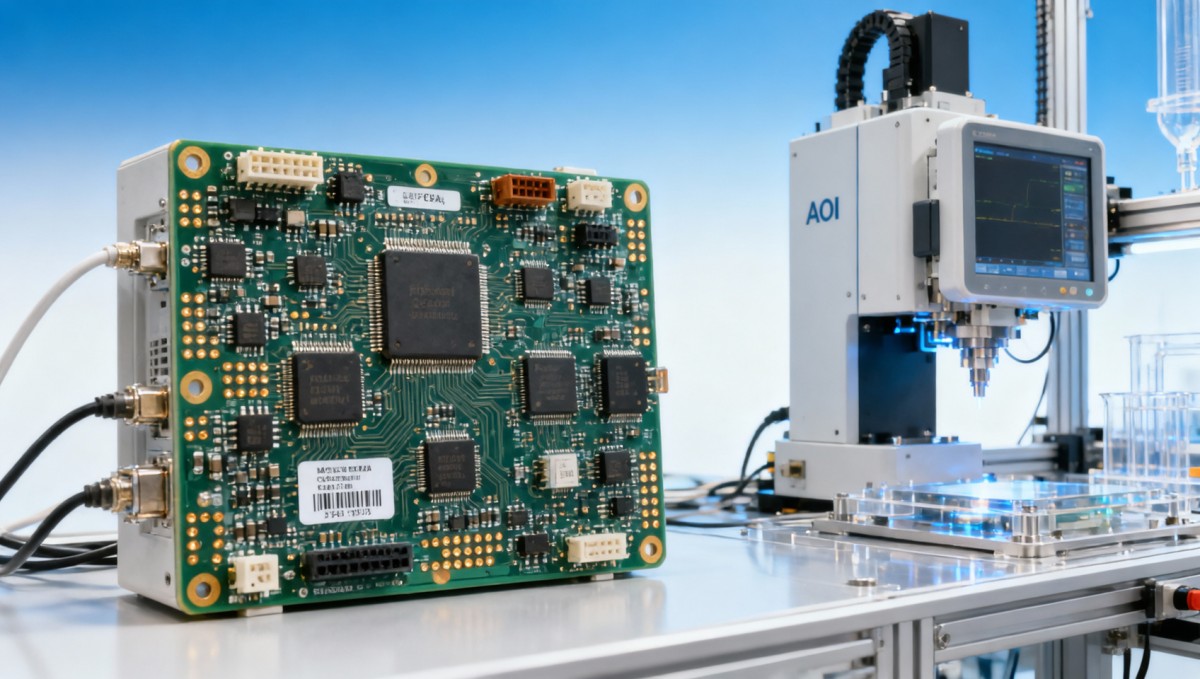
A patient monitor PCBA manufacturer influences far more than assembly output. Their process controls affect signal accuracy, alarm latency, thermal behavior, and field reliability. In bedside monitors, transport monitors, and compact wearable systems, small assembly deviations can create large downstream risks, especially when the product runs continuously for 12–24 hours per day.
Medical electronics also operate under tighter compliance expectations than general industrial devices. Buyers must consider documentation depth, lot traceability, component authenticity, and support for design history records. If a manufacturer cannot provide process evidence within 24–72 hours during an audit or complaint investigation, procurement savings can quickly turn into regulatory exposure.
Another reason this decision matters is lifecycle continuity. Many patient monitor platforms stay in service for 5 years, while certain spare-part obligations may extend even longer. A qualified manufacturer should have a strategy for obsolescence management, second-source review, and controlled engineering change notices rather than reactive substitutions made at the last minute.
From a B2B sourcing perspective, this is where independent technical benchmarking becomes valuable. Organizations such as VitalSync Metrics (VSM) help decision-makers compare actual engineering parameters instead of relying on brochure language alone. For buyers who need objective screening, translating manufacturing claims into auditable technical evidence reduces sourcing uncertainty.
What makes medical PCBA different from standard electronics
Medical PCBAs often require tighter cleanliness control, more disciplined electrostatic discharge protection, and stronger verification records. In many projects, acceptable process windows are narrower, and the tolerance for undocumented rework is close to zero. Boards that handle ECG, SpO2, NIBP, temperature, or respiration inputs must preserve signal integrity from the sensor front end to the processor path.
- Low-noise analog performance for physiological signal capture
- Stable power delivery across multiple rails and backup scenarios
- Controlled soldering profiles for fine-pitch and mixed-technology assemblies
- Traceability down to lot, operator, machine program, and inspection result
Early warning signs of a weak supplier
If a supplier answers every question with “customizable” but provides few records, that is a warning sign. The same applies if they cannot explain incoming inspection criteria, AOI coverage, X-ray capability for hidden joints, or how they handle moisture-sensitive devices within floor-life limits such as 24, 48, or 168 hours depending on material classification.
The key takeaway is simple: a patient monitor PCBA manufacturer should be judged on process evidence, not presentation quality. When the supplier can show controlled inspection, documented change management, and medical-oriented traceability, procurement risk decreases materially.
Core technical checks before approving a manufacturer
A structured technical review helps buyers separate capable medical electronics partners from general-purpose assemblers. At minimum, teams should evaluate 4 dimensions: manufacturing process capability, test coverage, component control, and engineering support. These areas directly affect first-pass yield, field returns, and how quickly problems can be isolated when failures occur.
For patient monitoring devices, test strategy deserves special attention. A supplier that only offers basic continuity checks is not enough. Depending on board complexity, buyers should ask whether the manufacturer supports SPI, AOI, X-ray, ICT, functional test fixtures, and burn-in or environmental screening where required by the product risk profile.
Component sourcing discipline is equally critical. Medical PCBAs may include microcontrollers, analog front-end ICs, isolation devices, wireless modules, memory, and precision passive networks. Ask how the supplier handles authorized channels, shortage substitutions, date-code control, and counterfeit avoidance. A clear approved vendor list and substitution workflow are more valuable than broad but vague sourcing promises.
Engineering support matters most when moving from prototype to pilot and then to mass production. A competent manufacturer should be able to flag pad design issues, thermal relief problems, panelization weaknesses, and programming bottlenecks before they become yield losses. In many projects, one well-timed DFM review can prevent 2–3 rounds of avoidable redesign.
Technical questions every buyer should ask
- What is your standard process for new product introduction, and how many review stages are used before pilot build?
- Which inspection technologies are available in-house, and what percentage of joints or critical nets are covered?
- How do you control MSL components, storage humidity, and exposure time on the production floor?
- Can you support firmware loading, serial number binding, and calibration data retention at board level?
- What is your typical pilot lead time: 7–15 days, 2–4 weeks, or longer for regulated projects?
Signal integrity and reliability concerns
Patient monitors are especially sensitive to analog noise, grounding strategy, and thermal drift. Even if the design is sound, poor assembly can introduce unstable contact resistance, solder voids, or contamination that degrades long-term performance. Manufacturers should be able to discuss controlled solder profile windows, cleanliness standards, and handling for high-impedance or low-level analog sections.
This type of checklist allows procurement teams to compare suppliers on a common engineering basis. If one candidate can support test fixture development, process validation, and controlled component management while another cannot, the apparent price gap may disappear once total risk is included.
Regulatory readiness, documentation, and quality system depth
When selecting a patient monitor PCBA manufacturer, compliance readiness should be reviewed as carefully as assembly quality. Buyers do not need a supplier to own every product-level approval, but they do need evidence that the manufacturer can operate inside regulated medical workflows. This is especially relevant for teams preparing technical files under MDR or IVDR-linked environments and related post-market documentation structures.
The practical question is whether the manufacturer can generate consistent records. These often include material traceability, process parameters, inspection logs, nonconformance reports, corrective actions, training records, and controlled document revisions. In many supplier audits, documentation gaps appear before process gaps because procedures exist informally but not in an auditable format.
Procurement and quality teams should also evaluate complaint response speed. If a field issue emerges in month 18 of deployment, can the manufacturer identify the affected lot, production date, operator history, and alternative components used? A mature supplier should support root-cause analysis within a defined response window such as 48 hours for initial containment and 5–10 working days for a formal report.
For startups, this point is often underestimated. Early-stage companies may focus heavily on prototype agility, but once they move into verification builds or scaled pilot runs, weak records can slow regulatory submissions and investor diligence. Documentation discipline is therefore not bureaucracy; it is part of commercialization readiness.
Documents and controls worth reviewing
- Incoming material inspection criteria and supplier qualification records
- Work instructions with revision control for printing, placement, soldering, and rework
- Nonconformance and CAPA procedures with closure timelines
- Traceability mapping from component lot to finished board serial number
- Engineering change notice flow with approval checkpoints
How to assess audit readiness
An efficient approach is to ask for a sample documentation package from a completed build. Review whether records are complete, legible, version-controlled, and consistent across departments. A supplier that needs 2 weeks to assemble routine records may not be ready for medical growth. One that can provide a coherent package in 1–3 business days usually has a more mature system.
In addition, verify how the manufacturer handles deviations. A regulated-minded partner does not hide exceptions; it logs them, assesses risk, implements corrective action, and obtains approval where required. That operational transparency is often a stronger sign of reliability than polished sales language.
Supply chain resilience, lead time control, and cost-risk balance
A patient monitor PCBA manufacturer must be judged not only by current capacity but by resilience under market pressure. Medical electronics supply chains face recurring disruptions in semiconductors, wireless modules, connectors, and specialized analog components. A supplier with no structured risk buffer may deliver smoothly for 3 months, then fail when one critical part moves from 6 weeks to 26 weeks lead time.
This is why procurement teams should ask for visibility into material planning, buffer strategies, and alternate part review processes. You do not need excess inventory everywhere, but you do need a realistic response model. For stable programs, many buyers evaluate suppliers on whether they can support rolling forecasts over 8–12 weeks and identify shortages before they become line stoppages.
Cost analysis should also move beyond unit assembly price. A low quote can be offset by poor yield, delayed NPI, expensive expedites, and high failure investigation costs. In medical products, even a 1% increase in early-life failure can have outsized effects because service dispatch, replacement logistics, and customer confidence all carry hidden cost multipliers.
The best sourcing decisions usually balance 5 variables: price, technical capability, compliance readiness, lead-time predictability, and lifecycle support. If one factor is optimized at the expense of the others, total program performance often suffers within the first 12–18 months.
A practical procurement comparison model
The table below provides a simple way to compare shortlisted suppliers. Rather than asking who is cheapest, ask which manufacturer creates the lowest overall sourcing risk for a 3-year product lifecycle.
This framework helps enterprise buyers and startup teams speak the same language. It aligns sourcing with operational reality rather than a short-term price benchmark, which is especially important for patient monitoring platforms expected to scale across multiple clinical sites.
Common cost-focused mistakes
- Approving a supplier before reviewing test coverage and rework controls
- Ignoring component obsolescence risk in products with 3–5 year service expectations
- Failing to define response times for quality incidents and field returns
- Comparing quotes without normalizing tooling, test fixture, and NPI engineering charges
A step-by-step selection process for procurement and engineering teams
To choose the right patient monitor PCBA manufacturer, create a structured selection path that combines engineering review, procurement screening, and quality validation. This reduces internal bias and makes supplier approval defendable during audits, executive reviews, and investor due diligence.
Start with a longlist of 5–8 candidates, then narrow it to 2–3 after technical questionnaires and documentation review. Site audits or remote process audits should follow before pilot production. A pilot build is not just for output; it is the best point to measure communication speed, issue escalation, defect handling, and process transparency under real project conditions.
During pilot evaluation, define acceptance criteria in advance. These may include first-pass yield targets, turnaround time for engineering questions, traceability completeness, and defect closure timing. Without measurable criteria, teams often rely too heavily on subjective impressions, which can lead to poor long-term supplier choices.
After pilot approval, establish a governance rhythm. Quarterly business reviews, monthly shortage monitoring, and documented engineering change procedures can prevent surprises. In regulated medical supply chains, disciplined supplier management is as important as the initial vendor selection itself.
Recommended 6-step selection workflow
- Define product requirements, compliance expectations, forecast volume, and service-life targets.
- Screen suppliers using a technical and quality questionnaire with at least 20–30 scored items.
- Review sample documentation, traceability methods, and change-control procedures.
- Conduct audit review and validate process capabilities for assembly and testing.
- Run a pilot build and measure yield, response speed, defect closure, and delivery accuracy.
- Approve with ongoing scorecards covering quality, lead time, support, and risk events.
Questions to include in final supplier interviews
Ask how the supplier manages last-time buys, whether they can support low-volume and mid-volume production on the same platform, and how quickly they can issue a formal 8D or equivalent corrective action report. Strong manufacturers answer with process logic, timelines, and examples of control methods rather than vague assurances.
For organizations needing objective support, VSM-style benchmarking can be useful at this stage. Independent comparison of test discipline, material controls, and engineering responsiveness gives procurement leaders a firmer basis for executive approval and supplier onboarding.
FAQ: common buyer concerns
How long does qualification usually take?
For a new medical electronics supplier, initial qualification often takes 4–8 weeks, depending on audit scope, sample build complexity, and documentation readiness. If a patient monitor includes wireless functions, dense BGAs, or strict calibration steps, the review may take longer.
Should startups choose the same supplier type as large OEMs?
Not always. Startups usually need stronger NPI support, lower volume flexibility, and more engineering interaction, while large OEMs may prioritize multisite capacity and service-level structure. The best fit depends on your next 12–24 months, not just current prototype needs.
What metrics matter most after onboarding?
Track on-time delivery, defect rate, response time to quality incidents, documentation completeness, and engineering change turnaround. A simple monthly scorecard across 5 core metrics often reveals supply risk early enough for corrective action.
Choosing a patient monitor PCBA manufacturer is ultimately a risk-management decision grounded in engineering evidence. The best suppliers combine technical process control, documentation discipline, resilient sourcing, and responsive support across the full product lifecycle. For procurement teams, operators, and decision-makers, that means looking beyond quotes to assess traceability, testing depth, compliance readiness, and long-term service reliability.
If you need a clearer basis for comparison, VitalSync Metrics (VSM) helps translate manufacturing claims into practical benchmarking insights for healthcare sourcing. Contact us to discuss your evaluation criteria, request a tailored assessment framework, or learn more about data-driven supplier selection for medical electronics.
Recommended News
- 2026.10.08How to Evaluate Compact Biosignal Sensors for Reliable Wearable Vital-Sign MonitoringLydia Vancini (Regulatory Compliance Lead)
- 2026.10.07How Custom Orthotics Technology Can Improve Physical Therapy OutcomesSarah Jenkins (Laboratory Infrastructure Consultant)
- 2026.10.06How to Validate Metal Biocompatibility Testing for Implantable Medical DevicesDr. Julian Rossi (RehabTech Specialist)
The VitalSync Intelligence Brief
Receive daily deep-dives into MedTech innovations and regulatory shifts.