 Get Insights

How to shortlist a reliable ICU monitor supplier?
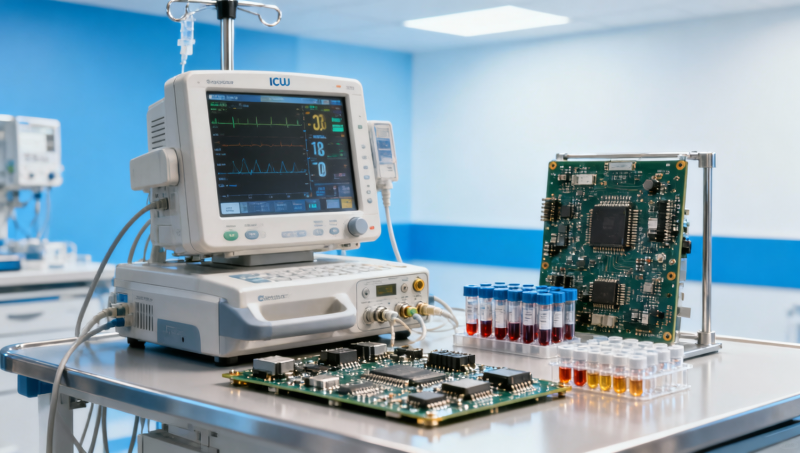
Shortlisting a reliable ICU monitor supplier is not mainly about finding the lowest quote or the widest product range. It is about reducing clinical risk, procurement risk, and lifecycle risk. For hospital buyers, ICU operators, MedTech teams, and business decision-makers, the best supplier is the one that can prove stable product performance, traceable manufacturing, regulatory readiness, integration capability, and dependable post-sale support. In practice, a strong shortlist usually includes suppliers that can document engineering consistency, pass compliance scrutiny, support interoperability, and sustain long-term service—not just deliver a polished brochure.
In a market where digital healthcare procurement is becoming more evidence-driven, a structured shortlisting process helps separate clinical-grade ICU monitor partners from vendors relying on marketing claims. The key is to assess technical integrity, supply chain transparency, and operational fit at the same time.
What should you check first when shortlisting an ICU monitor supplier?
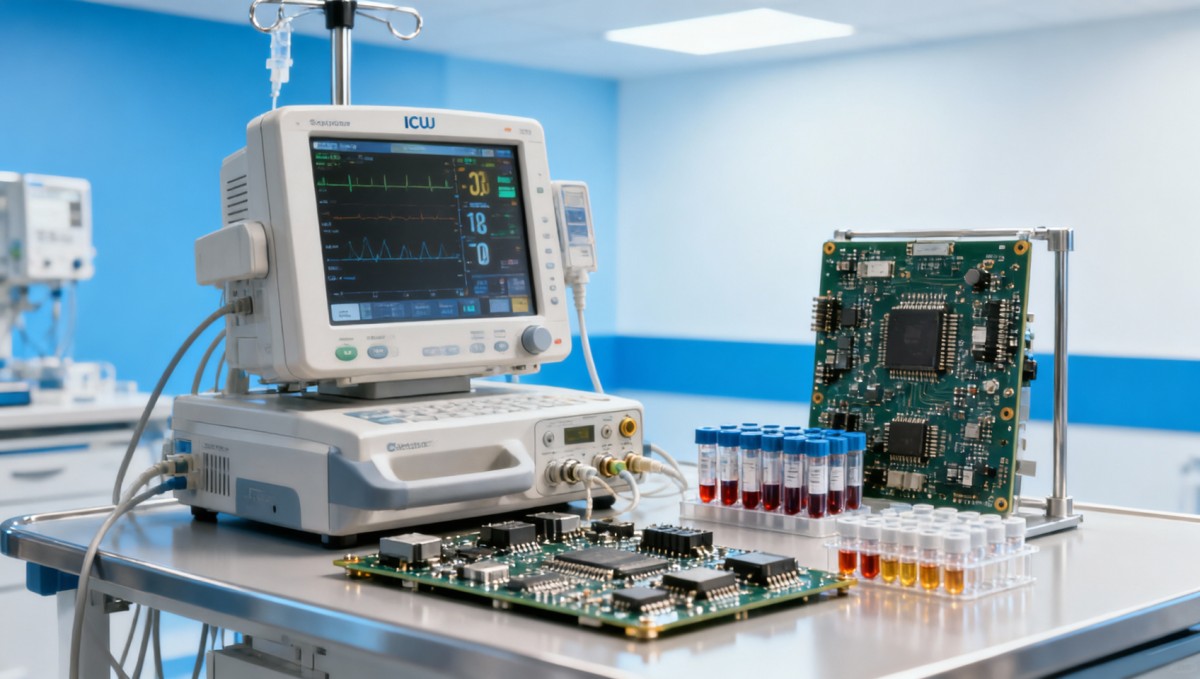
Start with a simple rule: if a supplier cannot clearly demonstrate regulatory compliance, manufacturing control, and real-world ICU use suitability, it should not make the shortlist.
Before comparing advanced features, check these first-level screening factors:
- Regulatory status: Confirm whether the ICU monitor and related components meet applicable requirements such as MDR or other target-market approvals.
- Clinical suitability: Verify that the monitor is designed for intensive care settings, not merely adapted from lower-acuity patient monitoring platforms.
- Manufacturing traceability: Ask whether the supplier can trace key components, PCB assemblies, firmware versions, and quality-control records.
- Product consistency: Determine whether the supplier can prove batch-to-batch stability in signal acquisition, alarm performance, display reliability, and power management.
- Service capability: Check lead times, spare-parts support, software updates, calibration processes, and field service responsiveness.
This first filter matters because many ICU monitor procurement failures do not come from obvious product defects. They come from hidden weaknesses such as unstable component sourcing, incomplete verification data, limited integration support, or slow technical response after installation.
What matters most to procurement teams, ICU users, and decision-makers?
Although different stakeholders ask different questions, their concerns usually overlap around reliability, usability, compliance, and total cost of ownership.
Procurement teams often focus on whether the supplier is dependable over the contract period. They want to know:
- Can this supplier deliver consistently across regions and sites?
- Is the pricing realistic once accessories, maintenance, training, and software are included?
- Will documentation stand up to internal audit and external regulatory review?
Operators and clinical users care more about practical performance:
- Are readings stable and easy to interpret in a high-pressure ICU environment?
- Is the alarm system effective without causing excessive alarm fatigue?
- Is the interface intuitive enough for fast adoption and fewer operating errors?
Business leaders and enterprise decision-makers usually look at broader strategic impact:
- Will this supplier support digital integration and future expansion?
- How much operational risk exists if the supplier changes components or firmware?
- Does this choice protect the organization from compliance, reputational, and downtime risk?
That is why a reliable ICU monitor supplier should not be judged only by specification sheets. A monitor may look competitive on paper but still create downstream cost and risk if its engineering discipline, service model, or documentation quality is weak.
How do you verify technical reliability beyond marketing claims?
The most useful way to evaluate an ICU monitor supplier is to ask for evidence that connects design, production, and field performance. This is where an independent benchmarking mindset becomes valuable.
Look for proof in the following areas:
1. Signal quality and monitoring stability
Ask how the supplier validates signal accuracy, noise resistance, parameter stability, and alarm responsiveness across different patient conditions and ICU workloads. If available, request test data instead of summary claims.
2. PCBA and hardware manufacturing capability
For buyers evaluating a patient monitor PCBA manufacturer or a vertically integrated ICU monitor supplier, this is critical. The quality of PCB assembly, soldering control, component qualification, thermal management, and electromagnetic compatibility directly affects reliability in clinical environments.
Useful questions include:
- Are PCBAs manufactured in-house or outsourced?
- How are component substitutions controlled and documented?
- What test coverage is used during production?
- How does the supplier manage end-of-life components?
3. Software and firmware control
Modern ICU monitors are not purely hardware devices. Firmware stability, cybersecurity readiness, update governance, and configuration control all matter. A reliable supplier should be able to explain how software changes are validated and how installed devices are managed over time.
4. Environmental and durability testing
ICU monitors operate continuously and often in demanding conditions. Ask about stress testing for power fluctuations, temperature variation, connector wear, transport conditions, and display endurance. Long-term reliability is a measurable engineering issue, not a branding statement.
5. Failure handling and CAPA discipline
If a supplier cannot show how it logs failures, investigates root causes, and implements corrective and preventive actions, it may not be mature enough for serious ICU deployment.
Why are regulatory compliance and documentation quality so important?
In healthcare procurement, reliability is inseparable from compliance. A supplier may offer attractive pricing, but if its documentation is incomplete or poorly controlled, procurement delays and audit risk can quickly erase any initial savings.
Pay close attention to:
- Regulatory readiness: Evidence of conformity to the applicable market framework, including MDR or equivalent requirements.
- Technical documentation: Product files, risk management records, verification reports, and change-control history.
- Quality system maturity: Certifications alone are not enough; ask how the quality system works in practice.
- Labeling and IFU quality: Clear instructions, multilingual support where needed, and proper version control reduce operational risk.
For teams sourcing across borders, regulatory gaps can also affect customs clearance, tender qualification, reimbursement eligibility, and post-market obligations. A reliable ICU monitor supplier should make compliance easier, not harder.
How do you assess integration, service, and long-term support?
An ICU monitor is part of a larger digital and clinical workflow. Even a technically solid product can become a poor procurement choice if it fails to integrate smoothly or if post-installation support is weak.
Evaluate the supplier on three fronts:
Interoperability
Can the monitor integrate with hospital information systems, central stations, EMR platforms, and data networks? Ask about supported protocols, compatibility records, and implementation support.
Training and deployment
Reliable suppliers provide structured onboarding, user training, technical manuals, and escalation pathways. This is especially important for ICU staff who need rapid familiarity and low operating friction.
After-sales resilience
Check service SLAs, local distributor competence, spare-parts availability, remote diagnostics, and software maintenance commitments. If support depends on a thin regional network, the procurement risk rises significantly.
For enterprise buyers, this is where total cost of ownership becomes clearer. A slightly higher upfront purchase price may be justified if it reduces downtime, retraining costs, service delays, and replacement risk over the device lifecycle.
What is a practical shortlist framework you can use?
To make supplier evaluation more objective, use a weighted shortlisting model. This helps compare vendors based on evidence rather than presentation quality.
A practical framework may include:
- 25% Technical performance: signal quality, alarm functionality, hardware design, reliability data
- 20% Regulatory and documentation quality: compliance readiness, audit support, traceability
- 20% Manufacturing robustness: PCBA control, quality assurance, component management, production consistency
- 15% Integration and usability: interoperability, interface design, workflow fit, training burden
- 10% Service and lifecycle support: maintenance, spare parts, response times, software updates
- 10% Commercial value: total cost of ownership, contract flexibility, supply continuity
After scoring, shortlist only suppliers that meet minimum thresholds in compliance, technical evidence, and service support. A vendor should not remain on the list simply because it scores well on price.
How can an independent benchmarking approach improve supplier selection?
This is where organizations like VitalSync Metrics (VSM) add value. In a complex MedTech market, internal teams often do not have enough time or engineering depth to verify every supplier claim at component, subsystem, and documentation level.
An independent, data-driven evaluation approach helps by:
- Translating technical claims into measurable benchmarks
- Comparing suppliers using standardized engineering criteria
- Identifying hidden manufacturing or compliance weaknesses early
- Supporting procurement teams with evidence suitable for internal review
- Reducing the gap between product marketing and actual clinical-grade performance
For ICU monitor sourcing, this matters because procurement decisions increasingly affect not just purchasing outcomes, but digital integration readiness, risk exposure, and long-term operational continuity.
Final takeaway: what does a reliable ICU monitor supplier really look like?
A reliable ICU monitor supplier is one that can prove—not just promise—clinical suitability, engineering consistency, regulatory readiness, and durable support. The best shortlist is built by screening for evidence in manufacturing, compliance, integration, and lifecycle performance before discussing commercial terms in detail.
If you are evaluating potential vendors, focus less on catalog breadth and more on verifiable technical integrity. Ask for test data, traceability records, software governance details, service commitments, and quality-system evidence. In critical care environments, the real cost of a poor supplier choice is not only financial. It can affect uptime, staff confidence, compliance exposure, and patient care continuity.
In short, shortlist ICU monitor suppliers the same way you would assess any high-stakes medical technology partner: through disciplined verification, not assumptions. That is the most dependable path to sourcing with confidence.
Recommended News
- 2026.10.08How to Evaluate Compact Biosignal Sensors for Reliable Wearable Vital-Sign MonitoringLydia Vancini (Regulatory Compliance Lead)
- 2026.10.07How Custom Orthotics Technology Can Improve Physical Therapy OutcomesSarah Jenkins (Laboratory Infrastructure Consultant)
- 2026.10.06How to Validate Metal Biocompatibility Testing for Implantable Medical DevicesDr. Julian Rossi (RehabTech Specialist)
The VitalSync Intelligence Brief
Receive daily deep-dives into MedTech innovations and regulatory shifts.