 Get Insights

How to verify a patient monitor PCBA manufacturer fast?
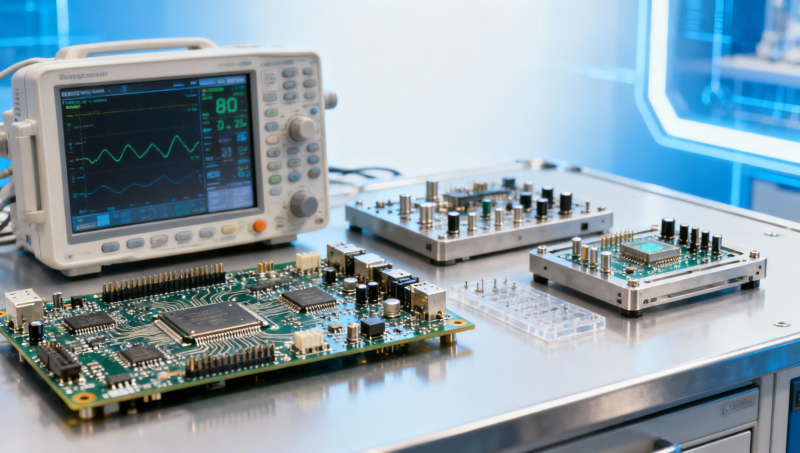
Choosing a patient monitor PCBA manufacturer is no longer just a sourcing task—it is a matter of supply chain verification, compliance, and clinical reliability. For buyers comparing an ICU monitor supplier, oxygen concentrator factory, or ultrasound machine OEM factory, fast verification means checking healthcare engineering depth, IVDR certification readiness, and proven healthcare equipment performance before risk enters procurement.
What does fast verification really mean in patient monitor PCBA sourcing?
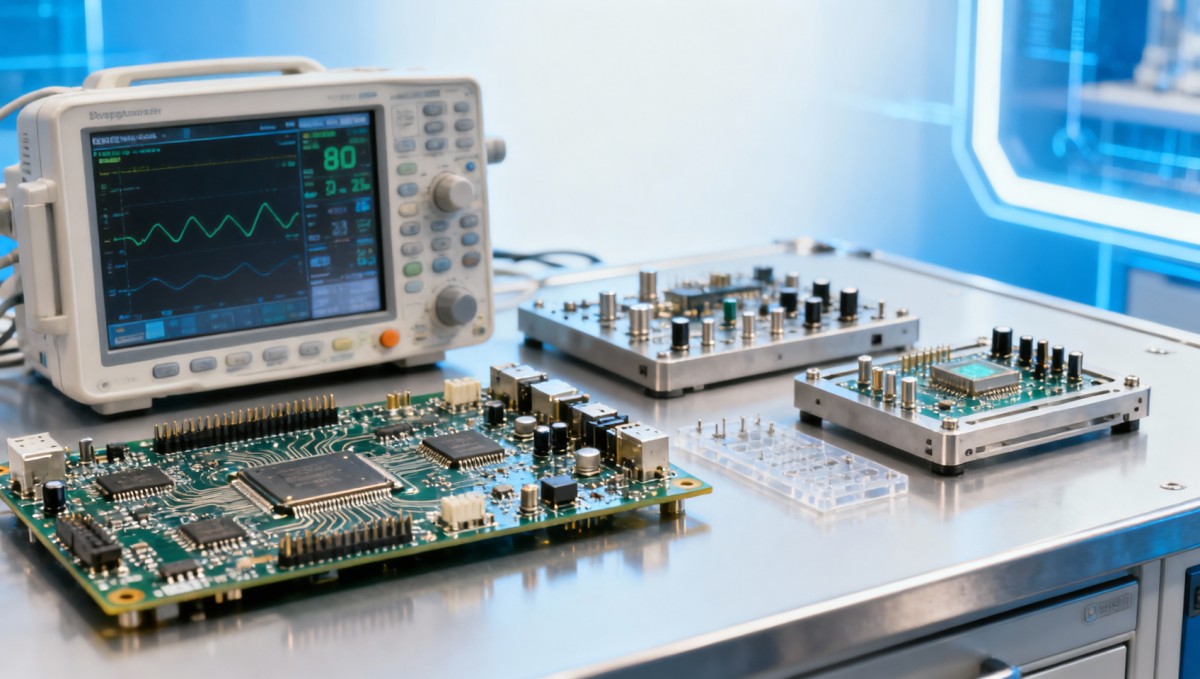
In medical electronics, fast verification does not mean making a rushed supplier choice in 24 hours. It means reducing uncertainty through a structured review completed in 3 stages: technical screening, compliance screening, and production-risk screening. For a patient monitor PCBA manufacturer, that review must go beyond a website, catalog, or sales quotation.
A patient monitor PCBA sits inside equipment that may run continuously for 24/7 operation in ICU, emergency transport, step-down wards, or surgical recovery areas. That changes the evaluation logic. Buyers are not simply checking whether a factory can assemble boards; they are verifying whether the manufacturer understands signal integrity, alarm stability, power safety, traceability, and lifecycle consistency.
For procurement teams, speed matters because tender cycles may be only 2–4 weeks, pilot builds may require samples in 7–15 days, and internal approval committees often need a concise risk summary. The fastest route is not asking 50 general questions. It is asking 5–7 decisive questions that reveal engineering maturity within the first meeting.
The fastest verification lens for healthcare electronics buyers
VitalSync Metrics (VSM) approaches this task as a technical benchmarking and verification exercise. Instead of relying on promotional claims, buyers should look for evidence that manufacturing parameters can be translated into documented performance logic. In practical terms, the supplier should explain not only what they build, but how they control variation, test critical nodes, and support compliance documentation.
- Can the manufacturer describe experience with medical-grade PCB assemblies, not only industrial electronics?
- Can they explain incoming material control, lot traceability, and process records for each board revision?
- Can they support verification files needed for MDR/IVDR-linked product documentation and downstream audits?
- Can they discuss failure modes such as connector fatigue, thermal drift, false alarms, and EMI sensitivity?
If the answers remain vague after one call and one document review, verification has already delivered value: it has identified elevated sourcing risk early. Fast verification is therefore less about speed alone and more about filtering out weak candidates before sample cost, engineering time, and regulatory exposure increase.
Which checkpoints reveal a capable patient monitor PCBA manufacturer quickly?
The most efficient procurement process uses a shortlist of checkpoints rather than broad supplier questionnaires. In the patient monitor PCBA field, 6 checkpoints usually expose whether a factory is suitable for serious medical projects: design-for-manufacturing capability, component control, test coverage, documentation discipline, change control, and post-delivery support.
These checkpoints are especially important when the same sourcing team is also evaluating an ICU monitor supplier, oxygen concentrator factory, or ultrasound machine OEM factory. Across these categories, the core procurement issue is similar: can the supplier maintain stable electrical and functional performance from prototype through batch production without undocumented process drift?
6 practical checkpoints to review in the first 7 days
The table below helps procurement managers, operators, and decision-makers assess a patient monitor PCBA manufacturer using concrete evidence instead of marketing language. It is designed for fast internal scoring during supplier screening, qualification, or re-sourcing.
These checkpoints are useful because they convert supplier evaluation into observable evidence. In most cases, a qualified manufacturer should be able to provide a first document package within 3–7 business days. If document release is repeatedly delayed, procurement should assume either weak internal systems or limited readiness for regulated projects.
What experienced buyers review first
Experienced teams usually prioritize three items before discussing unit price: traceability depth, test coverage, and engineering responsiveness. A low quotation has limited value if the supplier cannot explain component alternates, board-level reliability controls, or support the documentation burden required during registration, validation, or customer audit preparation.
- Review whether the manufacturer can support prototype, pilot, and batch phases without changing core controls.
- Check whether sampling plans and test records can be linked to specific board lots and revision numbers.
- Verify whether engineering teams can discuss failure causes in technical terms, not only service terms.
How should you compare suppliers on compliance, testing, and delivery risk?
A patient monitor PCBA manufacturer may look capable on paper, yet still create risk if compliance support and manufacturing execution are misaligned. For medical equipment programs, buyers should compare suppliers across at least 3 dimensions: regulatory readiness, reliability discipline, and delivery predictability. This is especially relevant when procurement also manages related devices with different risk profiles.
For example, an oxygen concentrator factory may emphasize airflow systems and final device integration, while an ultrasound machine OEM factory may highlight imaging subsystems and enclosure-level assembly. A patient monitor PCBA manufacturer, however, must prove board-level stability under long operating hours, noise-sensitive data paths, and clinically meaningful alarm behavior. The evaluation criteria overlap, but they are not interchangeable.
A practical comparison table for medical electronics procurement
The following comparison framework helps decision-makers score suppliers consistently when reviewing technical meetings, RFQ responses, and qualification files. It focuses on the issues most likely to affect approval timelines, service burden, and post-market reliability.
This type of comparison is where VSM adds value. An independent benchmark-oriented review helps buyers separate a polished presentation from a manufacturing system that can actually support medical device commercialization. In value-based procurement, the true cost driver is often not the initial unit price but the time lost in requalification, field corrections, or repeated document clarification.
Typical lead-time ranges to verify
While exact schedules depend on BOM complexity and material availability, buyers should expect separate lead-time discussions for 3 phases: sample build, pilot build, and recurring production. Typical ranges may be 7–15 days for a sample build after material readiness, 2–4 weeks for pilot quantity, and longer if controlled components or imported sensors are involved. A supplier that cannot distinguish these phases may not have mature planning discipline.
Which compliance and documentation signals should buyers check first?
Many sourcing delays happen because buyers evaluate assembly capability first and documentation capability later. In regulated medical electronics, this sequence creates avoidable risk. A patient monitor PCBA manufacturer must support not just assembly output, but records that can feed design history, risk management, verification files, and audit trails used by the device owner or legal manufacturer.
That does not mean every manufacturer must act as a regulatory consultant. It means they should understand how their process records affect downstream MDR/IVDR readiness, post-market traceability, and supplier qualification. In a hospital-facing or export-facing product chain, weak documentation can delay approval even when the hardware itself appears functional.
Documents and controls worth checking in the first review round
A focused first-round review usually covers 5 key document categories. Asking for these items early helps procurement identify whether the supplier is prepared for serious medical programs or only for general-purpose electronics outsourcing.
- Controlled BOM and revision history, including alternate component approval logic.
- Incoming inspection and lot traceability records for critical materials and components.
- Process flow documents covering SMT, hand soldering where used, cleaning, inspection, and rework limits.
- Functional test records, failure logging, and nonconforming material handling procedures.
- Engineering change notice workflow tied to customer approval and revision release timing.
For procurement leaders, the key question is simple: can this manufacturer help us remain audit-ready during scale-up? For operators and end users, the same question appears differently: will this board behave consistently from unit to unit, month to month? Documentation discipline is the bridge between these viewpoints.
Common compliance misunderstanding
A common misunderstanding is assuming that a quality certificate alone proves suitability for patient monitor PCBA work. It does not. Certificates can indicate system intent, but buyers still need evidence of execution: traceability depth, process discipline, deviation handling, and controlled communication. In practice, a 60-minute technical review often reveals more than a polished capability brochure.
What mistakes slow down verification, and how can you avoid them?
The biggest delay in supplier verification is asking too many broad questions and too few decisive ones. When teams request generic capability decks, factory photos, and price lists without defining device risk level, expected annual volume, or compliance pathway, they create noise. Fast verification depends on narrowing the review to the factors that matter most for patient monitor PCB assembly.
Another frequent mistake is comparing suppliers only by quotation. In medical electronics, the lower upfront offer may become the higher total cost if it causes 2 extra validation rounds, repeated sample corrections, or delayed launch preparation. A sourcing decision should consider engineering response speed, documentation maturity, and the supplier’s ability to sustain controlled changes over 12–24 months.
High-risk mistakes during supplier screening
- Treating a patient monitor PCBA manufacturer like a standard consumer electronics EMS partner.
- Approving sample builds before checking material traceability and test record format.
- Ignoring how component substitutions are reviewed, approved, and recorded.
- Assuming device-level compliance can compensate for weak board-level manufacturing records.
A more effective process is to align internal stakeholders in 4 steps: define intended application, define mandatory documents, define critical performance risks, and define approval gates. Once these are clear, buyers can often narrow a long supplier list to 2–3 viable candidates quickly. That saves engineering hours and improves the quality of final negotiations.
FAQ for buyers and technical teams
How fast can a patient monitor PCBA manufacturer usually be verified?
An initial verification can often be completed within 5–10 business days if the manufacturer can provide a controlled document package, engineering discussion, and sample process overview promptly. Full qualification takes longer, but early risk filtering should not wait until pilot production.
What should procurement ask before requesting a quote?
Ask about medical electronics experience, test flow, traceability, component control, and expected lead times by phase. A quote without this context may look comparable across suppliers while hiding major differences in execution risk.
Is a factory audit always necessary at the first stage?
Not always. For early screening, a document review plus technical interview is often enough to remove unsuitable suppliers. A deeper audit becomes more important before large pilot release, strategic sourcing commitment, or regulated market expansion.
Why do medical device teams use independent benchmarking support?
Because independent technical benchmarking reduces bias. It helps teams compare what manufacturers can prove, not only what they claim. This is particularly useful when launching new platforms, entering export markets, or reconciling procurement and engineering priorities.
Why work with VSM when evaluating a patient monitor PCBA manufacturer?
VitalSync Metrics (VSM) is positioned for buyers who need engineering truth, not generic supplier promotion. In medical technology sourcing, the difficult part is rarely finding names in the market. The difficult part is verifying whether a manufacturer can support clinical-grade performance, controlled documentation, and long-term supply confidence under real project pressure.
Our advantage is a data-driven, benchmark-oriented approach built for healthcare and life sciences decision-making. We help global procurement directors, MedTech startups, laboratory architects, and device teams convert scattered factory claims into structured evaluation logic. That includes checking manufacturing parameters, test discipline, compliance readiness, and risk visibility before they become expensive procurement problems.
What you can discuss with us
- Patient monitor PCBA manufacturer verification criteria for prototype, pilot, or multi-batch sourcing.
- Comparison of an ICU monitor supplier, oxygen concentrator factory, and ultrasound machine OEM factory based on your program scope.
- Review of documentation readiness for MDR/IVDR-linked supply chain requirements.
- Assessment of test coverage, traceability, lead-time assumptions, and supplier change-control discipline.
- Support for parameter confirmation, sample planning, qualification strategy, and quotation comparison.
If you are validating a new supplier, requalifying an existing one, or preparing a healthcare equipment sourcing decision under time pressure, contact VSM with your current BOM stage, expected volume range, documentation concerns, and target timeline. We can help you build a faster verification path, identify hidden technical risks, and make sourcing decisions with stronger confidence.
- value-based procurement
- medical technology
- medical equipment
- technical benchmarking
- life sciences
- supply chain
- engineering truth
- manufacturing parameters
- data-driven
- healthcare engineering
- IVDR certification
- healthcare equipment
- supply chain verification
- ultrasound machine oem factory
- icu monitor supplier
- patient monitor pcba manufacturer
- oxygen concentrator factory
Recommended News
- 2026.10.08How to Evaluate Compact Biosignal Sensors for Reliable Wearable Vital-Sign MonitoringLydia Vancini (Regulatory Compliance Lead)
- 2026.10.07How Custom Orthotics Technology Can Improve Physical Therapy OutcomesSarah Jenkins (Laboratory Infrastructure Consultant)
- 2026.10.06How to Validate Metal Biocompatibility Testing for Implantable Medical DevicesDr. Julian Rossi (RehabTech Specialist)
The VitalSync Intelligence Brief
Receive daily deep-dives into MedTech innovations and regulatory shifts.