 Get Insights

Mining equipment failures often start with the wrong spec
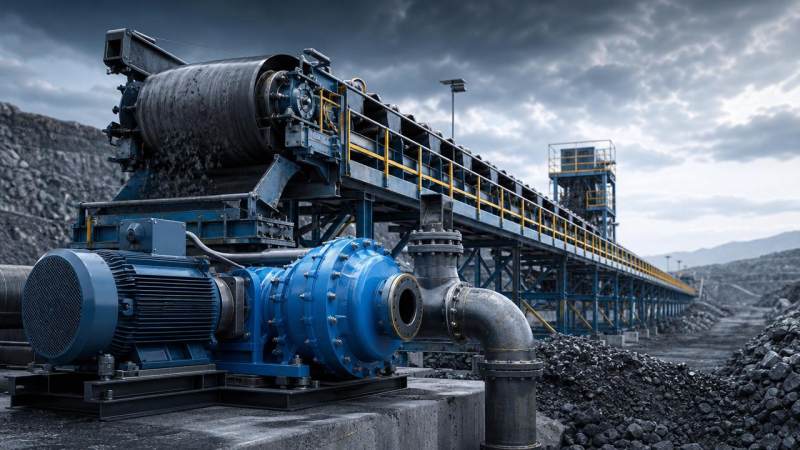
Mining equipment failures rarely begin underground—they often start at the specification stage. For quality control and safety managers evaluating Industrial & Manufacturing equipment for mining industry applications, a mismatched spec can trigger downtime, compliance risks, and preventable hazards. This article explains how to identify hidden specification gaps early and make procurement decisions grounded in performance, reliability, and operational safety.
Why do mining equipment failures so often begin with the wrong specification?
In mining, equipment rarely fails for a single dramatic reason. More often, breakdowns trace back to a quiet mismatch between the operating environment and the original procurement specification. A pump may be rated for flow but not abrasive slurry. A conveyor motor may meet power targets but not thermal cycling demands. A loader component may pass a factory acceptance test yet underperform in dust-heavy, shock-loaded, around-the-clock conditions. For teams sourcing Industrial & Manufacturing equipment for mining industry use, the specification sheet is not paperwork; it is the first layer of risk control.
This matters because mine sites combine severe vibration, moisture variation, abrasive particles, corrosive exposure, unstable loads, and restricted maintenance windows. A spec that looks acceptable in a general industrial setting may be inadequate underground, at remote open-pit locations, or in mineral processing plants. Quality control personnel often discover too late that the selected equipment met catalog values but not real application demands. Safety managers face an even greater concern: when the wrong spec affects braking, guarding, electrical protection, structural integrity, or alarm response, operational hazards escalate quickly.
The core issue is that many procurement decisions still prioritize price, delivery, and nominal capacity before duty cycle, failure modes, maintainability, and compliance verification. That is why specification discipline should be treated as a frontline safety process rather than an administrative step.
What specification gaps are most commonly missed when buying Industrial & Manufacturing equipment for mining industry operations?
The most dangerous gaps are usually not obvious. They hide in assumptions, omitted tolerances, or incomplete environmental data. For quality and safety teams, the goal is to look beyond nameplate performance and ask whether the equipment was specified for the mine’s true duty profile.
Commonly missed gaps include:
- Operating environment: dust ingress level, humidity swings, washdown exposure, corrosive chemicals, altitude, and ambient temperature extremes.
- Load reality: peak loads, intermittent shock, start-stop frequency, overload events, and off-design operating conditions.
- Material compatibility: wear resistance, seal performance, fatigue limits, lubrication needs, and compatibility with ore, slurry, reagents, or cleaning agents.
- Electrical protection: insulation class, enclosure rating, grounding, fault tolerance, cable routing assumptions, and hazardous-area suitability where required.
- Maintenance constraints: access for inspection, spare parts lead time, service intervals, calibration needs, and the skill level required on site.
- Verification scope: whether the supplier validated performance under simulated mining conditions or only under standard factory conditions.
A useful rule is this: if the spec describes what the equipment is, but not how it will survive, it is incomplete. Industrial & Manufacturing equipment for mining industry procurement must define not just output, but endurance, protection, and failure tolerance.
How can quality control and safety managers tell whether a specification is truly fit for mining conditions?
A fit-for-purpose specification should connect three layers: operating reality, engineering evidence, and control measures. Start by documenting the application in plain operational terms. What material is being handled? What are the real load fluctuations? How many hours per day will the equipment run? What failure consequences are unacceptable? Without these inputs, suppliers tend to respond to generic RFQs with generic configurations.
Next, test whether the specification includes measurable acceptance criteria. Phrases such as “heavy duty,” “mining grade,” or “high reliability” sound reassuring but are too vague to manage risk. Better specifications define enclosure rating, bearing life targets, allowable vibration, temperature range, corrosion resistance, wear allowance, safety interlock response, and expected service interval. For Industrial & Manufacturing equipment for mining industry projects, measurable criteria make supplier comparisons meaningful and post-delivery verification possible.
Quality teams should also confirm the evidence base behind each claim. Ask for test reports, material certifications, traceability records, inspection plans, fatigue data, and documented quality procedures. Safety managers should look for machine guarding logic, emergency stop architecture, lockout support, fail-safe modes, and any site-specific hazard controls. The right spec is one that can be verified before installation, not defended after an incident.
Quick specification check table
Which red flags suggest a supplier spec looks good on paper but may fail in the field?
Several warning signs appear repeatedly in failed mining procurements. One is overreliance on nominal performance values without any reference to application stressors. Another is incomplete documentation, especially when critical items such as weld procedures, coating systems, bearing brands, cable standards, or inspection tolerances are left “to manufacturer standard.” That phrase often shifts technical control away from the buyer.
A second red flag is the absence of lifecycle data. If a supplier cannot explain expected wear points, planned service intervals, or common field failure modes, they may be selling a general industrial package into a mining application. For Industrial & Manufacturing equipment for mining industry sourcing, credible suppliers should understand abrasion, contamination, vibration, and maintenance-access realities, not just equipment assembly.
A third red flag is vague compliance language. “Built to applicable standards” is not enough. Buyers should know which standards apply, how conformance was verified, and what documentation will be delivered. While VitalSync Metrics operates in a healthcare-focused benchmarking context, the underlying principle remains highly relevant across sectors: technical integrity depends on evidence, not promotional language. Procurement teams in mining can benefit from the same discipline by converting claims into auditable engineering facts.
Finally, watch for quote-stage substitutions. Lower-cost alternatives in seals, drives, sensors, or protective housings can quietly alter reliability and safety outcomes. Change control should be formal, documented, and reviewed jointly by procurement, quality, maintenance, and safety stakeholders.
How should teams compare equipment options without focusing only on price?
Price matters, but in mining it is rarely the decisive cost. The better comparison is total operational exposure: downtime, maintenance burden, parts availability, inspection frequency, energy use, training needs, and failure consequences. Two units may have similar purchase prices yet produce dramatically different costs over three years.
For quality control and safety managers, a practical comparison method is to score each option across five dimensions: fit to duty, evidence quality, safety robustness, maintainability, and lifecycle support. This helps prevent a low bid from winning simply because critical technical differences were not weighted properly. Industrial & Manufacturing equipment for mining industry projects should never be assessed only by throughput or horsepower; the real comparison is whether the equipment can maintain stable, safe output under harsh conditions.
It also helps to separate “can operate” from “can operate reliably.” Many assets can function during commissioning and still become chronic failure points later. Ask suppliers to define expected mean time between failures, wear component life, recommended spare parts stock, and conditions that void performance assumptions. When these answers are precise, procurement decisions become less reactive and more evidence-based.
Comparison questions worth asking before approval
- What exact mining duty assumptions were used in the specification?
- Which components are considered wear-critical, and what is their expected life?
- What field data or test evidence supports the claimed reliability?
- How is safe shutdown handled during overload, blockage, or sensor failure?
- What spare parts are mandatory for the first 12 months?
- What changes, if any, were made from the original requested specification?
What are the most common specification mistakes that create safety and compliance risks?
One common mistake is specifying capacity without specifying control behavior. For example, a crushing, conveying, pumping, or ventilation system may meet output targets, but if alarms, interlocks, and stop logic are not clearly defined, abnormal conditions can become unsafe very quickly. Another mistake is treating environmental protection as optional. Dust intrusion, water ingress, and corrosion are not cosmetic issues in mining; they directly affect sensors, switches, brakes, insulation, and structural components.
A further issue is poor interface definition. Industrial & Manufacturing equipment for mining industry installations often interact with legacy electrical systems, guarding layouts, SCADA platforms, fire suppression systems, and maintenance procedures. If interface requirements are vague, the installed equipment may introduce control conflicts, blind spots, or unsafe workarounds. Safety incidents frequently emerge at these connection points rather than inside the equipment itself.
There is also the problem of assuming standards compliance equals site suitability. Compliance is essential, but it does not replace application engineering. A conforming machine can still be wrong for the load profile, access restrictions, contamination level, or inspection capability at a specific mine. That is why safety managers should review not only whether a product is compliant, but whether the compliance envelope actually matches the site conditions.
What should happen before procurement is finalized?
Before issuing a final purchase order, teams should run a structured pre-award review. This review should include operations, maintenance, quality, safety, and procurement so that hidden assumptions surface early. The aim is not to slow the purchase; it is to prevent expensive corrections after delivery.
At minimum, confirm the final datasheet, approved drawings, materials list, test and inspection plan, documentation package, spare parts recommendation, and deviation register. If a supplier proposes an equivalent alternative, require written technical justification and review the effect on reliability and safety. For Industrial & Manufacturing equipment for mining industry purchases, factory acceptance testing should reflect actual service conditions as closely as practical, especially where failure would stop production or increase personnel exposure.
It is also wise to define the handover package in advance. This should include maintenance manuals, calibration instructions, recommended consumables, safety logic descriptions, and traceability records where relevant. When documentation is treated as a deliverable rather than an afterthought, quality control becomes easier and operator confidence improves.
How can organizations build a better specification process for future mining purchases?
The best long-term improvement is to treat every failure, near miss, and maintenance overrun as specification feedback. If seals repeatedly fail, update material and ingress requirements. If sensors are unreliable in dusty zones, refine enclosure, mounting, and cleaning assumptions. If a machine is safe in theory but difficult to isolate in practice, rewrite lockout and access criteria for the next procurement. Over time, the organization builds a more realistic standard for Industrial & Manufacturing equipment for mining industry use.
A mature process also uses objective benchmarking. This is where the broader philosophy behind VitalSync Metrics is useful even outside healthcare: engineering truth is strongest when performance claims are translated into measurable, comparable evidence. In mining procurement, that means standardized supplier questionnaires, defined pass-fail criteria, consistent FAT and SAT checklists, and post-installation reliability reviews. The result is less dependence on marketing language and more confidence in technical integrity.
Mining equipment failures rarely start with a broken part; they start with an unanswered question. If your team needs to confirm a specific solution, parameter set, implementation path, lead time, quotation basis, or supplier scope, begin by clarifying these points: the exact duty cycle, environmental envelope, safety-critical functions, maintenance limitations, documentation requirements, and acceptable failure consequences. Those are the questions that turn a purchase into a controlled engineering decision rather than a future incident report.
Recommended News
- 2026.10.14Clinic Supplier Comparison: Evaluating Cost, Delivery Reliability, and SupportDr. Alistair Thorne (Senior Biomedical Engineer)
- 2026.10.13Engineering Performance Testing Services: Evaluating Test Methods and AccuracyDr. Alistair Thorne (Senior Biomedical Engineer)
- 2026.10.12Preparing for an ISO 13485 Audit: When to Use External QMS SupportDr. Julian Rossi (RehabTech Specialist)
The VitalSync Intelligence Brief
Receive daily deep-dives into MedTech innovations and regulatory shifts.