 Get Insights

How Clinics Can Choose Imaging Systems That Fit Workflow, Space, and Budget
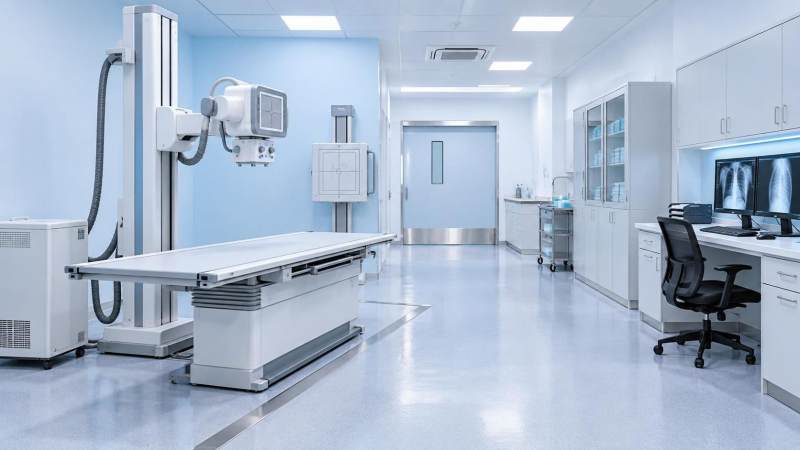
Start With the Care Pathway, Not the Equipment Category
A clinic should choose an imaging system by tracing the patient journey it needs to support, then testing whether a proposed system can serve that journey reliably within the available room, staffing model, and cash flow. A lower purchase price can become expensive if it creates repeat scans, reporting delays, scheduling bottlenecks, or an unplanned renovation. Conversely, the highest-specification platform may be difficult to justify when its capability is rarely used.
For procurement teams, the practical question is not simply whether a system produces acceptable images. It is whether the clinic can consistently obtain clinically useful studies, move patients through the department without friction, store and report the results, and maintain uptime at a cost that the organization can sustain.
That framing changes the evaluation process. Instead of comparing feature lists from several vendors, begin with the examinations that drive demand. A musculoskeletal practice, a primary-care clinic with limited diagnostic capacity, a women's health center, and an outpatient cardiology service may all use imaging, but they require different combinations of image quality, throughput, patient positioning, reporting access, and support coverage.
Define the Clinical Work Before Specifying the System
The most useful starting document is a short examination profile. It should identify the studies the clinic expects to perform, the clinical decisions those studies must support, the anticipated patient mix, and the cases that will still be referred elsewhere. This prevents a common procurement error: buying a system around a broad label such as “ultrasound,” “X-ray,” or “advanced imaging” without agreeing on the actual diagnostic scope.
For example, an ultrasound system intended for routine abdominal, vascular, and obstetric work needs a different probe mix, workflow configuration, and image review process from one used primarily for point-of-care assessments. A radiography room serving ambulatory orthopedic patients may prioritize rapid positioning and standing studies, while a clinic with patients who have reduced mobility may need a room layout and table configuration that make transfers safer and faster.
The clinical team should distinguish between essential and occasional requirements. Essential requirements are those that affect the clinic's regular examinations: the necessary acquisition modes, detector or transducer options, positioning aids, dose-management functions where applicable, and image quality at the anatomical sites being examined. Occasional requirements may still matter, but they should not silently dictate the configuration unless there is a credible plan to build that service volume.
It is also useful to identify the operational consequence of a missed capability. If a system cannot support a rare study, referral may be acceptable. If it cannot support a high-volume study without repeated attempts or manual workarounds, the system is poorly matched even if it meets a generic specification.
Questions that clarify the requirement
- Which examinations account for most expected volume, and which require the highest diagnostic confidence?
- Who acquires the images, who reviews them, and where does reporting occur?
- How many patients must move through the service during a typical operating day?
- Which patient groups create positioning, mobility, privacy, or infection-control constraints?
- Which studies must be completed on site, and which can reasonably remain referral cases?
- What happens when the system is unavailable for a day: delayed appointments, outsourced scans, or interruption of a clinical pathway?
A clinic does not need a perfect volume forecast to use this approach. The purpose is to expose assumptions early. A proposed configuration should be evaluated against the expected work mix, rather than against a demonstration that showcases a narrow set of ideal cases.

Space Is a Workflow Constraint, Not Just a Room Measurement
Available floor area is often treated as a pass-fail installation issue. In practice, it has a direct effect on patient handling, staff movement, cleaning, privacy, and daily throughput. A system may fit physically into a room while leaving too little clearance to position a wheelchair, assist a patient onto a table, access emergency equipment, or service the unit without disrupting the clinic.
Procurement should ask for a room-planning review before treating an equipment proposal as final. The review needs more than the device footprint. It should account for doors, corridors, patient changing areas, control positions, equipment travel paths, storage, cable routing, power capacity, ventilation requirements, structural considerations, and any shielding or safety provisions associated with the modality.
For mobile or compact systems, the question shifts from room construction to circulation. Can staff move the system between examination areas without blocking patient flow? Is there a secure charging location? Does the unit fit through all relevant doors and lifts? A compact platform that must be moved frequently can consume more staff time than a fixed system placed in a properly designed room.
Patient experience belongs in this assessment. Claustrophobia, pain, limited range of motion, bariatric care, pediatric needs, and the presence of an accompanying carer can all affect whether a nominally suitable room works in use. A procurement file that only records technical dimensions may miss the conditions that determine whether appointments run on time.
Test Workflow at the Level of Minutes and Handovers
Many medical imaging systems for clinics are sold with claims about speed, automation, or ease of use. Those claims may be relevant, but procurement teams should translate them into an observable workflow: from order entry and patient arrival to acquisition, quality check, image transfer, reporting, and result delivery.
Acquisition time alone is not a dependable measure of capacity. A system may capture images quickly but lose time through patient registration, manual demographic entry, complex positioning, image relabeling, delayed transfer, or repeated scans. The clinic should understand where each handover occurs and who owns it.
During evaluation, use representative examination scenarios rather than a generic vendor demonstration. Ask to see a normal outpatient workflow, a patient who needs assistance with positioning, a study requiring a repeat image, and the steps involved when an image must be reviewed remotely. The aim is not to create an adversarial test. It is to identify the routine conditions under which speed or complexity changes.
Staffing should be considered alongside interface design. A highly configurable system can be appropriate for an experienced imaging department, yet impose a training burden on a small clinic where coverage is limited. Conversely, a simplified interface may reduce routine errors but constrain specialized work. The right balance depends on who will use the system on an ordinary day, not on the most experienced operator available during commissioning.
Procurement teams should also examine quality assurance. Determine how image quality is checked before the patient leaves, how rejected or repeated studies are recorded, and whether routine calibration or performance checks can be performed without excessive service disruption. A workflow that discovers inadequate images only after the patient has departed creates clinical and administrative cost regardless of how efficient the acquisition screen appears.
Integration Must Be Assessed as a Working Process
An imaging device that operates well in isolation can still create a fragmented service if it does not fit the clinic's information environment. The essential issue is not simply whether the vendor states that the system supports interoperability. The clinic needs to map how patient and study information will travel through its own systems.
At a minimum, examine the path from scheduling or order creation to modality worklist, image storage, reporting, and access by the referring clinician. Clarify which organization manages each component, which interface work is included in the proposal, and how exceptions are handled. Duplicate patient records, manual transcription, and uncertain ownership of failed transmissions are operational risks, not minor technical inconveniences.
For clinics that use external reporting services or hospital partners, image transfer and retrieval deserve particular attention. Large image sets, network interruptions, user permissions, retention policies, and access from different locations can all affect the time to a final report. A demonstration should include the intended route to the archive or reporting environment where possible, rather than only a local workstation.
Cybersecurity and service access should be part of the same conversation. Ask how software updates are delivered, how remote support is controlled, what user roles are available, and who is responsible for maintaining supported operating environments. These questions are especially important when the clinic has a small internal IT team and relies on external support.
Compare Lifecycle Cost With Explicit Assumptions
Budget discipline requires a view of cost beyond the quoted equipment price. Capital cost is only one part of the commitment. Installation, room preparation, shielding or electrical work where required, network integration, applications training, service coverage, consumables, software subscriptions, probes or accessories, downtime arrangements, and eventual replacement all influence the economic case.
Rather than relying on a single “total cost” figure, build a cost model with visible assumptions. Estimate the planned service period, expected examination volume, support coverage, likely accessory replacement, and any site work that falls outside the supplier quotation. Then compare options under the same assumptions. This makes it easier to see whether a lower initial bid transfers cost into excluded work, limited warranty terms, or future software charges.
Uptime should be evaluated in relation to the clinic's tolerance for disruption. A site with one system and little ability to redirect patients may value rapid on-site response, loan equipment, or a clear escalation process more highly than a larger organization with redundancy. Procurement should read service terms for practical details: coverage hours, response commitments, exclusions, preventive maintenance, remote diagnostics, parts availability, and whether travel or labor is charged separately.
Used and refurbished equipment can be viable in some settings, but the assessment should be stricter, not lighter. The clinic needs clarity on system age, software support, remaining useful life of critical components, documentation, image quality verification, warranty scope, upgrade feasibility, and availability of qualified service. The lower purchase price should be weighed against the consequences of unsupported software or a component failure that cannot be resolved promptly.
Do Not Treat Compliance as a Paperwork Check
Regulatory status, local installation requirements, radiation protection obligations where relevant, and data-handling responsibilities must be resolved before a purchase order locks the clinic into a configuration. Documentation should correspond to the exact system and intended use, including material options, software versions, accessories, and any clinical applications presented as part of the proposal.
Procurement teams should avoid assuming that a feature available in a vendor brochure is necessarily available, authorized, or enabled in the proposed configuration. The same caution applies to artificial intelligence functions, automated measurements, and advanced post-processing. Ask what the feature does, what input it requires, who validates its output, how performance limitations are communicated, and whether it adds a recurring cost or implementation dependency.
Compliance review also has an operational side. A clinic must be able to maintain required records, complete routine checks, manage user access, and support auditability without creating a process that staff cannot realistically follow. The most defensible procurement decision is one that aligns the device, the room, the software environment, and the clinic's own governance capacity.
Use a Shortlist Process That Exposes Trade-Offs
Once the clinical, spatial, workflow, integration, and cost requirements are documented, score a shortlist against them using weighted criteria. The score should not replace professional judgment, but it prevents an attractive demonstration or aggressive pricing from dominating the decision.
The final selection should leave a clear record of why the chosen system fits the intended service and where compromises have been accepted. That record is useful later when volume changes, new clinical services are considered, or the clinic evaluates whether an upgrade is warranted.
A well-chosen imaging system does not have to be the most advanced option in the market. It has to deliver dependable diagnostic work in the clinic's real rooms, with its real staff and information systems, at a cost structure the organization can manage over its working life.
Recommended News
- 2026.10.14Clinic Supplier Comparison: Evaluating Cost, Delivery Reliability, and SupportDr. Alistair Thorne (Senior Biomedical Engineer)
- 2026.10.13Engineering Performance Testing Services: Evaluating Test Methods and AccuracyDr. Alistair Thorne (Senior Biomedical Engineer)
- 2026.10.12Preparing for an ISO 13485 Audit: When to Use External QMS SupportDr. Julian Rossi (RehabTech Specialist)
The VitalSync Intelligence Brief
Receive daily deep-dives into MedTech innovations and regulatory shifts.