 Get Insights

Bio-Sample Storage Temperature Ranges: How to Choose the Right System
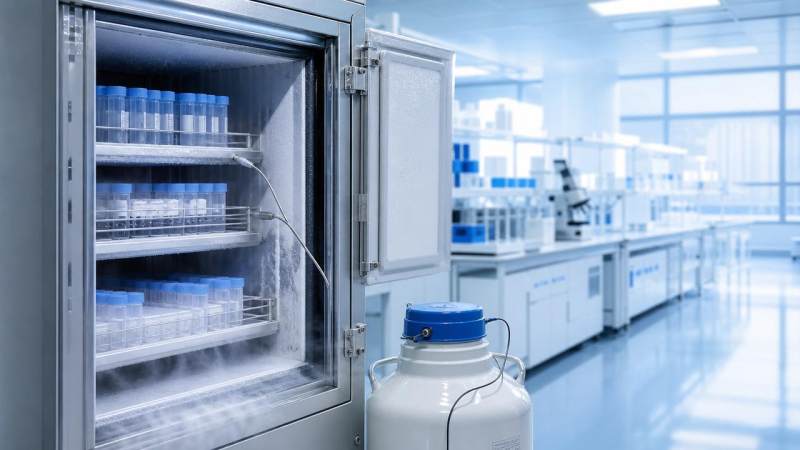
Selecting the right Bio-Sample Storage system is not simply a matter of choosing a freezer temperature. For technical evaluators, it requires matching sample stability requirements, validation data, temperature uniformity, monitoring architecture, and regulatory expectations to the real-world workflow of the laboratory.
From refrigerated biobank inventories to ultra-low temperature and cryogenic applications, each range carries distinct engineering trade-offs. This guide provides a practical framework for assessing Bio-Sample Storage temperature ranges and identifying systems that support reliable, compliant, long-term preservation.
Why Bio-Sample Storage Requires a Checklist-Based Decision
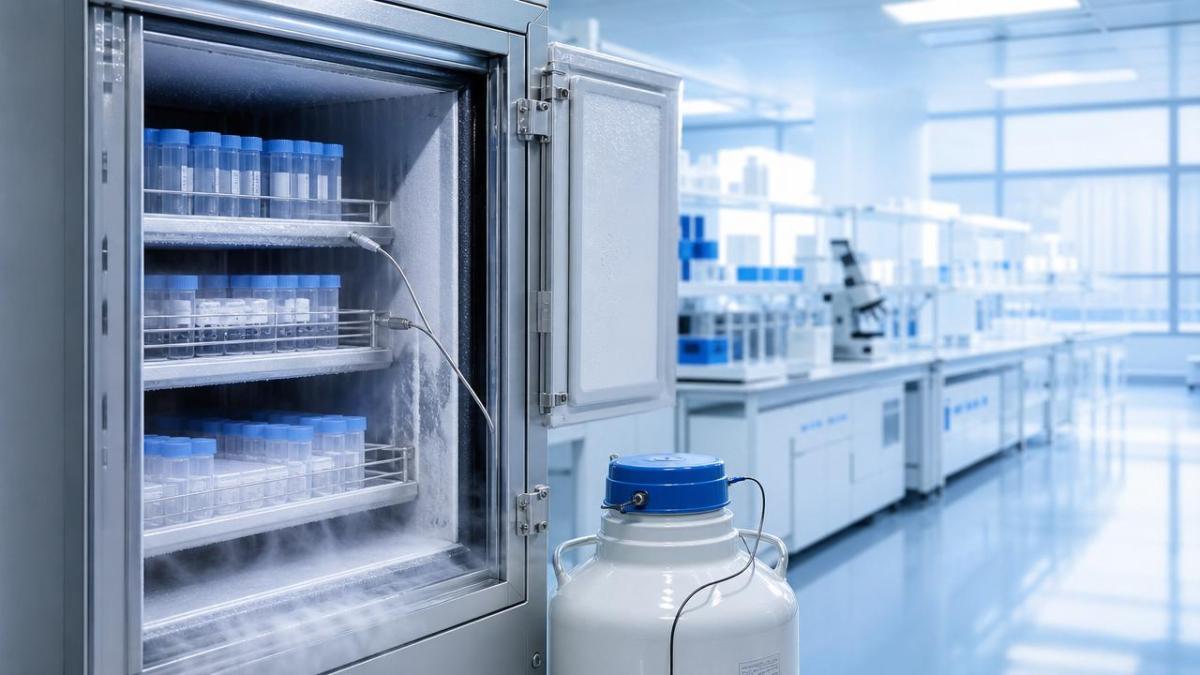
Sample integrity depends on more than a nominal setpoint. A freezer labeled -80°C may still expose vials to damaging gradients, door-open recovery delays, or undocumented alarm behavior.
A checklist approach turns Bio-Sample Storage selection into an engineering review. It connects biology, equipment design, validation records, and operational discipline.
This matters across clinical research, diagnostics, cell therapy, biobanking, pharmaceutical development, food safety, environmental testing, and forensic workflows. Each field carries different tolerance for sample loss.
VitalSync Metrics evaluates these systems by separating promotional claims from measurable performance. The goal is technical clarity, not temperature folklore.
Core Bio-Sample Storage Temperature Ranges
Start by mapping the sample type to its stability profile. The correct Bio-Sample Storage range should protect analytes, maintain chain-of-custody, and fit daily handling patterns.
Do not treat these ranges as interchangeable. A lower temperature can improve stability, but it may increase cost, complexity, safety requirements, and retrieval time.
Bio-Sample Storage Selection Checklist
Use the following checklist before specifying a refrigerator, freezer, ultra-low freezer, or cryogenic platform. Each item should be documented before purchase or validation.
- Define the sample stability window using published evidence, internal validation, assay sensitivity, and acceptable degradation thresholds for each stored material.
- Match the Bio-Sample Storage range to the most temperature-sensitive analyte, not the most convenient equipment already available.
- Request thermal mapping data at empty, partial, and loaded conditions to confirm uniformity across shelves, racks, drawers, and edge zones.
- Verify recovery performance after realistic door openings, because short handling events often create more risk than steady-state operation.
- Check alarm architecture for independent probes, audible alerts, remote notifications, escalation logic, and documented response procedures.
- Review data logging intervals, audit trails, calibration certificates, user permissions, and export formats for regulatory and quality audits.
- Assess backup strategy, including emergency power, CO₂ or LN₂ backup, spare capacity, relocation procedures, and after-hours response ownership.
- Confirm rack compatibility, vial format, barcode readability, inventory software integration, and retrieval workflow before finalizing Bio-Sample Storage capacity.
- Evaluate energy consumption, heat rejection, noise, floor loading, ventilation clearance, and service access under real installation conditions.
- Require service history, component availability, preventive maintenance intervals, warranty scope, and response-time commitments for long-term reliability.
Choosing Between Refrigerated and Frozen Storage
Refrigerated Bio-Sample Storage between 2°C and 8°C suits short-term materials, temperature-sensitive reagents, and samples awaiting processing. It is accessible and operationally simple.
However, refrigeration is vulnerable to frequent access and air stratification. Forced-air design, probe placement, and validated load patterns become decisive.
Freezer storage at -20°C or -40°C works for many routine archives. It offers lower cost than ultra-low systems while slowing many degradation pathways.
For this Bio-Sample Storage range, frost control and door discipline are critical. Manual defrost models may protect stability, but require stricter maintenance planning.
When Ultra-Low Temperature Storage Is Justified
Ultra-low Bio-Sample Storage at -70°C to -86°C is widely used for nucleic acids, proteins, viral materials, and long-term biological archives.
The choice is justified when degradation risk, assay reproducibility, or future sample value outweighs higher operating cost and infrastructure demand.
Compare units by actual performance metrics. Pull-down time, warm-up profile, compressor redundancy, insulation design, and door gasket durability all affect sample security.
A strong Bio-Sample Storage review should include test data at installed voltage, ambient temperature, and expected loading density. Factory specifications alone are not enough.
Cryogenic Bio-Sample Storage for Cellular Materials
Cryogenic Bio-Sample Storage is appropriate for viable cells, reproductive materials, tissues, and advanced therapy samples requiring deep thermal stability.
Vapor-phase LN₂ systems reduce cross-contamination risk compared with liquid immersion. They also require precise temperature stratification assessment inside the vessel.
Safety planning is mandatory. Oxygen depletion monitoring, ventilation, PPE, fill controls, and emergency procedures must be treated as part of system design.
Inventory discipline is especially important. Long retrieval times can warm canisters, expose neighboring samples, and compromise the Bio-Sample Storage environment.
Common Overlooked Risks
Temperature Uniformity Is Not the Same as Setpoint Accuracy
A display may read correctly while corners drift outside limits. Always evaluate Bio-Sample Storage uniformity using mapped probes and loaded-condition testing.
Door Openings Create Repeatable Thermal Stress
Frequent access can create micro-thaw events. Use drawer systems, inventory maps, and pre-planned retrieval lists to reduce exposure time.
Monitoring Can Fail Silently
Single-probe monitoring may miss local risk. Independent sensors, regular calibration, and alert testing strengthen Bio-Sample Storage control.
Capacity Planning Often Ignores Future Growth
Overfilled systems recover slowly and block airflow. Plan usable capacity, not nameplate capacity, especially for long-term Bio-Sample Storage programs.
Compliance Depends on Evidence, Not Equipment Labels
MDR, IVDR, GxP, and ISO-aligned environments require documented control. Validation files must show installation, operation, and performance qualification evidence.
Practical Execution Steps
- Create a sample matrix listing material type, required temperature, retention period, access frequency, container format, and acceptable excursion limits.
- Perform a risk ranking that identifies irreplaceable samples, high-value cohorts, regulated materials, and items requiring duplicated Bio-Sample Storage locations.
- Compare candidate systems using thermal maps, recovery curves, alarm tests, energy data, maintenance records, and service support evidence.
- Run an installation qualification check covering location, clearance, power stability, ambient conditions, network connectivity, and emergency access routes.
- Validate operating procedures for loading, retrieval, defrosting, cleaning, alarm response, data review, and disaster recovery drills.
- Schedule periodic reviews of excursions, maintenance logs, calibration records, inventory utilization, and Bio-Sample Storage performance trends.
For high-value inventories, use redundancy by design. Duplicate critical aliquots, separate storage locations, and verified emergency capacity reduce catastrophic loss exposure.
Do not wait for a failure to test contingency plans. Simulate alarm escalation, power loss, and freezer transfer under controlled conditions.
Evaluation Metrics Worth Benchmarking
A credible Bio-Sample Storage decision should be based on measurable engineering data. Benchmarking helps distinguish robust systems from attractive catalog claims.
- Measure steady-state temperature spread across representative storage positions during normal load and expected ambient conditions.
- Measure recovery time after defined door-open events that reflect real retrieval behavior, not ideal laboratory demonstrations.
- Track power consumption against storage volume, sample density, and heat rejection to estimate lifetime operating cost.
- Review alarm latency from excursion detection to remote notification, acknowledgement, escalation, and documented closure.
- Assess maintainability by checking filter access, gasket replacement, compressor serviceability, probe calibration, and spare part availability.
VitalSync Metrics favors comparative testing under realistic constraints. Bio-Sample Storage performance should be proven through repeatable data, not assumed from category labels.
Summary and Next Action
The right Bio-Sample Storage system begins with the sample, not the equipment. Define stability needs, then test whether the system can protect them.
Use a checklist covering temperature range, uniformity, monitoring, validation, workflow, safety, capacity, and long-term serviceability. Document every assumption before implementation.
For the next step, build a sample matrix and request objective performance evidence from shortlisted systems. Reliable Bio-Sample Storage is engineered through verification, not selected by setpoint alone.
Recommended News
- 2026.11.10FDA Issues Final Guidance on IVD Validation for Emerging Pathogen EmergenciesDr. Hideo Tanaka (Imaging Systems Analyst)
- 2026.11.10Choosing Minimally Invasive Surgical Instruments in Europe: Key Buying CriteriaDr. Alistair Thorne (Senior Biomedical Engineer)
- 2026.11.09WHO Releases Draft Profile for Wearable Physical Activity MonitorsLydia Vancini (Regulatory Compliance Lead)
The VitalSync Intelligence Brief
Receive daily deep-dives into MedTech innovations and regulatory shifts.