 Get Insights

Biosample Integrity Testing: Which Methods Best Detect Degradation During Storage and Shipping?
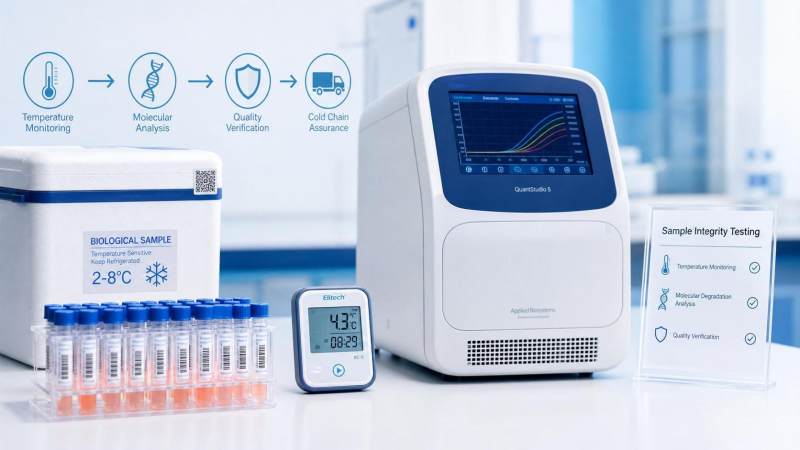
Biosample Integrity Testing: Which Methods Best Detect Degradation During Storage and Shipping?
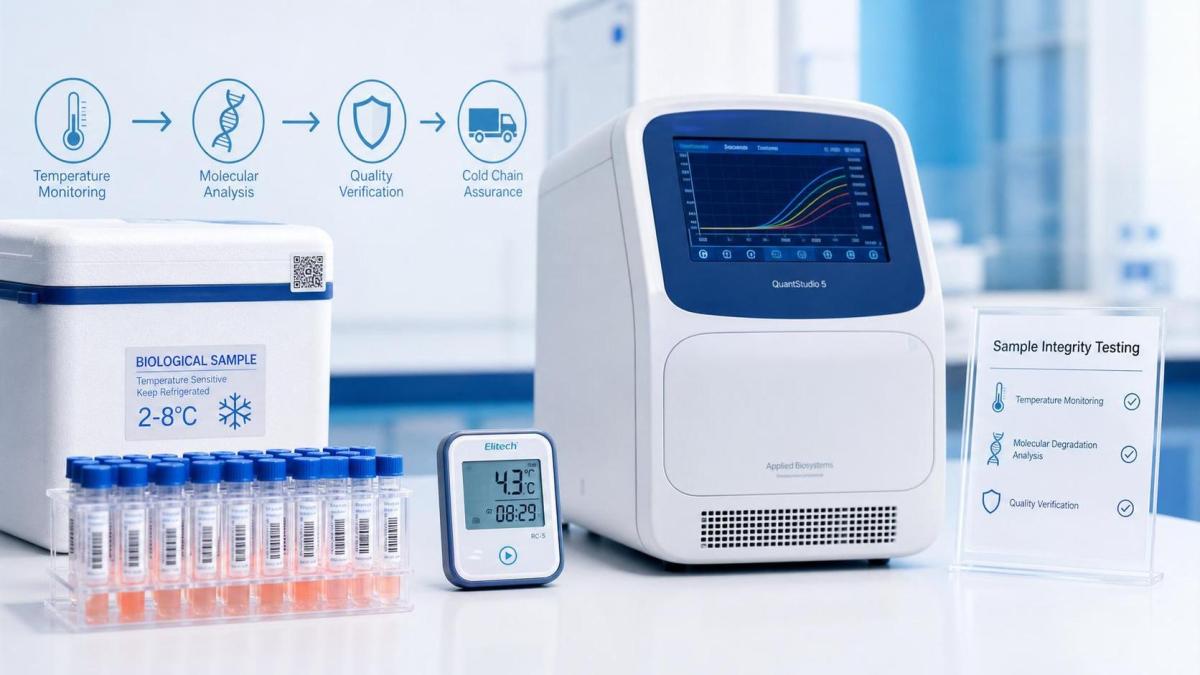
In regulated healthcare and laboratory workflows, biosample integrity testing is essential to confirm that storage and shipping conditions have not compromised analytical reliability.
For quality and safety decisions, the real issue is not whether degradation happens. It does. The issue is how early it can be detected.
That matters because a sample can appear acceptable while critical analytes have already shifted beyond usable limits.
In practice, biosample integrity testing must connect storage risk, shipping stress, and analytical fitness into one defensible decision path.
This is especially important when frozen transport, repeated handling, and long hold times can each create different degradation signatures.
A useful approach starts by matching the testing method to the failure mode, not simply to the sample type.
Why Storage and Shipping Damage Is Hard to See
Some degradation is obvious, such as clotting, leakage, or visible hemolysis. Most of the risk is less visible.
Protein denaturation, nucleic acid fragmentation, enzymatic drift, and microbial growth may begin before the container shows any clear warning.
That is why biosample integrity testing cannot rely on appearance checks alone.
More importantly, different matrices fail in different ways. Whole blood, plasma, tissue, urine, and swab specimens each respond differently to time and temperature.
A refrigerated shipment delay may barely affect one biomarker but invalidate another.
From a control perspective, the best biosample integrity testing methods are those that detect meaningful change before clinical or research conclusions are distorted.
Which Biosample Integrity Testing Methods Work Best
No single method covers every degradation pathway. Strong programs use layered biosample integrity testing instead of one universal screen.
1. Temperature excursion monitoring
This is the first control point, not the last. Data loggers and time-temperature indicators reveal whether the sample experienced out-of-spec conditions.
They do not directly measure degradation. They show whether degradation risk was plausible.
For shipping validation, this remains essential because it links handling history to later test results.
2. Visual and physical inspection
Simple checks still matter. Volume loss, discoloration, turbidity, clotting, phase separation, and container damage often provide fast exclusion criteria.
This form of biosample integrity testing is low cost and immediate, but it lacks sensitivity for subtle chemical or molecular change.
3. Hemolysis, lipemia, and icterus indices
For blood-derived specimens, automated indices are highly practical. They flag preanalytical stress that can interfere with downstream assays.
Hemolysis is especially useful because shipping vibration, freeze-thaw damage, or poor handling often leave a measurable signature.
In many labs, this is one of the most efficient biosample integrity testing tools for routine triage.
4. Molecular integrity assays
When RNA, DNA, or cell-free nucleic acids are the core analytes, integrity assays are often the most revealing option.
Examples include RNA integrity number assessment, fragment analysis, qPCR control targets, and sequencing library quality checks.
These methods directly measure analyte breakdown, making them powerful biosample integrity testing choices for high-risk molecular workflows.
5. Biochemical stability markers
Some degradation is best seen through surrogate markers. Enzyme activity loss, pH drift, lactate rise, glucose depletion, or protein aggregation can expose instability.
These markers are useful when direct integrity testing is too slow or expensive for every shipment.
They are also easier to trend across sites and transport lanes.
6. Microbial contamination screening
For certain media, tissues, and extended transport workflows, contamination screening is critical.
Culture-based methods, endotoxin checks, and rapid microbial assays help determine whether storage or shipping introduced biological compromise.
This area of biosample integrity testing is often overlooked until an investigation forces attention.
How to Match the Method to the Actual Risk
Method selection should begin with a simple question. What specific degradation event would change the result in a meaningful way?
That answer determines whether biosample integrity testing should focus on thermal history, cell damage, molecular fragmentation, contamination, or biochemical drift.
In actual operations, a risk-based matrix helps avoid both overtesting and weak controls.
This kind of mapping is where biosample integrity testing becomes operationally useful rather than just technically impressive.
What a Defensible Testing Strategy Looks Like
A strong strategy does not stop at method selection. It also defines thresholds, escalation rules, documentation, and release decisions.
That is where many programs weaken. They collect data but do not define what action the data should trigger.
To tighten biosample integrity testing, several controls usually deliver the most value:
- Set analyte-specific acceptance criteria, not generic pass or fail limits.
- Validate freeze-thaw tolerance for each sample matrix and container format.
- Use control materials that mimic shipping stress, not only ideal bench conditions.
- Trend excursion data by route, carrier, season, and packaging type.
- Link sample rejection rules to documented clinical or analytical impact.
- Keep MDR, IVDR, and local documentation requirements aligned with release records.
From a governance standpoint, the best biosample integrity testing program is traceable from shipment initiation to final analytical use.
That level of traceability is increasingly expected in value-based procurement and regulated supply chain reviews.
Where Many Teams Miss the Signal
One common mistake is treating biosample integrity testing as a receiving step only.
Degradation risk starts earlier, during packaging design, preconditioning, courier handoff, and route qualification.
Another mistake is overreliance on one metric. A clean temperature log does not guarantee molecular stability. A normal appearance does not rule out analyte loss.
More telling signals usually appear when physical, biochemical, and molecular evidence are reviewed together.
This is where independent benchmarking can help separate vendor claims from measurable performance.
At VSM, that means translating packaging behavior, sensor data, and assay outcomes into evidence that supports sourcing confidence.
A Practical Decision Framework
If the goal is better biosample integrity testing, start with the highest-value questions.
- Which analytes are most sensitive to transport or storage stress?
- What failure mode would create a wrong release or interpretation decision?
- Which method detects that failure earliest and with acceptable cost?
- What threshold triggers rejection, retest, or investigation?
- Can the evidence stand up to audit, supplier review, or incident investigation?
That framework keeps biosample integrity testing tied to business reality, analytical validity, and regulatory defensibility.
The best methods are rarely the most complicated ones. They are the ones that clearly detect relevant degradation before a bad sample becomes a bad decision.
For most organizations, the strongest path combines excursion tracking, targeted integrity assays, and pre-defined action rules.
That is how biosample integrity testing moves from a checklist exercise to a reliable control system for storage and shipping risk.
Recommended News
- 2026.10.14Clinic Supplier Comparison: Evaluating Cost, Delivery Reliability, and SupportDr. Alistair Thorne (Senior Biomedical Engineer)
- 2026.10.13Engineering Performance Testing Services: Evaluating Test Methods and AccuracyDr. Alistair Thorne (Senior Biomedical Engineer)
- 2026.10.12Preparing for an ISO 13485 Audit: When to Use External QMS SupportDr. Julian Rossi (RehabTech Specialist)
The VitalSync Intelligence Brief
Receive daily deep-dives into MedTech innovations and regulatory shifts.