 Get Insights

How Biosample Integrity Testing Services Verify Stability During Storage and Transport
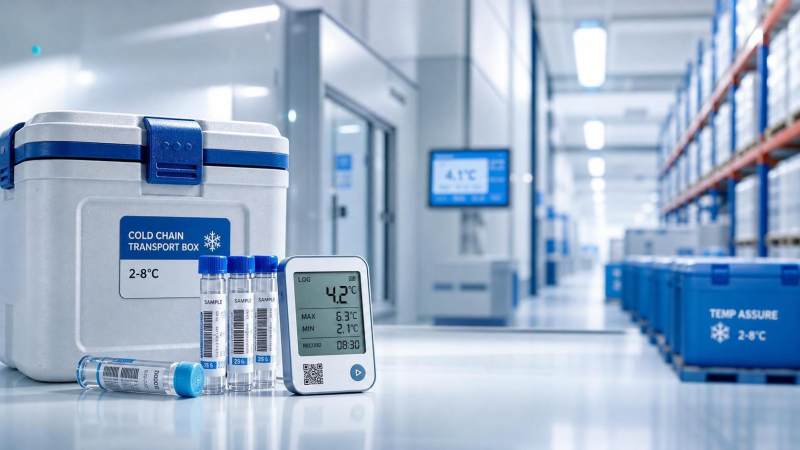
Reliable results begin long before analysis starts. In healthcare and life sciences, sample stability during storage and transport often determines whether a test result is defensible, repeatable, and acceptable in an audit.
That is why biosample integrity testing services have moved from a niche support function to a practical control point. They help verify whether a specimen stayed within defined conditions, retained measurable properties, and remained traceable across every handoff.
For organizations working under tighter MDR, IVDR, and documentation expectations, this verification matters. It reduces uncertainty between claimed storage performance and clinical-grade evidence, especially when logistics, packaging, and device workflows intersect.
What stability verification really covers
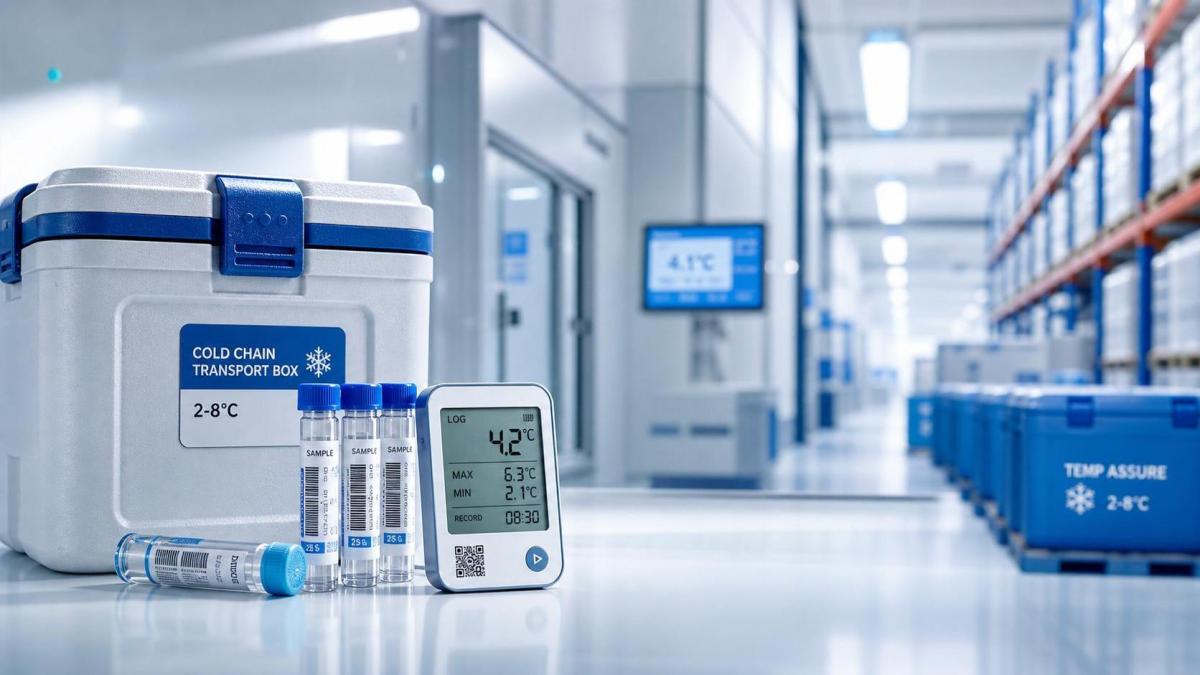
Biosample integrity testing services do more than confirm that a container stayed cold. They examine whether the sample remained suitable for its intended analytical use after realistic storage and transport conditions.
In practice, stability verification connects several questions. Was temperature maintained? Did vibration or delay alter the matrix? Did packaging protect against contamination, evaporation, or mechanical stress?
Equally important, did chain-of-custody records match the physical evidence? A complete answer depends on both laboratory data and process data.
The core elements under review
- Temperature excursion exposure, including duration and recovery behavior
- Chemical or biological degradation over time
- Container closure integrity and leakage risk
- Contamination introduced during packing, handling, or transfer
- Documentation continuity from collection to receipt
Simple pass or fail language is rarely enough. Most useful biosample integrity testing services build a stability profile tied to the sample type, expected route, and analytical endpoint.
Why the issue is getting more attention
The pressure is not coming from one source. It is coming from procurement scrutiny, digital traceability requirements, decentralized care models, and more complex diagnostic workflows.
Samples now move across wider networks. They may pass through collection sites, courier hubs, external labs, biobanks, and validation teams before final interpretation.
Each step introduces a variable. A short delay on the tarmac, repeated freezer door openings, or unverified secondary packaging can shift an acceptable sample into a questionable one.
This is where an evidence-based approach matters. VitalSync Metrics operates in a landscape where stakeholders increasingly want engineering truth rather than vendor reassurance. Stability claims need testable proof.
That same mindset applies to biosample integrity testing services. They translate logistics assumptions into measurable evidence, which is far more useful than generic statements about safe handling.
How biosample integrity testing services verify storage and transport conditions
Verification usually combines environmental simulation, analytical comparison, and documentation review. The goal is not to test an ideal shipment, but to model what actually happens in the field.
Controlled stress studies
Samples are exposed to defined temperatures, humidity ranges, movement patterns, and holding times. These studies can include freeze-thaw cycles, transit delays, or staged loading and unloading conditions.
The purpose is to identify when measurable drift begins. That threshold is often more valuable than a general storage label.
Comparative analytical testing
Reference specimens are compared with stressed specimens. Laboratories may assess biomarker concentration, nucleic acid integrity, cellular viability, hemolysis, microbial growth, or matrix consistency.
If the analyte remains within an acceptable variance band, the storage or transport condition may be considered suitable. If not, the route, packaging, or time limit needs adjustment.
Packaging and handling assessment
Packaging is part of sample performance. Biosample integrity testing services often evaluate insulation efficiency, shock resistance, closure reliability, and seal durability under practical transit scenarios.
This matters because an analytically stable specimen can still fail if the transport system introduces leaks, contamination, or undocumented substitutions.
Traceability review
Digital logs, labels, timestamps, and temperature records are checked against physical sample history. Gaps in traceability may not alter chemistry directly, but they can compromise admissibility and confidence.
Where these services create operational value
The value is broader than avoiding spoiled samples. Good verification supports release decisions, method validation, supplier qualification, CAPA investigations, and cross-site standardization.
In other words, these services help organizations decide with less guesswork. They also help separate a manageable process deviation from a true data integrity event.
What to examine when reviewing a testing program
Not all studies answer the same question. A useful review starts with fit-for-purpose design rather than headline claims.
Match the protocol to the real route
A study based only on nominal refrigerated storage may miss actual risk. Real routes involve handoffs, delays, vibrations, ambient exposure, and repacking.
Look for analyte-specific acceptance criteria
A tolerance suitable for one biomarker may be unacceptable for another. Biosample integrity testing services should define acceptance bands around the intended analytical purpose.
Check whether failure modes are visible
A report should show where stability starts to degrade, not just where it still passes. That transition point helps shape handling instructions and exception rules.
Assess documentation depth
Strong evidence links raw environmental data, specimen identifiers, handling records, and analytical outcomes. Without that chain, conclusions may look clean but remain hard to defend.
A practical reading of risk across common scenarios
Some risks are obvious, such as a broken cold chain. Others are quieter and more common.
- Short ambient exposure during receiving can affect sensitive blood fractions
- Repeated freeze-thaw cycles can alter proteins, enzymes, and nucleic acid quality
- Improper tube materials can interact with analytes or promote adsorption losses
- Incomplete labeling can turn a stable sample into an unusable one
- Transit vibration may influence fragile cellular or particulate content
This is why biosample integrity testing services should be read as a system check, not only as a laboratory assay package.
Turning evidence into better control decisions
The strongest outcome is not a polished report. It is a clearer operating rule set built from measured evidence.
That may include revised hold times, different shipping materials, tighter excursion thresholds, or updated release criteria. It may also support supplier comparisons when several logistics or packaging options appear similar on paper.
Organizations influenced by value-based procurement increasingly need this level of proof. Benchmarking-oriented groups such as VitalSync Metrics reflect the same market shift: technical claims now need standardized, decision-ready evidence.
A sensible next step is to map the highest-risk sample routes, define acceptable analytical drift, and review whether existing biosample integrity testing services reflect real transport conditions. That creates a stronger basis for qualification, audit defense, and future process changes.
Recommended News
- 2026.10.14Clinic Supplier Comparison: Evaluating Cost, Delivery Reliability, and SupportDr. Alistair Thorne (Senior Biomedical Engineer)
- 2026.10.13Engineering Performance Testing Services: Evaluating Test Methods and AccuracyDr. Alistair Thorne (Senior Biomedical Engineer)
- 2026.10.12Preparing for an ISO 13485 Audit: When to Use External QMS SupportDr. Julian Rossi (RehabTech Specialist)
The VitalSync Intelligence Brief
Receive daily deep-dives into MedTech innovations and regulatory shifts.