 Get Insights

Is Sheet Metal Welding Right for Bio-Sample Storage Units

For bio-sample storage units, sheet metal welding can improve structural integrity, hygiene, and long-term reliability—but only when paired with precise sheet metal fabrication, sheet metal forming, sheet metal cutting, and sheet metal bending. For buyers comparing sheet metal cost, sheet metal price, and the capabilities of each sheet metal manufacturer or sheet metal supplier, the real question is whether the design meets clinical durability, compliance, and maintenance demands.
That question matters across hospital biobanks, blood centers, pathology labs, vaccine storage rooms, and research facilities where cabinets, enclosures, and cold-chain housings must operate reliably for 5–10 years or longer. In these environments, a welded sheet metal assembly is not just a mechanical choice. It affects contamination control, thermal stability, service access, vibration resistance, and the total cost of ownership.
For procurement teams and technical decision-makers, the evaluation should go beyond appearance or a simple sheet metal price comparison. A lower-cost housing may create higher lifecycle expense if weld seams trap residue, if bend tolerances drift beyond ±0.5 mm, or if corrosion protection fails after repeated cleaning cycles. The most suitable design depends on storage temperature range, cleaning chemistry, load profile, and regulatory expectations.
From the perspective of VitalSync Metrics (VSM), the practical issue is verification. Clinical-grade performance starts with measurable manufacturing discipline: material selection, weld quality, dimensional repeatability, surface finishing, and inspection control. This article explains when sheet metal welding is the right choice for bio-sample storage units, what buyers should assess, and how to balance fabrication quality with long-term operational value.
Why welding matters in bio-sample storage unit construction
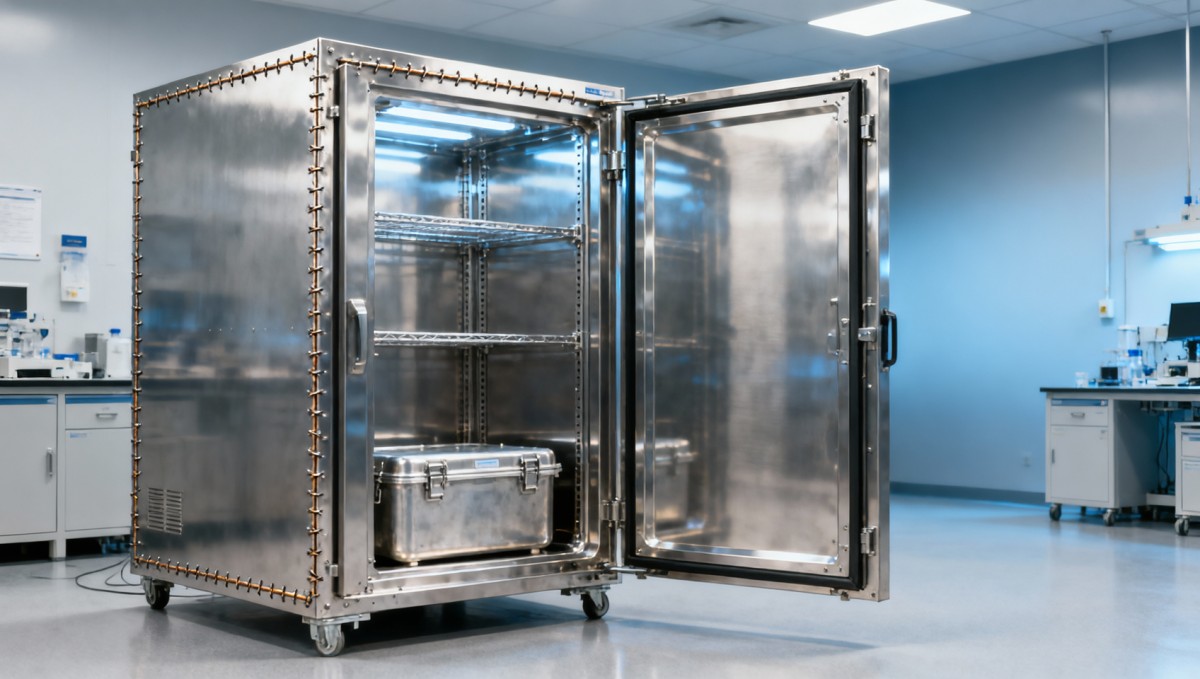
Bio-sample storage units often carry more than static weight. They may support compressors, evaporators, control boxes, shelving systems, insulated panels, door frames, casters, and cable routing paths. In a typical laboratory freezer enclosure, the outer housing may see point loads of 30–80 kg at mounting locations and repeated vibration cycles during daily operation. Sheet metal welding helps create a rigid structure that resists distortion better than loosely fastened assemblies.
Welding is also relevant to hygiene. In medical and laboratory environments, fewer exposed mechanical joints can reduce crevices where dust, moisture, or cleaning residue may accumulate. However, this only holds true if welds are continuous where needed, ground smoothly, and followed by an appropriate surface finish. Poorly executed welding can create the opposite result: micro-crevices, heat tint, and irregular surfaces that complicate cleaning and corrosion resistance.
For cold storage and ambient sample cabinets alike, dimensional stability is essential. Door alignment, gasket compression, shelf fit, and panel sealing all depend on predictable geometry. A welded frame can maintain squareness more effectively when the unit is moved frequently, loaded unevenly, or installed in facilities with temperature fluctuations between 2°C and 25°C. That benefit becomes especially important for large-format units above 1.8 meters in height.
Still, welding is not automatically the best answer for every enclosure. Over-welding can add cost, introduce heat distortion, and reduce serviceability if a component needs replacement. The right approach is selective welding based on structural demand, hygiene exposure, and maintenance access. In many cases, the most robust design combines welded load-bearing sections with modular panels fastened for field service.
What welding changes in real-world use
When a storage unit is used 10–20 times per day, repeated door opening, sample loading, and cleaning cycles place stress on the enclosure. Welded hinge reinforcement zones and base frames can lower the risk of looseness over time. For users, this translates into steadier door closure, less rattle, and fewer alignment problems after 24–36 months of routine operation.
- Improved torsional stiffness for tall cabinets and mobile units.
- Better vibration control around compressors, fans, and mounting rails.
- Fewer exposed fastening points in splash-prone or chemical-cleaning areas.
- More consistent panel positioning for insulation fit and gasket sealing.
Common trade-offs buyers should recognize
The following comparison helps clarify where welding adds value and where alternative assembly methods may remain practical.
The key takeaway is that welding delivers the most value in high-stress, hygiene-sensitive, and long-life applications. For low-duty storage units or highly modular systems, a hybrid design may outperform an all-welded enclosure on both cost and maintenance.
Material selection, fabrication accuracy, and weld quality standards
A good welded enclosure starts long before the arc is struck. Material choice defines how the unit behaves under cleaning exposure, impact, and long-term corrosion risk. For bio-sample storage units, common options include powder-coated carbon steel for controlled indoor rooms and stainless steel, often in the 304 family, for higher hygiene demand, aggressive cleaning agents, or splash-prone spaces. The selection should reflect the operating environment, not just the initial sheet metal cost.
Fabrication precision is equally important. Sheet metal cutting affects edge quality, burr level, and downstream fit-up. Sheet metal bending determines whether door frames, mounting flanges, and reinforcement channels align properly. If cut and formed parts arrive with inconsistent tolerances, welders must compensate manually, which can increase distortion and rework. For critical assemblies, buyers should ask about tolerance control targets such as ±0.3 mm to ±0.8 mm depending on the part function.
Weld quality should be evaluated by application zone. A hidden base frame does not require the same cosmetic finish as an external door surround or top panel. However, functional quality still matters everywhere: penetration consistency, spatter control, heat input, and post-weld finishing influence fatigue resistance and cleanability. In clinical-adjacent equipment, smooth transitions and deburred edges often matter as much as the weld itself.
VSM typically recommends assessing the manufacturing chain as a system rather than treating welding as an isolated process. Sheet metal forming, cutting, welding, grinding, passivation or coating, and final inspection should work to one documented specification. A unit with premium material but weak weld discipline can fail earlier than a well-controlled carbon steel design in the correct use environment.
Parameters procurement teams should ask suppliers to clarify
- Material grade and thickness range, such as 0.8 mm outer panels versus 1.5–3.0 mm structural supports.
- Cutting method used for critical parts, including laser or turret punching, and how burr removal is handled.
- Bend tolerance and angle repeatability for mating components that affect seal or door performance.
- Weld type by zone, including spot, seam, TIG, or MIG, and where continuous welds are specified.
- Post-weld finishing steps, such as grinding, pickling, passivation, or powder coating thickness.
Typical material and fabrication fit by use case
The table below gives a practical framework for matching enclosure strategy to operating conditions rather than defaulting to the cheapest or most premium option.
In practice, buyers should compare suppliers on process capability, not only on raw material declarations. Two vendors may quote the same gauge and finish, yet deliver very different long-term results because one controls heat distortion and inspection more tightly.
A practical inspection lens
If sample storage units are part of regulated or quality-managed workflows, incoming inspection should include at least 4 checks: visual weld continuity, corner squareness, door or panel alignment, and finish integrity after cleaning simulation. Even a short verification protocol can reduce the risk of accepting cosmetically acceptable but functionally weak housings.
When welded sheet metal is the right choice—and when it is not
Welded sheet metal is usually the right choice when the storage unit must endure frequent movement, high load concentration, repeated door cycling, or strict cleaning routines. Examples include blood sample freezer housings, mobile specimen transfer carts, centralized biobank cabinets, and analyzer-adjacent refrigerated storage where vibration and operator interaction are both high. In these cases, the value lies in structural continuity and better resistance to loosening over a 3–7 year service period.
It may be less suitable for highly modular units where panels, control modules, or refrigeration components need regular replacement. If service access is a top priority, an enclosure with welded subframes and removable panels may be better than a monolithic welded body. This hybrid approach can preserve strength while cutting maintenance time from several hours to less than 60 minutes for common component access tasks.
Budget also shapes the answer. Sheet metal price differences often reflect labor intensity in welding and finishing, especially when smooth cosmetic surfaces are required. For low-risk indoor storage with limited cleaning exposure, a simpler formed-and-fastened structure may achieve the performance target at a lower capital cost. But for clinical-facing equipment, avoiding premature corrosion, hinge misalignment, or frame flex often justifies the additional manufacturing effort.
The wrong decision usually happens when buyers apply generic industrial enclosure logic to healthcare settings. A cabinet intended for warehouse use and a unit used near patient samples may appear similar, yet their surface hygiene, cleaning tolerance, and stability requirements are different. That is where engineering review adds more value than catalog comparison.
Decision checklist for different stakeholders
- Operators should check ease of cleaning, door feel, noise level, and resistance to wobble during daily use.
- Procurement teams should compare not only quote price but expected maintenance events over 3–5 years.
- Facility planners should verify installation footprint, floor load, caster performance, and access clearances.
- Executives should ask whether the enclosure design supports compliance, uptime, and total lifecycle value.
Typical fit by application type
The table below summarizes where welded sheet metal tends to perform best and where a hybrid or alternative approach may be more economical.
This comparison shows that “right” does not mean “always.” It means matching structural strategy to the actual duty cycle, cleaning regime, and maintenance model of the healthcare environment.
How to evaluate sheet metal manufacturers and suppliers for healthcare storage projects
Not every sheet metal manufacturer is prepared for medical or life sciences applications. Some suppliers are excellent at general industrial fabrication but lack process discipline for hygiene-sensitive assemblies or low-variance repeat production. For buyers, that means vendor qualification should include process review, sample inspection, and quality communication standards—not just a quotation spreadsheet.
Start by examining capability alignment. Does the supplier manage sheet metal cutting, sheet metal bending, and welding in-house, or outsource critical steps? A fragmented chain can still work, but it increases coordination risk and dimensional variation. Units with complex door frames, insulated cavities, or integrated electronics benefit from a controlled process flow where tolerances are handed off consistently from one stage to the next.
Lead time is another indicator of maturity. For prototype healthcare enclosures, a realistic cycle may range from 2–4 weeks depending on complexity, while repeat production often stabilizes around 3–6 weeks after approved drawings and tooling confirmation. Extremely short promises can signal superficial review, especially when welding fixtures, finish validation, and packaging are involved.
Buyers should also ask how nonconformities are managed. If a door aperture shifts out of tolerance or powder coating fails an adhesion check, what is the response path? Strong suppliers can describe rework criteria, inspection gates, and shipment hold procedures in operational terms. That level of clarity often matters more than a polished sales presentation.
Six practical supplier evaluation points
- Can the supplier document material traceability and thickness consistency for critical zones?
- Do they define inspection points after cutting, bending, welding, and finishing rather than checking only at final assembly?
- Can they show examples of smooth weld finishing on exposed hygienic surfaces?
- Do they understand removable access design for service components such as fans, controllers, or power modules?
- Are packaging methods suitable for coated or stainless surfaces to avoid transit damage?
- Can they support engineering change control without losing dimensional repeatability?
Questions that reveal process maturity
Ask for three things during supplier review: a sample inspection record, a drawing feedback example, and a defect-resolution workflow. If a vendor cannot explain how they control heat distortion, surface finishing, or fit-up repeatability, the risk of quality drift increases, even if the initial sheet metal price looks attractive.
Implementation risks, maintenance realities, and a smarter procurement path
Even a well-designed welded enclosure can underperform if implementation details are overlooked. One common issue is specifying thick material everywhere in pursuit of durability. This can increase mass unnecessarily, raise shipping cost, and complicate installation without solving the actual weak points. A smarter design often uses 0.8–1.2 mm panels for covers and 2.0–3.0 mm stock only where structural reinforcement is needed.
Another risk is ignoring maintenance access. Sample storage units typically require periodic checks of gaskets, fans, filters, wiring paths, or control modules. If welded construction blocks access, service time rises and field modifications become more likely. Good engineering separates sealed structural zones from maintenance zones, allowing routine service without compromising rigidity or hygiene.
Cleaning compatibility must also be validated. Units exposed to daily disinfectant wipe-downs, weekly deeper cleaning, or occasional spill events need finishes that tolerate repeated chemical contact. Buyers should confirm surface recommendations and cleaning limits up front rather than assuming that all powder-coated or stainless surfaces behave the same over 12–24 months of use.
For procurement, the smartest path is a staged review process. First define the use profile. Then review structural concept, material-fit logic, and service access. Finally compare price in the context of quality gates and lifecycle risk. This sequence helps organizations avoid buying a low-cost unit that requires premature repair, replacement, or operational workaround.
Common mistakes to avoid
- Choosing based only on sheet metal cost without checking weld finish and dimensional repeatability.
- Assuming stainless steel automatically guarantees hygiene if welds and corners are poorly finished.
- Overlooking service access until after installation, which can turn a 30-minute task into a multi-hour intervention.
- Failing to match the enclosure design to cleaning chemistry, humidity exposure, and duty cycle.
FAQ for buyers and specifiers
How do I know if a welded enclosure is necessary for my application?
If the unit is tall, mobile, heavily loaded, or opened many times per day, welded support structures usually make sense. If the application is low-duty and stationary, a formed and selectively fastened design may be sufficient. The decision should reflect load, cleaning frequency, and expected service life rather than a generic preference.
What delivery timeline is typical for a custom sheet metal storage enclosure?
For a prototype or first article, 2–4 weeks is common after drawing approval, with additional time if finish testing or design changes are needed. Repeat production often falls into a 3–6 week window, depending on volume, fixture status, and whether material sourcing is standard or specialized.
Which metrics matter more than headline price?
Three metrics often matter more: tolerance repeatability, surface durability after cleaning exposure, and service access time. A unit that costs 8% less upfront but requires frequent adjustment or longer maintenance visits can become more expensive over a 3-year ownership period.
Can a hybrid design outperform a fully welded structure?
Yes. In many healthcare storage units, a welded base frame and door reinforcement combined with removable external panels delivers the best balance of rigidity, hygiene, and repairability. Hybrid construction is often the most practical choice when both uptime and service efficiency matter.
For bio-sample storage units, sheet metal welding is often the right choice when structural stability, surface cleanability, and long-term reliability are central to the application. The strongest results come from disciplined integration of sheet metal fabrication, sheet metal forming, sheet metal cutting, and sheet metal bending—not from welding alone. Buyers should evaluate materials, tolerances, weld finishing, service access, and lifecycle fit before comparing sheet metal price line by line.
VSM supports healthcare stakeholders by translating fabrication detail into procurement clarity. If you are assessing a sheet metal manufacturer, comparing sheet metal suppliers, or defining a clinical-grade enclosure strategy for storage equipment, contact us to discuss a tailored evaluation framework, technical benchmarking criteria, or a more reliable sourcing plan.
Recommended News
- 2026.11.10FDA Issues Final Guidance on IVD Validation for Emerging Pathogen EmergenciesDr. Hideo Tanaka (Imaging Systems Analyst)
- 2026.11.10Choosing Minimally Invasive Surgical Instruments in Europe: Key Buying CriteriaDr. Alistair Thorne (Senior Biomedical Engineer)
- 2026.11.09WHO Releases Draft Profile for Wearable Physical Activity MonitorsLydia Vancini (Regulatory Compliance Lead)
The VitalSync Intelligence Brief
Receive daily deep-dives into MedTech innovations and regulatory shifts.