 Get Insights

Laboratory equipment validation errors in sample storage
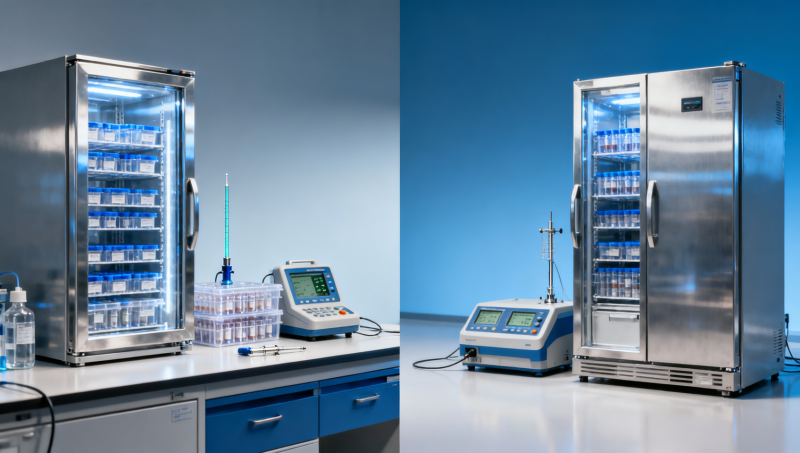
Laboratory equipment validation errors in sample storage can quietly undermine medical device testing, healthcare benchmarking, and overall medical device reliability. For operators, procurement teams, and global decision-makers facing MDR/IVDR and medical equipment compliance demands, even minor validation gaps may lead to costly risk, failed audits, and unreliable outcomes. In practice, the biggest issue is rarely a single broken freezer or incubator. It is the false assumption that storage conditions are controlled, documented, and fit for purpose when they are not. If your organization depends on stored samples for testing, verification, stability work, or evidence generation, validation quality directly affects data credibility, audit readiness, and procurement confidence.
For most searchers, the real question behind laboratory equipment validation errors in sample storage is straightforward: which mistakes create the highest risk, how can they be detected early, and what should buyers and operators verify before those errors damage results? The answer lies in combining technical validation discipline with practical risk management, not in treating storage equipment as a routine facility purchase.
Which validation errors in sample storage cause the most damage?
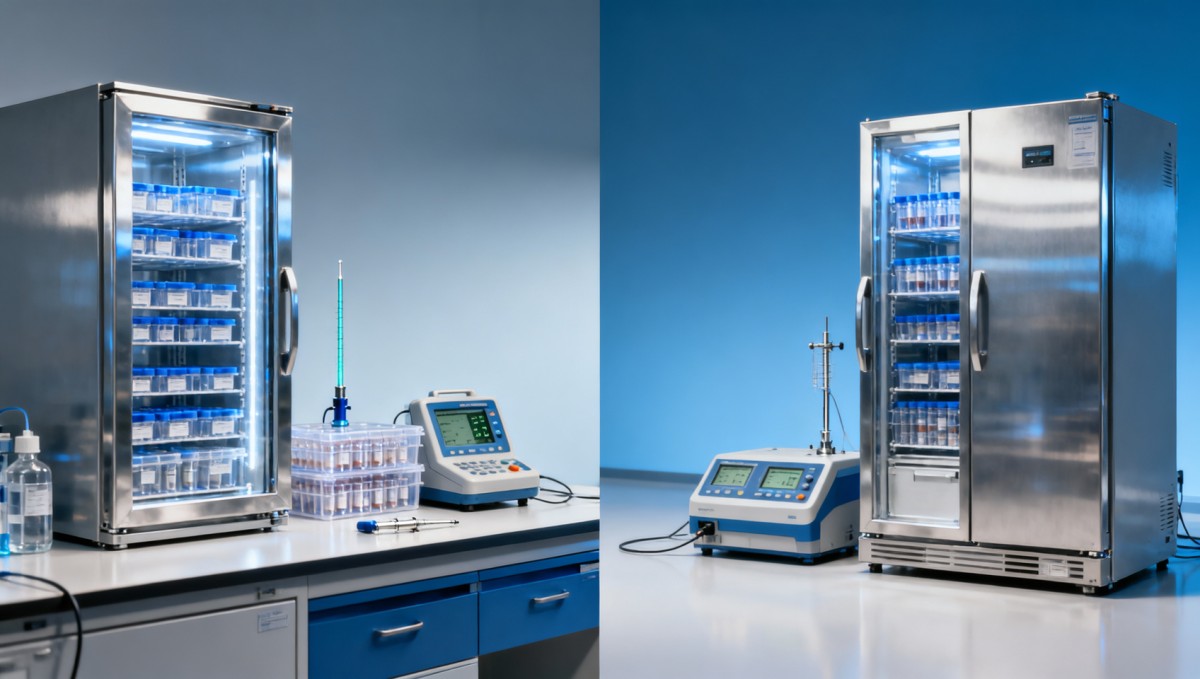
The most harmful validation errors are the ones that remain invisible until results become unreliable. In sample storage, that usually means the equipment appears functional, but the validation approach fails to reflect real operating conditions, regulatory expectations, or the sensitivity of the samples being stored.
Common high-impact errors include:
- Using empty-chamber validation instead of loaded-condition validation: Equipment may hold temperature well when empty but behave very differently when filled with racks, reagents, devices, or biological samples.
- Insufficient temperature mapping: A few probe points do not represent the true thermal profile of a refrigerator, freezer, stability chamber, or cryogenic system.
- Ignoring door-opening effects: Frequent access can create temperature excursions that never appear during static validation tests.
- Validating installation, but not actual use: Passing IQ/OQ does not guarantee the system performs consistently during routine operation. PQ failures are often where the real risk appears.
- Sensor placement errors: Monitoring probes placed near ideal airflow zones can mask warm spots, cold spots, or recovery delays.
- Poor alarm setpoint logic: Alarm thresholds may be too wide, too delayed, or disconnected from sample risk tolerance.
- Calibration without system-level performance review: A calibrated sensor does not mean the equipment protects samples adequately.
- Weak documentation and change control: Validation may become invalid after maintenance, relocation, software updates, or loading pattern changes.
These errors matter because sample storage is not only about preserving material. It is about preserving evidentiary value. In healthcare benchmarking, medical device evaluation, and regulated laboratory workflows, compromised storage conditions can distort later conclusions, even when the deviation is not immediately obvious.
Why do these errors matter so much for MDR/IVDR, compliance, and procurement decisions?
For regulated and quality-sensitive organizations, storage validation is not a facility housekeeping task. It is part of the chain of technical integrity. If samples support assay development, performance verification, post-market evaluation, comparability studies, or medical technology benchmarking, then the storage environment can affect the validity of downstream results.
From a compliance perspective, weak validation creates several layers of risk:
- Audit exposure: Inspectors and quality auditors will look beyond whether equipment exists. They will ask whether validation was risk-based, traceable, current, and relevant to intended use.
- Data defensibility risk: If storage conditions were not properly validated, test outcomes may be challenged or rejected.
- CAPA and deviation burden: Unexplained result variation often leads to investigations that consume time, budget, and management attention.
- Procurement failure: A low-cost storage system with poor validation support can become more expensive than a premium system once downtime, requalification, data loss, and corrective actions are considered.
- Reputation damage: In healthcare and life sciences, confidence is tied to technical rigor. Poor sample control undermines trust quickly.
For procurement teams and enterprise decision-makers, this means the right question is not “Does this unit meet the temperature range on the brochure?” but “Can this storage system demonstrate validated, repeatable, auditable performance under our real operating conditions?” That distinction is where many purchasing mistakes begin.
What do operators and laboratory teams most often miss during validation?
Operators usually do not fail because they ignore quality. They fail because daily workflow realities are not built into validation planning. A storage unit may pass qualification in a quiet setup and then struggle under actual laboratory use.
The most frequently missed practical factors include:
- Recovery time after door openings: Short excursions may still damage sensitive materials if recovery is slow or repetitive.
- Loading pattern variability: Dense loading, uneven rack distribution, and blocked airflow can create local instability.
- Power interruption scenarios: Backup power assumptions are often not fully tested.
- Defrost cycle effects: Some systems produce acceptable average readings while exposing samples to problematic short-term fluctuations.
- User behavior variation: Different shifts may handle storage access, labeling, and door discipline very differently.
- Mismatch between product sensitivity and storage criteria: “Within range” is not always safe enough for every specimen type.
This is why strong sample storage validation must reflect use-case reality. Laboratory equipment validation should test the system people actually use, not the idealized system described in a protocol template.
How can buyers and decision-makers judge whether a storage validation approach is truly reliable?
If you are sourcing laboratory equipment, outsourcing validation, or reviewing an installed base, focus on evidence quality rather than vendor claims. Reliable validation support should show that the storage equipment performs under defined, realistic, and documented conditions.
Use the following checklist when evaluating a supplier, laboratory partner, or internal validation package:
- Risk-based rationale: Is the validation depth aligned with sample criticality and intended use?
- IQ/OQ/PQ completeness: Are all three stages covered, or is “validation” really just installation and calibration?
- Temperature mapping depth: How many points were measured, in which locations, and over what duration?
- Loaded-state testing: Was the system tested under representative loads?
- Access simulation: Were routine door openings and operator interactions included?
- Alarm verification: Were alarms challenged and response pathways tested?
- Traceable calibration: Are sensors and instruments calibrated to recognized standards?
- Change control triggers: Is there a clear rule for requalification after repairs, relocation, software updates, or process changes?
- Data review quality: Does the report interpret risk, or only present raw readings?
- Documentation readiness: Would the validation package stand up in an audit or technical due diligence review?
For senior management, this checklist helps separate operational adequacy from true technical reliability. For procurement teams, it supports better supplier comparisons. For users, it clarifies what must be controlled in daily practice to maintain validation status.
What does a stronger validation strategy look like in practice?
A stronger validation strategy begins with sample risk, not equipment specification. The storage environment must be validated according to what is being protected, how long it is stored, how often it is accessed, and how the stored material influences downstream testing or clinical-grade evidence.
In practice, effective organizations typically do the following:
- Classify sample criticality: Separate low-risk routine storage from high-impact samples tied to regulated studies, device evaluation, or quality evidence.
- Define acceptance criteria by use case: Avoid generic limits when sample sensitivity requires tighter controls.
- Validate under realistic operating conditions: Include actual loads, access frequency, ambient conditions, and expected staff use.
- Strengthen ongoing monitoring: Continuous trend review is often more valuable than a one-time qualification event.
- Link alarms to action: Alarm systems should trigger defined responses, escalation paths, and documented interventions.
- Build requalification into lifecycle management: Validation is not permanent; it must be maintained through changes and aging.
- Review performance drift: Storage units can remain “functional” while gradually losing performance quality.
This approach improves more than compliance. It supports better medical equipment reliability, reduces hidden quality costs, and strengthens confidence in the data generated from stored samples. For organizations operating in healthcare, MedTech, and laboratory benchmarking environments, that confidence has direct business value.
How does poor sample storage validation affect long-term reliability and total cost?
One reason validation is often under-prioritized is that the cost of failure does not always appear immediately. A minor validation gap today may become a major reliability problem months later, when trend data no longer makes sense, a client questions comparability, or an audit uncovers weak evidence.
The long-term consequences often include:
- Repeat testing and wasted sample material
- Delayed studies, reports, or technical submissions
- Increased CAPA, deviation, and investigation workload
- Unexpected maintenance and emergency replacement costs
- Reduced confidence in laboratory outputs and benchmark conclusions
- More difficult supplier qualification and procurement justification
In other words, poor validation creates both quality risk and financial inefficiency. By contrast, robust laboratory equipment validation in sample storage supports defensible data, smoother audits, more accurate benchmarking, and better procurement decisions over the equipment lifecycle.
Conclusion: what should organizations do next?
Laboratory equipment validation errors in sample storage are rarely just technical oversights. They are decision-quality risks that can affect compliance, evidence credibility, operational stability, and purchasing outcomes. The most important takeaway is simple: do not judge sample storage systems by specification sheets or basic calibration records alone. Judge them by validated performance under real conditions, with documentation strong enough to support audits, investigations, and strategic decisions.
For operators, that means focusing on workflow reality, monitoring discipline, and requalification triggers. For procurement teams, it means comparing validation support and lifecycle reliability, not only upfront cost. For business leaders, it means treating sample storage validation as part of technical governance and risk control. Organizations that do this well are better positioned to achieve dependable medical technology evaluation, stronger medical equipment compliance, and more confident, standards-driven sourcing.
- laboratory equipment validation
- medical device reliability
- medical equipment compliance
- medical technology
- technical integrity
- medical equipment
- life sciences
- long-term reliability
- global decision-makers
- medical technology evaluation
- healthcare benchmarking
- medical device evaluation
- medical device testing
Recommended News
- 2026.10.08How to Evaluate Compact Biosignal Sensors for Reliable Wearable Vital-Sign MonitoringLydia Vancini (Regulatory Compliance Lead)
- 2026.10.07How Custom Orthotics Technology Can Improve Physical Therapy OutcomesSarah Jenkins (Laboratory Infrastructure Consultant)
- 2026.10.06How to Validate Metal Biocompatibility Testing for Implantable Medical DevicesDr. Julian Rossi (RehabTech Specialist)
The VitalSync Intelligence Brief
Receive daily deep-dives into MedTech innovations and regulatory shifts.