 Get Insights

Where medical equipment compliance slips in bio-sample storage
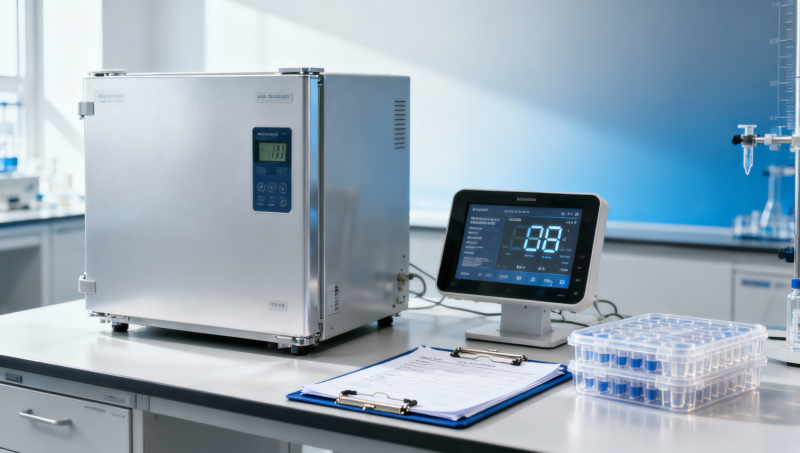
In bio-sample storage, compliance problems rarely begin with a dramatic equipment failure. More often, they start in the gray zone between a supplier’s marketing claims and the verified performance a laboratory can document under real operating conditions. For labs, procurement teams, and healthcare decision-makers, the key issue is not simply whether a freezer, monitoring system, or storage platform “works,” but whether it can consistently meet medical device testing expectations, laboratory equipment validation requirements, and MDR/IVDR-related evidence standards when samples, audits, and patient-linked outcomes are at stake.
The practical answer is clear: compliance usually slips at interfaces, not headlines. Temperature uniformity may look acceptable in brochure data but fail under full-load use. Alarm systems may be installed but not integrated into escalation workflows. Calibration may exist on paper but lack traceability. Software may collect data but not support secure, audit-ready records. These gaps are exactly where medical device evaluation becomes critical, because small technical weaknesses can quickly turn into storage deviations, investigation costs, procurement disputes, and regulatory exposure.
Where compliance slips first in bio-sample storage operations
For most target readers, the core search intent behind this topic is practical risk detection: where do hidden compliance failures actually happen in bio-sample storage equipment, and how can they be identified before they become regulatory or operational problems? That question matters across several roles:
- Information researchers want a structured view of the most common failure points.
- Users and operators need to know what to monitor in day-to-day handling.
- Procurement teams want to separate compliant systems from well-marketed ones.
- Business decision-makers care about risk, lifecycle value, documentation quality, and audit resilience.
In real environments, compliance commonly slips in five areas:
- Performance verification under real load
Equipment may pass factory checks yet show poor temperature recovery, unstable uniformity, or inconsistent performance once drawers, racks, frequent access, and mixed sample loads are introduced. - Calibration and traceability
Many facilities have calibration certificates, but not all certificates provide the traceable chain, interval logic, measurement uncertainty, or point-specific relevance required for regulated laboratory use. - Monitoring and alarm management
A storage system can have sensors and alarms yet still fail compliance if alert thresholds are poorly configured, escalation paths are unclear, remote notifications are unreliable, or alarm events are not retained in an audit-ready way. - Software, data integrity, and records
If data logs can be altered, overwritten, exported without control, or disconnected from user access records, the system may create compliance vulnerability even when the storage hardware itself is technically strong. - Installation qualification and workflow alignment
Equipment may be compliant in theory but become non-compliant in practice because room conditions, power backup, maintenance access, cleaning procedures, and operator behavior were not validated together.
This is why hospital equipment standards and laboratory equipment validation should never be reduced to a checklist exercise. In bio-sample storage, compliance is operational, documented, and cumulative.
What procurement teams and lab leaders should verify before accepting supplier claims
The readers most likely to act on this topic are usually trying to make a judgment: Can this equipment be trusted in a regulated, sample-critical environment? To answer that well, they need evidence, not positioning language.
The most useful evaluation approach is to verify supplier claims across three layers:
1. Technical performance evidence
Ask for data that reflects actual use conditions, not idealized testing only. Key points include:
- temperature mapping under empty, partial-load, and full-load conditions
- door-open recovery time
- spatial uniformity across shelves, drawers, or storage zones
- performance stability during ambient fluctuations
- sensor placement logic and redundancy
If the supplier cannot explain test conditions, acceptance criteria, and repeatability, the performance claim is weaker than it appears.
2. Regulatory and validation readiness
Especially where MDR IVDR alignment is relevant, procurement teams should confirm whether the product documentation supports formal qualification and regulated use. Useful questions include:
- Is there a documented validation package for installation, operation, and performance qualification?
- Are material and component choices suitable for long-term healthcare or laboratory use?
- Does the device support data retention, user access control, and audit trail expectations where applicable?
- Can the supplier provide traceable calibration and maintenance records?
- Are risk controls clearly documented for power loss, sensor drift, and alarm failure?
3. Lifecycle reliability
Medical device reliability in storage environments is not only about initial compliance. It is about whether the system stays compliant over time. That means evaluating:
- preventive maintenance intervals
- spare part availability
- field service responsiveness
- firmware or software change control
- requalification triggers after repair or relocation
This is where many organizations make a costly mistake: they buy on feature density or upfront price, then absorb hidden costs through downtime, repeated investigations, sample transfer events, and internal quality reviews.
Why medical device testing and evaluation matter more than marketing language
In bio-sample storage, “compliant” is often used too loosely. A brochure may mention standards, quality systems, or testing, but that does not automatically mean the equipment is suitable for your specific risk profile. Medical device testing and medical device evaluation are valuable because they convert claims into decision-grade evidence.
Independent or structured testing helps answer questions that sales documents usually do not:
- How does the system perform after repeated access cycles?
- What happens when sensors drift slightly over time?
- Does the alarm trigger early enough to protect sample integrity?
- Can the system maintain safe conditions during backup power transition?
- Is the logged data complete enough for investigation and audit defense?
For a procurement director, this evidence improves sourcing confidence. For an operator, it clarifies what daily controls matter most. For a quality team, it reduces the risk of discovering undocumented weaknesses during deviation review or inspection. For a business leader, it protects both budget and institutional credibility.
This is also where organizations benefit from a more engineering-led sourcing model. A data-driven benchmark approach can reveal that two products with similar compliance language have very different performance margins. One may remain stable under stress, while the other only appears acceptable under narrow test conditions.
Common blind spots that create hidden compliance risk
Some of the most damaging bio-sample storage failures do not come from obvious neglect. They come from assumptions. The following blind spots are especially common:
Assuming certification equals operational suitability
A device may carry relevant markings or documentation, yet still be a poor fit for your sample profile, environmental conditions, or workflow demands. Compliance status does not replace use-case validation.
Overlooking integration between equipment and process
Storage units, external probes, central monitoring software, building management systems, and human response protocols must work as one controlled system. Compliance slips when these elements are approved separately but not validated together.
Focusing on nominal temperature instead of stability and recovery
Many buyers focus on the target storage temperature. In practice, sample protection depends just as much on uniformity, disturbance recovery, sensor accuracy, and alarm timing.
Underestimating documentation quality
Weak documentation can turn a manageable event into a major compliance issue. If logs are incomplete, maintenance actions are poorly recorded, or acceptance testing lacks clarity, proving control becomes difficult.
Neglecting post-installation drift
Performance can change over time because of compressor wear, seal degradation, sensor aging, software updates, room ventilation changes, or altered usage intensity. Compliance is not static.
These blind spots matter because they affect both operational continuity and defensibility. When a regulator, accreditation body, customer, or internal audit asks how a sample environment was controlled, the organization needs more than good intentions. It needs evidence.
A practical checklist for stronger laboratory equipment validation
For readers looking for actionable guidance, the most effective response is to build validation around actual risk points instead of generic acceptance only. A useful approach includes the following:
- Define the storage risk profile
Clarify sample sensitivity, acceptable excursion limits, access frequency, retention periods, and consequences of loss. - Verify installation conditions
Confirm room temperature, airflow clearance, electrical stability, backup power, network reliability, and physical placement. - Run fit-for-purpose performance tests
Test temperature distribution, recovery after door openings, alarm thresholds, and monitoring continuity under expected operating patterns. - Review data integrity controls
Check user permissions, audit trails, time synchronization, data export control, record retention, and cybersecurity-related handling where applicable. - Document escalation procedures
Define who receives alarms, who responds, how events are classified, and how corrective actions are recorded. - Set requalification triggers
Establish when the system must be reassessed, such as after major maintenance, relocation, software change, component replacement, or recurring deviation.
This process is useful not only for compliance but also for business performance. Better validation reduces emergency interventions, protects high-value samples, and creates a stronger basis for supplier comparison.
How better compliance evaluation supports smarter healthcare sourcing decisions
For enterprise decision-makers, the value of stronger compliance assessment is not limited to avoiding audit findings. It directly affects procurement quality, lifecycle cost, and supplier governance.
When buyers use medical device evaluation and engineering benchmarks to assess bio-sample storage systems, they are better able to:
- reduce the risk of buying underperforming equipment with strong marketing
- compare suppliers on technical integrity instead of claim volume
- support value-based procurement with measurable criteria
- protect downstream research, diagnostics, and patient-related processes
- improve internal alignment between procurement, quality, operations, and executive leadership
This is particularly relevant in a healthcare environment shaped by tighter budgets, digital integration, and greater regulatory scrutiny. In that context, compliance is not a paperwork issue. It is a sourcing intelligence issue.
Organizations that evaluate storage systems only at the purchase stage often miss long-term weaknesses. Those that evaluate them as part of a broader reliability and evidence framework are more likely to achieve stable operations and defensible quality outcomes.
Conclusion
Medical equipment compliance in bio-sample storage usually slips in the space between stated capability and verified control. The biggest risks are rarely dramatic at first: incomplete validation, weak monitoring logic, non-traceable calibration, poor data integrity, and untested real-world performance. But these are exactly the issues that can escalate into sample loss, audit exposure, and procurement regret.
For laboratories, operators, procurement teams, and healthcare leaders, the most reliable path is to treat medical device testing, medical device evaluation, and laboratory equipment validation as practical decision tools rather than formalities. When equipment is assessed through real operating conditions, documented evidence, and lifecycle reliability, it becomes far easier to judge true MDR IVDR alignment, support hospital equipment standards, and make sourcing decisions with confidence.
In short, compliance does not fail where the brochure is weakest. It fails where verification is missing. That is the point where better engineering evidence creates real operational value.
- value-based procurement
- hospital equipment standards
- laboratory equipment validation
- medical device reliability
- medical equipment compliance
- technical integrity
- medical equipment
- MDR IVDR
- digital integration
- sourcing confidence
- data-driven
- medical device evaluation
- medical device testing
- Bio-Sample Storage
Recommended News
- 2026.10.08How to Evaluate Compact Biosignal Sensors for Reliable Wearable Vital-Sign MonitoringLydia Vancini (Regulatory Compliance Lead)
- 2026.10.07How Custom Orthotics Technology Can Improve Physical Therapy OutcomesSarah Jenkins (Laboratory Infrastructure Consultant)
- 2026.10.06How to Validate Metal Biocompatibility Testing for Implantable Medical DevicesDr. Julian Rossi (RehabTech Specialist)
The VitalSync Intelligence Brief
Receive daily deep-dives into MedTech innovations and regulatory shifts.