 Get Insights

Which medical equipment standards matter for sample storage

In sample storage, the standards that matter most are the ones that directly affect specimen integrity, traceability, safety, and auditability. For most buyers and operators, that means looking beyond a generic “compliant” label and checking how equipment aligns with MDR/IVDR relevance, electrical and safety standards, temperature performance validation, calibration control, data integrity requirements, and the laboratory or hospital workflows it must support. If the equipment cannot hold stable conditions, document performance, and stand up to inspection, it is not fit for serious clinical or research use—regardless of marketing claims.
For procurement teams, lab managers, and healthcare decision-makers, the practical question is not “Which standards exist?” but “Which standards are critical for this storage application, and how do we verify them before purchase?” The answer depends on whether the unit stores diagnostic samples, blood products, reagents, biobank materials, or temperature-sensitive research specimens. The more critical the sample, the less room there is for vague specifications and unverified performance.
Which medical equipment standards matter most for sample storage decisions?
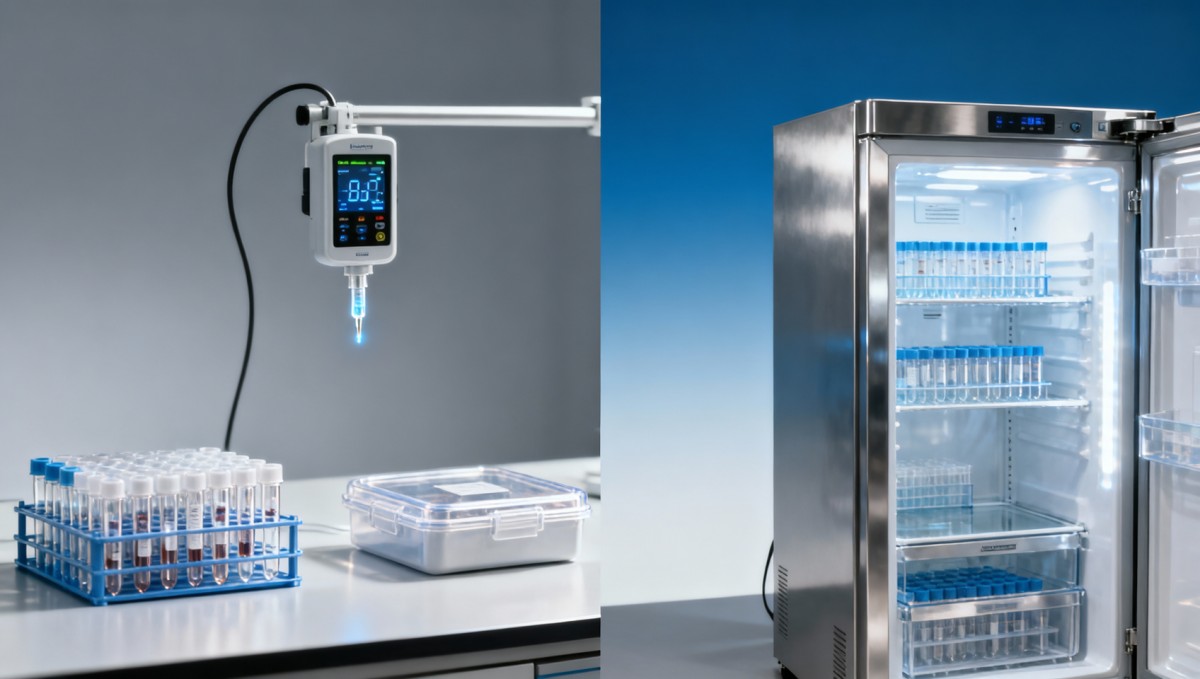
When evaluating sample storage equipment, the most important standards are usually not a single universal checklist. Instead, they sit across several layers: regulatory applicability, electrical safety, environmental performance, quality management, and data control. The key is to identify which layer creates the highest operational and compliance risk in your setting.
In practice, these are the areas that matter most:
- MDR/IVDR relevance: If the storage equipment is used within an in vitro diagnostic workflow or supports regulated clinical processes, its role in the broader compliance chain matters. Even when the cabinet, refrigerator, freezer, or monitoring component is not itself classified the same way as an IVD, it may still affect audit readiness, traceability, and evidence quality.
- IEC 61010 safety requirements: For laboratory electrical equipment, this is a core reference point for safety. Buyers should confirm whether the equipment and connected monitoring systems align with applicable electrical safety expectations.
- EMC considerations such as IEC 61326: Sample storage units increasingly include digital controls, alarms, connectivity, and sensors. Electromagnetic compatibility matters because unstable electronics can lead to false readings, alarm failures, or intermittent system behavior.
- Temperature performance validation: This is often more important than the sales brochure. Uniformity, recovery time after door opening, pull-down time, alarm thresholds, mapping evidence, and sensor placement all directly affect sample stability.
- Calibration and metrological traceability: If displayed and logged temperatures are used for quality records, calibration status and traceable reference methods become essential.
- ISO 13485 or equivalent quality system signals from the manufacturer: Even where not legally required for every storage product category, strong quality management is a useful indicator for documentation discipline, change control, complaint handling, and product consistency.
- ISO 15189 and laboratory accreditation alignment: Clinical laboratories often need storage equipment that supports accredited workflows, including documented monitoring, deviation management, maintenance, and evidence retention.
- GDP/GxP-style documentation expectations where applicable: In pharmaceutical, clinical trial, and advanced life sciences settings, data logging, access control, deviation records, and validation documentation may be just as important as refrigeration performance itself.
For many organizations, the biggest mistake is over-focusing on broad regulatory language while under-checking measurable performance. A freezer that claims compliance but lacks mapped temperature stability, calibration records, and reliable alarm logging may create more risk than a less heavily marketed unit with stronger validation evidence.
What do procurement teams, lab operators, and decision-makers actually need to verify?
Different stakeholders look at sample storage from different angles, but their concerns overlap more than they may realize.
Information researchers usually want clarity on which standards truly influence purchasing and compliance decisions. They need a practical framework, not a long list of acronyms.
Operators and users care about day-to-day reliability: Does the unit maintain setpoint conditions during frequent access? Are alarms easy to interpret? Is cleaning practical? Are probes, shelves, and interfaces designed for real workflows? Can they trust the temperature record during busy shifts?
Procurement personnel need defensible supplier comparison criteria. They want to know which documents to request, which claims to challenge, and how to distinguish technical substance from polished marketing.
Business decision-makers focus on downstream risk and return: Will this equipment reduce sample loss, support audits, lower maintenance events, simplify digital integration, and remain reliable over years rather than months?
Across all these groups, the most important verification points are usually the following:
- Is the equipment suitable for the exact sample class and storage temperature range?
- Are there documented temperature mapping and uniformity test results?
- How was alarm functionality tested, and under what failure scenarios?
- Is the monitoring system independent, integrated, or both—and what happens if one layer fails?
- What calibration intervals and service requirements apply?
- Is there evidence of long-term reliability, not just factory acceptance?
- Can the unit support audit trails, digital records, and user access control if needed?
- What standards are actually certified, tested, declared, or merely referenced in marketing material?
This is where medical device evaluation becomes practical. A credible assessment should connect each claimed standard to a real operational outcome: safer storage, stronger traceability, lower excursion risk, faster qualification, or better inspection readiness.
How do MDR, IVDR, laboratory equipment validation, and hospital equipment standards connect in real life?
Many buyers assume these are separate topics, but in real environments they overlap. A hospital laboratory, blood bank, pathology unit, or diagnostics facility may need sample storage equipment that fits into a chain shaped by hospital equipment standards, laboratory accreditation expectations, and regulated diagnostic workflows.
MDR and IVDR matter most when storage equipment interacts with regulated medical or diagnostic processes. Even if the storage cabinet itself is not always the core regulated product, it can still influence specimen viability, testing accuracy, and quality evidence. In that sense, medical equipment compliance is not just about the device category—it is about the integrity of the total workflow.
Laboratory equipment validation matters because sample storage performance should not be assumed from catalog data. Installation qualification, operational qualification, and performance qualification may be necessary depending on the environment. This is especially relevant for biobanks, pathology labs, genomics workflows, cell storage, and any operation where excursions can invalidate downstream results.
Hospital equipment standards matter because healthcare environments introduce additional expectations around electrical safety, alarm audibility, infection control considerations, maintenance governance, and interoperability with facility systems. A technically strong freezer that is difficult to maintain or does not integrate with central monitoring may still be a poor hospital fit.
Digital integration is increasingly critical. Healthcare organizations are moving toward connected monitoring, centralized dashboards, predictive maintenance, and stronger audit trails. Sample storage equipment that supports secure logging, remote alerts, and documented event history often creates more long-term value than a unit chosen only on basic capacity and purchase price.
For this reason, the most useful buying lens is not “Which single standard applies?” but “Which combination of standards and validation evidence proves that this storage system is safe, stable, traceable, and fit for our intended use?”
How should buyers evaluate sample storage equipment without getting lost in compliance jargon?
A practical evaluation framework helps cut through supplier overstatement. Instead of asking for “all certificates,” ask for evidence tied to failure risk.
Use this decision sequence:
- Define the storage risk profile. What samples are being stored? How sensitive are they to temperature variation, vibration, light, contamination, or access frequency? What is the cost of sample loss?
- Identify the compliance context. Is the environment clinical, diagnostic, research, pharmaceutical, or mixed-use? Does it sit under accreditation, GxP controls, or hospital governance requirements?
- Request performance evidence. Ask for temperature mapping, stability data, recovery time testing, alarm validation, calibration methods, and maintenance recommendations.
- Review safety and EMC documentation. Confirm that the equipment aligns with relevant laboratory and electrical safety expectations for the installation environment.
- Assess data integrity. How are records stored? Can logs be exported? Are changes traceable? Are user permissions controlled? Can the system support inspection or incident review?
- Check serviceability and lifecycle support. What is the parts availability outlook? How quickly can probes, boards, seals, compressors, or sensors be replaced? Is preventive maintenance realistic?
- Evaluate integration readiness. Can the unit connect to your existing monitoring stack, BMS, LIMS, or facility alerting system without fragile workarounds?
- Verify manufacturer discipline. Strong technical files, clear test reports, version-controlled documentation, and transparent limits are often better indicators than broad promotional claims.
This approach is especially useful for procurement teams comparing multiple vendors. It converts vague “quality” discussions into measurable selection criteria and supports value-based procurement rather than price-led compromise.
Which common mistakes create the biggest compliance and specimen risks?
Several predictable errors appear again and again in sample storage projects.
- Buying on setpoint range alone: A stated operating temperature is meaningless without uniformity and recovery evidence.
- Confusing declarations with independent verification: Not every listed standard means the same thing. Some are tested by third parties, some are self-declared, and some are only loosely referenced.
- Ignoring monitoring architecture: A storage unit and a monitoring system should not be treated as interchangeable. Independent verification layers often reduce risk.
- Underestimating installation conditions: Ambient heat load, ventilation clearance, power quality, and door-opening behavior can undermine real-world performance.
- Skipping requalification: Initial acceptance is not enough for critical storage. Equipment drifts, sensors age, and usage patterns change.
- Overlooking audit usability: If records are difficult to retrieve, review, or interpret, compliance problems appear during inspections—not during purchasing.
- Choosing lowest upfront cost over lifecycle reliability: A single excursion event can cost far more than the savings from a cheaper unit.
These risks matter not only to operators but also to executive stakeholders. Failed storage conditions can damage diagnostic confidence, force retesting, delay release decisions, waste high-value specimens, and weaken trust in the supply chain.
What is the clearest takeaway for selecting compliant sample storage equipment?
The medical equipment standards that matter for sample storage are the ones that can be connected to real specimen protection and verifiable operational control. In most cases, that means focusing on a combination of regulatory fit, electrical and laboratory safety, EMC, validation evidence, calibration traceability, digital record integrity, and lifecycle support.
For global healthcare buyers, the best decision is rarely the unit with the broadest claims. It is the one with the clearest evidence. If a supplier can show how its equipment supports medical equipment compliance, laboratory equipment validation, hospital equipment standards, and practical healthcare digital integration, the conversation shifts from marketing language to technical confidence.
In short, sample storage should be evaluated as a risk-control system, not just as cold equipment. When decision-makers align standards review with intended use, measurable performance, and audit needs, they make better purchases, protect specimen value, and reduce long-term operational uncertainty.
Recommended News
- 2026.10.08How to Evaluate Compact Biosignal Sensors for Reliable Wearable Vital-Sign MonitoringLydia Vancini (Regulatory Compliance Lead)
- 2026.10.07How Custom Orthotics Technology Can Improve Physical Therapy OutcomesSarah Jenkins (Laboratory Infrastructure Consultant)
- 2026.10.06How to Validate Metal Biocompatibility Testing for Implantable Medical DevicesDr. Julian Rossi (RehabTech Specialist)
The VitalSync Intelligence Brief
Receive daily deep-dives into MedTech innovations and regulatory shifts.