 Get Insights

Diagnostic Equipment Evaluation in Saudi Arabia: Key Criteria for Hospitals and Importers
Diagnostic Equipment Evaluation in Saudi Arabia: Key Criteria for Hospitals and Importers
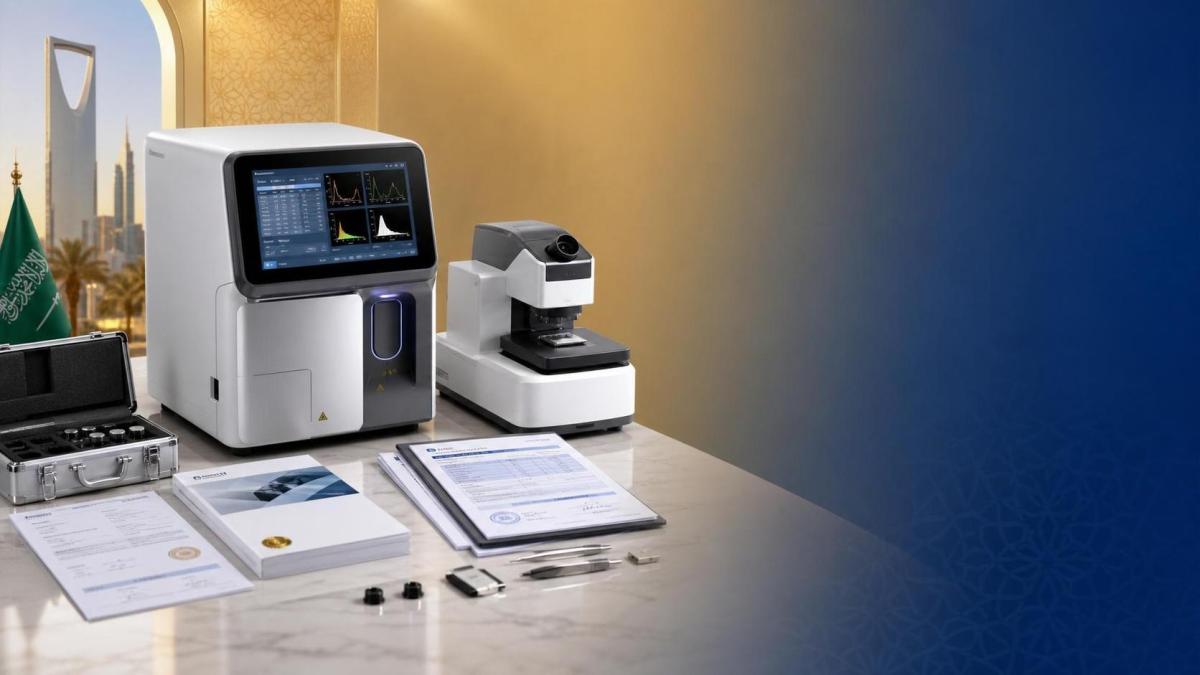
In Saudi Arabia’s rapidly modernizing healthcare sector, diagnostic equipment evaluation Saudi Arabia has become a critical step for hospitals and importers seeking reliable, compliant, and cost-effective solutions.
Beyond brand claims, procurement teams must assess technical performance, regulatory alignment, serviceability, and long-term value.
This guide outlines the key criteria that support confident purchasing decisions in a market shaped by quality standards and growing clinical demand.
From recent market changes, one signal is clear.
Buyers are moving away from price-first selection.
They now look harder at uptime, data quality, workflow fit, and evidence-backed performance.
That shift makes diagnostic equipment evaluation Saudi Arabia a practical decision framework, not just a procurement formality.
Why Evaluation Standards Matter More in Saudi Arabia
Saudi Arabia is investing heavily in healthcare infrastructure, digital hospitals, and specialized diagnostic capacity.
As a result, diagnostic equipment evaluation Saudi Arabia now sits at the center of expansion planning.
More facilities are comparing imported systems across multiple layers.
These include technical validation, local compliance, integration needs, and support capability after installation.
This matters because diagnostic devices affect treatment speed, clinical confidence, and operating cost at the same time.
A poor buying decision may look acceptable during tender review.
The real problems usually appear later through calibration drift, unstable outputs, delayed maintenance, or incompatible software.
In practical terms, the market now rewards buyers who verify claims with measurable evidence.
Start With Clinical Use Case and Throughput Needs
The first step in diagnostic equipment evaluation Saudi Arabia is defining actual use conditions.
That sounds obvious, but many projects still begin with brand lists instead of workload data.
A hospital lab, imaging center, or importer serving mixed facilities will need different selection criteria.
Focus first on:
- Expected daily sample or patient volume
- Required turnaround time
- Sensitivity and specificity targets
- Operator skill level
- Planned test menu or imaging scope
- Peak demand during seasonal surges
This stage prevents overbuying and underbuying.
An advanced platform with weak utilization is expensive.
A lower-capacity unit in a high-volume setting creates delays and quality risk.
Good diagnostic equipment evaluation Saudi Arabia starts with demand realism.
Check Technical Performance Beyond the Brochure
This is where many purchasing decisions become risky.
Marketing materials often highlight ideal conditions, not routine operating performance.
For diagnostic equipment evaluation Saudi Arabia, technical review should include objective metrics and test evidence.
Review the following points carefully:
- Accuracy, repeatability, and reproducibility
- Detection limits and analytical range
- Failure rates under continuous operation
- Calibration frequency and stability
- Environmental tolerance for heat, dust, and power variation
- Compatibility with consumables and approved accessories
In Saudi conditions, environmental resilience deserves extra attention.
Some systems perform well in controlled showrooms but struggle in real facilities with variable load and climate exposure.
Ask for third-party benchmarks, validation reports, and site references with similar operating profiles.
That is usually more useful than generic case studies.
Confirm Regulatory Alignment and Import Readiness
Another core layer of diagnostic equipment evaluation Saudi Arabia is regulatory review.
A technically strong device can still create delays if documentation is incomplete or market authorization is unclear.
Importers and healthcare buyers should verify:
- SFDA registration status and listing pathway
- Applicable MDR or IVDR documentation
- Quality management evidence, including ISO 13485
- Labeling, instructions, and traceability records
- Post-market surveillance and complaint handling process
This is also where supplier maturity becomes visible.
Strong manufacturers usually provide structured technical files quickly.
Weak suppliers often respond with fragmented paperwork and vague approval claims.
In real procurement cycles, that difference affects launch timelines and compliance risk.
Evaluate Integration, Data Flow, and Cybersecurity
Diagnostic systems no longer work as isolated hardware.
They sit inside broader digital workflows that include LIS, RIS, PACS, EMR, and reporting platforms.
That means diagnostic equipment evaluation Saudi Arabia should include data architecture from the start.
Check whether the system supports common standards and clean interoperability.
Look at interface stability, export formats, audit trails, user permissions, and remote update controls.
Cybersecurity should not be treated as an IT-only issue.
A vulnerable diagnostic platform can interrupt operations and expose sensitive clinical data.
Useful evaluation questions include:
- Can the device integrate with existing hospital systems without custom instability?
- Are software patches documented and regularly supported?
- Is data access role-based and traceable?
- What happens to operations during network downtime?
These points often influence long-term usability more than initial device specifications.
Measure Serviceability and Total Cost of Ownership
Price alone does not define value.
A realistic diagnostic equipment evaluation Saudi Arabia process must estimate lifecycle cost over several years.
That includes more than the purchase order.
It includes installation, training, consumables, software licenses, preventive maintenance, spare parts, and downtime exposure.
A simple comparison table helps keep decisions grounded:
In actual operations, slow service response can cost more than a higher upfront price.
That is why serviceability should be weighted heavily in diagnostic equipment evaluation Saudi Arabia.
Use a Structured Vendor Assessment Process
A disciplined scoring process makes supplier comparison more defensible.
It also helps align technical teams, finance reviewers, and operational stakeholders.
For diagnostic equipment evaluation Saudi Arabia, the review model should balance performance, compliance, and support.
A practical vendor checklist may include:
- Verified clinical or analytical performance data
- SFDA and global regulatory readiness
- Installation and commissioning plan
- Local support network and spare parts access
- Integration capability with existing systems
- Five-year cost projection
- Reference sites with comparable workloads
This kind of framework reduces bias toward brand familiarity alone.
It also creates a clear record for internal approval and future audits.
Final Decision Criteria for Confident Procurement
The strongest procurement decisions usually come from balanced judgment.
Technical performance matters, but so do regulatory fit, service depth, and lifecycle economics.
In that sense, diagnostic equipment evaluation Saudi Arabia is less about finding the most promoted system.
It is about identifying the most reliable fit for real clinical demand.
A sound process should leave three things clear.
- The device can perform consistently in local operating conditions
- The supplier can support compliance, integration, and maintenance
- The long-term cost aligns with service goals and capacity plans
For organizations navigating complex sourcing decisions, structured benchmarking adds needed clarity.
That is where independent, data-driven evaluation becomes valuable.
VitalSync Metrics supports this shift by translating technical evidence into decision-ready insight.
When diagnostic equipment evaluation Saudi Arabia is handled with rigor, procurement becomes faster, safer, and far more defensible.
Recommended News
- 2026.11.16Choosing Wi-Fi Diagnostic Hardware: Connectivity and Security CriteriaDr. Hideo Tanaka (Imaging Systems Analyst)
- 2026.11.15India Reforms Medical Device Incentive Scheme to Deepen Local ManufacturingDr. Julian Rossi (RehabTech Specialist)
- 2026.11.15Choosing Materials for Sheet Metal Parts: Strength, Corrosion and CostDr. Alistair Thorne (Senior Biomedical Engineer)
The VitalSync Intelligence Brief
Receive daily deep-dives into MedTech innovations and regulatory shifts.