 Get Insights

EU Clarifies Class A Marking for IVDR Annex XVI IVD Hardware
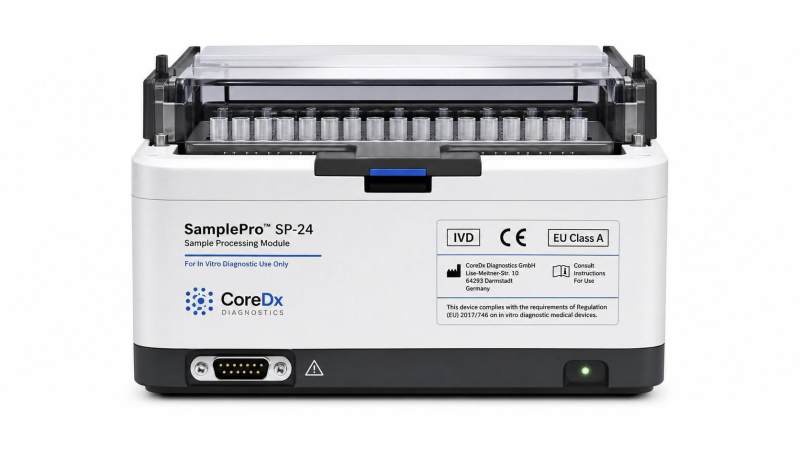
On July 17, 2026, the European Commission issued implementing guidance C(2026)4821 final, setting a clearer compliance requirement for certain IVD-related hardware placed under IVDR Annex XVI. From October 1, 2026, affected products will need a Class A classification declaration and a conformity statement added to both labeling and the IFU. For exporters, manufacturers, distributors, and customs-facing supply chain teams, this is notable because the issue is no longer only product scope interpretation, but also whether goods can move through EU import procedures without being stopped.
What the new guidance explicitly requires
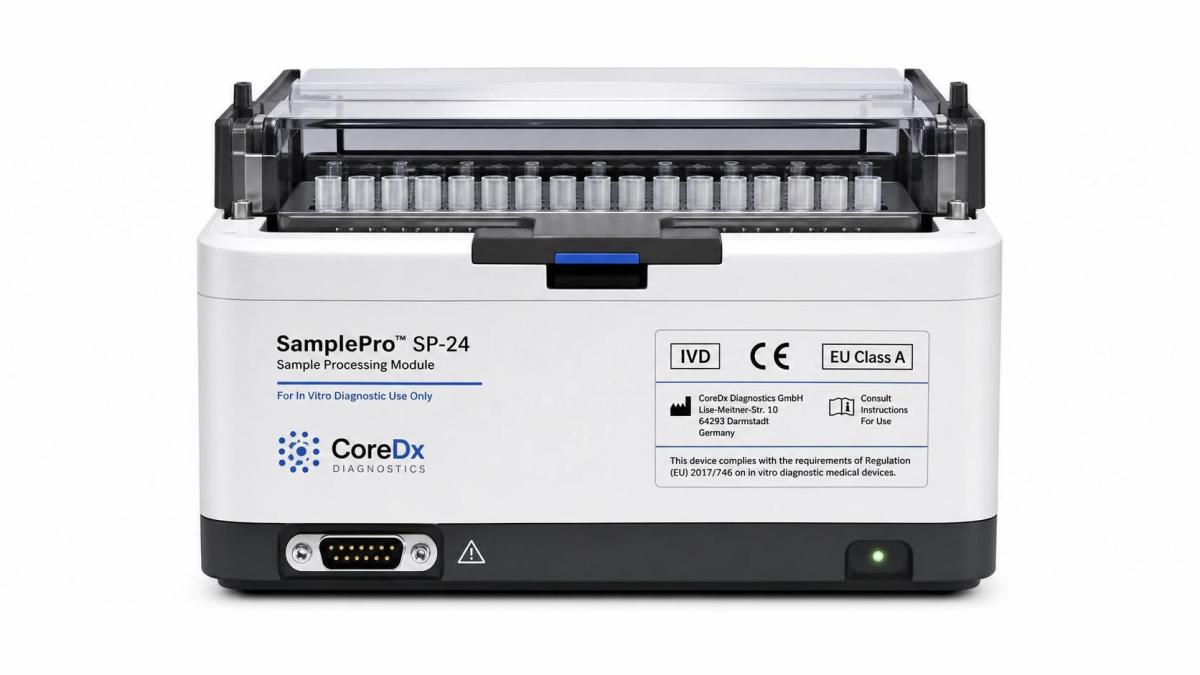
According to the information provided, the guidance released by the European Commission on July 17, 2026 applies to hardware products classified under IVDR Annex XVI, meaning products that are not medical devices themselves but are closely related auxiliary products for in vitro diagnostics. The examples provided include sample processing modules, reagent dispensing systems, and data interface terminals.
The confirmed requirement is that, from October 1, 2026, these hardware products must complete a Class A classification declaration. In addition, the conformity statement must be included in the product label and in the instructions for use. The information provided also states that products without the required marking will be refused customs clearance.
Where the impact is likely to be felt first
Export-oriented hardware manufacturers
From an industry perspective, manufacturers shipping IVD hardware to Europe are the most directly exposed. The immediate impact is likely to appear in product classification review, label preparation, IFU updates, and shipment release planning. What deserves closer attention is whether a product falls within the Annex XVI scope described in the guidance and whether its documentation is aligned before goods leave the factory.
Trading and distribution channels serving the EU market
Trading companies and distribution partners may be affected because they often sit between manufacturing output and customs entry. The practical pressure point is document consistency across commercial shipments, especially where labels, IFUs, and product declarations must match. Observably, any mismatch in compliance wording could become a transaction risk rather than a purely regulatory discussion.
Customs, logistics, and order fulfillment functions
Supply chain service providers and internal logistics teams should pay attention because the stated consequence for non-marked products is refusal of customs clearance. This means the risk is tied not only to regulatory interpretation but also to delivery timing, warehouse planning, and customer commitments. For businesses exporting from China to the EU, shipment scheduling may need to account for document and packaging readiness before dispatch.
Buyers and downstream users sourcing affected hardware
Procurement teams and downstream users may also need to watch this change more closely. Analysis shows that once compliance statements become a visible requirement on labels and IFUs, buyers may begin checking documentation earlier in the sourcing process. The key issue is not only whether the product can be purchased, but whether it can be imported and accepted without interruption.
Operational points companies should review now
Check whether current products fall within the stated scope
Companies involved in sample processing modules, reagent dispensing systems, data interface terminals, or similar IVD-related hardware should first review whether their products are covered by the Annex XVI description in the provided information. This is the starting point for deciding whether Class A declaration work and document changes are required before the October 1, 2026 date.
Align labels and IFU with the new compliance wording
The guidance, as summarized in the provided information, makes labeling and IFU content a direct compliance point. Businesses should therefore focus on whether packaging files, printed labels, and instructions for use are updated in step with the required conformity statement, rather than treating the issue as a back-office filing exercise.
Recheck shipment documents and delivery schedules
Because the stated enforcement consequence is refusal of customs clearance for products lacking the required marking, exporters should pay close attention to document completeness before shipment. In practical terms, this affects dispatch timing, customer communication, and handoff between regulatory, operations, and logistics teams.
Track whether official wording or implementation practice evolves
What deserves closer attention is the distinction between the policy signal and how it is applied in day-to-day trade. While the requirement and date are clearly stated in the provided information, companies should continue monitoring whether any additional official clarification affects product scope interpretation, declaration wording, or implementation details in actual export workflows.
How this should be read at this stage
Analysis shows that this is best understood as a concrete near-term compliance change rather than a distant policy direction. The date is fixed, the affected product category has been identified in the provided information, and the consequence for non-compliant shipments has already been framed in operational terms. At the same time, it is more appropriate to understand this as a targeted regulatory clarification with immediate trade implications, not as a basis for broader claims about the entire IVD market.
Observably, the main industry signal is that auxiliary IVD-related hardware is receiving more explicit treatment in the EU compliance path. For companies exporting from China, the issue is not only whether a product is technically marketable, but whether regulatory labeling and documentation are complete enough to support smooth entry into Europe.
Why the market will keep watching this change
In summary, the July 17, 2026 guidance matters because it turns a compliance expectation into an actionable requirement tied to labeling, IFU content, and customs clearance. For affected IVD hardware businesses, the immediate task is practical: verify scope, complete the Class A declaration process, and ensure product-facing documents are consistent before the October 1, 2026 deadline.
It is more appropriate to understand this development as a near-term operational compliance issue with broader signaling value. The short-term effect is likely to center on export readiness and shipment acceptance, while the longer-term significance will depend on whether further clarification changes how Annex XVI-related hardware is interpreted and implemented in cross-border trade.
Basis of this article and points for continued verification
This article is based on the user-provided news title, event date, and summary describing the European Commission guidance C(2026)4821 final issued on July 17, 2026. For this type of development, commonly relevant source categories may include official notices, company statements, industry association updates, authoritative media reporting, and standards-related documents.
No specific official source link was provided in the input, so the exact source document and any subsequent interpretive materials still require continued verification. The main follow-up point to watch is whether additional official clarification further refines product scope, declaration wording, or implementation practice for EU-bound IVD hardware shipments.
Recommended News
- 2026.11.10FDA Issues Final Guidance on IVD Validation for Emerging Pathogen EmergenciesDr. Hideo Tanaka (Imaging Systems Analyst)
- 2026.11.10Choosing Minimally Invasive Surgical Instruments in Europe: Key Buying CriteriaDr. Alistair Thorne (Senior Biomedical Engineer)
- 2026.11.09WHO Releases Draft Profile for Wearable Physical Activity MonitorsLydia Vancini (Regulatory Compliance Lead)
The VitalSync Intelligence Brief
Receive daily deep-dives into MedTech innovations and regulatory shifts.