 Get Insights

How Laboratories Can Integrate Digital Systems Without Disrupting Sample Workflows
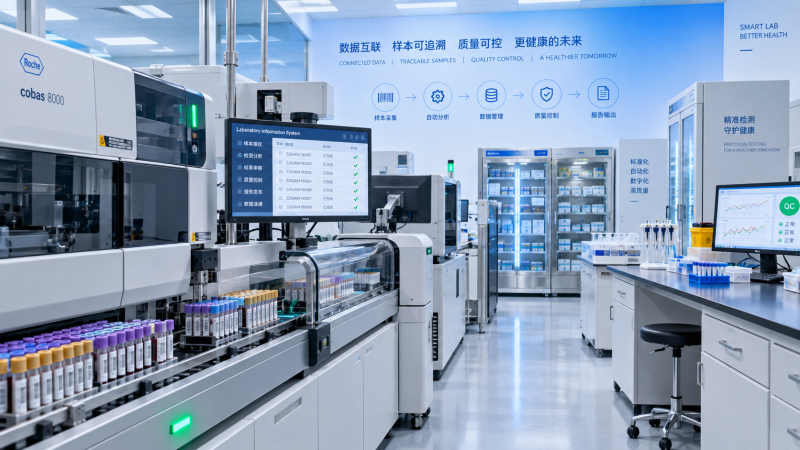
Digital integration should not begin with a software rollout. It should begin with a workflow decision: which sample-handling steps must remain stable, and which information gaps are creating avoidable risk? For laboratories, the purpose of connecting systems is to improve traceability, review speed, equipment visibility, and quality control without changing the actions that protect sample identity and turnaround time.
Effective healthcare digital integration for laboratories connects the laboratory information management system (LIMS), instruments, quality records, inventory, and reporting in stages. It does not require a full replacement of every existing platform. In many projects, the safest result comes from retaining validated workflows, exposing the right data between systems, and making changes only after they have been tested against real sample scenarios.
Protect the sample journey before connecting systems
A digital project can look successful in a demonstration yet create operational problems once specimens enter the process. A new interface may add an extra barcode scan, a different status label, a manual data entry field, or an approval step that does not match how benches actually operate. Each small interruption can create queues, workarounds, or uncertainty about who owns the next action.
Before selecting an integration method, map the sample journey from receipt to reporting. The map should show physical movement and digital movement together. It should include accessioning, labeling, preparation, analyzer loading, result generation, exception handling, review, storage, disposal, and any handoff to another department or external site.
The useful question is not “Which systems do we want to connect?” It is “At which point does an operator need information, and what happens if that information is late, wrong, duplicated, or unavailable?” This distinguishes a meaningful integration from a technical connection with little operational value.
- Identity controls: patient or study identifiers, accession numbers, aliquot relationships, labels, and chain-of-custody records.
- Workflow controls: status changes, queue assignment, reflex testing, reruns, holds, and priority rules.
- Quality controls: calibration status, quality-control results, audit trails, nonconformance records, and approval roles.
- Operational controls: reagent availability, instrument downtime, maintenance events, consumable lots, and capacity constraints.
This exercise often reveals that the main problem is not missing software. It may be inconsistent specimen status definitions, an instrument interface that sends incomplete context, or manual exception handling that was never formalized. Integrating unstable processes merely distributes the instability faster.
Choose the integration boundary carefully
Laboratories frequently try to solve every data issue through direct system-to-system connections. That approach can work for a limited environment, but it becomes fragile when several instruments, sites, quality platforms, and procurement tools need access to the same information. Each point-to-point interface creates another dependency to test, monitor, and maintain.
A better architecture depends on the laboratory’s scale and the criticality of each exchange. The LIMS commonly remains the operational source of truth for sample status, test orders, and results. Instruments should receive only the worklist data they need, then return results and operational status through controlled interfaces. Quality systems should receive relevant evidence rather than becoming a second workflow engine. Procurement and inventory tools should support availability decisions without changing the sample record.
Do not make a central data platform responsible for immediate bench decisions unless it has been designed and validated for that role. Analytical reporting can tolerate scheduled data refreshes in some situations. A specimen routing decision usually cannot. The distinction between operational data and analytical data is one of the most important design choices in a laboratory modernization program.
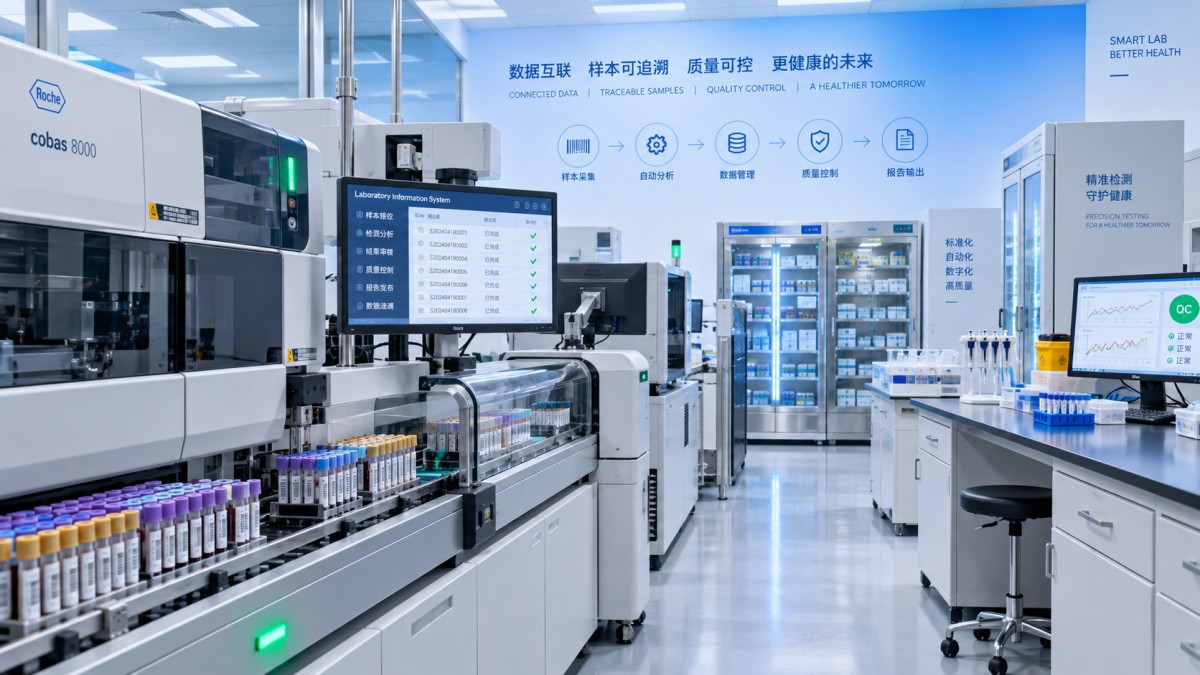
Implement in slices that can be validated in normal work
A large “go-live” is tempting because it appears to reduce project duration. In practice, it concentrates risk. When several interfaces, role changes, data migrations, and workflow rules change on the same day, teams cannot easily identify the cause of an error or restore a stable process quickly.
A phased implementation is more reliable when each phase has a narrow operational purpose. For example, a laboratory might first connect an analyzer to the LIMS for worklist delivery and result capture. Once that exchange is stable, the next phase can add instrument status monitoring, then reagent-lot information, then quality-system links. The order should follow operational risk and workflow dependency, not the vendor’s standard implementation sequence.
Validate the exceptions, not just the happy path
Standard samples and normal results prove only that a basic interface works. The more valuable test cases cover the situations that force staff to stop and think: duplicate orders, unreadable labels, sample rejection, insufficient volume, result flags, analyzer downtime, reruns, amended reports, network interruption, and instrument-to-LIMS identifier mismatches.
For every scenario, define three things before configuration is finalized:
- Which system owns the record at that moment.
- What the user sees and what action they are allowed to take.
- How the process recovers without losing traceability or creating duplicate work.
Recovery design deserves the same attention as the normal workflow. If an interface fails, staff need a controlled fallback process that preserves sample identity and records what happened. A workaround based on personal memory, informal spreadsheets, or handwritten notes may keep work moving temporarily, but it weakens auditability and makes reconciliation harder afterward.
Keep validation proportional to the decision being automated
Not every data connection carries the same level of risk. A dashboard displaying daily test volume does not make the same operational decision as an interface that releases results or changes a specimen’s workflow state. Treating both changes identically can consume time without improving control. Treating them as equally low risk can compromise the integrity of a regulated process.
Project documentation should therefore focus on intended use, data ownership, access roles, interface logic, test evidence, exception handling, and change control. Teams should be able to explain, in plain operational language, what information is transferred, why it is needed, how errors appear, and who resolves them.
This is also where procurement requirements should become more specific. A supplier’s claim that a platform is “interoperable” is not enough. Ask whether it supports the laboratory’s actual instruments, identifiers, result structures, authentication model, audit expectations, and failure-recovery process. Ask who maintains interface mappings after a software upgrade, how changes are documented, and what diagnostic information is available when a message fails.
Do not confuse digitization with workflow improvement
Replacing paper forms with electronic forms can improve retrieval and audit trails, but it can also add clicks without removing ambiguity. A scanned maintenance record does not automatically make maintenance data usable for scheduling. A digital deviation form does not reduce recurrence unless its categories and review path support meaningful analysis. A barcode system does not solve traceability if relabeling rules remain unclear.
Every proposed digital function should be tested against a practical question: does it remove a manual reconciliation, prevent an error, shorten the time needed to make a controlled decision, or provide evidence that was previously unavailable? If the answer is no, the feature may still be useful, but it should not compete with critical workflow work during the first phases.
Laboratory teams also need to distinguish between data capture and data usability. Collecting more instrument data can be valuable for performance monitoring, but only when timestamps, device identifiers, lot information, and maintenance events are consistent enough to interpret. Otherwise, reports may look detailed while supporting weak conclusions.
Build governance around ownership, not around software screens
Digital integration often fails after implementation because no one owns the ongoing decisions. Interfaces change when instruments are replaced, test menus are updated, user roles evolve, and upstream systems alter their data fields. A project team can deliver a connection, but a laboratory needs an operating model to keep it reliable.
Assign clear owners for workflow definitions, master data, interface monitoring, access management, validation evidence, and supplier escalation. These responsibilities may sit with different functions, but gaps between them should be explicit. For example, IT may monitor connectivity while laboratory operations owns the decision on how an exception affects sample processing.
Define a small set of operational measures that teams can review regularly: unresolved interface exceptions, manual result-entry volume, samples held for missing information, repeat labeling events, overdue instrument maintenance records, and changes that bypass the established process. The aim is not to create a reporting burden. It is to identify whether the digital design is reducing friction or moving it to another part of the laboratory.
Use independent evidence when technology choices affect long-term operations
Integration choices are often made while evaluating new analyzers, connected devices, laboratory software, or consumable supply arrangements. In these situations, product claims should be translated into operational questions: Does the device expose the data required for the intended workflow? Can its performance and maintenance records be assessed consistently? Are its interfaces sufficiently documented for controlled integration? Will the supplier support the configuration through lifecycle changes?
Independent technical benchmarking can help procurement and engineering teams compare those questions without relying solely on promotional materials. VitalSync Metrics (VSM), an independent technical benchmarking laboratory for MedTech and life sciences supply chains, provides standardized engineering-focused evidence that can support this type of evaluation. For a laboratory project, the useful output is not a generic supplier score. It is evidence that helps determine whether a technology can fit the required workflow, quality controls, and long-term maintenance model.
Start with one workflow where disruption is visible
The strongest first project is rarely the most ambitious one. Select a workflow with a clear pain point, defined users, stable ownership, and a measurable operational consequence. An instrument result interface with recurring manual transcription may be appropriate. A controlled digital link between maintenance records and equipment status may be another. Avoid beginning with a process that is already being redesigned, has unresolved ownership conflicts, or depends on several untested external systems.
Before approving the first phase, confirm that the team can answer four questions: What sample action will remain unchanged? What decision will become faster or more reliable? What happens when the connection fails? Who owns the system after go-live?
When those answers are clear, digital integration becomes a controlled improvement program rather than a disruptive technology project. The laboratory gains usable visibility while protecting the disciplined sample workflows on which reliable results depend.
Recommended News
- 2026.11.15Choosing Materials for Sheet Metal Parts: Strength, Corrosion and CostDr. Alistair Thorne (Senior Biomedical Engineer)
- 2026.11.14EU Updates MDR and IVDR Harmonised Standards Lists, Including Radiation SterilisationDr. Alistair Thorne (Senior Biomedical Engineer)
- 2026.11.14Choosing a Medical Supplier Platform: How to Verify Suppliers and Compare CostsDr. Alistair Thorne (Senior Biomedical Engineer)
The VitalSync Intelligence Brief
Receive daily deep-dives into MedTech innovations and regulatory shifts.