 Get Insights

How to Evaluate Diagnostic Equipment for Laboratories by Test Scope and Workflow
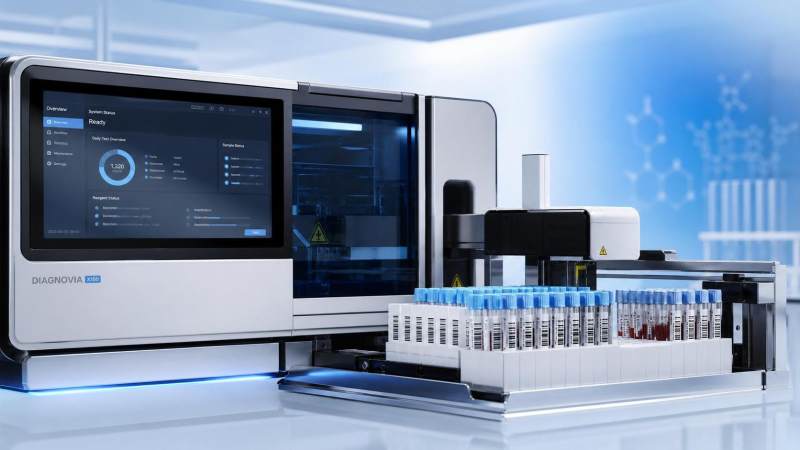
Choosing diagnostic equipment for laboratories is no longer a simple comparison of price, footprint, or advertised speed. Test menus are expanding, workflows are becoming more data-driven, and procurement decisions now carry regulatory, interoperability, and lifecycle consequences. A system that looks efficient in a brochure may still create bottlenecks, rework, or compliance risk once it enters a live laboratory environment.
That is why evaluating diagnostic equipment for laboratories by test scope and workflow has become a more disciplined exercise. The useful question is not only what an instrument can run, but how reliably it supports the full path from sample intake to result release. In a market shaped by MDR, IVDR, digital integration, and value-based procurement, measurable fit matters more than broad claims.
Start with test scope, not with the instrument list
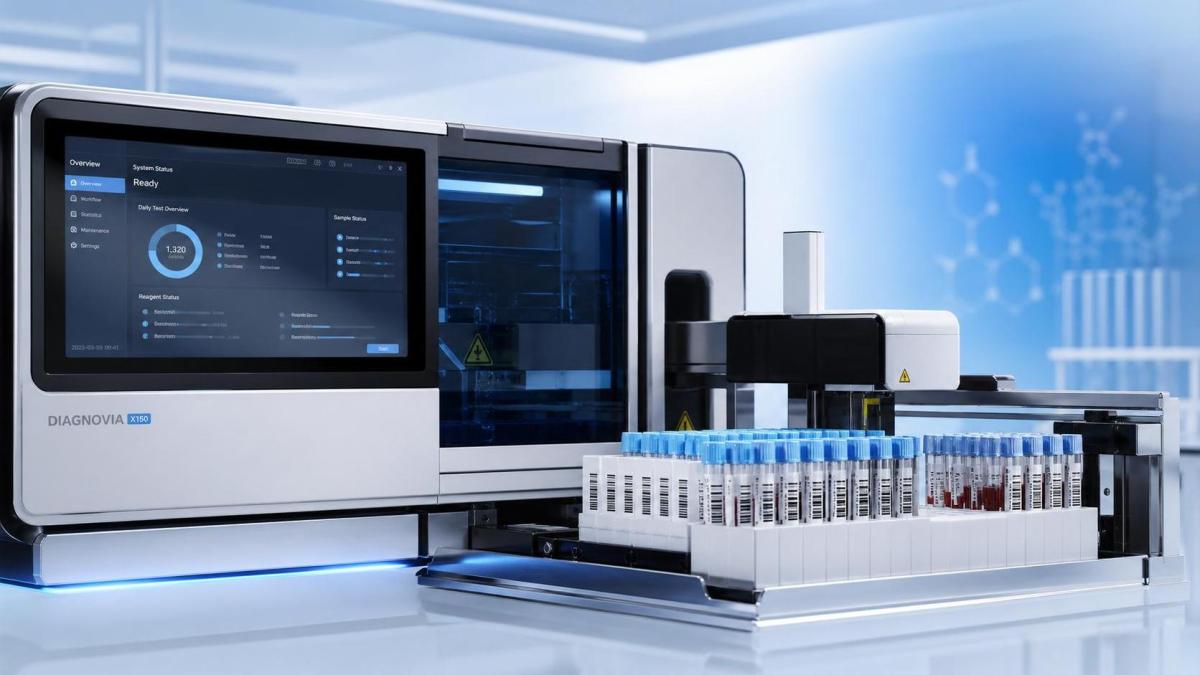
The first filter for diagnostic equipment for laboratories is the actual testing mission. Laboratories often serve mixed demands, including routine chemistry, immunoassay, molecular diagnostics, microbiology, toxicology, or specialty panels. When these demands are grouped too broadly, evaluation becomes vague and supplier comparisons lose technical meaning.
A better approach is to map the required test scope into operational categories. This means identifying assay complexity, target turnaround time, sample volume variability, reagent stability needs, calibration frequency, and expected expansion areas. Once those variables are clear, equipment selection becomes more evidence-based and less influenced by headline specifications.
This step also reveals whether one platform should cover several assay families or whether separate systems are justified. Broad test menus can look attractive, but menu breadth alone does not guarantee a good fit if workflow changeovers, maintenance cycles, or consumable constraints reduce usable capacity.
What test scope should capture
- Current assays by volume, criticality, and turnaround expectation
- Expected new assays over the next three to five years
- Sample types, storage conditions, and pre-analytical handling needs
- Required analytical sensitivity, specificity, and reportable range
- Controls, calibrators, and repeat testing burden
Workflow fit often determines real performance
Many laboratories discover that equipment rated for high throughput still underperforms in practice. The reason is usually workflow mismatch. Throughput claims are often measured under controlled conditions with ideal batching, limited assay diversity, and uninterrupted loading.
In daily operations, samples arrive unevenly, urgent work interrupts routine runs, and operators balance several systems at once. Diagnostic equipment for laboratories should therefore be examined against the laboratory’s real sample flow, not the supplier’s peak-capacity chart.
A practical workflow review follows the sample journey. It begins with accessioning, continues through preparation and analysis, and ends with review, validation, and result transmission. Each stage can expose hidden inefficiencies such as manual relabeling, reruns caused by sample integrity issues, or delays from middleware limitations.
Workflow questions that change the decision
Look beyond brochure metrics
Analytical performance remains central, but it should be read in context. Sensitivity, specificity, precision, carryover, linearity, and limit of detection are not abstract numbers. They affect whether the system can support the intended patient mix, sample quality range, and reporting thresholds.
For diagnostic equipment for laboratories, repeatability under real workload deserves special attention. A platform may produce strong validation data in a controlled file, yet drift under frequent recalibration, variable operator practice, or unstable environmental conditions. This is where independent benchmarking becomes valuable.
VitalSync Metrics approaches this problem from an engineering perspective. Instead of treating performance claims as fixed truths, the emphasis is placed on how manufacturing quality, signal integrity, mechanical tolerances, software behavior, and documentation standards translate into dependable laboratory output. That distinction is increasingly relevant as digital systems and complex assay menus become harder to evaluate through sales material alone.
Performance signals worth validating independently
- Precision across low, mid, and high concentration ranges
- Carryover risk between clinically different samples
- Downtime frequency and recovery after interruptions
- Stability after software updates or reagent lot changes
- Consistency of result flags and exception handling
Compliance and integration are part of equipment quality
Regulatory readiness should not be treated as a separate legal checkbox. For diagnostic equipment for laboratories, MDR and IVDR alignment, traceability records, cybersecurity controls, and post-market support all shape operational risk. A compliant instrument is easier to validate, easier to defend during audit, and easier to maintain within changing quality systems.
Integration matters just as much. A laboratory analyzer that cannot communicate cleanly with the LIS, middleware, or enterprise data layer will generate manual workarounds. Those workarounds introduce delays, transcription risks, and fragmented audit trails. The more digitally connected the laboratory becomes, the more expensive poor interoperability becomes.
This is one reason value-based procurement is replacing simple capital comparison. The total value of diagnostic equipment for laboratories includes data quality, serviceability, uptime, and documentation strength, not only acquisition cost.
Documentation that deserves close review
- Regulatory declarations and market authorization status
- Verification and validation records for software functions
- Service manuals, maintenance intervals, and spare part policy
- Cybersecurity update process and incident response procedures
- Data export structure, interface specifications, and audit logs
Different laboratory settings need different priorities
Evaluation criteria shift depending on the operating context. A central reference facility may prioritize menu breadth, automation depth, and high daily throughput. A hospital lab may focus more on STAT response, instrument redundancy, and integration with acute care workflows. A startup or pilot facility may care more about scalability, validation support, and upgrade flexibility.
These differences explain why no single shortlist works everywhere. Diagnostic equipment for laboratories should be ranked against use-case severity, clinical criticality, staffing profile, and IT maturity. When that context is explicit, tradeoffs become easier to defend internally.
Even space planning and utility requirements can alter the answer. Heat output, vibration control, water quality demands, backup power behavior, and preventive maintenance access may sound secondary, but they directly affect deployment success.
A practical way to compare options
A structured scoring model usually produces better decisions than a narrative comparison. The model should combine analytical metrics, workflow performance, integration readiness, service support, and lifecycle cost. Weighting should reflect clinical and operational priorities rather than supplier visibility.
In practice, this means separating mandatory criteria from preference criteria. A system that fails core assay performance, regulatory compatibility, or traceability thresholds should not remain competitive because it offers attractive pricing or a broad menu.
It is also useful to request evidence in comparable formats. Standardized whitepapers, technical benchmark summaries, stress-test data, and documented failure modes make side-by-side review more reliable. That evidence-driven method is exactly where organizations like VitalSync Metrics add value, since procurement quality improves when technical claims are normalized and independently interpreted.
Core comparison dimensions
- Assay fit for current and future diagnostic scope
- Workflow compatibility under real sample arrival patterns
- Integration quality with existing digital infrastructure
- Reliability, downtime exposure, and service response
- Regulatory and documentation maturity
- Total cost across reagents, labor, service, and upgrades
Where to go next with the evaluation
The strongest decisions usually begin with a simple discipline: define the laboratory’s actual test scope, map the real workflow, and then challenge each equipment option against both. That keeps the review anchored to evidence instead of presentation quality.
For diagnostic equipment for laboratories, the next useful step is to build a comparison matrix that includes analytical performance, operator burden, interoperability, compliance readiness, and expected service stability. Gaps should be documented early, especially where claims depend on ideal operating conditions.
When the stakes are high, independent benchmarking and standardized technical review can sharpen the picture further. The goal is not to buy the most impressive platform on paper. It is to select equipment that remains accurate, traceable, supportable, and efficient once real laboratory pressure begins.
Recommended News
- 2026.11.16Choosing Wi-Fi Diagnostic Hardware: Connectivity and Security CriteriaDr. Hideo Tanaka (Imaging Systems Analyst)
- 2026.11.15India Reforms Medical Device Incentive Scheme to Deepen Local ManufacturingDr. Julian Rossi (RehabTech Specialist)
- 2026.11.15Choosing Materials for Sheet Metal Parts: Strength, Corrosion and CostDr. Alistair Thorne (Senior Biomedical Engineer)
The VitalSync Intelligence Brief
Receive daily deep-dives into MedTech innovations and regulatory shifts.