 Get Insights

How to vet an IVD analyzer distributor without missing risks?
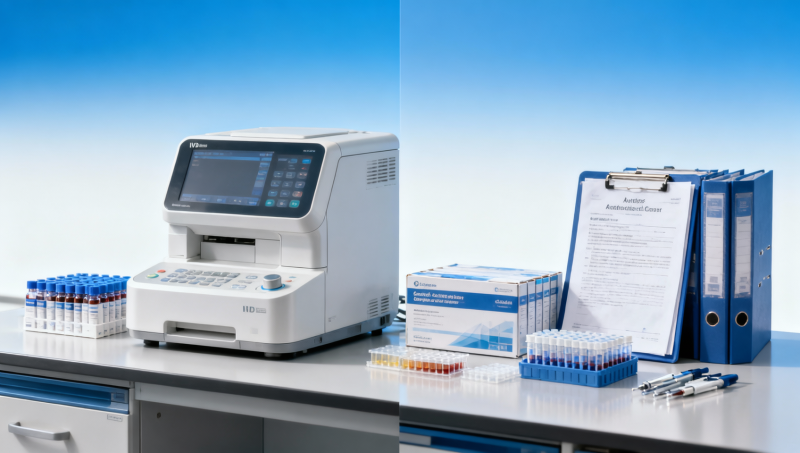
Choosing an IVD analyzer distributor is not just about price or product availability. For procurement teams, lab operators, and business leaders, the real question is whether the distributor can consistently deliver compliant products, technical support, documentation, and long-term service without exposing your organization to regulatory, operational, or financial risk. The safest way to evaluate a distributor is to treat the process like a structured risk assessment: verify legal authorization, test technical competence, confirm service capacity, and examine how they perform after the sale—not just during the pitch.
In practice, the distributors that create the biggest problems are rarely the ones with the weakest marketing. They are the ones with incomplete IVDR documentation, unclear service boundaries, poor spare-parts planning, weak training capability, or unstable manufacturer relationships. If you are comparing options, the goal is not simply to find a supplier. It is to identify whether the distributor is a reliable extension of your clinical, operational, and compliance system.
What should you check first when vetting an IVD analyzer distributor?
Start with the highest-risk items first. Before discussing discounts, lead times, or bundle offers, verify whether the distributor is legally, technically, and operationally fit to support the analyzer in your market.
The first screening should include:
- Authorized distribution status: Ask for proof that the distributor is officially authorized by the manufacturer for the exact IVD analyzer models you are considering.
- Regulatory alignment: Confirm whether the product and its supporting documents meet the requirements relevant to your region, especially MDR/IVDR where applicable.
- Local market registration capability: Check who is responsible for registration, import compliance, vigilance reporting, and post-market communication.
- Service coverage: Verify whether the distributor has trained field engineers, installation protocols, calibration procedures, and escalation channels.
- Supply continuity: Assess inventory strategy for reagents, consumables, spare parts, and critical replacement components.
If a distributor cannot provide clear evidence in these areas early in the process, that is already a useful answer. In IVD procurement, ambiguity itself is a risk signal.
How do you verify regulatory compliance without relying on sales claims?
Regulatory risk is one of the most underestimated issues in distributor selection. A polished sales presentation does not prove that an IVD analyzer distributor can support compliant deployment in real clinical settings.
Ask for documents and evidence, not summaries. Depending on the market, your review should include:
- Declaration of conformity and applicable certificates
- Manufacturer information and legal entity details
- Authorized representative details, if relevant
- Labeling and instructions for use in required languages
- Post-market surveillance and complaint-handling procedures
- Traceability process for instruments, accessories, and reagent lots
- Document control and revision history
Also clarify the division of responsibility between manufacturer and distributor. Many buyers assume the distributor “handles compliance,” but in reality, accountability may be fragmented. That becomes dangerous when field actions, software updates, adverse event reporting, or nonconformities occur.
A practical test is to ask scenario-based questions such as:
- What happens if a field safety notice is issued?
- Who contacts existing users and within what timeframe?
- How are affected serial numbers identified?
- Who manages software validation after an update?
- What is the process if a reagent lot causes inconsistent results?
Distributors with real compliance maturity can answer these questions clearly and document the workflow.
What technical risks are most often missed during distributor evaluation?
Many teams focus heavily on the analyzer itself but overlook the distributor’s role in preserving performance after delivery. This is where hidden technical risk often appears.
Common blind spots include:
- Installation quality: Incorrect site preparation, environmental mismatch, power instability, or network integration failures can affect analyzer performance from day one.
- Calibration and verification discipline: A capable distributor should have standardized commissioning and acceptance-testing procedures.
- Operator training depth: Basic button-click training is not enough. Users need practical instruction on maintenance, quality control, troubleshooting, and error interpretation.
- Software and LIS connectivity support: In modern labs, digital integration is critical. Weak support for middleware, LIS mapping, cybersecurity coordination, or data integrity can create major operational disruption.
- Preventive maintenance execution: Ask how maintenance schedules are tracked, documented, and audited.
Request evidence of technical competence, such as engineer certifications, training logs, sample installation checklists, uptime records, or documented service KPIs. A distributor that truly understands healthcare engineering should be able to show process discipline, not just product familiarity.
How can procurement teams evaluate service reliability before signing a contract?
Service quality is often promised in general terms and delivered unevenly in practice. To properly vet an IVD analyzer distributor, procurement teams should evaluate service as a measurable operating system.
Key questions include:
- What is the guaranteed response time for remote and onsite support?
- Are there service engineers located in your country or region?
- Which spare parts are stocked locally?
- What is the average repair turnaround time?
- How are escalations handled when first-line support cannot solve the issue?
- What service reports are provided after maintenance or breakdown visits?
- Can they support peak-demand periods without service degradation?
Ask for service-level performance data from existing deployments. If the distributor cannot share exact customer names due to confidentiality, they should still be able to provide anonymized metrics such as uptime percentage, first-time fix rate, and mean time to resolution.
It is also wise to speak with reference customers who match your use case. A distributor may perform well in a small private clinic but poorly in a high-throughput hospital laboratory. Context matters.
What commercial warning signs suggest future supply chain problems?
Commercial risk is not only about price inflation. It includes hidden dependencies, weak planning, and contracts that leave the buyer exposed when conditions change.
Look closely at:
- Single-source dependence: If the distributor relies on a fragile upstream manufacturer relationship, continuity risk rises.
- Unclear reagent and consumable commitments: Analyzer availability means little if ongoing supply is unstable.
- Nontransparent warranty terms: Clarify what is covered, what is excluded, and who pays for logistics, labor, or replacement parts.
- Overpromised lead times: Compare quoted delivery times with inventory position and import process reality.
- Weak contract language: Ensure service obligations, acceptance criteria, training scope, and escalation responsibilities are explicitly defined.
One of the best ways to reduce risk is to request a total cost of ownership view rather than a unit price quote. This should include installation, validation, training, preventive maintenance, consumables, software support, spare parts, and likely downtime impact. A low acquisition price can hide a high operational burden.
How should decision-makers score and compare different distributors?
For business leaders and procurement committees, a structured scorecard is more useful than informal impressions. It helps separate commercial attractiveness from operational reliability.
A practical evaluation model can score distributors across these categories:
- Regulatory readiness
- Technical competence
- Service infrastructure
- Supply chain resilience
- Training and onboarding support
- Digital integration capability
- Commercial transparency
- Reference performance
Use weighted scoring based on your environment. For example:
- Hospitals with strict compliance requirements may give more weight to regulatory documentation and post-market support.
- High-throughput labs may prioritize uptime, spare parts availability, and rapid field service.
- New healthcare ventures may place stronger emphasis on onboarding support and scalable digital integration.
To make the process more reliable, combine document review, interviews, site audits where possible, and reference checks. If the analyzer is critical to core clinical operations, a trial deployment or formal acceptance test may be justified before full rollout.
What does a low-risk distributor usually look like?
A trustworthy IVD analyzer distributor usually demonstrates a few consistent traits. They answer technical and regulatory questions directly, provide controlled documentation, define responsibilities clearly, maintain trained service personnel, and can explain how they support the analyzer over its full lifecycle.
Just as importantly, they do not hide behind vague language. They can show how issues are logged, how complaints are escalated, how customers are trained, how software is managed, and how performance is sustained after installation. In other words, they operate like a disciplined healthcare partner, not just a reseller.
For organizations navigating value-based procurement and digital integration, this difference is critical. The distributor you choose affects not only procurement success, but also implementation quality, compliance posture, clinical continuity, and long-term return on investment.
Conclusion
To vet an IVD analyzer distributor without missing risks, focus on evidence over claims. Verify authorization, regulatory compliance, technical support capability, service infrastructure, supply continuity, and contract clarity before making a decision. The most important question is not whether the distributor can deliver the analyzer, but whether they can support safe, compliant, and reliable performance throughout its operational life.
For procurement teams, operators, and decision-makers, a disciplined evaluation process reduces the chance of hidden failures later—especially in environments shaped by IVDR requirements, digital workflows, and rising expectations for clinical reliability. A distributor should strengthen your healthcare system, not become its weakest link.
Recommended News
- 2026.10.08How to Evaluate Compact Biosignal Sensors for Reliable Wearable Vital-Sign MonitoringLydia Vancini (Regulatory Compliance Lead)
- 2026.10.07How Custom Orthotics Technology Can Improve Physical Therapy OutcomesSarah Jenkins (Laboratory Infrastructure Consultant)
- 2026.10.06How to Validate Metal Biocompatibility Testing for Implantable Medical DevicesDr. Julian Rossi (RehabTech Specialist)
The VitalSync Intelligence Brief
Receive daily deep-dives into MedTech innovations and regulatory shifts.