 Get Insights

What red flags matter in an IVD analyzer distributor deal?
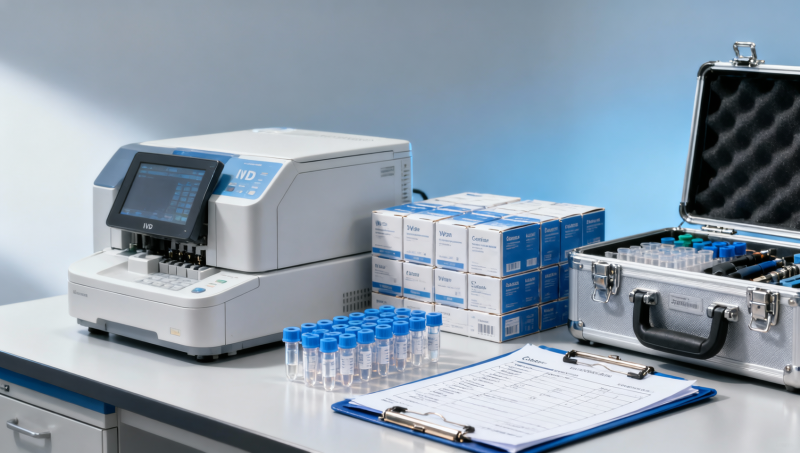
Choosing an ivd analyzer distributor is no longer just a pricing exercise—it is a test of supply chain verification, IVDR certification, and real healthcare engineering capability. For procurement teams, lab operators, and decision-makers comparing healthcare equipment partners, hidden red flags often sit behind glossy claims. This article highlights the warning signs that matter most when technical integrity, digital integration, and long-term reliability are on the line.
Why distributor risk matters more than brochure claims
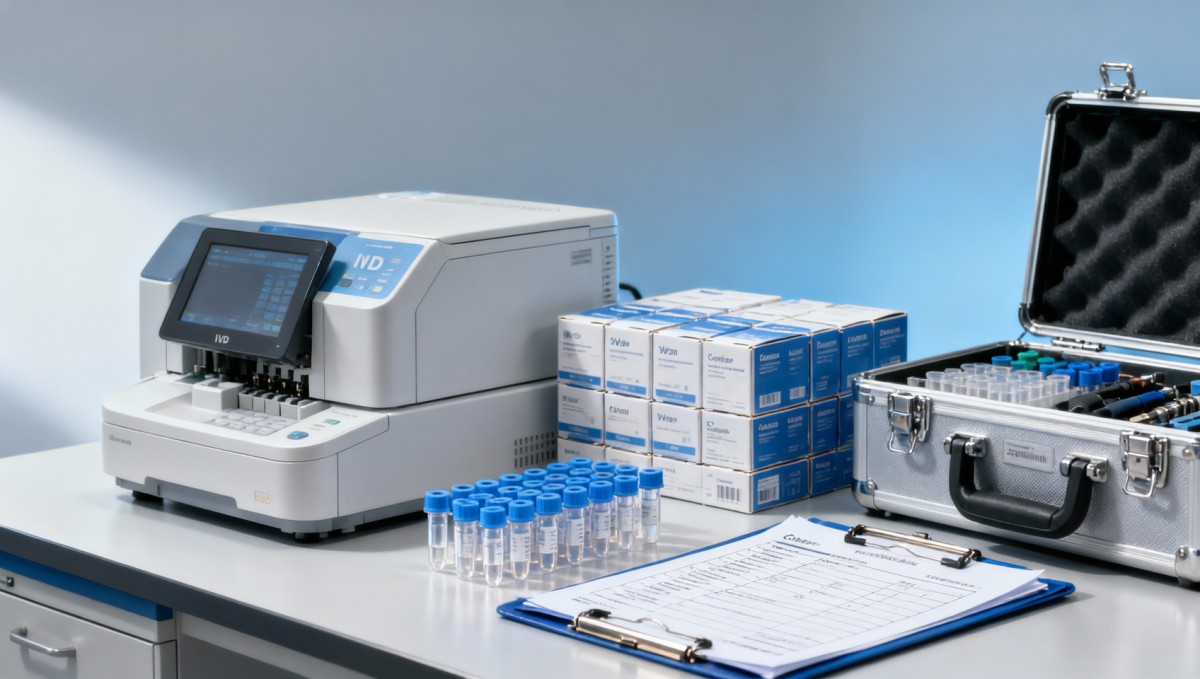
In the IVD analyzer market, the distributor often shapes the real ownership experience more than the product leaflet does. A strong analyzer can still become a weak procurement outcome if local installation, service response, reagent logistics, software support, and compliance handling fail after delivery. For hospitals, laboratories, and diagnostic networks, the distributor is not a side actor; it is part of the operating system behind the instrument.
This is especially important in a value-based procurement environment, where buyers are expected to assess not only purchase price but also uptime, traceability, maintenance intervals, documentation quality, and integration with LIS or middleware. A distributor deal that looks efficient in the first 2–4 weeks can expose serious weaknesses in the next 6–12 months, when calibration issues, spare-part delays, or service ticket backlogs start to affect workflow.
For information researchers, operators, procurement managers, and business decision-makers, the core question is simple: can this distributor prove technical reliability under real operating conditions? VitalSync Metrics (VSM) approaches this question from an engineering and benchmarking perspective, helping buyers distinguish sales narratives from measurable support capability, regulatory alignment, and long-term risk.
In practice, most high-impact red flags fall into 4 connected areas: unclear authorization, weak compliance evidence, fragile service infrastructure, and poor data transparency. If even 1 of these areas is underdeveloped, the distributor relationship may create hidden costs across onboarding, training, consumables management, and audit readiness.
The first screening questions procurement teams should ask
- Is the distributor formally authorized for the exact analyzer family, software version, and regional market, or only for a broader product category?
- Can it document installation qualification, operator training, preventive maintenance cycles, and escalation pathways within 24–72 hours?
- Does it provide current regulatory documentation aligned with applicable MDR/IVDR expectations, import rules, and post-market responsibilities?
- Can it explain how reagent continuity, spare-part stock, and remote support are handled during 3 common disruption scenarios?
Which red flags in an IVD analyzer distributor deal should never be ignored?
The most serious red flag is vague authorization. Many distributor proposals say they “represent” a manufacturer without clarifying territory, product scope, or service rights. A buyer should verify whether the distributor is approved to sell, install, maintain, update software, and supply parts for the exact analyzer model in question. If these rights are split across multiple entities, accountability becomes blurred from day 1.
A second warning sign is incomplete compliance documentation. In a regulated healthcare environment, a distributor must be ready to support document review, including declarations, labeling consistency, traceability records, complaint handling routes, and market-specific registration status where applicable. If the distributor can produce only marketing PDFs but not operational compliance records within 5–10 business days, that gap should be treated seriously.
A third red flag is weak service architecture. Buyers should look beyond claims such as “fast support” or “experienced team.” The real questions are how many trained field engineers are available in the region, whether preventive maintenance follows a documented schedule, how long critical parts take to arrive, and whether remote diagnostics are possible. A distributor that depends entirely on ad hoc factory intervention may create downtime risk that no discount can justify.
The fourth red flag is poor transparency around software, connectivity, and cybersecurity responsibilities. Modern IVD analyzers are no longer isolated devices. They interact with LIS, middleware, hospital networks, barcode systems, and audit trails. If the distributor cannot define who handles interface validation, user access control, update management, and version compatibility, the buyer may inherit an expensive integration problem.
Red flags that often appear harmless at first
Commercial flexibility without technical depth
An unusually fast quotation, broad discounting, or “full package” promise can feel attractive during tender comparison. But if the distributor cannot define assay menu limitations, sample throughput assumptions, environmental requirements, or operator competency needs, the offer may be built for contract conversion rather than stable operation. In clinical settings, unclear technical boundaries often surface during the first 30–90 days of use.
Training offered as a one-time event
A single training session is rarely enough. Analyzer use typically requires initial onboarding, competency confirmation, refresher training after software changes, and retraining when staff turnover occurs. If the distributor has no structured training matrix, no operator sign-off process, and no plan for shift-based teams, error rates and user frustration can increase even when the analyzer itself is technically sound.
The table below helps procurement teams evaluate the most common distributor red flags in a more operational way, using criteria that matter during selection, onboarding, and long-term support.
A practical rule is to treat missing detail as a real finding, not a paperwork inconvenience. In an IVD analyzer distributor deal, undocumented capability is usually not capability. It is unresolved risk.
How should buyers compare distributors beyond price?
A disciplined comparison process helps teams avoid being pulled toward the lowest visible number. In most laboratory procurements, the better question is not “Who quoted lower?” but “Who can support analytical continuity over the next 3–5 years?” That requires a comparison framework covering technical support, compliance reliability, consumables resilience, and upgrade path clarity.
Operators usually care about daily usability, error recovery, reagent availability, and training quality. Procurement teams focus on contract terms, service levels, replacement parts, and total cost of ownership. Executive stakeholders look at business interruption, regulatory exposure, and digital strategy. A credible distributor should satisfy all 3 layers, not just the purchasing one.
One effective method is to score each distributor across 5 core dimensions: authorization, compliance support, service readiness, integration capability, and supply continuity. Weighting can vary by site, but many labs assign higher importance to service response and consumable stability because disruptions there affect testing operations immediately.
VSM often recommends that buyers compare not only headline offerings but also evidence quality. A distributor that provides a slower, more documented answer may be more reliable than one that promises everything within 24 hours but cannot support any claim with service matrices, process documents, or escalation contacts.
Comparison points that reveal hidden weakness
- Preventive maintenance interval: Is it defined by the manufacturer, localized by the distributor, and tied to a documented checklist every 6 or 12 months?
- Spare parts strategy: Are critical components stocked locally, regionally, or only at the factory with a 2–8 week lead time?
- Reagent continuity: Can the distributor describe buffer inventory, shelf-life management, and cold-chain handling where relevant?
- Software governance: Who validates updates, who approves version changes, and what is the rollback plan if connectivity fails?
The following table is useful when comparing an IVD analyzer distributor deal during tender review or final negotiation. It translates broad promises into measurable procurement criteria.
When buyers use a framework like this, price becomes one line in a wider risk model. That usually leads to better long-term outcomes, especially where analyzer uptime and audit readiness are more costly than the initial purchasing gap.
What compliance and technical evidence should a distributor be able to show?
A competent IVD analyzer distributor should be able to support a documented review process, not merely answer questions informally. That means providing a coherent package covering product identity, intended use consistency, service responsibility, complaint escalation, and local market handling. Under MDR/IVDR-sensitive procurement conditions, fragmented answers often indicate fragmented control.
Buyers do not need unrestricted access to full manufacturer files, but they do need enough evidence to assess fitness for deployment. At a minimum, the distributor should explain which documents are available pre-contract, which are available during qualification, and which are controlled under service agreement. If every technical request is delayed without explanation for more than 7–10 business days, that is operationally meaningful.
Technical evidence also extends beyond regulatory files. For example, a laboratory should know environmental requirements, power stability expectations, throughput assumptions, maintenance intervals, calibration dependencies, and interface prerequisites before installation. A distributor unable to define these parameters may expose the site to avoidable implementation delays or workflow mismatch.
This is where an independent benchmarking perspective adds value. VSM focuses on separating stated specifications from verified operating realities. In distributor evaluation, that means asking not only whether the analyzer can perform under ideal conditions, but also whether the support structure can preserve that performance under normal clinical pressure.
A practical 6-point evidence checklist
- Model-specific authorization and territory confirmation.
- Regulatory and labeling support aligned with the target market.
- Installation, qualification, and user training process documents.
- Preventive maintenance schedule and service escalation map.
- Spare parts and consumables continuity plan covering at least routine and shortage scenarios.
- Software, LIS, and data handling responsibilities with version control clarity.
What good documentation looks like
Good documentation is current, model-linked, and process-specific. It does not have to be long, but it should be coherent. For example, if a distributor claims local service capability, there should be engineer qualification records, maintenance templates, and spare-part workflows that support the claim. If it claims digital integration support, it should identify interface responsibility, test sequence, and post-update validation steps.
For many buyers, the issue is not lack of technical depth but lack of time. A distributor that can organize evidence into a clear 3-stage review process—pre-sales, qualification, and go-live—reduces procurement friction and strengthens internal approval. One that cannot often creates hidden workload for the buyer’s regulatory, IT, and lab management teams.
How can labs reduce risk before signing the distributor agreement?
The safest time to control risk is before signature, not after installation. Buyers should convert critical assumptions into written contract language and implementation checkpoints. This includes named service levels, training scope, acceptance criteria, software responsibilities, and terms for replacement parts or reagent shortages. If these points remain verbal, the buyer may discover that “standard support” means something very different to each party.
A useful pre-signing method is to run a 4-step validation path: document review, technical interview, implementation planning, and service stress test. The stress test does not need to be complex. It can simply ask how the distributor responds to 3 realistic scenarios: a failed installation, a consumables disruption, and an analyzer fault during a high-throughput period. Weak answers here often reveal more than polished presentations do.
Procurement teams should also define acceptance in measurable terms. For example, installation should not be considered complete until connectivity, operator training, basic functionality checks, and handover documents are finished. In many settings, a 5-item acceptance checklist prevents disputes later. Without that structure, sites may be pushed to sign off before the analyzer is operationally ready.
Another effective safeguard is to separate commercial commitment from performance verification. That can include staged payments, initial reagent stocking checks, or early review milestones at 30 and 90 days. These mechanisms are especially relevant when the distributor is new to the region or when the analyzer platform has software dependencies across multiple systems.
Pre-contract questions decision-makers should insist on
- Who owns installation qualification, and what documents are delivered at handover?
- What is the expected local support path during the first 12 months?
- How are software patches, connectivity updates, and validation steps coordinated with the laboratory IT team?
- What is the replenishment logic for critical reagents and service parts, and how is emergency shortage handled?
Common procurement mistakes
The first mistake is assuming the manufacturer name alone protects the buyer. It does not. Regional distributor quality can vary significantly. The second mistake is checking certification language without checking service execution. The third is focusing on analyzer specifications while ignoring implementation capacity. In reality, procurement success depends on the connection between product performance and distributor operations.
The fourth mistake is underestimating integration work. In digitally connected labs, interface mapping, user permissions, result transmission, and update control can take days or weeks if responsibilities are not clear. Any distributor deal that treats these as minor details may introduce avoidable delay and accountability conflict.
FAQ: the questions buyers ask most about an IVD analyzer distributor deal
Because distributor evaluation sits between technical review and commercial negotiation, many buyers ask similar questions. The answers below focus on practical decision-making rather than general product promotion.
How do I know if a distributor is truly qualified for an IVD analyzer?
Ask for model-specific authorization, service scope confirmation, training capability, and evidence of local support structure. A qualified distributor should explain what it can do directly, what requires manufacturer escalation, and what response timeline applies. If those boundaries are unclear, qualification is incomplete even if the company is commercially active.
What matters more: lower price or stronger support?
In most clinical and laboratory settings, stronger support creates better long-term value. The cost of downtime, delayed go-live, repeated training, or audit difficulty can exceed the initial price difference quickly. Buyers should compare at least 5 dimensions beyond price: service levels, compliance readiness, integration support, consumables continuity, and maintenance structure.
What is a realistic implementation timeline for an analyzer distributor project?
Timelines vary by site complexity, but a practical planning window often includes 1–2 weeks for document review, 1–3 weeks for installation and interface preparation, and additional time for training and acceptance. If a distributor promises immediate deployment without discussing infrastructure, connectivity, operator readiness, and validation, the schedule may be optimistic rather than reliable.
Can a distributor create compliance risk even if the analyzer itself is compliant?
Yes. Compliance risk can arise from poor traceability, inconsistent labeling support, weak complaint handling, undocumented software changes, or incomplete handover records. A compliant instrument still depends on compliant distribution, service, and post-market handling practices. That is why the distributor agreement deserves the same scrutiny as the analyzer specification.
Why work with VSM before choosing an IVD analyzer distributor?
VitalSync Metrics (VSM) supports healthcare buyers that need more than product marketing. As an independent, data-driven think tank and technical benchmarking laboratory, VSM helps procurement directors, MedTech teams, and laboratory planners evaluate whether a proposed distributor arrangement stands up to engineering, compliance, and operational review. The goal is not to add friction; it is to remove hidden risk before it becomes expensive.
Our strength lies in turning scattered technical claims into structured decision evidence. That includes benchmarking support readiness, reviewing documentation logic, mapping service vulnerabilities, and clarifying where analyzer performance depends on distributor execution. In a market shaped by IVDR pressure, digital integration, and tighter procurement accountability, that clarity helps teams move faster with better control.
If you are reviewing an IVD analyzer distributor deal, VSM can help you assess parameters before commitment. Typical consultation topics include model and service scope verification, compliance document review, implementation risk screening, delivery and spare-part planning, interface responsibility mapping, and supplier comparison for multi-bid procurement. These are the areas where hidden red flags usually live.
Contact VSM if you need support with distributor due diligence, product selection, delivery timeline review, technical requirement clarification, sample or documentation assessment, or quotation comparison. A stronger deal starts when you can separate promotional confidence from documented healthcare engineering capability.
Recommended News
- 2026.10.08How to Evaluate Compact Biosignal Sensors for Reliable Wearable Vital-Sign MonitoringLydia Vancini (Regulatory Compliance Lead)
- 2026.10.07How Custom Orthotics Technology Can Improve Physical Therapy OutcomesSarah Jenkins (Laboratory Infrastructure Consultant)
- 2026.10.06How to Validate Metal Biocompatibility Testing for Implantable Medical DevicesDr. Julian Rossi (RehabTech Specialist)
The VitalSync Intelligence Brief
Receive daily deep-dives into MedTech innovations and regulatory shifts.