 Get Insights

Healthcare compliance gaps that trigger costly corrective action
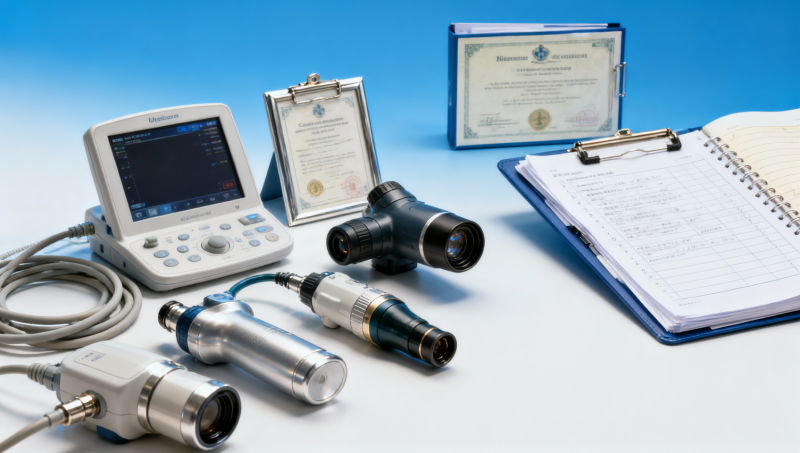
Healthcare compliance gaps rarely start with obvious failures—they often hide inside incomplete medical device certification, weak medical device assessment, and overlooked hospital equipment standards. For buyers, operators, and decision-makers comparing Physical Therapy Tech, Ultrasound Metrics, or suppliers of wholesale medical endoscopes china, even small lapses can trigger costly corrective action. This article explores how healthcare compliance, MDR certification, and life sciences compliance issues emerge, and what procurement teams can verify before risk becomes expense.
Where healthcare compliance gaps usually begin in real procurement cycles
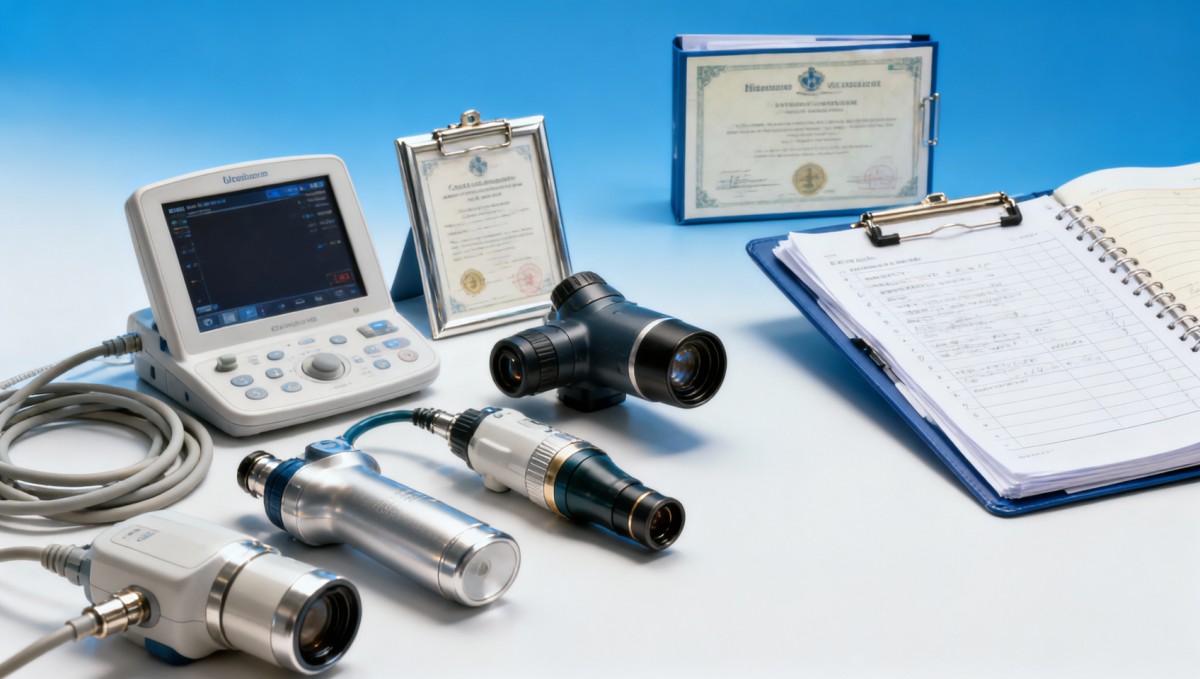
In healthcare procurement, corrective action is rarely caused by one dramatic defect. More often, it starts with a chain of small omissions across documentation, labeling, validation, and post-market controls. A device may appear commercially ready, yet the technical file is incomplete, the intended use is too broadly written, or the supplier cannot connect claims with verifiable engineering data. In hospitals and laboratories, these gaps surface during onboarding, audits, or complaint review.
This pattern is becoming more visible as procurement moves toward value-based purchasing and digital traceability. Teams are no longer reviewing only unit price and delivery lead time. They are also checking MDR certification status, software documentation, maintenance evidence, material integrity, cybersecurity exposure, and service continuity over 3–5 years. When one layer is weak, the cost of correction often spreads across clinical operations, inventory planning, and regulatory remediation.
For information researchers and enterprise decision-makers, the key issue is not simply whether a supplier says it is compliant. The real question is whether the supplier can prove conformity in a form that stands up to medical device assessment, internal quality review, and external inspection. This matters whether the category is wearable monitoring, ultrasound systems, rehabilitation equipment, or wholesale medical endoscopes from China entering multi-country procurement pipelines.
VitalSync Metrics (VSM) addresses this problem by translating technical claims into benchmarkable evidence. Instead of relying on brochure language, procurement teams can compare measurable indicators such as signal stability, fatigue tolerance, calibration consistency, test repeatability, and documentation completeness. That approach helps buyers detect compliance gaps before purchase orders are finalized, rather than after nonconformity reports appear 30–90 days into deployment.
What a hidden compliance gap often looks like
The risk is often operationally subtle. A device may pass incoming inspection but fail to align with hospital equipment standards during installation qualification. A wearable sensor may show acceptable average performance yet demonstrate unstable signal-to-noise ratio across different users or temperature ranges. A sterilizable component may meet basic material declarations but lack sufficient evidence on repeated use cycles, cleaning compatibility, or packaging integrity after transport.
- Incomplete technical documentation, especially missing test protocols, revision history, or intended-use boundaries.
- Weak supplier traceability for critical components, firmware versions, calibration records, or outsourced manufacturing steps.
- Certification confusion, such as assuming a certificate covers a full product family when it applies only to specific variants.
- Marketing claims that are not supported by measurable engineering evidence under real operating conditions.
These issues are especially costly because they do not always stop a transaction at the start. Instead, they create delayed friction: extra supplier queries, quarantine stock, CAPA escalation, retraining, software patching, or field corrections. In practice, a compliance gap that takes 2 hours to identify during pre-purchase review can otherwise consume 2–6 weeks after delivery.
Which compliance failures most often trigger costly corrective action?
Not every documentation flaw creates the same level of exposure. Procurement teams need to separate minor administrative gaps from nonconformities that can interrupt use, delay acceptance, or create patient-safety concerns. In MedTech and life sciences compliance, the highest-risk failures usually affect intended use, performance verification, labeling accuracy, post-market obligations, or the chain between design inputs and validated output.
For example, an ultrasound device may be sold with performance language that sounds credible, but if the supplier cannot show stable measurement output across defined test conditions, the compliance issue is not cosmetic. The gap affects acceptance criteria, user trust, and service planning. The same applies to Physical Therapy Tech devices when output consistency, electrical safety documentation, and maintenance intervals are not clearly aligned.
The table below summarizes common healthcare compliance failures and why they often escalate into corrective action instead of remaining simple procurement questions.
The point is not that every supplier will fail, but that procurement teams need evidence that is specific, current, and tied to the exact product configuration being sourced. Generic certificates, legacy test reports, or unsupported claims are weak defenses once a hospital, distributor, or regulator asks for product-level proof.
Three failure zones that deserve early review
Across most healthcare categories, VSM sees 3 recurring failure zones. First, document mismatch: certificates, datasheets, and manuals describe slightly different products or different intended-use limits. Second, test mismatch: the validation method does not reflect the real operating environment. Third, lifecycle mismatch: the supplier can support first delivery, but not service, software revision control, or complaint response over the next 12–36 months.
Why this matters for different buyer roles
Operators care about reliability at the point of use. Procurement managers care about acceptance risk and supplier accountability. Executives care about exposure across cost, reputation, and continuity. One compliance gap can therefore become three different business problems at the same time, especially in cross-border sourcing and multi-site rollouts.
How to assess medical devices before a gap becomes a purchase problem
A stronger medical device assessment process does not need to be slow. What it needs is a structured screening model that connects clinical relevance, regulatory status, and engineering evidence. For many procurement teams, a 4-step review completed over 7–15 business days is more effective than a rushed bid comparison followed by months of corrective action. The goal is to identify what must be verified before approval, not after installation.
This matters when comparing categories with different risk profiles. Physical Therapy Tech may need close review of output consistency, electrical safety references, and maintenance instructions. Ultrasound Metrics evaluations often require closer attention to measurement stability, calibration logic, software version traceability, and user-dependent variability. Endoscopic equipment sourcing may add sterilization compatibility, material durability, packaging validation, and accessory consistency.
The table below offers a procurement-oriented assessment matrix that can be used across hospital, distributor, and laboratory sourcing programs.
A useful assessment process also separates essential checks from desirable checks. If procurement teams treat every document as equally urgent, reviews become slow and inconsistent. A better model prioritizes 5 key checkpoints: certification scope, intended use, core performance evidence, traceability, and service capability. Additional documents can follow in the second review layer without delaying critical decisions.
A practical 4-step review flow
- Screen the regulatory baseline: confirm market, classification, certificate scope, declaration alignment, and labeling language.
- Verify technical claims: request performance methods, tolerance ranges, test conditions, and revision dates for reports.
- Check operational fit: review installation needs, environmental limits, maintenance intervals, and user training demands.
- Validate lifecycle support: confirm spare parts, software control, complaint response windows, and change-notification process.
This framework is especially useful for multinational procurement because it reduces dependence on broad marketing claims. It also creates a more defendable internal approval record if questions later arise from auditors, distributors, or clinical stakeholders.
What procurement teams should compare when suppliers appear equally compliant
A common procurement mistake is assuming that two suppliers with similar certificates carry similar risk. In reality, one may have stronger engineering controls, clearer traceability, faster complaint handling, and better-defined performance boundaries. Compliance is not only about whether a certificate exists. It is also about how robustly the product can hold its claims during use, transport, maintenance, software updates, and post-market scrutiny.
This becomes critical in categories where claims are easy to market but harder to validate. For instance, ultrasound metrics may look similar on a brochure, yet differ in repeatability across operators or in the transparency of calibration logic. Wholesale medical endoscopes from China may offer attractive cost positions, but the procurement decision should also examine reprocessing guidance, accessory consistency, documentation completeness, and response time for nonconformities.
When suppliers appear equally compliant, the best differentiators are often the ones linked to long-term operational control rather than day-one presentation.
Five comparison points that reduce downstream risk
- Evidence freshness: Are key reports from the last 12–24 months, and do they match the current product revision?
- Test relevance: Were performance claims validated under realistic use ranges, not just controlled ideal settings?
- Change control: Does the supplier notify buyers when firmware, materials, or component sources change?
- Corrective action responsiveness: Can the supplier provide root-cause response and containment within defined business days?
- Documentation usability: Can operators, auditors, and procurement teams all use the documents without interpretive gaps?
Why independent benchmarking matters
This is where VSM adds value beyond standard supplier questionnaires. Independent benchmarking helps convert claims into comparable engineering language. Instead of asking whether a product is “advanced,” buyers can ask whether the signal-to-noise ratio remains stable across specified conditions, whether fatigue limits are documented for repeated cycles, or whether a component retains acceptable performance after expected sterilization or transport stress. That shift improves both procurement confidence and internal alignment.
In practical terms, stronger comparison reduces hidden cost. It may not always lower initial price, but it often lowers requalification effort, complaint burden, and service disruption over the next 1–3 years. For B2B healthcare sourcing, that tradeoff is often more financially important than a small difference in upfront quotation.
Common misconceptions, FAQ, and the safest next step for buyers
Many teams still assume that compliance risk belongs mainly to manufacturers or regulators. In practice, procurement decisions strongly influence whether gaps are caught early or become expensive later. The buyers who reduce corrective action exposure are usually the ones who ask narrower, more technical questions before approving vendors, sample orders, or long-term contracts.
The following questions reflect common search intent from researchers, operators, procurement specialists, and decision-makers evaluating healthcare compliance, MDR certification, and medical device assessment requirements.
How do I know whether MDR certification is enough for procurement approval?
MDR certification is important, but it is not a complete procurement decision by itself. Buyers should check whether the certificate applies to the exact device, intended use, configuration, and target market. They should also verify whether the technical documentation, labeling, and post-market support align with that scope. In many tenders, these supporting details determine whether the product can move smoothly into acceptance and use.
What should operators look for that procurement teams may miss?
Operators often detect practical compliance weaknesses first. They should review training clarity, alarm logic, cleaning instructions, calibration frequency, consumable compatibility, and service response expectations. A device that looks compliant on paper can still create operational risk if setup takes too long, maintenance steps are ambiguous, or performance drifts under routine use over weekly or monthly cycles.
Are lower-cost overseas suppliers automatically higher risk?
Not automatically. The real issue is evidence quality, traceability depth, and service reliability. Some lower-cost suppliers can support strong compliance packages, while some higher-priced suppliers still leave documentation gaps. What matters is whether the supplier can provide current proof for performance, certification scope, change control, and post-market handling. That is why structured comparison is more useful than country-based assumptions alone.
How long should a proper compliance review take?
For a focused pre-procurement review, 7–15 business days is a common practical range if documents are available and the evaluation scope is defined upfront. More complex categories, multi-market sourcing, or products with software and sterilization considerations may require 2–4 weeks. The key is to define mandatory checkpoints early so the process stays disciplined rather than open-ended.
Why choose VSM when internal teams already review suppliers?
Internal teams are essential, but they often work under time pressure and across mixed product categories. VSM supports them with independent, data-driven benchmarking that connects engineering truth to procurement language. We help teams examine medical device assessment quality, hospital equipment standards, MDR/IVDR alignment, and long-term reliability without relying on promotional claims. This is especially useful when comparing competing suppliers, validating technical integrity before tender award, or clarifying whether a quoted product truly matches clinical-grade expectations.
If you are reviewing Physical Therapy Tech, Ultrasound Metrics, life sciences equipment, or wholesale medical endoscopes from China, contact VSM to discuss parameter confirmation, supplier comparison, certification requirements, sample evaluation, delivery timeline risk, or a tailored benchmarking whitepaper. A focused pre-purchase review today can prevent weeks of corrective action, delayed acceptance, and hidden ownership cost later.
- healthcare procurement
- MDR certification
- hospital equipment standards
- life sciences compliance
- medical device assessment
- technical integrity
- signal-to-noise ratio
- life sciences
- long-term reliability
- engineering truth
- data-driven
- medical device certification
- healthcare compliance
- Ultrasound Metrics
- Physical Therapy Tech
- Packaging
- wholesale medical endoscopes china
Recommended News
- 2026.10.08How to Evaluate Compact Biosignal Sensors for Reliable Wearable Vital-Sign MonitoringLydia Vancini (Regulatory Compliance Lead)
- 2026.10.07How Custom Orthotics Technology Can Improve Physical Therapy OutcomesSarah Jenkins (Laboratory Infrastructure Consultant)
- 2026.10.06How to Validate Metal Biocompatibility Testing for Implantable Medical DevicesDr. Julian Rossi (RehabTech Specialist)
The VitalSync Intelligence Brief
Receive daily deep-dives into MedTech innovations and regulatory shifts.