 Get Insights

How to do supply chain verification for medical devices?
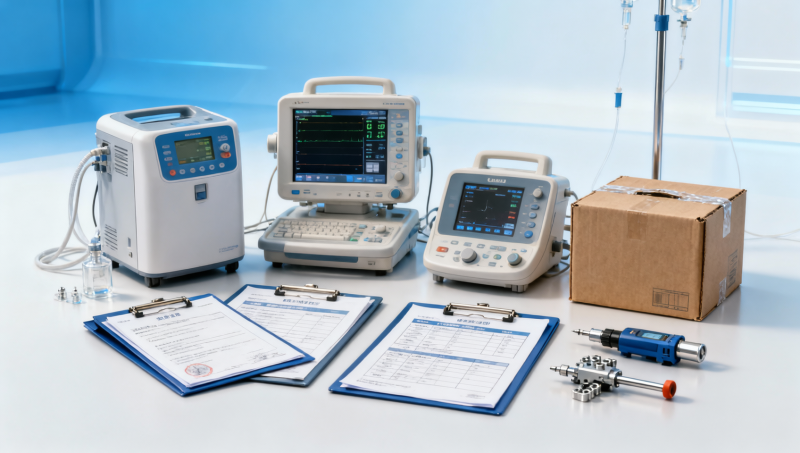
Supply chain verification is now essential for healthcare equipment sourcing, especially when evaluating an oxygen concentrator factory, an ICU monitor supplier, or an ultrasound machine OEM factory. For procurement teams and technical leaders, medical technology verification must go beyond brochures to assess IVDR certification, engineering consistency, and supplier reliability—turning complex global sourcing into evidence-based decisions.
What does supply chain verification for medical devices actually involve?
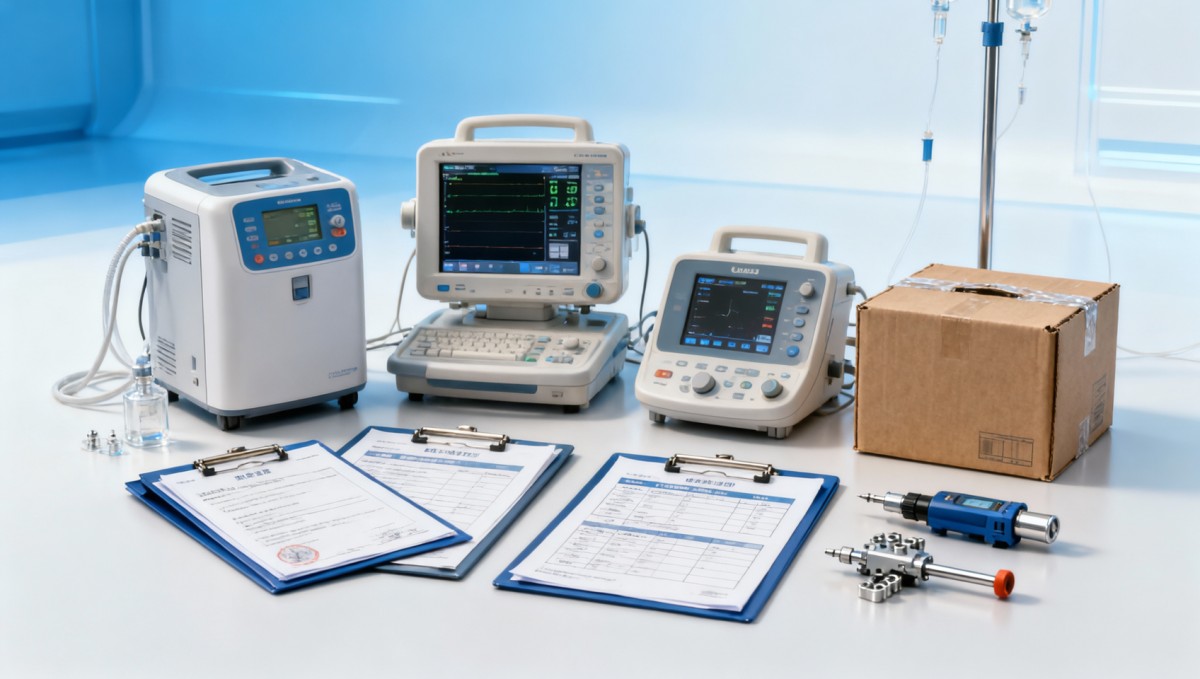
In medical devices, supply chain verification is not a simple factory check or a document review. It is a structured process used to confirm whether a supplier can repeatedly deliver products that meet regulatory, engineering, and operational expectations. For buyers comparing an oxygen concentrator factory, an ICU monitor supplier, or an ultrasound machine OEM factory, the real question is not only “Can they make it?” but “Can they make it consistently over 12–36 months under controlled conditions?”
A reliable verification framework usually combines 4 layers of review: regulatory compliance, technical performance, production process control, and post-delivery support capability. In practice, this means checking how design files are translated into manufacturing steps, how incoming materials are controlled, how finished units are validated, and how changes are documented. If one layer is weak, the entire sourcing decision becomes vulnerable.
This matters because medical device risk is cumulative. A sensor with unstable signal quality, a housing material with inconsistent fatigue resistance, or a supplier with poor traceability can all create downstream failures. These failures may not appear during the first shipment. They often surface after 3–6 months of field use, during maintenance cycles, or when procurement scales from pilot batches to recurring orders.
For information researchers and decision-makers, supply chain verification also helps separate marketing claims from measurable capability. VitalSync Metrics (VSM) approaches this challenge as an independent benchmarking and technical review partner. Instead of relying on promotional language, VSM focuses on engineering evidence, whitepaper-grade documentation, and practical sourcing indicators that procurement teams can compare side by side.
The 5 core dimensions buyers should verify first
- Regulatory readiness: confirm whether the supplier understands MDR, IVDR, product classification, technical documentation expectations, and market-specific registration responsibilities.
- Process stability: review batch records, calibration intervals, incoming quality controls, and nonconformance handling procedures over at least 2–4 recent production cycles.
- Performance evidence: request verification data such as signal accuracy trends, environmental tolerance ranges, endurance testing windows, or alarm response repeatability.
- Supply continuity: check whether second-source materials, spare parts planning, and lead-time resilience exist for 6–12 month procurement planning horizons.
- Service response: evaluate complaint handling, field failure analysis, software update control, and expected turnaround times for corrective action.
When these 5 dimensions are reviewed together, supply chain verification becomes a decision tool rather than a compliance exercise. It helps buyers identify whether a supplier is suitable for pilot deployment, regional distribution, or long-term strategic sourcing.
Why do procurement teams still face hidden risk after checking certificates?
Many procurement teams assume that if a supplier presents certificates, audit summaries, and product brochures, the verification work is mostly done. In reality, certificates show a compliance baseline, not day-to-day execution quality. A medical device supply chain can still fail through weak process transfer, unstable component sourcing, incomplete traceability, or inconsistent validation practices. This is why many sourcing problems appear after onboarding rather than before contract signing.
Consider three common scenarios. First, a supplier may have acceptable documentation but poor lot-to-lot consistency. Second, a device may perform well in a sales demo but show drift after continuous operation over 8–12 hours. Third, a factory may outsource critical subassemblies without giving buyers full visibility into sub-tier controls. Each of these gaps can affect clinical reliability, maintenance cost, and regulatory exposure.
This is especially relevant in value-based procurement, where purchase price is only one part of the decision. Hospitals, MedTech startups, and laboratory planners increasingly assess total lifecycle impact, including downtime, service load, consumables compatibility, and replacement planning. A lower initial quotation may become a higher total cost if failure investigation, shipment delays, or field returns increase over the first 2–3 procurement cycles.
VSM’s role is useful here because independent technical benchmarking reduces blind spots. Instead of relying only on supplier-prepared materials, buyers can compare engineering parameters, manufacturing signals, and compliance-readiness indicators in a neutral framework. This is often the difference between a transactional purchase and a defensible sourcing decision.
Typical weak points in medical device supplier verification
The table below summarizes where hidden risk often appears during medical device sourcing and what procurement teams should verify before issuing volume orders or long-term agreements.
The key takeaway is simple: documentary review should lead to deeper verification, not replace it. Procurement teams that investigate the “how” behind supplier claims usually detect risk earlier and negotiate more effectively.
How should you verify technical performance, process control, and compliance together?
A strong medical device verification process should move through 3 linked stages: pre-screening, technical evidence review, and production-level validation. Pre-screening confirms basic eligibility. Technical evidence review tests whether the engineering case is credible. Production-level validation checks whether the same performance can be maintained in repeat manufacturing. Skipping any of these stages creates a gap between supplier qualification and real procurement readiness.
For example, if you are evaluating an ICU monitor supplier, do not stop at display quality, alarm features, and user interface design. Review measurement stability under continuous use, sensor interoperability, service parts availability, and software revision control. If you are assessing an oxygen concentrator factory, examine sieve bed sourcing, output stability windows, maintenance intervals, and packaging controls for international transport. For an ultrasound machine OEM factory, evaluate imaging consistency, probe traceability, heat management, and integration controls.
Compliance must be assessed in the same workflow, not as a separate checkbox. MDR and IVDR relevance depends on product type, intended use, technical file quality, labeling, and post-market obligations. A supplier may be competent in production but weak in change control, complaint trend reporting, or documentation structure. For importers, distributors, and hospital procurement departments, those gaps can create delays of several weeks or trigger rework in market entry planning.
This is where evidence formatting matters. VSM translates raw manufacturing and technical inputs into benchmarking-ready whitepapers and comparison logic. That makes it easier for procurement personnel, engineers, and executives to review the same supplier through a common decision lens instead of fragmented spreadsheets and isolated emails.
A practical 6-point verification checklist
- Map the product to its intended market and regulatory route, including whether MDR, IVDR, or local registration documentation will be required.
- Review 3 categories of evidence: technical specifications, process controls, and field-support capability.
- Confirm traceability from critical materials and components to finished device records, including lot coding and change history.
- Verify routine test windows such as electrical safety checks, calibration intervals, burn-in duration, or environmental simulation where applicable.
- Assess supply resilience for at least 2 demand scenarios: pilot volume and scaled procurement volume.
- Define acceptance criteria before purchase order release, including shipment documents, incoming inspection checkpoints, and service escalation timing.
This checklist is valuable because it aligns engineering, compliance, and procurement. It turns verification into a documented workflow rather than a subjective impression built from sales meetings.
What timelines are realistic?
For standard supplier screening, 7–15 business days may be enough to review documents and identify obvious gaps. For deeper benchmarking, sample review, and process evaluation, 2–4 weeks is more realistic. If market-specific compliance review, multi-site sourcing, or custom OEM evaluation is involved, timelines often extend further depending on document quality and test access. The important point is not speed alone, but whether the verification output can support an actual sourcing decision.
Which supplier comparison criteria matter most during procurement?
Procurement teams often compare suppliers on quotation, delivery promise, and general certifications. Those factors matter, but they are not enough for medical device supply chain verification. A useful comparison model should combine technical fit, compliance-readiness, lifecycle support, and supply resilience. This is especially important when selecting between multiple factories offering similar headline specifications but very different manufacturing discipline.
One practical approach is to score suppliers across 5 decision blocks: product performance evidence, process control maturity, documentation quality, service responsiveness, and commercial stability. This helps organizations avoid overvaluing the lowest unit price or the fastest quoted lead time. In many cases, a 10% lower price is quickly offset by return management, replacement logistics, or delayed installation readiness.
For operators and end users, comparison should also include usability and maintenance factors. Are consumables standardized? Are replacement parts available over a 3–5 year service window? Can local technical teams access service documents or software support? If not, the supplier may still be a poor fit even when the initial procurement package looks attractive.
The table below can be used as a starting framework for supplier comparison in medical device sourcing projects, especially when buyers need to defend a selection decision internally.
A comparison table like this becomes more powerful when weighted against your actual use case. A startup validating an OEM partner may prioritize engineering transparency. A hospital group may prioritize continuity, service response, and documentation quality across multiple sites.
Common procurement mistakes to avoid
- Choosing based on brochure specification alone without reviewing how the parameter was measured or under what conditions it was achieved.
- Treating a sample pass as proof of production consistency, even when no recent batch records or process controls are reviewed.
- Ignoring sub-tier suppliers for critical sensors, chips, valves, or materials that can affect delivery reliability and validation outcomes.
- Separating compliance review from technical review, which often leads to rework at the contract or registration stage.
Avoiding these errors improves both sourcing efficiency and negotiation strength. It also reduces the chance of discovering fundamental issues only after product launch or installation.
How can different stakeholders use verification results in real sourcing scenarios?
Supply chain verification is most useful when its findings are translated into role-specific decisions. Information researchers need clarity on supplier credibility. Operators need confidence in usability, maintenance rhythm, and training burden. Procurement personnel need a structured basis for comparing bids. Executives need to understand strategic exposure, compliance risk, and long-term vendor fit. A good verification process should serve all 4 perspectives without creating separate, conflicting reports.
In a hospital procurement project, for example, a verified supplier profile can clarify whether the device is appropriate for ICU use, outpatient workflows, mobile deployment, or laboratory integration. In a MedTech startup context, verification can reveal whether an OEM factory has the engineering discipline required for scale-up, design transfer, and future regulatory scrutiny. In a laboratory architecture project, it can help align equipment sourcing with installation constraints, service access, and infrastructure compatibility.
VSM adds value because it turns technical and manufacturing signals into procurement-grade insight. That is particularly useful when internal teams are cross-functional and do not speak the same operational language. Benchmark-style analysis helps stakeholders move from general concerns to defined selection criteria, such as acceptable lead-time variability, minimum documentation completeness, or critical component traceability thresholds.
In practical terms, this means a verification report should not only say whether a supplier is “good” or “bad.” It should indicate whether the supplier is suitable for pilot use, limited-volume supply, regulated market expansion, or long-term strategic sourcing. That level of granularity makes action possible.
Application-driven verification priorities
Different medical device sourcing scenarios require different emphasis. The table below shows how verification priorities shift depending on the procurement objective and operating environment.
This scenario-based view helps teams avoid generic evaluations. The right supplier for one use case may not be the right supplier for another, even when the product family looks similar on paper.
FAQ: what do buyers most often ask about medical device supply chain verification?
Buyers usually ask the same practical questions before committing budget or technical resources. The answers below focus on procurement value, implementation realism, and common verification gaps.
How do I know whether a supplier verification process is deep enough?
If the process reviews only certificates, quotations, and a product demo, it is not deep enough. A stronger review should include at least 3 evidence groups: technical performance data, manufacturing process controls, and supply continuity indicators. It should also define acceptance criteria before purchase approval, such as document completeness, traceability scope, and response times for corrective action.
What is the difference between supplier qualification and supply chain verification?
Supplier qualification usually confirms that a company meets baseline requirements to be considered. Supply chain verification goes further. It tests whether the supplier’s actual production system, documentation discipline, and support structure can sustain your expected use case over time. Qualification is a gate. Verification is a decision framework.
How important is IVDR or MDR knowledge when buying devices from an OEM factory?
It is important whenever the intended market, product type, or documentation route depends on those frameworks. Even if the buyer manages final market access, the OEM factory still influences technical documentation quality, traceability, labeling controls, and change management. Weak alignment in these areas can slow projects by several weeks and create avoidable rework.
Should we verify only critical devices, or all medical equipment suppliers?
Verification depth should match risk and strategic importance. High-dependency categories, regulated products, devices with continuous operation, and OEM relationships usually need deeper review. Lower-risk items may need a lighter assessment. A tiered approach often works best: rapid screening for all suppliers, then detailed verification for the top 20% of high-impact sourcing decisions.
Why work with VSM when verifying a medical device supply chain?
VitalSync Metrics (VSM) is built for buyers and technical teams that need engineering truth rather than marketing simplification. In complex healthcare sourcing, the problem is rarely access to suppliers. The problem is determining which supplier can withstand technical scrutiny, compliance review, and operational reality. VSM addresses that gap through independent benchmarking, manufacturing parameter analysis, and standardized documentation logic designed for procurement clarity.
This approach is especially useful when your team is evaluating an oxygen concentrator factory, an ICU monitor supplier, an ultrasound machine OEM factory, or another medical technology source where brochures do not reveal process discipline. VSM helps convert scattered supplier inputs into evidence that supports comparison, internal approval, and negotiation. That can shorten decision cycles, improve supplier selection quality, and reduce downstream surprises.
If you are planning a sourcing project, you can consult VSM on parameter confirmation, supplier comparison logic, delivery cycle evaluation, OEM verification depth, certification relevance, sample review strategy, or quotation-stage technical gaps. Whether your timeline is 2 weeks for shortlist screening or longer for detailed validation, a structured verification path can prevent expensive procurement mistakes later.
Contact VSM when you need a clearer decision basis for medical device supply chain verification. You can discuss product selection criteria, technical performance checkpoints, MDR or IVDR-related documentation concerns, expected lead-time ranges, custom benchmarking scope, sample support requirements, and procurement-ready reporting formats that help your team source with greater confidence.
- value-based procurement
- regulatory compliance
- medical technology
- medical equipment
- hospital procurement
- technical benchmarking
- supply chain
- engineering truth
- IVDR certification
- healthcare equipment
- medical technology verification
- supply chain verification
- Packaging
- ultrasound machine oem factory
- icu monitor supplier
- oxygen concentrator factory
- medical equipment supplier
Recommended News
- 2026.11.16Choosing Wi-Fi Diagnostic Hardware: Connectivity and Security CriteriaDr. Hideo Tanaka (Imaging Systems Analyst)
- 2026.11.15India Reforms Medical Device Incentive Scheme to Deepen Local ManufacturingDr. Julian Rossi (RehabTech Specialist)
- 2026.11.15Choosing Materials for Sheet Metal Parts: Strength, Corrosion and CostDr. Alistair Thorne (Senior Biomedical Engineer)
The VitalSync Intelligence Brief
Receive daily deep-dives into MedTech innovations and regulatory shifts.