 Get Insights

ISO 13485 audit requirements that trigger the most corrective actions
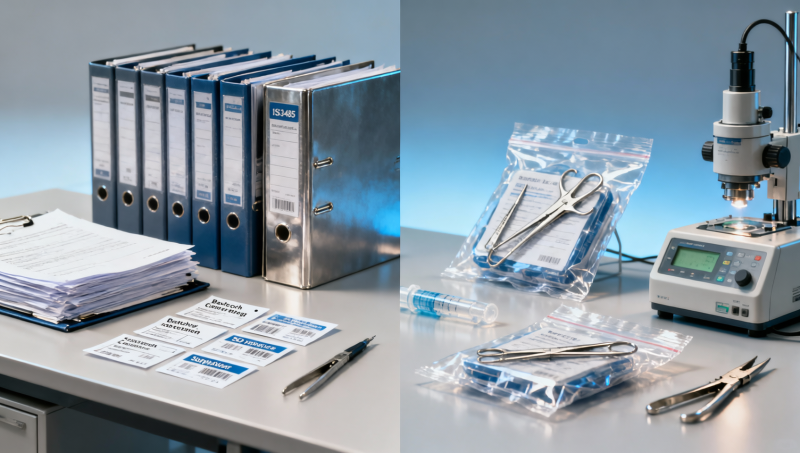
ISO 13485 audit requirements often reveal the same weak points that generate the most corrective actions, from document control and supplier oversight to CAPA effectiveness and risk-based validation. For buyers, operators, and MedTech leaders comparing technical credibility, understanding how these findings connect with biocompatibility testing standards, autoclave sterilization validation, and signal to noise ratio in patient monitors is essential for making compliant, evidence-based decisions.
In practice, audit findings are rarely random. The majority of corrective actions in medical device quality management systems cluster around a limited number of process failures: uncontrolled revisions, incomplete supplier qualification, weak validation rationale, poor traceability, and CAPA records that close on paper but not in performance. These issues affect more than certification status. They shape procurement risk, product reliability, complaint rates, and regulatory readiness under MDR and IVDR.
For hospital procurement teams, MedTech founders, quality managers, and laboratory planners, it is not enough to ask whether a manufacturer is certified. A better question is which ISO 13485 audit requirements most often trigger corrective actions, why those findings recur, and how they influence long-term technical credibility. That perspective is especially valuable when comparing suppliers of sterile devices, diagnostic systems, implantable products, monitoring equipment, and contract manufacturing services.
Why the Same ISO 13485 Audit Requirements Repeatedly Trigger Findings
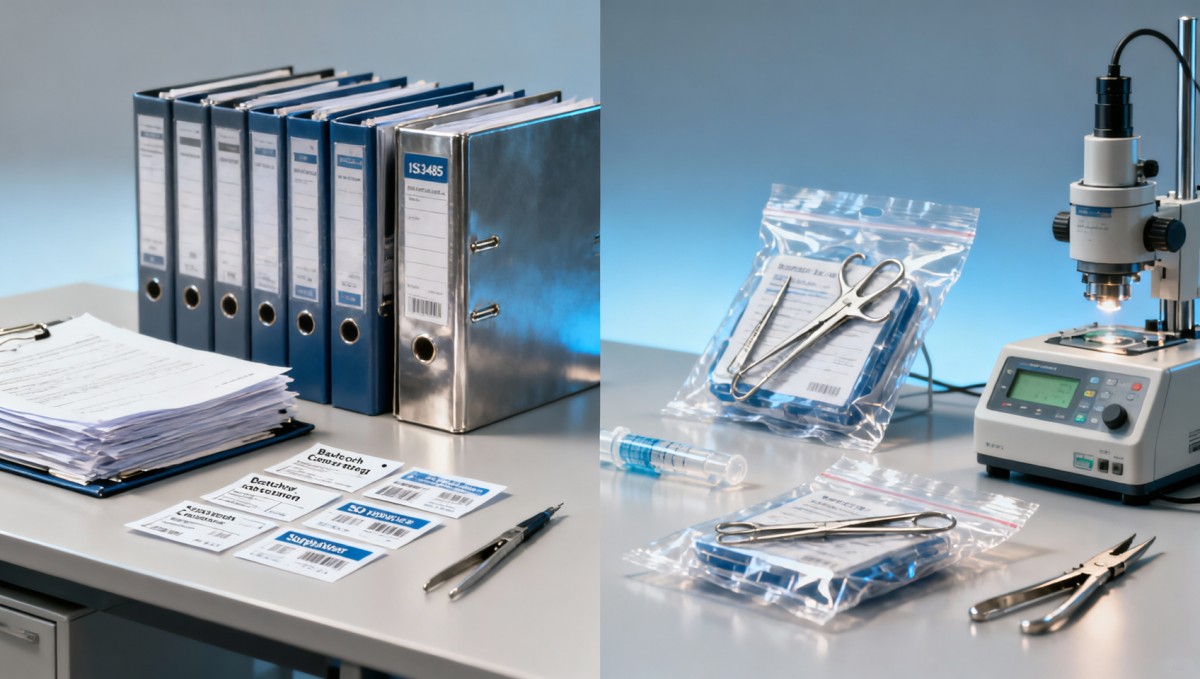
ISO 13485 audits are designed to test whether a quality management system is both documented and operational. Corrective actions are most often raised when procedures look complete in the manual but are inconsistently applied on the shop floor, in design transfer, or in supplier control. In many organizations, 4 to 6 core processes account for the majority of nonconformities during surveillance and recertification audits.
Auditors generally focus on objective evidence. If a company claims design changes are controlled within 24 hours, supplier reviews occur every 12 months, or validation is re-executed after major process changes, records must prove it. When those records are missing, outdated, or contradictory across departments, the result is often a major or minor nonconformity followed by corrective action deadlines that can range from 15 to 90 days.
The most frequent problem is not lack of intent. It is lack of system discipline. Quality, regulatory, engineering, and purchasing teams may each maintain different versions of specifications, approved supplier lists, or risk files. In a MedTech environment, even a small discrepancy can become significant if it affects sterilization parameters, material selection, software revision control, or acceptance criteria for signal quality in patient monitoring devices.
Common structural reasons behind repeated corrective actions
- Procedures are written once but not updated after process changes, acquisitions, or supplier transitions.
- Training records show attendance, but competency verification is weak or absent.
- Risk management files are disconnected from validation, complaint handling, and post-market feedback loops.
- Quality agreements with critical suppliers are incomplete, generic, or not aligned with actual incoming inspection controls.
For procurement and executive teams, this matters because repeated audit findings increase operational friction. A supplier with 3 unresolved audit themes across document control, CAPA, and process validation may still hold a certificate, but the risk profile is materially different from a supplier with stable closure history and clear evidence of effectiveness checks over 6 to 12 months.
Document Control and Traceability: The Most Visible Source of Nonconformities
Document control is one of the most audited and most frequently cited ISO 13485 audit requirements because it touches every stage of the device lifecycle. Auditors often discover obsolete drawings at production stations, conflicting work instructions between digital and printed versions, or risk files that do not match the latest design inputs. A single uncontrolled revision can compromise release decisions, labeling, sterilization instructions, or test acceptance limits.
Traceability failures are especially serious for implantable devices, sterile products, IVD components, and electronic assemblies used in patient monitoring. If a manufacturer cannot trace a lot number back to the approved material, sterilization cycle, software version, or final test record within a reasonable retrieval window such as 2 to 4 hours, auditors may question not only compliance but also recall readiness.
The challenge grows when organizations operate across multiple sites, contract manufacturers, and regional regulatory frameworks. Specifications for biocompatibility, packaging seal integrity, or EMC performance may be updated in one system but not in another. In those cases, corrective actions often point to ineffective change control rather than a narrow clerical problem.
Typical document control failures auditors see
The table below summarizes recurring document and traceability issues, why they trigger corrective actions, and what buyers should ask when evaluating supplier maturity.
For operators and technical reviewers, the practical takeaway is simple: ask how quickly records can be retrieved, how revisions are locked at the point of use, and whether traceability extends from incoming components to final distribution. Mature organizations can usually demonstrate this in 3 to 5 clicks within an electronic QMS or through a clearly indexed hybrid system.
Selection questions that reduce supplier risk
- How many controlled document revisions were issued in the last 12 months, and how were obsolete copies removed?
- Can the supplier retrieve traceability for one lot within 2 hours, including materials, process records, and release approval?
- Are risk files, validation reports, and labeling artwork linked to the same engineering change notice?
When these controls are weak, corrective actions tend to recur. When they are robust, they reduce audit friction and provide a more reliable basis for procurement decisions, especially for products with sterile barrier systems, software-driven outputs, or patient-contact materials.
Supplier Control, Purchasing Data, and Incoming Quality Oversight
Supplier control is another top source of ISO 13485 corrective actions because manufacturers often rely on external partners for critical processes such as molding, machining, coating, sterilization, packaging, electronics assembly, or reagent preparation. Certification alone does not satisfy audit expectations. Organizations must define approval criteria, monitor performance, and ensure purchasing information is technically complete and risk-based.
Auditors typically examine whether the approved supplier list distinguishes between critical, major, and standard suppliers. A vendor providing a primary polymer for a patient-contact device or running an autoclave sterilization process should not be reviewed with the same depth as a general packaging carton supplier. Many findings occur because supplier classifications are generic and annual reviews are performed as a checklist exercise rather than a performance analysis.
Purchasing data is equally important. Drawings, material specifications, cleanliness requirements, bioburden limits, calibration expectations, and change notification periods must be unambiguous. If a purchase order omits a critical tolerance of ±0.05 mm or fails to define a validated sterilization parameter range, downstream inspection may not detect drift until complaints or audit sampling expose the gap.
What a stronger supplier oversight model looks like
The table below compares a reactive supplier control approach with a more mature, audit-resilient model.
For procurement leaders, the important insight is that supplier control is not just a quality department issue. It directly affects total cost of ownership. A low-price vendor can become expensive if incoming failures increase line stoppages, revalidation events, complaint investigations, or resourcing pressure across engineering and regulatory teams over a 6- to 18-month period.
High-value metrics to request during supplier evaluation
- Critical supplier review frequency: every 3, 6, or 12 months depending on process risk.
- SCAR closure target: often 30 to 60 days for standard issues, shorter for patient-safety-related findings.
- Incoming acceptance criteria tied to material identity, dimensional tolerance, microbial load, or electrical performance.
- Formal supplier change notification windows, commonly 60 to 180 days before implementation for critical changes.
A supplier that can explain these controls clearly is usually better positioned to withstand both ISO 13485 audits and customer technical due diligence. That is highly relevant when comparing contract manufacturers or component suppliers that influence device safety, sterility, signal quality, or long-term reliability.
CAPA Effectiveness and Risk-Based Validation: Where Auditors Test Real System Maturity
Corrective and preventive action systems often trigger some of the most consequential findings because they reveal whether a company merely documents problems or actually learns from them. Auditors look for evidence that nonconformities, complaints, trending data, internal audit results, and supplier issues are translated into root cause analysis, action plans, implementation, and measurable effectiveness checks. If any of those steps are weak, CAPA becomes a repeat finding.
A common failure pattern is superficial root cause analysis. Teams may identify operator error, training gap, or isolated oversight without exploring systemic drivers such as unclear acceptance limits, poor fixture design, unstable software configuration, or inadequate process windows. When the same issue recurs within 3 to 6 months, auditors often conclude the original CAPA was ineffective.
Risk-based validation is closely connected. Process validation, software validation, cleaning validation, packaging validation, and sterilization validation must be aligned with risk severity and intended use. For example, an autoclave sterilization process with exposure time, temperature, and load configuration variables cannot be justified by a one-time report if product family changes or packaging geometry shifts materially. The same principle applies to patient monitor performance when signal-to-noise ratio or alarm reliability changes after a hardware revision.
Warning signs of a weak CAPA and validation framework
- CAPA closure is based on completed tasks rather than verified outcome metrics.
- Effectiveness checks are performed too early, such as after 2 weeks when a full production cycle requires 6 to 8 weeks.
- Validation rationale does not explain worst-case conditions, sample size, or revalidation triggers.
- Risk files are not updated after process changes, complaint trends, or supplier substitutions.
For buyers and technical operators, these are not abstract audit concerns. They affect whether a sterilization process remains reproducible, whether a biocompatibility claim is still supported after material substitution, and whether monitoring equipment maintains acceptable signal integrity in real-world use. In several device categories, the difference between a stable process and a drifting one may be hidden until validation discipline uncovers it.
Practical evidence that indicates stronger maturity
A stronger organization can usually show CAPA aging data, recurrence trends over 12 months, statistically or operationally justified effectiveness checks, and revalidation criteria linked to material, tooling, software, or environmental changes. It can also explain how design risk management, complaint trending, and production process controls feed one another rather than operating as isolated files.
That level of integration is exactly where independent benchmarking becomes valuable. A data-driven review of signal-to-noise ratio in wearable sensors, packaging fatigue under transport simulation, or material performance after repeated sterilization cycles helps decision-makers move beyond paper compliance and evaluate engineering truth.
How Buyers and Decision-Makers Should Evaluate Audit Risk Before Selecting a MedTech Supplier
Procurement teams often rely on certificates, quotations, and delivery promises, but those inputs alone do not reveal which ISO 13485 audit requirements are likely to generate future corrective actions. A more disciplined supplier review should combine quality-system evidence with technical benchmark data, process transparency, and risk-to-use-case alignment. This is particularly important for organizations sourcing high-sensitivity monitoring systems, sterile assemblies, laboratory devices, or patient-contact components.
A practical evaluation model uses 4 dimensions: quality-system robustness, validation depth, supplier control maturity, and engineering performance evidence. Each dimension should be scored using defined indicators rather than general impressions. For instance, a supplier may score well on document presentation but poorly on change control linkage, complaint response time, or long-term material fatigue data.
The purpose is not to duplicate a certification audit. It is to identify hidden execution risk before contracts, line transfer, or product launch. In many projects, a 2- to 3-week technical due diligence phase costs far less than one unplanned revalidation, one delayed regulatory filing, or one field correction driven by supplier process drift.
A procurement-oriented audit risk checklist
The following table can be used as a practical review framework when comparing manufacturers, laboratories, or critical component suppliers.
This approach aligns closely with the needs of value-based procurement. It helps decision-makers distinguish between a supplier that is audit-passable and one that is operationally dependable over 12, 24, or 36 months. For organizations handling complex devices, that difference can determine launch speed, complaint burden, and total lifecycle cost.
Where independent benchmarking adds measurable value
VitalSync Metrics supports this decision process by translating technical parameters into comparable evidence. When teams need to assess the credibility behind biocompatibility claims, autoclave sterilization consistency, or signal quality in monitoring equipment, benchmarking data provides a more objective basis than promotional literature. That is especially useful when internal resources are limited or when competing suppliers present similar certifications but very different engineering depth.
FAQ: Practical Questions About ISO 13485 Audit Requirements and Corrective Actions
Many buyers, quality teams, and operators ask similar questions when reviewing suppliers or preparing for audits. The answers below address common search and selection concerns in practical terms.
Which ISO 13485 clauses generate the most corrective actions?
In many audits, the heaviest concentration of findings appears in document control, purchasing controls, validation, CAPA, complaint handling, training effectiveness, and management of outsourced processes. The exact clause numbers matter less than whether evidence is current, traceable, and consistent across departments. If 2 or 3 of these areas are weak at the same time, audit risk rises sharply.
How can a procurement team detect hidden quality-system weakness before onboarding a supplier?
Ask for sample records rather than policy summaries. Useful examples include a recent engineering change, one CAPA with effectiveness evidence after 90 days, one critical supplier review, and one validation summary showing worst-case rationale. If the supplier struggles to connect these documents coherently, the system may be more presentation-driven than execution-driven.
How often should validated processes be re-evaluated?
There is no universal interval for every process. Revalidation is usually triggered by significant changes in materials, equipment, software, tooling, packaging, sterilization load, or environmental conditions. Some organizations also define periodic review intervals, such as every 12 or 24 months for high-risk processes, combined with event-based triggers when drift or complaint trends appear.
Why do CAPA records fail audits even when actions were completed?
Because completion is not the same as effectiveness. Auditors want to see whether the issue stopped recurring, whether risk was updated, whether related procedures and training changed, and whether the chosen action addressed the true root cause. A CAPA that closes in 14 days but recurs in the next batch or quarter is often viewed as inadequate.
What is the link between audit findings and technical benchmarking?
Audit findings show where a management system may be weak; benchmarking shows whether technical performance supports the claims being made. Together, they help determine whether a supplier can consistently deliver clinically relevant performance, whether in implant material endurance, sterilization reproducibility, or signal-to-noise ratio in patient monitors under real operating conditions.
The ISO 13485 audit requirements that trigger the most corrective actions are rarely isolated paperwork errors. They point to deeper execution risks in document control, traceability, supplier oversight, CAPA effectiveness, and risk-based validation. For buyers and MedTech decision-makers, these themes are valuable because they reveal whether a certified supplier is also a dependable engineering partner.
By combining quality-system review with technical evidence such as biocompatibility support, sterilization validation logic, and device performance benchmarks, organizations can make more reliable sourcing decisions and reduce downstream compliance surprises. If you need a clearer way to compare supplier credibility in the healthcare and life sciences supply chain, VitalSync Metrics can help translate complex technical parameters into procurement-ready insight.
Contact us to discuss your evaluation criteria, request a tailored benchmarking framework, or learn more about evidence-based supplier assessment for MedTech procurement, product development, and laboratory planning.
- value-based procurement
- wearable sensors
- hospital procurement
- technical benchmarking
- material fatigue
- signal-to-noise ratio
- life sciences
- supply chain
- long-term reliability
- engineering truth
- data-driven
- medical device quality
- ISO 13485 Audits
- Packaging
- iso 13485 audit requirements
- signal to noise ratio in patient monitors
- biocompatibility testing standards
- autoclave sterilization validation
Recommended News
- 2026.10.08How to Evaluate Compact Biosignal Sensors for Reliable Wearable Vital-Sign MonitoringLydia Vancini (Regulatory Compliance Lead)
- 2026.10.07How Custom Orthotics Technology Can Improve Physical Therapy OutcomesSarah Jenkins (Laboratory Infrastructure Consultant)
- 2026.10.06How to Validate Metal Biocompatibility Testing for Implantable Medical DevicesDr. Julian Rossi (RehabTech Specialist)
The VitalSync Intelligence Brief
Receive daily deep-dives into MedTech innovations and regulatory shifts.