 Get Insights

Medical Device Quality Management for Suppliers: Key ISO 13485 Requirements
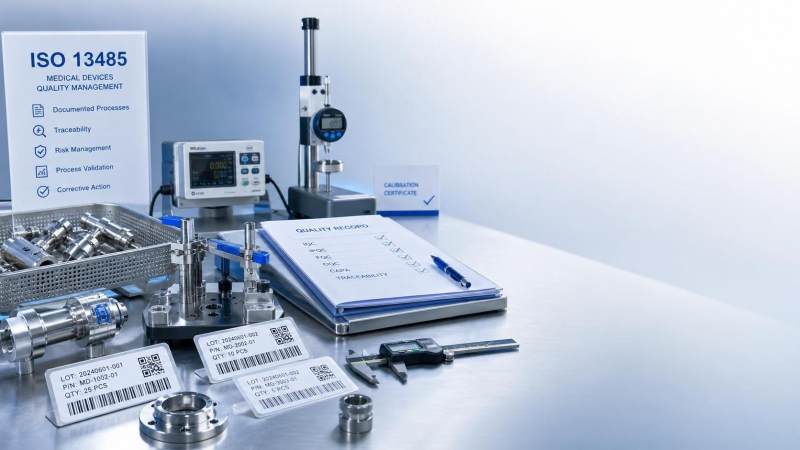
Why is medical device quality management for suppliers under closer scrutiny now?
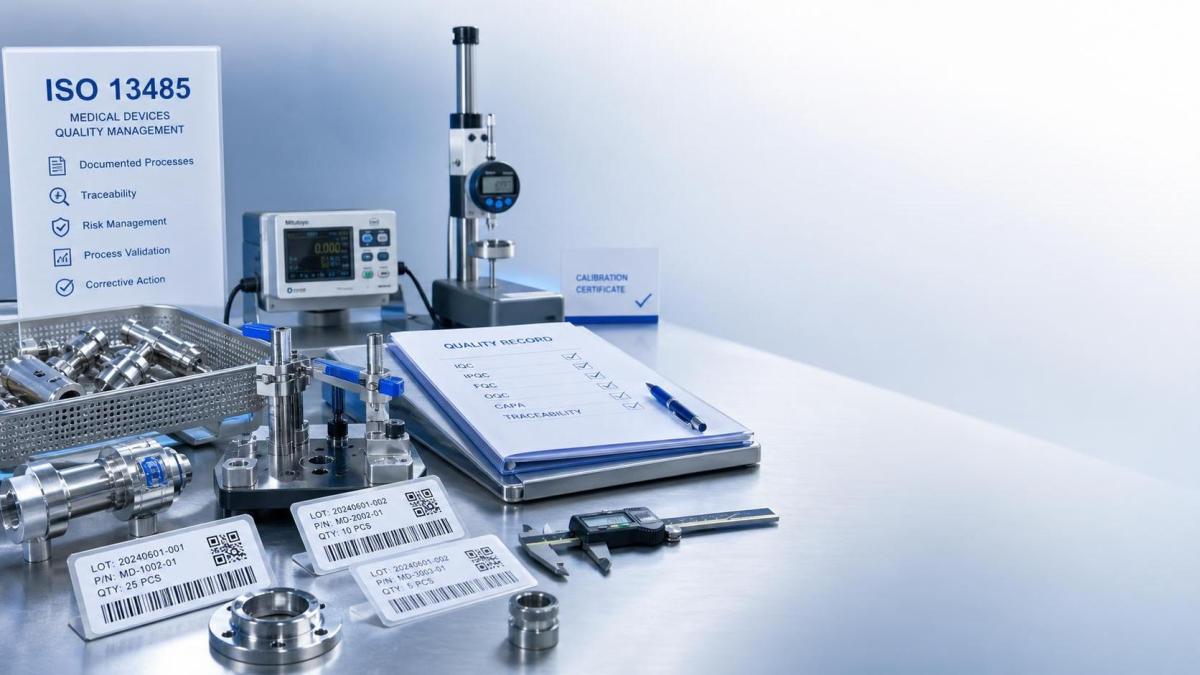
Medical device quality management for suppliers has moved far beyond routine paperwork. It now sits at the center of product reliability, audit readiness, and market access.
That pressure comes from two directions. Devices are becoming more complex, while regulators expect clearer evidence that every outsourced process remains controlled.
In practical terms, a supplier is no longer judged only by delivery speed or price. The real question is whether its processes can consistently support clinical-grade performance.
ISO 13485 frames that expectation clearly. It requires documented controls, risk-based oversight, traceability, and records that can withstand internal review, customer audits, and regulatory inspection.
This is why medical device quality management for suppliers matters across the broader healthcare supply chain. A weak supplier system can trigger recalls, nonconformities, delayed submissions, or field failures.
More organizations are also working in value-based procurement environments. Claims are no longer enough. Performance data, validation evidence, and repeatable process capability carry more weight.
That same shift explains why technical benchmarking groups such as VitalSync Metrics are becoming relevant. Independent data helps separate polished marketing language from measurable manufacturing discipline.
What does ISO 13485 actually expect from a supplier?
Many teams ask this in a very direct way: does ISO 13485 require certification, or does it require controlled behavior? The short answer is controlled behavior, supported by evidence.
Certification can help, but it does not replace evaluation. Medical device quality management for suppliers depends on whether the supplier can demonstrate effective quality planning and repeatable execution.
Several requirements tend to carry the most operational weight:
- Documented procedures for production, inspection, change control, training, and nonconformance handling.
- Traceability for materials, components, batches, and records where risk or regulation requires it.
- Risk management integration, especially when supplier output affects safety, performance, sterility, or measurement accuracy.
- Validation of special processes that cannot be fully verified by later inspection.
- Control of outsourced activities, including criteria for selection, monitoring, and re-evaluation.
- CAPA discipline, with root cause analysis tied to real evidence rather than assumptions.
A common misunderstanding is that finished product inspection can compensate for weak process control. In medical devices, that is rarely enough.
If bonding strength, software configuration, cleanroom handling, or calibration drift are not controlled upstream, downstream inspection may only detect the damage after cost and risk have already increased.
A practical screening view
The table below summarizes how core ISO 13485 topics are usually interpreted when reviewing medical device quality management for suppliers.
Which suppliers need the deepest level of control?
Not every supplier carries the same risk. A packaging label vendor and an implant coating processor should not be managed with identical depth.
The more useful approach is to classify suppliers by impact. Medical device quality management for suppliers becomes stronger when oversight is matched to product and patient risk.
High-control categories usually include suppliers tied to:
- Critical raw materials or biocompatibility-sensitive inputs
- Sterilization, cleanroom assembly, or aseptic handling
- Software, electronics, sensors, or performance-critical calibration
- Special processes such as welding, molding, coating, or heat treatment
- Components affecting strength, fatigue life, dosage, or signal accuracy
Lower-risk suppliers still need control, but the evidence set can be lighter. That may mean desk assessments, periodic scorecards, and incoming verification with defined sampling logic.
In actual supplier qualification work, the most common mistake is over-relying on certificates while under-reviewing process capability and engineering limits.
This is where independent testing can add value. A benchmarking lab can verify whether claimed sensor stability, dimensional tolerance, or material fatigue performance is real under controlled conditions.
How can you tell if a supplier system is mature or only audit-ready on paper?
A polished document set can look convincing. The harder question is whether the system performs well when change, deviation, or scale pressure appears.
A mature system usually shows consistency between procedures, shop-floor behavior, and records. You can ask simple questions and still see a coherent trail.
For example, if a critical dimension drifts, does the supplier only sort parts, or does it investigate machine condition, operator training, maintenance history, and validation status?
That distinction matters because medical device quality management for suppliers depends on prevention, not just containment.
A useful review often includes these checks:
- Compare approved procedures with live production records from recent lots.
- Sample closed CAPAs and confirm effectiveness evidence, not just closure signatures.
- Review change history for materials, firmware, tooling, and subcontractors.
- Check whether training records align with actual job assignments.
- Trace one batch backward to raw material and forward to release data.
When those links break, risk is already visible. Even if output currently passes inspection, the control system may not be stable enough for regulated growth.
Where do supplier quality failures usually start?
Failures rarely begin with one dramatic event. More often, they build from quiet gaps that look manageable until they intersect.
One recurring issue is unclear change notification. A resin grade, adhesive source, firmware version, or test fixture may shift without formal impact review.
Another frequent weakness is incomplete traceability. Records exist, but not in a way that supports fast containment when a complaint or deviation appears.
Medical device quality management for suppliers also breaks down when risk files and supplier controls are disconnected. In that case, critical characteristics are not monitored with the right frequency.
A few warning patterns deserve attention:
- Incoming defects are rising, but supplier scores still look acceptable.
- On-time delivery is tracked closely, while process capability is not.
- Audit findings close quickly, yet the same issue returns in another form.
- Engineering changes move faster than validation and document updates.
In more data-driven programs, these signals are paired with technical evidence. That may include repeatability studies, fatigue data, calibration drift analysis, or sensor accuracy benchmarking.
This is one reason VSM-style benchmarking is useful in the wider MedTech ecosystem. It translates production claims into measurable performance language that quality systems can actually use.
What is a workable roadmap for strengthening medical device quality management for suppliers?
The goal is not to create endless supplier paperwork. The goal is to build control where failure would be costly, hard to detect, or harmful to performance.
A practical roadmap usually starts with supplier segmentation. Rank suppliers by product impact, process complexity, and detectability of failure.
Then align review depth to that ranking. Some suppliers need onsite audits and periodic validation review. Others may only need structured questionnaires and routine performance checks.
It also helps to define a small set of non-negotiable controls:
- Formal change notification before implementation
- Traceability expectations by material, lot, or serial level
- Validation requirements for special processes
- Escalation rules for deviations and out-of-specification events
- Periodic review of capability, complaints, and CAPA trends
Where performance claims are technically sensitive, independent verification should be considered early. It can shorten qualification cycles and reduce argument over conflicting supplier data.
In the end, strong medical device quality management for suppliers is less about checking a standard and more about proving control under real operating conditions.
The next useful step is to map critical suppliers against ISO 13485 control points, then compare those results with actual process evidence, not declarations alone.
From there, focus on traceability gaps, change control discipline, and validation depth. Those three areas usually reveal whether the supplier base is ready for scale, audits, and long-term reliability.
Recommended News
- 2026.10.14Clinic Supplier Comparison: Evaluating Cost, Delivery Reliability, and SupportDr. Alistair Thorne (Senior Biomedical Engineer)
- 2026.10.13Engineering Performance Testing Services: Evaluating Test Methods and AccuracyDr. Alistair Thorne (Senior Biomedical Engineer)
- 2026.10.12Preparing for an ISO 13485 Audit: When to Use External QMS SupportDr. Julian Rossi (RehabTech Specialist)
The VitalSync Intelligence Brief
Receive daily deep-dives into MedTech innovations and regulatory shifts.