 Get Insights

Medical device assessment mistakes that weaken market readiness
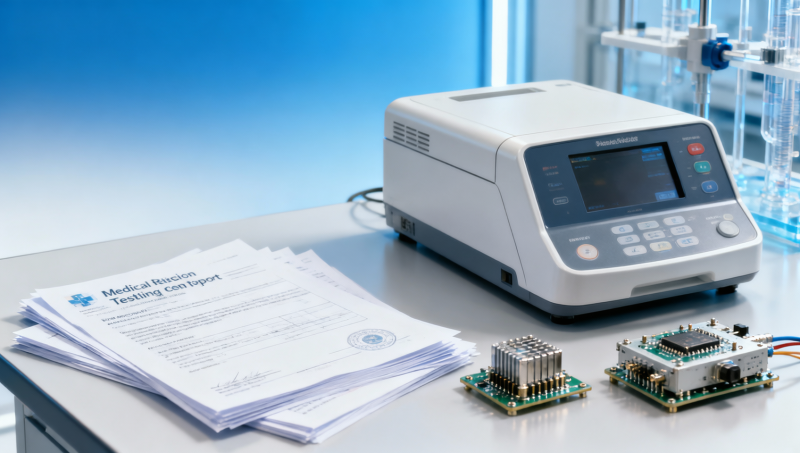
Medical device assessment often breaks down long before a product reaches procurement review or clinical use. The problem is rarely a lack of vendors or innovation. More often, teams rely on incomplete validation, over-trust marketing claims, or treat healthcare compliance as a late-stage checkbox instead of a market-readiness requirement. For procurement leaders, MedTech startups, lab planners, and operational users, the consequence is serious: delayed purchasing decisions, failed pilot deployments, higher regulatory risk, and lower confidence in long-term performance.
The core issue behind searches related to medical device assessment, medical device certification, MDR certification, and hospital equipment standards is practical decision-making. Readers want to know which assessment mistakes most often weaken market readiness, how to identify them early, and what evidence actually supports a reliable sourcing or go-to-market decision. They are not looking for abstract definitions. They need a sharper framework for judging technical integrity, compliance readiness, and real-world usability.
In practice, the biggest assessment failures usually come from seven areas: weak performance benchmarking, misread regulatory pathways, poor test design, missing use-case validation, inadequate reliability evidence, fragmented documentation, and failure to translate technical results into procurement-grade decision criteria. Getting these areas right improves not only compliance posture, but also commercialization speed, buyer trust, and deployment success.
Why medical device assessment mistakes directly weaken market readiness
Market readiness in healthcare is not just about whether a device functions in a controlled setting. It depends on whether the product can withstand scrutiny from clinical users, quality teams, procurement committees, regulatory reviewers, and technical evaluators. A device may look promising in a demo and still fail a hospital review because the assessment did not answer the questions that matter in actual buying and deployment decisions.
For information researchers, the key concern is credibility: is there enough verifiable evidence to trust the claims? For operators and users, the concern is functional consistency in realistic working conditions. For procurement professionals, the focus shifts to risk, standards alignment, total lifecycle value, and supplier defensibility. For business decision-makers, the central issue is whether the product can scale without regulatory or performance surprises.
This is why weak assessment does more than create technical uncertainty. It undermines commercial readiness. Hospitals and laboratories increasingly expect objective benchmarks, standardized documentation, and transparent evidence tied to real operational outcomes. If a product cannot demonstrate these clearly, it appears immature regardless of how advanced the technology may be.
The most common mistake: confusing product claims with validated performance
One of the most damaging errors in MedTech evaluation is treating promotional positioning as if it were technical proof. Claims such as “high accuracy,” “clinical-grade precision,” or “AI-enhanced workflow efficiency” may sound persuasive, but without defined test protocols, comparator references, and measurable thresholds, they do not support market readiness.
This problem is especially common in fast-growing product categories such as wearable sensors, connected diagnostics, imaging systems, and robotic platforms. For example, a wearable device may advertise strong signal capture, but if no independent Ultrasound Metrics, signal-to-noise analysis, or motion-artifact testing is provided, buyers cannot determine whether the device performs reliably in real patient environments. Likewise, a surgical platform may emphasize automation, but without clear surgical robot latency test results under simulated workflow conditions, response-time risk remains unresolved.
To avoid this mistake, assessment teams should ask:
- What exact claim is being made?
- What test method was used to validate it?
- Was the test performed under realistic clinical or operational conditions?
- Is there a recognized benchmark, threshold, or comparator device?
- Was the data generated internally only, or independently verified?
If these questions cannot be answered clearly, the product is not truly assessment-ready, even if it appears innovation-ready.
Regulatory readiness is often treated too late
Another common mistake is separating technical evaluation from regulatory strategy. Teams may focus on engineering performance first and assume medical device certification, CE marking, or MDR certification can be addressed later. In reality, regulatory readiness shapes what evidence must be collected from the beginning.
Under MDR and IVDR expectations, manufacturers and buyers alike need stronger documentation, clearer traceability, and more robust performance substantiation than in the past. When assessment activities are not aligned with intended classification, claims scope, risk profile, and post-market obligations, gaps emerge late in the process. These gaps can delay launch, trigger retesting, or reduce buyer confidence even if the product itself is technically strong.
This matters to both vendors and procurement teams. A hospital buyer reviewing a product without a credible compliance roadmap may see future servicing, quality, and legal risk. A startup that has not mapped its evidence package to regulatory expectations may waste time generating attractive but non-actionable data.
Strong assessment therefore includes regulatory logic from the outset, including:
- Device classification assumptions
- Applicable MDR or IVDR requirements
- Intended use and claims consistency
- Risk management linkage
- Performance and usability evidence planning
- Technical file readiness
Testing in ideal conditions instead of real clinical environments
A device can pass bench testing and still struggle in practice. One major reason is that assessment protocols are often built around stable, idealized conditions rather than actual use environments. This weakens market readiness because healthcare buyers are not purchasing laboratory perfection; they are purchasing repeatable performance in complex settings.
Consider how environmental and workflow variables affect device behavior:
- Operator skill differences
- Patient variability
- Noise, vibration, humidity, or temperature conditions
- Network instability for connected systems
- Cleaning and sterilization cycles
- Extended use, downtime, and maintenance intervals
When these factors are excluded from assessment, results may overstate readiness. This is particularly important for hospital equipment, diagnostics, monitoring systems, and robotics. Buyers increasingly expect performance evidence that reflects realistic burden, not ideal demonstration settings.
Assessment should therefore include scenario-based validation. Instead of asking only, “Does it work?”, teams should ask, “Does it still perform within acceptable limits when used repeatedly, by mixed operators, in variable environments, under realistic workload conditions?” That is a much stronger indicator of deployment success.
Ignoring hospital equipment standards and procurement logic
Many assessments are technically detailed but commercially incomplete because they ignore how hospitals actually evaluate equipment. Procurement teams do not buy devices on engineering novelty alone. They need evidence that maps to hospital equipment standards, purchasing criteria, implementation burden, and lifecycle cost control.
In many cases, suppliers present raw test data but fail to translate it into decision-relevant meaning. A procurement committee may receive pages of specifications without clear answers to practical questions such as:
- Is the device compliant with relevant safety and quality expectations?
- How does performance compare with current alternatives?
- What training burden will it create?
- What are the maintenance and calibration requirements?
- How likely is failure or downtime?
- Can the supplier support long-term service continuity?
This is where assessment often fails the market-readiness test. The technical review may be thorough, but if the output is not converted into procurement-grade evidence, the device remains difficult to approve. Stronger assessments bridge engineering data and buying logic. They frame results in terms of reliability, risk reduction, interoperability, cost stability, and implementation confidence.
Overlooking reliability, durability, and long-term ownership risk
Another frequent mistake is focusing too heavily on first-use performance and too lightly on long-term dependability. In healthcare, a device that performs well on day one but degrades quickly under routine use is not market ready. Reliability is not a secondary issue; it is central to trust.
This is especially relevant for devices with moving parts, repeat-use interfaces, wearable materials, batteries, sensors, embedded software, or sterilization exposure. Material fatigue, drift, calibration loss, software instability, connector wear, and component aging can all erode product value over time.
Assessment should therefore include evidence such as:
- Accelerated life testing
- Material fatigue analysis
- Repeatability and drift monitoring
- Maintenance cycle performance data
- Failure mode trends
- Software update stability validation
For procurement leaders and executives, this evidence supports better total-cost and risk judgments. For users and operators, it signals whether the device will remain dependable after installation, not just during evaluation.
Poor documentation weakens trust even when test results are acceptable
Some products are held back not because the data is weak, but because the documentation is fragmented, inconsistent, or difficult to audit. In healthcare, evidence must be not only generated, but also structured in a way that different stakeholders can review and trust.
A common problem is mismatch across documents: marketing claims say one thing, technical files show another, test reports lack context, and compliance summaries omit limitations. This creates uncertainty. Buyers and reviewers may then assume that unresolved risk exists, even if the underlying engineering is sound.
Assessment documentation should be organized so that each major claim can be traced to supporting evidence, test conditions, limitations, and relevance to the intended use case. Ideally, this includes standardized summaries, benchmark tables, and whitepaper-style reporting that translates raw engineering findings into usable decision support.
For an organization like VitalSync Metrics, this is where independent benchmarking creates value. Converting manufacturing parameters and technical outputs into consistent, decision-ready documentation helps remove ambiguity and improve sourcing confidence.
How to assess medical devices more effectively before launch or procurement
To improve market readiness, assessment should be built as an integrated framework rather than a loose collection of tests. The most effective approach combines engineering validation, regulatory alignment, real-world performance review, and procurement relevance.
A practical framework includes the following steps:
- Define critical claims clearly
Identify which performance, safety, workflow, or outcome claims must be proven. - Map claims to standards and regulatory expectations
Ensure the evidence strategy supports certification and market access requirements. - Use realistic benchmarking methods
Compare against recognized devices, thresholds, or use-case baselines rather than isolated internal targets. - Test under operational conditions
Include operator variation, workload stress, environmental variables, and connectivity factors where relevant. - Evaluate lifecycle reliability
Look beyond initial function to durability, maintenance behavior, and long-term consistency. - Translate evidence into buyer-friendly outputs
Present results in formats that procurement, quality, and executive stakeholders can interpret quickly. - Use independent review when stakes are high
Third-party technical benchmarking can reveal blind spots and strengthen defensibility.
This framework is useful whether the goal is launch preparation, supplier comparison, procurement screening, or internal due diligence.
What good market-readiness evidence looks like
High-quality assessment evidence is specific, traceable, comparative, and relevant to actual decision-making. It should help a reader answer not just whether a device passed a test, but whether it is a safe, reliable, and credible choice in the intended market context.
Good evidence usually has these characteristics:
- Clear link between product claims and test results
- Defined methodologies and acceptance criteria
- Realistic use-case conditions
- Independent or standardized benchmarking where possible
- Regulatory and standards alignment
- Transparent limitations and risk notes
- Structured reporting that supports procurement and executive review
When these elements are missing, the result is hesitation. When they are present, teams move faster with greater confidence.
Conclusion: better assessment leads to better sourcing, faster approval, and stronger trust
The biggest medical device assessment mistakes are rarely dramatic. They are often quiet gaps: unverified claims, incomplete compliance planning, unrealistic testing conditions, weak durability evidence, or documentation that does not support real buyer decisions. But these small weaknesses add up quickly and can seriously damage market readiness.
For researchers, users, procurement professionals, and business leaders, the best path forward is to evaluate devices through a more disciplined lens: technical truth, regulatory relevance, operational realism, and lifecycle reliability. In a healthcare market shaped by value-based procurement and rising compliance expectations, stronger assessment is not an administrative burden. It is a strategic advantage.
Organizations that benchmark devices rigorously, align evidence with MDR/IVDR expectations, and translate results into procurement-grade insight are better positioned to make smarter sourcing decisions and bring more credible products to market. That is how market readiness is truly built.
- MDR certification
- value-based procurement
- hospital equipment standards
- medical device assessment
- wearable sensors
- technical integrity
- technical benchmarking
- material fatigue
- manufacturing parameters
- sourcing confidence
- medical device certification
- healthcare compliance
- Robotics
- Ultrasound Metrics
- surgical robot latency test
Recommended News
- 2026.10.08How to Evaluate Compact Biosignal Sensors for Reliable Wearable Vital-Sign MonitoringLydia Vancini (Regulatory Compliance Lead)
- 2026.10.07How Custom Orthotics Technology Can Improve Physical Therapy OutcomesSarah Jenkins (Laboratory Infrastructure Consultant)
- 2026.10.06How to Validate Metal Biocompatibility Testing for Implantable Medical DevicesDr. Julian Rossi (RehabTech Specialist)
The VitalSync Intelligence Brief
Receive daily deep-dives into MedTech innovations and regulatory shifts.