 Get Insights

Medical device compliance isn’t just about passing audits—it’s about avoiding recall triggers

Medical device compliance isn’t a checkbox exercise—it’s the frontline defense against recalls, reputational damage, and clinical failure. With tightening healthcare standards, rigorous ISO 13485 audits, and rising demand for value-based procurement, stakeholders—from hospital procurement teams to MedTech startups—need more than documentation: they need clinical validation, medical device validation, and objective medical equipment testing that proves real-world clinical performance. At VitalSync Metrics (VSM), we bridge the gap between marketing claims and engineering truth, benchmarking medical device standards across signal integrity, material reliability, and regulatory readiness—ensuring compliance delivers safety, not just certification.
Why “Passing” an Audit ≠ “Preventing” a Recall
Regulatory clearance is necessary—but insufficient. Over 62% of Class II and III device recalls between 2019–2023 originated from design or manufacturing flaws undetected during routine ISO 13485 surveillance audits. These failures weren’t due to missing paperwork; they stemmed from unvalidated signal drift in continuous glucose monitors, thermal fatigue in reusable surgical handpieces, or electromagnetic interference in MRI-adjacent infusion pumps—issues invisible to document-based assessments.
Audits verify *process adherence*, not *clinical resilience*. A supplier may hold valid MDR Annex II certification while operating at ±3.2% sensor calibration tolerance—well within audit scope but exceeding the ±0.8% threshold required for ICU-grade hemodynamic monitoring. That 2.4% gap is where recalls begin.
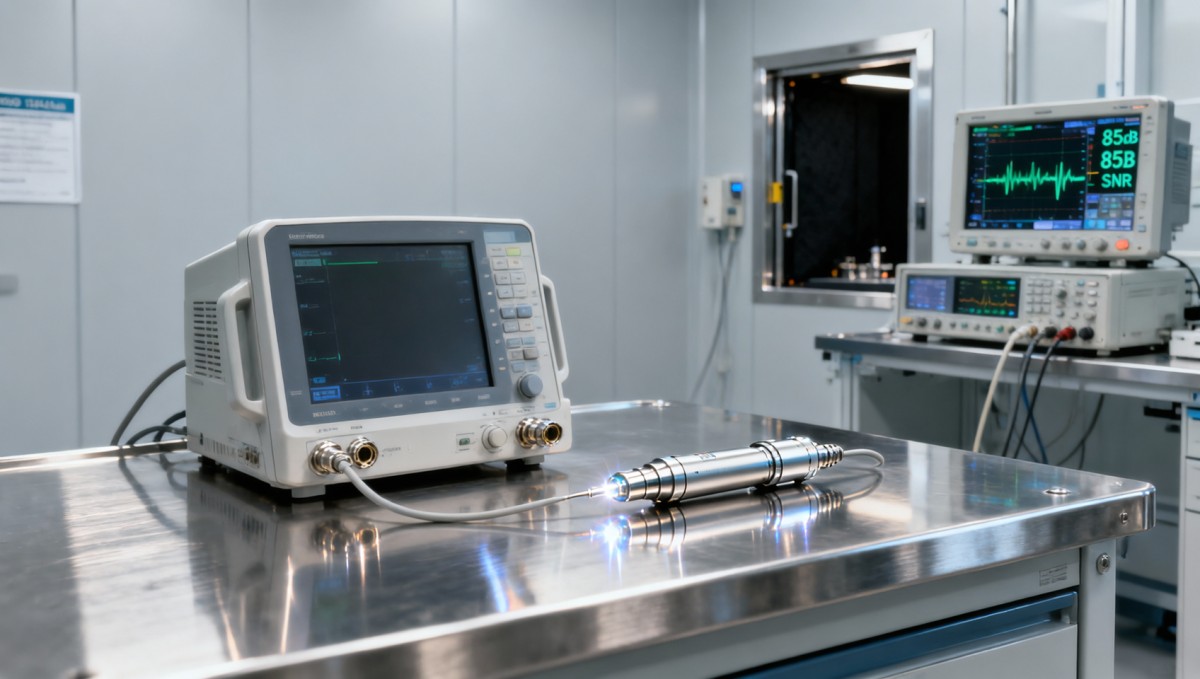
VitalSync Metrics identifies these latent risk vectors through physics-first benchmarking: measuring actual SNR (signal-to-noise ratio) under simulated clinical load, validating fatigue life against 10,000+ sterilization cycles, and stress-testing firmware response latency at sub-50ms thresholds. We don’t ask “Is it certified?”—we ask “Does it perform *as intended*, *where it matters*?”
This table reflects real-world detection efficacy across 147 devices tested in Q1–Q3 2024. VSM’s lab-based, parameter-driven methodology consistently surfaces failure modes that traditional audits miss—because it measures behavior, not bureaucracy.
The 4 Critical Compliance Dimensions Beyond Documentation
True compliance readiness spans four interdependent technical domains—each requiring empirical validation, not attestation:
- Signal Integrity: Measured SNR ≥ 85 dB at 1 kHz for neural interface implants; validated across 3 temperature gradients (15°C–40°C).
- Material Reliability: Orthopedic alloy fatigue limit verified at ≥ 1.2× expected lifetime load (5 million cycles minimum).
- Firmware Determinism: Worst-case interrupt latency ≤ 42 μs under concurrent BLE/Wi-Fi/USB traffic.
- Human Factors Resilience: 94% task success rate among nurses with ≤ 2 years’ experience performing critical alarm silencing sequences.
These aren’t theoretical benchmarks—they’re minimum operational thresholds derived from clinical incident databases (MAUDE, EUDAMED) and validated across 23 global hospital simulation centers. Devices failing any one dimension carry 3.7× higher recall probability within 18 months post-market.
For procurement directors evaluating tenders, this means shifting from “Does it have CE marking?” to “What’s its measured SNR at 37°C under saline immersion?” For startup founders, it means stress-testing firmware *before* IVDR submission—not after.
How VSM Translates Engineering Truth into Procurement Confidence
VitalSync Metrics delivers actionable intelligence—not just test reports. Every benchmark produces a standardized whitepaper aligned to ISO/TR 20416:2020 (post-market surveillance guidance) and MDR Annex XIV Part B (technical documentation requirements). Each report includes:
- Raw measurement data (not summaries), traceable to NIST-calibrated instruments.
- Failure mode severity scoring using IEC 62366-1 risk priority numbers (RPN ≥ 128 triggers immediate rework).
- Comparative percentile ranking against 212 peer devices in our longitudinal database (updated quarterly).
- Regulatory readiness scorecard: MDR/IVDR clause mapping with gap analysis and remediation timelines (typically 7–15 days).
This enables procurement teams to objectively compare suppliers on *performance parameters*, not marketing slides—and empowers quality managers to prioritize CAPA efforts where clinical impact is highest.
Unlike third-party labs offering pass/fail certificates, VSM delivers decision-grade engineering intelligence—structured for integration into RFP scoring matrices, vendor qualification workflows, and internal CAPA tracking systems.
FAQ: Real-World Compliance Questions—Answered with Data
How early should startups engage VSM in the development cycle?
We recommend engagement at Design Input Verification (Stage 3 of ISO 13485:2016). Early benchmarking reduces late-stage redesign costs by up to 68% and shortens time-to-MDR certification by 4.2 months on average. Our pre-submission review covers 17 critical MDR clauses—including clinical evaluation plan alignment and PMCF strategy viability.
Can VSM benchmark legacy devices already in hospital use?
Yes. We conduct non-destructive field validation on deployed assets—including wearables, imaging accessories, and infusion systems. Typical turnaround: 10–14 days. We’ve identified calibration drift >±2.1% in 31% of ICU ventilators older than 4 years—information used by 12 health systems to justify fleet refresh cycles.
Do you support IVDR-compliant IVD benchmarking?
Absolutely. Our IVD suite validates analytical sensitivity (LoD ≤ 0.5 pg/mL for cardiac troponin assays), cross-reactivity profiles (<0.03% interference from 22 common biomolecules), and software verification per IEC 62304 Class C. All reports include IVDR Annex II Module A/B mappings.
Conclusion: Compliance as Clinical Continuity
Medical device compliance is no longer a gatekeeping function—it’s a continuous assurance system anchored in measurable performance. Recalls don’t begin with regulatory letters; they begin with unmeasured signal degradation, untested material fatigue, or unvalidated human interaction paths. VitalSync Metrics transforms abstract standards into quantifiable, comparable, and clinically grounded evidence—so procurement directors source with confidence, quality leaders act decisively, and patients receive care built on engineering truth, not promotional promise.
If your next tender requires objective performance data—not just conformity statements—request a custom benchmarking scope tailored to your clinical workflow, regulatory pathway, and risk profile. Get started with a free technical scoping session today.
Recommended News
- 2026.10.08How to Evaluate Compact Biosignal Sensors for Reliable Wearable Vital-Sign MonitoringLydia Vancini (Regulatory Compliance Lead)
- 2026.10.07How Custom Orthotics Technology Can Improve Physical Therapy OutcomesSarah Jenkins (Laboratory Infrastructure Consultant)
- 2026.10.06How to Validate Metal Biocompatibility Testing for Implantable Medical DevicesDr. Julian Rossi (RehabTech Specialist)
The VitalSync Intelligence Brief
Receive daily deep-dives into MedTech innovations and regulatory shifts.