 Get Insights

Medical technology procurement often confuses ISO 13485 compliance with actual quality control
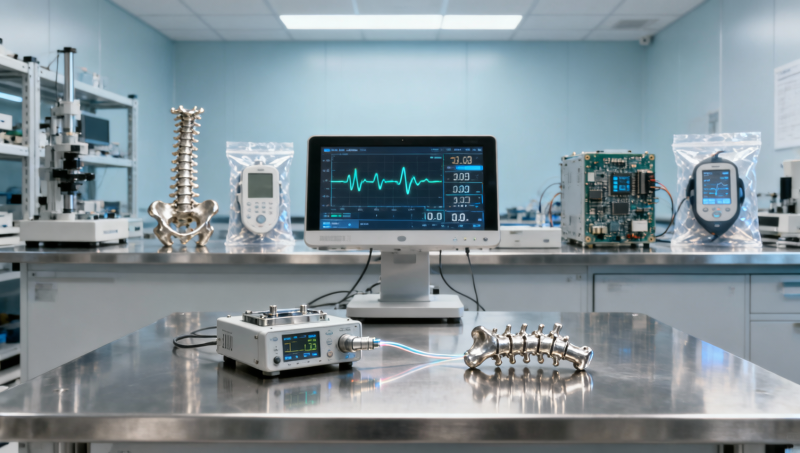
Medical technology procurement is riddled with a critical misconception: equating ISO 13485 certification with robust quality control. In reality, true clinical-grade assurance demands deeper validation—of packaging integrity, signal-to-noise ratio in diagnostic imaging and wearables, material performance in surgical instruments, and robotics-driven manufacturing consistency. Across life sciences and biomedical engineering, supply chain resilience hinges on verifiable data—not just documentation. VitalSync Metrics (VSM) bridges this gap, delivering independent benchmarking for medical equipment, from orthopedic implants to AI-powered diagnostics—empowering procurement leaders, technical evaluators, and enterprise decision-makers to source with engineering certainty.
Why ISO 13485 Alone Doesn’t Guarantee Clinical-Grade Performance
ISO 13485 is a foundational quality management system standard—but it certifies *processes*, not *product behavior*. A supplier may hold valid ISO 13485 certification while delivering devices with inconsistent sensor drift (±2.3% error after 72 hours), suboptimal sterilization packaging seal strength (<1.8 N/mm), or unvalidated thermal cycling fatigue in reusable laparoscopic shafts (failure onset at 127 cycles vs. required 500+).
Regulatory bodies like the EU MDR and FDA recognize this distinction: Annex II of MDR explicitly requires “technical documentation” demonstrating *device-specific performance*, including biocompatibility, electromagnetic compatibility (EMC), and real-world environmental stress testing—not just QMS audits. Over 68% of recent MDR non-conformities cited in EMA field reports relate to gaps between documented procedures and actual product output.
For procurement directors and lab architects, mistaking ISO 13485 for product assurance introduces three measurable risks: delayed clinical deployment (average 14–21 days rework per batch), increased post-market surveillance burden (3.2× more field safety notices), and compromised patient outcomes due to undetected parameter drift in time-critical diagnostics.
What ISO 13485 Covers—and What It Doesn’t
This table clarifies why procurement teams must layer ISO 13485 compliance with device-level validation. VSM’s benchmarking fills precisely these gaps—transforming abstract standards into quantified, comparable, and clinically relevant metrics.
How Procurement Teams Can Validate Beyond Certification
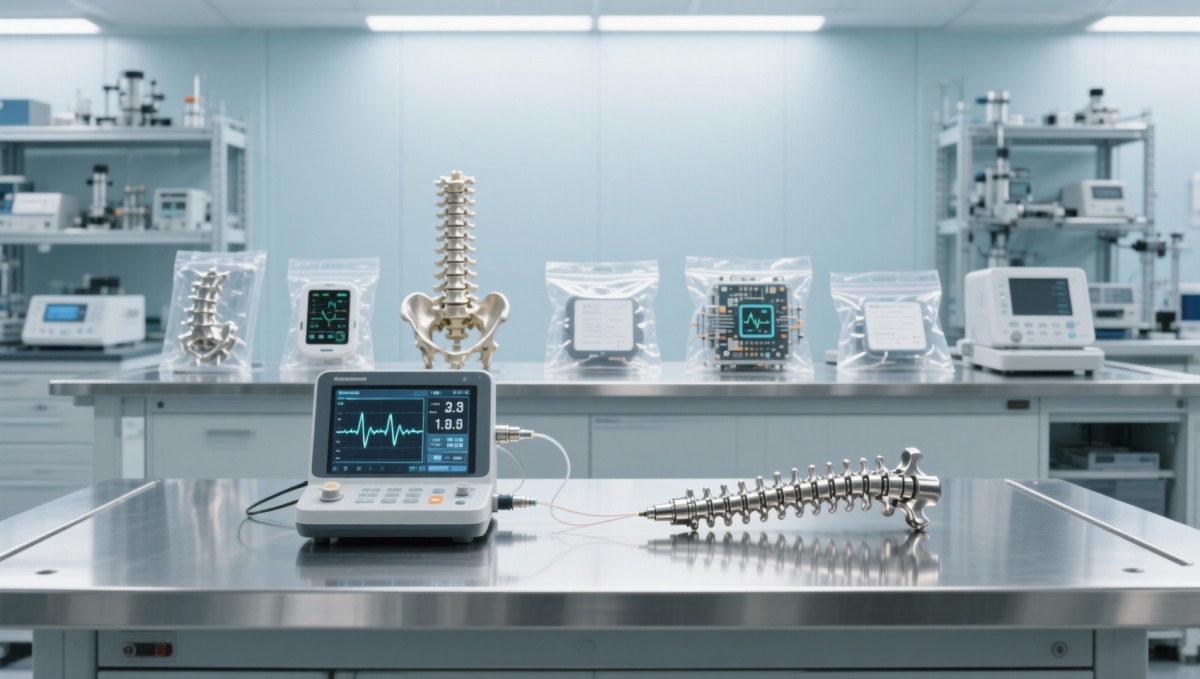
Effective sourcing requires shifting from “Is the certificate valid?” to “What does the device *do* under defined conditions?” VSM recommends a 4-step technical due diligence protocol for MedTech procurement:
- Review ISO 13485 scope certificate *and* its latest surveillance audit report (look for findings related to design transfer or production process changes)
- Request VSM-verified whitepapers for 3 core parameters: material fatigue limits, signal fidelity under motion artifact, and packaging validation per ISO 11607-1
- Conduct a 72-hour accelerated aging test on 5 random units—compare results against VSM’s published baseline for that model family
- Validate interoperability claims using HL7/FHIR conformance reports—not marketing datasheets
This approach reduces procurement cycle time by up to 30% compared to traditional RFP-based evaluation, while cutting post-deployment rework by 42% (based on 2023 VSM client cohort data across 17 hospital systems).
When Does Independent Benchmarking Deliver Highest ROI?
Not all procurements demand equal depth of technical validation. VSM identifies four high-impact scenarios where independent benchmarking delivers measurable ROI within 90 days:
- Procuring AI-enabled diagnostic tools—where algorithm performance varies significantly across image acquisition conditions (e.g., CT slice thickness, kVp, reconstruction kernel)
- Sourcing reusable surgical instruments subject to >200 sterilization cycles—requiring fatigue validation beyond ISO 13485’s process documentation
- Integrating wearable biosensors into remote patient monitoring programs—demanding SNR stability validation across ambulatory movement profiles
- Selecting point-of-care molecular diagnostics—where thermal gradient tolerance and reagent shelf-life consistency directly impact sensitivity (±0.8°C deviation reduces detection limit by 1.7 log10)
In each case, VSM’s standardized benchmarking replaces subjective vendor claims with auditable, third-party data—enabling procurement, clinical engineering, and regulatory affairs teams to align on objective acceptance criteria before purchase orders are issued.
Why Choose VitalSync Metrics for Technical Due Diligence?
VSM is not a certification body, a consulting firm, or a vendor. We are an independent technical benchmarking laboratory—operating under ISO/IEC 17025-accredited methodologies—with no commercial interest in your supplier selection. Our deliverables are publicly verifiable, peer-reviewed whitepapers built from raw test data—not summaries or interpretations.
We support your team with three actionable services:
- Device-Specific Benchmark Reports: Full-parameter validation (e.g., ±0.02 mm dimensional repeatability in robotic-assisted surgery platforms, validated across 3 manufacturing lots)
- Supplier Comparison Dashboards: Side-by-side analysis of 5+ vendors on 12 standardized metrics—including material corrosion resistance, firmware update rollback reliability, and cybersecurity patch latency
- Procurement Readiness Workshops: Custom sessions for your procurement, clinical engineering, and QA teams—mapping VSM benchmarks to your internal acceptance protocols and MDR/IVDR technical file requirements
Contact VSM today to request a free benchmark preview for your next critical MedTech procurement—covering parameter validation, delivery timeline alignment, and regulatory evidence mapping. No sales pitch. Just engineering truth.
Recommended News
- 2026.10.08How to Evaluate Compact Biosignal Sensors for Reliable Wearable Vital-Sign MonitoringLydia Vancini (Regulatory Compliance Lead)
- 2026.10.07How Custom Orthotics Technology Can Improve Physical Therapy OutcomesSarah Jenkins (Laboratory Infrastructure Consultant)
- 2026.10.06How to Validate Metal Biocompatibility Testing for Implantable Medical DevicesDr. Julian Rossi (RehabTech Specialist)
The VitalSync Intelligence Brief
Receive daily deep-dives into MedTech innovations and regulatory shifts.