 Get Insights

What a machinery price list should include before approval
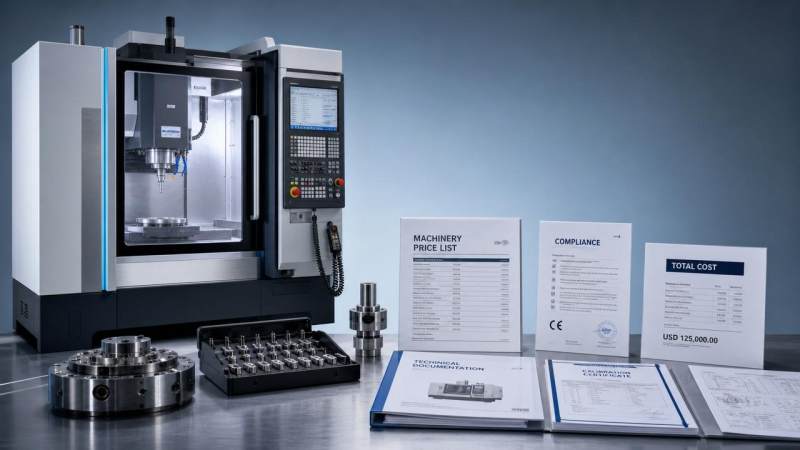
Before any purchase is approved, an Industrial & Manufacturing machinery price list should do more than show numbers. It should reveal total cost, technical scope, compliance status, installation needs, service obligations, and operational risk. In regulated environments, especially healthcare-related production, a complete price list becomes a decision document rather than a simple quotation. It helps prevent hidden cost exposure, supports defensible approvals, and makes value comparison possible across competing machinery options.
Why an Industrial & Manufacturing machinery price list needs checklist-based review
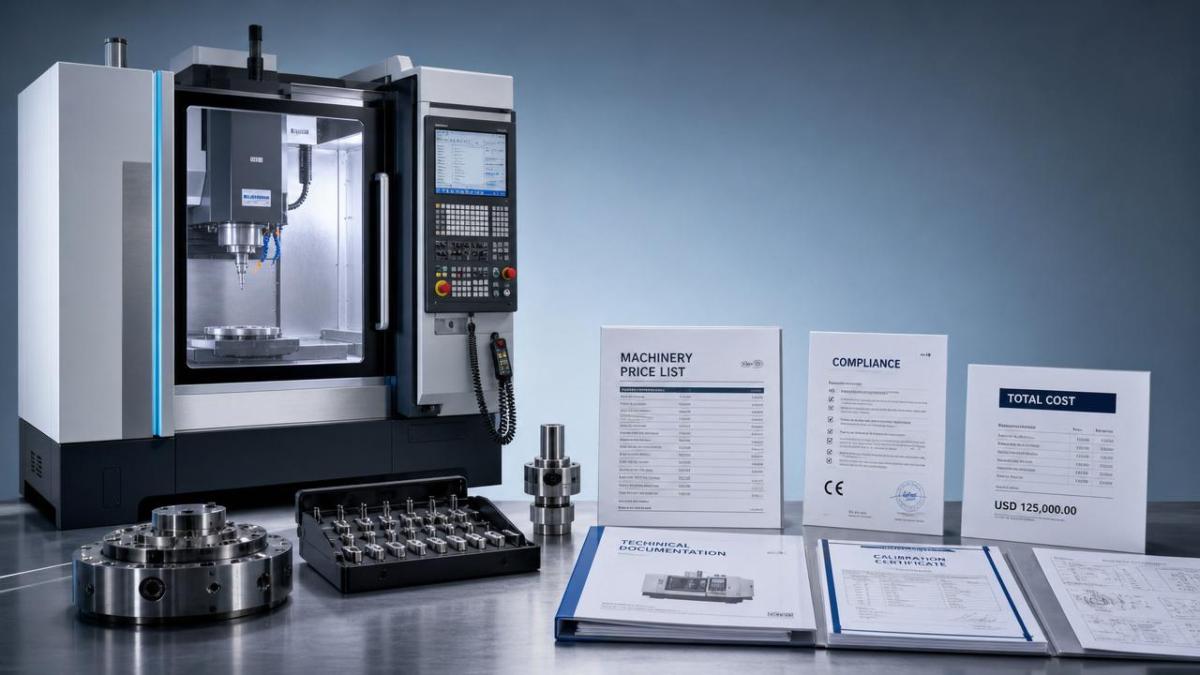
A machinery purchase often carries long-term implications beyond capital expenditure. Energy demand, calibration intervals, spare part availability, software licensing, and validation costs can significantly change the real investment profile after delivery.
That is why an Industrial & Manufacturing machinery price list should be reviewed through a structured checklist. The goal is not only to confirm price accuracy, but also to verify engineering completeness, regulatory fit, and lifecycle accountability.
For technical benchmarking organizations such as VitalSync Metrics, this structured approach is essential. In healthcare manufacturing and life sciences infrastructure, pricing must align with measurable performance, documented compliance, and maintainable operating conditions.
Core checklist: what a machinery price list should include before approval
- Confirm the exact machinery model, configuration, output capacity, utility requirements, and optional modules so the Industrial & Manufacturing machinery price list matches the intended production use.
- Break out the base equipment price from tooling, accessories, change parts, control systems, and software features to prevent bundled pricing from hiding essential costs.
- Verify quoted compliance documents, including CE marking, MDR or IVDR relevance, electrical safety records, and material certifications where regulated manufacturing conditions apply.
- State installation scope clearly, including site preparation, foundation work, rigging, cleanroom constraints, commissioning, and operator training required before productive use begins.
- List recurring service costs, such as preventive maintenance visits, calibration routines, software subscriptions, remote diagnostics, and recommended annual spare parts consumption.
- Include warranty duration, response time, exclusion terms, consumable limitations, and responsibilities for replacement labor to avoid false assumptions about post-sale coverage.
- Document lead time, shipment method, customs exposure, packaging standard, and delivery milestones because schedule risk can outweigh small differences in purchase price.
- Define performance acceptance criteria, such as throughput, tolerance range, environmental limits, and validation protocol, so approval depends on measurable operating results.
- Separate operating costs for electricity, compressed air, water, filtration, and consumables to show the true lifecycle value behind the machinery price list.
- Record upgradeability, parts obsolescence policy, cybersecurity support, and expected service life, especially for equipment with digital controls or networked monitoring functions.
Key pricing fields that should never be merged
- Base machine price versus line integration cost.
- Standard package versus optional validation features.
- Freight and insurance versus ex-works equipment pricing.
- Initial spare parts kit versus routine consumables.
- One-time training versus recurring service contract fees.
When these fields are merged, comparisons become misleading. A low headline number on an Industrial & Manufacturing machinery price list may only reflect a stripped quotation with excluded technical necessities.
How checklist priorities change by application
General factory equipment
For standard industrial operations, the Industrial & Manufacturing machinery price list should emphasize uptime, output stability, utility consumption, and spare part accessibility. Downtime economics usually dominate the approval discussion.
In this setting, service response, local technical support, and maintenance interval length are often more important than cosmetic feature differences. Price approval should reflect production continuity, not just acquisition cost.
Healthcare and medical device production
In healthcare manufacturing, a machinery price list must align with validation needs, traceability, material compatibility, and documentation quality. Equipment without adequate records can create approval delays and downstream compliance gaps.
This is where technical benchmarking matters. VSM-style review looks beyond brochure claims and asks whether performance data, repeatability, and risk controls are documented well enough for regulated use.
Laboratory and cleanroom infrastructure
For laboratory fit-outs and controlled environments, the Industrial & Manufacturing machinery price list should specify vibration limits, airflow impact, heat rejection, contamination controls, and compatibility with existing building systems.
A machine that appears affordable may become costly if HVAC modifications, isolation platforms, clean utilities, or requalification work are omitted from the quotation package.
Commonly ignored items that create approval risk
Hidden software dependency
Many machines now depend on licensed software, cloud access, or vendor-locked updates. If these charges are missing from the machinery price list, future operating cost can be materially understated.
Incomplete commissioning scope
A quotation may include delivery but exclude setup tuning, SAT support, or process optimization. Approval based on incomplete commissioning scope often leads to expensive post-purchase change orders.
Unclear consumable assumptions
Filters, seals, lubricants, sensors, and cleaning materials are frequently overlooked. A reliable Industrial & Manufacturing machinery price list should state expected consumption rates and approved replacement sources.
Weak acceptance language
If acceptance terms are vague, underperforming equipment may still be considered delivered. Performance thresholds should be numeric, testable, and tied to documented approval criteria.
No obsolescence view
Controls, drives, and electronic boards may become unsupported before the mechanical frame wears out. Without obsolescence planning, the lowest machinery price list may produce the highest replacement risk.
Practical execution steps before sign-off
- Build a side-by-side comparison sheet using the same pricing categories for every supplier submission.
- Request missing documentation before evaluating totals, especially compliance files and technical data sheets.
- Convert quoted prices into total cost of ownership over three to five years.
- Test headline claims against measurable acceptance standards, not sales language.
- Escalate any unclear exclusions involving training, utilities, software, or warranty response.
- Document assumptions directly on the Industrial & Manufacturing machinery price list review file.
This process improves financial clarity and technical defensibility. It also creates a useful audit trail when a machinery selection later needs validation, troubleshooting, or expansion planning.
Conclusion: approve the full picture, not just the quoted number
A strong Industrial & Manufacturing machinery price list should function as a technical and commercial control document. It must show what is included, what is excluded, how performance will be verified, and what ownership will cost over time.
Before approval, check whether the list covers equipment scope, compliance evidence, installation, validation, maintenance, warranty, software, and lifecycle risk. If any of these elements are unclear, the price is not yet decision-ready.
The next practical step is simple: convert every quotation into a checklist-based review sheet, then compare true delivered value instead of headline price alone. That approach leads to cleaner approvals, fewer surprises, and stronger long-term machinery performance.
Recommended News
- 2026.11.10FDA Issues Final Guidance on IVD Validation for Emerging Pathogen EmergenciesDr. Hideo Tanaka (Imaging Systems Analyst)
- 2026.11.10Choosing Minimally Invasive Surgical Instruments in Europe: Key Buying CriteriaDr. Alistair Thorne (Senior Biomedical Engineer)
- 2026.11.09WHO Releases Draft Profile for Wearable Physical Activity MonitorsLydia Vancini (Regulatory Compliance Lead)
The VitalSync Intelligence Brief
Receive daily deep-dives into MedTech innovations and regulatory shifts.