 Get Insights

What does IVDR certification mean for device buyers?
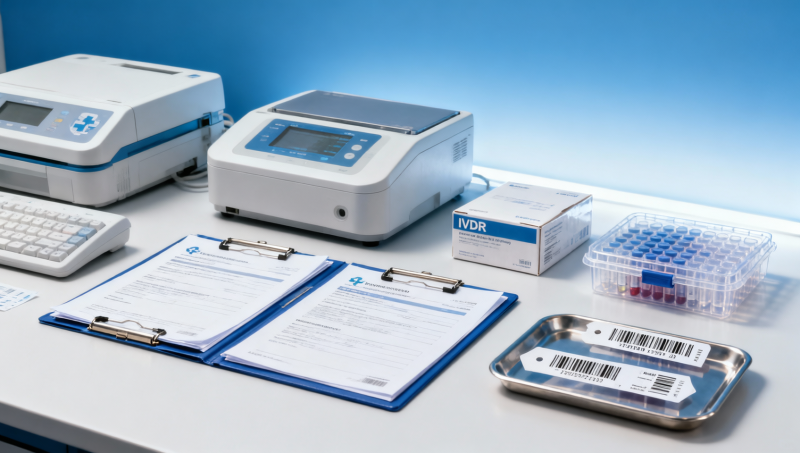
For buyers navigating healthcare equipment sourcing, IVDR certification is more than a label—it is a practical signal of supply chain verification, clinical reliability, and regulatory discipline. Whether evaluating an ivd analyzer distributor, an oxygen concentrator factory, or an icu monitor supplier, understanding IVDR certification helps procurement teams cut through marketing claims and make safer, data-driven decisions in an era of digital integration and medical technology verification.
Why IVDR certification matters in real procurement decisions
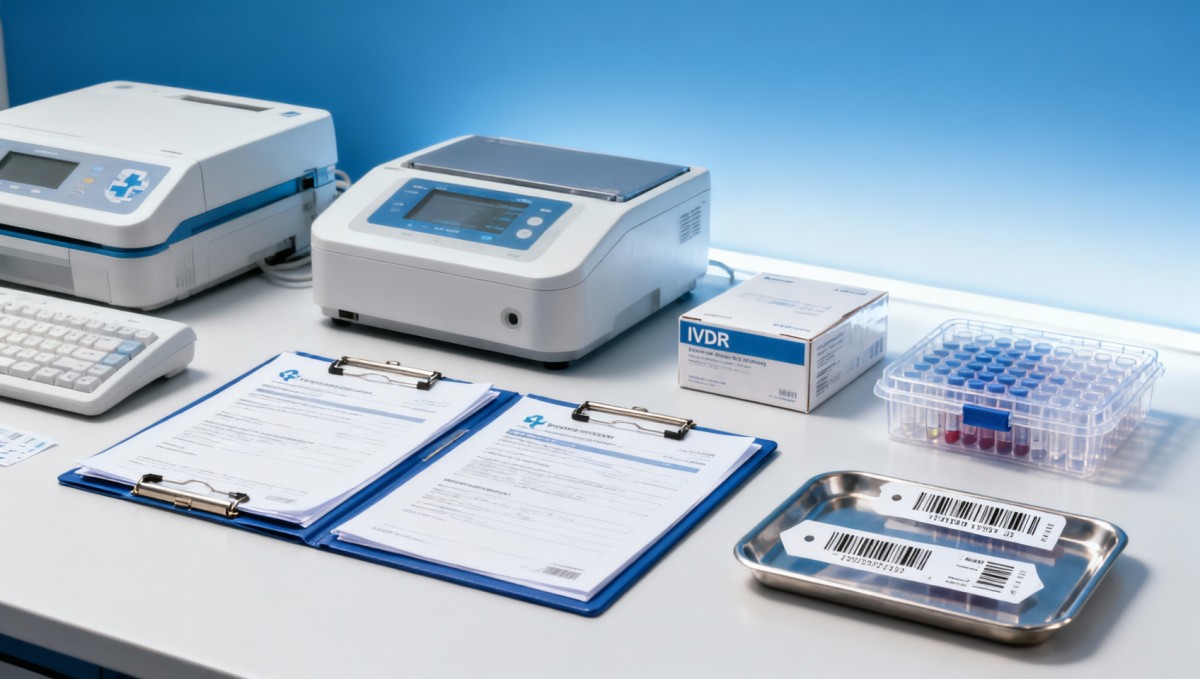
For device buyers, IVDR certification usually indicates that an in vitro diagnostic device has been assessed under the European Union’s In Vitro Diagnostic Regulation framework. In practice, this matters because procurement risk is rarely limited to price. It extends to traceability, labeling accuracy, performance claims, post-market surveillance, and the supplier’s ability to maintain compliance over a product lifecycle that may last 3–7 years.
Buyers often ask a simple question: does IVDR certification mean the product is “better”? Not automatically. What it does mean is that the manufacturer is operating within a stricter regulatory environment for evidence, documentation, and oversight. For procurement teams, this creates a more reliable basis for technical review than promotional brochures or self-declared product claims alone.
This is especially relevant in a market where hospitals, laboratories, and medical groups increasingly use value-based procurement models. A lower upfront quote can become expensive if the product later faces documentation gaps, unstable supply, software version inconsistency, or weak complaint handling. IVDR certification helps buyers screen for these hidden operational risks before tender award or distributor onboarding.
At VitalSync Metrics, the issue is not regulation in isolation. The issue is whether a supplier can translate compliance into repeatable engineering performance. That is why serious buyers review IVDR together with technical files, usability documentation, risk management records, and manufacturing consistency—not as a single checkbox, but as 1 part of a broader verification stack.
What buyers should read behind the certificate
A certificate should trigger a deeper review, not end it. Procurement leaders, lab managers, and clinical users should examine whether the intended use matches the actual purchasing scenario, whether sample types are clearly defined, and whether performance data supports the workflow volume they expect, such as low-throughput testing, medium-volume routine screening, or multi-shift lab operation.
- Check whether the device’s intended use aligns with your application, such as screening, diagnosis support, monitoring, or companion testing.
- Review whether documentation covers software, accessories, reagents, and labeling in the exact configuration being quoted.
- Confirm whether post-market surveillance and complaint handling processes are active and not merely described in generic terms.
- Verify whether the supplier can support ongoing updates over 12–36 months, especially when firmware, interfaces, or reagent lots may change.
What does IVDR certification actually tell you about supplier quality?
IVDR certification does not replace technical due diligence, but it does signal several useful things. First, the supplier has likely organized its regulatory documentation at a more disciplined level. Second, the product’s claims should be tied to defined evidence rather than broad marketing language. Third, change control and post-market follow-up are more likely to be formalized, which matters when buyers need continuity across multiple purchase cycles.
For buyers comparing an ivd analyzer distributor with a direct manufacturer, IVDR certification can also reveal supply chain maturity. A supplier that can maintain compliant labeling, documentation updates, and technical support across regions is often better prepared for distributor training, import documentation, and tender file consistency. That reduces friction during evaluation, installation, and reordering.
Still, certification should not be interpreted as universal product superiority. A compliant device may still be a poor fit if throughput is mismatched, reagent logistics are unstable, or service coverage is weak. In procurement, fitness for purpose matters as much as conformity. A small laboratory with 20–40 samples per day and a large reference center with 500+ daily samples need different risk thresholds and support models.
This is where independent benchmarking adds value. VSM helps buyers translate regulatory status into practical sourcing questions: Does the documented performance remain stable under routine use? Is the device sensitive to operator variation? Are consumables tied to a single source? Are maintenance intervals realistic for the intended duty cycle? These questions often separate compliant products from dependable procurement choices.
Core signals buyers can extract from IVDR-related documentation
The table below summarizes what procurement teams can reasonably infer from IVDR certification and what still requires independent verification. This helps prevent a common mistake: overestimating what a certificate alone proves during supplier selection.
The key takeaway is practical: IVDR certification improves the reliability of the starting point, but buyers still need evidence on service, integration, and operational suitability. That is why high-stakes procurement should combine certificate review with technical benchmarking, especially for products used in critical diagnostic workflows.
How should hospitals, labs, and distributors evaluate IVDR-certified devices?
A useful procurement method is to evaluate devices through 4 layers: regulatory scope, technical performance, workflow fit, and supplier resilience. This structure works across multiple categories, whether the buyer is reviewing an ivd analyzer distributor, a monitoring device supplier, or adjacent medical equipment where compliance culture influences long-term reliability.
In many sourcing projects, the first failure occurs at the scope stage. The product may be compliant, but not for the exact use case, sample matrix, or software-enabled function being purchased. The second failure happens at workflow fit. A technically valid device may still slow operations if calibration steps are frequent, consumables are proprietary, or user training takes 2–3 weeks longer than planned.
For procurement officers, one effective safeguard is to score suppliers against a fixed checklist before commercial negotiation. That avoids a common bias: awarding too much weight to quote price before technical and compliance risk are understood. For enterprise decision-makers, this also supports internal alignment between engineering, regulatory, finance, and clinical stakeholders.
VSM often recommends a phased review path rather than a one-meeting decision. In routine projects, buyers can complete a 3-stage assessment: document screening, technical clarification, and supply validation. This approach is especially helpful when buyers must compare established brands with emerging manufacturers whose marketing material appears strong but whose engineering consistency is not yet proven.
A practical procurement checklist
- Confirm intended use, specimen compatibility, software version, and accessory scope before accepting the compliance claim at face value.
- Review performance metrics relevant to your workflow, such as throughput bands, repeatability ranges, maintenance intervals, and environmental operating conditions.
- Map service obligations: installation lead time, preventive maintenance cycle, remote support availability, spare parts replenishment, and training duration.
- Check supply chain resilience by asking about batch traceability, multi-region logistics, and expected delivery windows such as 2–6 weeks for standard configurations.
- Request objective evidence where possible, including test protocols, validation summaries, or third-party benchmarking rather than slide deck claims.
Recommended evaluation matrix for buyers
The table below can be used by sourcing teams to compare offers more consistently. It is designed for cross-functional review and is useful when procurement decisions involve operators, technical managers, and executive approvers.
Using a matrix like this improves internal decision quality. It also creates a clear audit trail when procurement teams must justify why one compliant device was selected over another that appeared cheaper but carried higher lifecycle uncertainty.
Common misconceptions buyers should avoid
One frequent misconception is that IVDR certification applies equally across every product category a supplier sells. In reality, buyers should verify the exact product family and configuration. A company may present strong compliance credentials overall, yet the model under quotation may differ by intended use, accessory set, software release, or market registration pathway.
Another misconception is that certification eliminates the need for incoming verification, installation qualification, or user training. It does not. In many healthcare settings, 4–6 acceptance checks are still necessary before routine operation, including labeling review, accessory confirmation, environmental suitability, operator training logs, and interface validation with local information systems.
Buyers also sometimes assume that a compliant product will be easy to support globally. But service depth depends on regional infrastructure. A supplier may be strong in documentation and weak in field support, or strong in direct markets and weaker through third-party distributors. That is why contract terms for installation, corrective maintenance, and spare parts matter as much as the certificate itself.
The final misconception is cost-related: some teams assume IVDR-certified products always cost more and therefore offer poor value. The more accurate view is total cost over time. A higher acquisition price may be justified if it reduces revalidation effort, complaint frequency, or workflow disruption across 24–60 months. Procurement should compare operational burden, not just invoice amount.
Risk signals that deserve deeper review
- The supplier presents compliance claims but hesitates to clarify the exact product scope, model variation, or intended use statement.
- Quoted accessories, reagents, or software modules appear outside the documented package or are described inconsistently across documents.
- Service commitments remain vague, with no clear response timeline, no preventive maintenance plan, or no spare parts strategy for the next 12 months.
- The device appears compliant on paper, but the supplier cannot explain routine performance under local workflow conditions such as continuous use, operator turnover, or environmental variation.
FAQ: what procurement teams ask before approving an IVDR-certified product
Search behavior around IVDR certification is usually practical, not academic. Buyers want to know whether a product is safe to source, easy to support, and suitable for their exact operating environment. The answers below focus on real procurement judgment rather than abstract regulatory language.
Does IVDR certification guarantee clinical reliability?
It supports confidence, but it is not a stand-alone guarantee. Clinical reliability still depends on correct intended use, validated workflow, operator handling, maintenance discipline, and local implementation quality. Buyers should combine certificate review with technical evidence, especially when the product will run daily, across multiple operators, or in medium- to high-throughput environments.
How important is IVDR certification when sourcing through a distributor?
It is highly relevant, but distributor capability must also be verified. The key questions are whether the distributor can support the certified product scope, maintain documentation consistency, train users properly, and handle complaints or field actions. A strong manufacturer paired with a weak distributor can still create procurement risk within the first 6–12 months of deployment.
What should buyers request besides the certificate?
Ask for the intended use statement, configuration details, performance summary, labeling samples, maintenance plan, and support commitments. If the product includes software or connectivity, request clarification on version control and update procedures. For critical purchases, an independent benchmarking review can help compare engineering stability across competing suppliers.
How long does a proper evaluation usually take?
For a standard procurement project, document screening and technical clarification often take 1–3 weeks, while broader supply and service validation may extend the process to 2–6 weeks depending on complexity. Multi-site groups, tender committees, and connected devices may require longer because interface testing, user alignment, and contract review add extra checkpoints.
Why work with an independent technical benchmarking partner
In healthcare sourcing, the hardest part is rarely collecting brochures. The hard part is determining whether supplier claims hold up under engineering scrutiny. That is the role VSM is built to serve. We help hospitals, MedTech startups, laboratory planners, and procurement directors convert complex technical and regulatory language into sourcing decisions that are easier to defend internally and safer to execute operationally.
Our approach is useful when buyers face 3 recurring problems: multiple suppliers making similar claims, incomplete visibility into product consistency, and uncertainty about how compliance links to real-world performance. Instead of relying on sales narratives, we focus on technical benchmarking, documentation interpretation, and structured comparison across the dimensions that matter in procurement.
If you are reviewing IVDR certification as part of a broader sourcing decision, we can support parameter confirmation, supplier comparison, regulatory scope review, delivery-cycle discussion, sample evaluation planning, and quotation-stage technical clarification. This is especially valuable when your team must compare direct manufacturers, OEM channels, and regional distributors within a limited tender window of 2–4 weeks.
Contact VSM if you need an objective view before purchase approval. We can help you examine whether the quoted device configuration matches the intended use, whether the supplier’s evidence is decision-ready, what technical risks may affect deployment, and how to structure a more defensible procurement file for management review. That turns IVDR certification from a label on paper into a practical buying advantage.
- value-based procurement
- medical technology
- medical equipment
- technical benchmarking
- digital integration
- supply chain
- long-term reliability
- data-driven
- IVDR certification
- healthcare equipment
- medical technology verification
- supply chain verification
- icu monitor supplier
- ivd analyzer distributor
- oxygen concentrator factory
Recommended News
- 2026.10.08How to Evaluate Compact Biosignal Sensors for Reliable Wearable Vital-Sign MonitoringLydia Vancini (Regulatory Compliance Lead)
- 2026.10.07How Custom Orthotics Technology Can Improve Physical Therapy OutcomesSarah Jenkins (Laboratory Infrastructure Consultant)
- 2026.10.06How to Validate Metal Biocompatibility Testing for Implantable Medical DevicesDr. Julian Rossi (RehabTech Specialist)
The VitalSync Intelligence Brief
Receive daily deep-dives into MedTech innovations and regulatory shifts.