 Get Insights

Why Sheet Metal Price Varies for ISO 13485 Projects
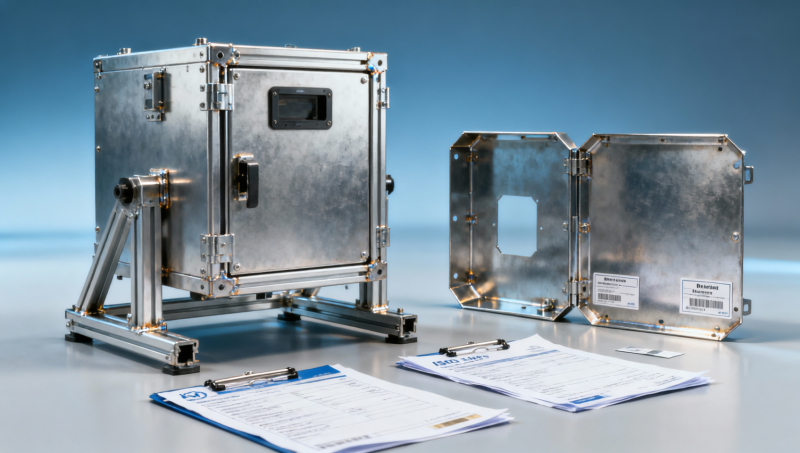
For ISO 13485 projects, sheet metal pricing is rarely driven by material cost alone. In regulated medical manufacturing, the real price difference usually comes from how a part is designed, documented, fabricated, inspected, and traced. That is why two quotes for what looks like the same sheet metal enclosure, chassis, bracket, panel, or housing can vary dramatically. For buyers, engineers, and decision-makers, the key question is not simply “Who offers the lowest price?” but “What exactly is included in that price, and what compliance or quality risk am I taking if I choose the cheaper option?”
In practice, ISO 13485 sheet metal cost is shaped by fabrication complexity, tolerance requirements, finishing standards, validation needs, supplier quality systems, lot traceability, change control, and the level of documentation expected for medical-device use. Understanding these drivers helps procurement teams compare quotes correctly, helps startups avoid underestimating manufacturing cost, and helps operators and project managers source parts that are fit for regulated production rather than just general industrial use.
Why the same sheet metal part can have very different prices in ISO 13485 projects
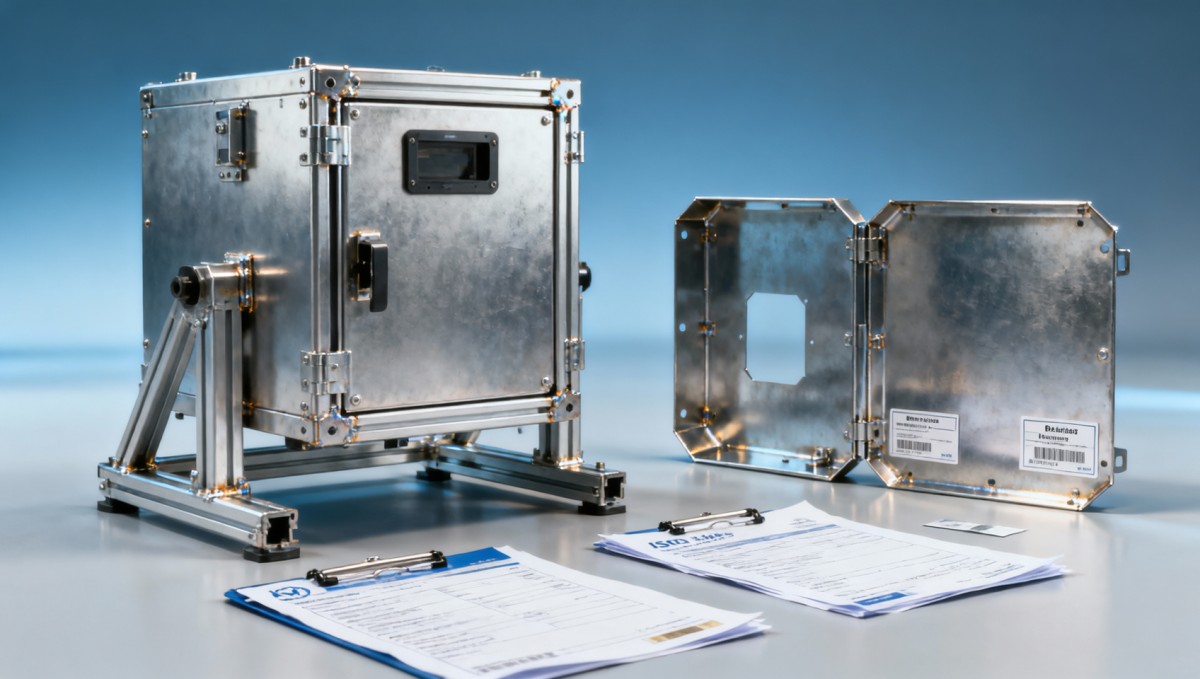
The core search intent behind this topic is usually commercial and evaluative: readers want to understand why medical-grade sheet metal fabrication costs more than standard fabrication, what makes one supplier quote higher than another, and how to judge whether that premium is justified. They are not just looking for a generic cost breakdown. They want to know what they are really paying for in an ISO 13485 environment.
In regulated healthcare and life sciences projects, price variation often reflects differences in process discipline rather than visible part geometry. A sheet metal manufacturer serving ISO 13485 programs may include:
- Controlled documentation and revision management
- Material certificates and batch traceability
- Process validation support
- In-process and final inspection records
- Nonconformance handling and CAPA readiness
- Supplier qualification and risk control procedures
- Cleanliness, packaging, and labeling controls for medical use
A lower-cost supplier may produce a visually acceptable part, but without these controls, the part may create hidden risk during audit, verification, complaint investigation, or scale-up. For ISO 13485 projects, the cheapest quote can become the most expensive outcome if it causes delays, requalification, scrap, field failures, or regulatory exposure.
What actually drives sheet metal cost in regulated medical manufacturing
For target readers such as procurement managers, technical evaluators, startup founders, and operations teams, the most useful way to analyze price is by separating visible manufacturing cost from compliance overhead and lifecycle risk.
1. Material selection is only the starting point
Raw material still matters, especially when projects require stainless steel, aluminum, coated steel, or specialty alloys chosen for corrosion resistance, cleanability, EMC performance, or structural integrity. However, in ISO 13485 projects, the cost impact goes beyond the price per kilogram. Material grade verification, mill certificates, and traceable sourcing all affect final sheet metal cost.
For example, a medical enclosure made from standard commercial sheet may appear similar to one made from fully traceable certified stainless steel, but the procurement value is not the same. If documentation and traceability are mandatory, the lower base material price becomes less relevant.
2. Part geometry and fabrication complexity raise labor and process time
Sheet metal cutting, sheet metal bending, and sheet metal welding are major cost drivers, especially when the design includes:
- Tight bend radii
- High feature density
- Numerous holes, PEM inserts, or cutouts
- Multi-stage forming
- Cosmetic surface requirements
- Welded assemblies that require low distortion
A simple bracket is priced very differently from a medical device housing with multiple bends, welded seams, access panels, mounting points, and cosmetic finishing. The more process steps involved, the more opportunities there are for dimensional variation, rework, and inspection burden.
3. Tolerances and fit requirements change the quote significantly
Medical products often integrate electronics, sensors, displays, doors, gaskets, cable routing, and sterilizable or cleanable surfaces. This means the sheet metal chassis or enclosure may need tighter tolerances than a general industrial part. Tighter tolerances increase setup time, inspection frequency, fixturing needs, and rejection risk.
Even if the drawing looks straightforward, quote differences often reflect how each sheet metal supplier interprets the manufacturability of those tolerances. One supplier may include the engineering controls needed to reliably meet them; another may quote aggressively and leave risk unpriced.
4. Surface finish and cleanliness standards are often underestimated
In healthcare equipment, finish quality is not purely cosmetic. Powder coating, passivation, bead blasting, brushing, polishing, conductive finishing, or chemical treatment may all influence performance, durability, and cleaning behavior. Certain applications also require burr control, edge safety, low particle generation, or finish consistency across lots.
These requirements add cost through extra process steps, outsourced finishing controls, masking, inspection, and packaging. A quote that excludes these details may look attractive early on but create mismatch later when final product expectations become clearer.
5. Documentation, traceability, and quality records are a real cost center
This is one of the biggest reasons sheet metal price varies for ISO 13485 projects. In regulated manufacturing, the supplier is not only making parts; they are supporting a controlled quality system. That may include:
- Certificate of conformity
- Material test reports
- First article inspection
- Dimensional reports
- Process records
- Revision-specific production control
- Lot identification and labeling
These activities consume engineering, quality, and administrative resources. Buyers who compare quotes only at the piece-part level often miss this entirely. In reality, one quote may cover only fabrication, while another covers regulated manufacturing support.
Why low quotes can be risky for procurement and project timelines
For procurement professionals and business decision-makers, the most important issue is not whether a quote is high or low in isolation, but whether it is complete. A low quote becomes dangerous when it hides cost transfer or operational risk.
Common warning signs include:
- Unclear inclusion of inspection and documentation
- No mention of material traceability
- No defined revision control process
- Vague finishing specifications
- No clarification of tolerances or cosmetic acceptance criteria
- No plan for nonconformance handling or change notification
In ISO 13485 projects, these gaps can lead to delayed approvals, failed incoming inspection, repeated DFM cycles, or expensive resubmission of production records. If the part is used in a device subject to MDR or IVDR expectations, poor supplier control can also affect downstream regulatory readiness.
This is especially relevant for MedTech startups and scaling OEMs. Early prototype suppliers may offer attractive pricing, but they may not be suitable for pilot builds or controlled production. The cost increase seen when switching to an ISO 13485-capable sheet metal manufacturer is often not arbitrary; it reflects the move from prototype convenience to regulated repeatability.
How to compare sheet metal quotes correctly for ISO 13485 programs
Readers in active sourcing mode usually need a practical framework, not theory. The most effective way to compare sheet metal fabrication quotes is to normalize them across technical scope, quality scope, and lifecycle support.
Ask what is included beyond fabrication
Confirm whether the quote includes:
- Material certification
- FAI or dimensional report
- Surface treatment documentation
- Lot traceability
- Custom packaging or labeling
- Revision-specific manufacturing records
- Weld inspection or cosmetic acceptance standard
Check whether the supplier understands medical-use context
A capable sheet metal supplier should be able to discuss not only manufacturing methods but also control methods. They should understand why repeatability, clean finishing, documented changes, and traceable inputs matter in healthcare equipment.
Separate prototype pricing from production pricing
Prototype builds may rely on manual workarounds, low-volume setups, or less optimized process control. Production quotes should reflect stable methods, inspection planning, and consistency across lots. Comparing a prototype quote from one supplier to a controlled production quote from another leads to false conclusions.
Evaluate total cost of ownership, not unit price alone
The lowest unit price may still create higher total cost through:
- Higher defect rates
- Longer qualification cycles
- More internal inspection burden
- Engineering clarification loops
- Supply inconsistency across batches
- Delays to launch or installation
For enterprise decision-makers, this broader view is where actual value becomes visible. In regulated supply chains, stable output and clean documentation often save more money than an aggressive initial quote.
Which parts and project scenarios tend to show the biggest price variation
Not all sheet metal parts experience the same pricing spread. The variation is usually greatest when the part has both technical complexity and regulatory sensitivity.
Typical examples include:
- Medical device enclosures with cosmetic and cleanliness requirements
- Sheet metal housings for diagnostic instruments
- Operator-access panels with tight fit and edge safety expectations
- Welded chassis assemblies that support precision internal modules
- Brackets or frames used near sensitive sensors, optics, or fluid paths
In these cases, pricing can vary because suppliers are not quoting the same manufacturing reality. One may be pricing a basic industrial fabrication approach, while another is pricing a process capable of supporting medical-grade performance and documentation.
How buyers and engineers can reduce unnecessary sheet metal cost without compromising compliance
Cost control is absolutely possible in ISO 13485 projects, but it should come from design and sourcing discipline rather than stripping out quality controls blindly.
Practical ways to reduce sheet metal cost include:
- Simplify bend count and reduce unnecessary formed features
- Relax non-critical tolerances where assembly allows
- Standardize hardware and material thickness
- Align cosmetic expectations with true user-facing surfaces only
- Consolidate documentation requirements by project phase
- Engage the sheet metal manufacturer early for DFM review
- Define acceptance criteria clearly before quoting
For many teams, the most effective savings come from preventing ambiguity. Ambiguous drawings, undefined finish standards, and incomplete quality requirements often inflate quotes because suppliers must either assume worst-case conditions or price in uncertainty.
Early collaboration with a capable supplier can lower cost while preserving compliance. That is particularly valuable when developing sheet metal enclosures, housings, and chassis for diagnostic systems, laboratory devices, or digital health equipment where reliability and serviceability matter over time.
What the price difference usually means in real business terms
For target readers making sourcing decisions, the final takeaway is simple: in ISO 13485 projects, higher sheet metal price often reflects lower operational risk, better documentation readiness, and stronger manufacturing consistency. It may also reflect a supplier’s ability to support auditability, design transfer, and long-term scale.
That does not mean every higher quote is justified. Some suppliers are inefficient, and some may overprice low-risk work. But in medical and life sciences applications, a meaningful price gap usually signals a difference in process maturity, not just margin.
If you are sourcing a sheet metal chassis, enclosure, panel, bracket, or housing for a regulated program, the right question is not “Why is this quote more expensive?” but “What quality, traceability, and lifecycle support does this quote include that the others do not?”
When that question is answered clearly, pricing becomes easier to evaluate. And in ISO 13485 environments, that clarity is often the difference between a successful sourcing decision and a costly compliance problem later.
- sheet metal fabrication
- sheet metal bending
- sheet metal cutting
- sheet metal welding
- sheet metal parts
- sheet metal enclosure
- sheet metal housing
- sheet metal chassis
- sheet metal supplier
- sheet metal manufacturer
- sheet metal price
- sheet metal cost
- life sciences
- supply chain
- healthcare equipment
- Packaging
Recommended News
- 2026.10.08How to Evaluate Compact Biosignal Sensors for Reliable Wearable Vital-Sign MonitoringLydia Vancini (Regulatory Compliance Lead)
- 2026.10.07How Custom Orthotics Technology Can Improve Physical Therapy OutcomesSarah Jenkins (Laboratory Infrastructure Consultant)
- 2026.10.06How to Validate Metal Biocompatibility Testing for Implantable Medical DevicesDr. Julian Rossi (RehabTech Specialist)
The VitalSync Intelligence Brief
Receive daily deep-dives into MedTech innovations and regulatory shifts.