 Get Insights

How to Evaluate Coated Polymer Biocompatibility for Device Contact and Sterilization Conditions
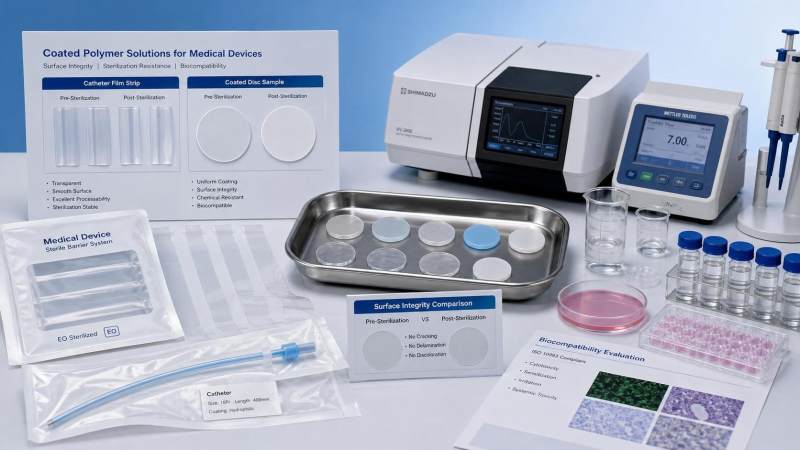
How to Evaluate Coated Polymer Biocompatibility for Device Contact and Sterilization Conditions
Evaluating coated polymer biocompatibility is no longer a simple compliance task. Device contact duration, sterilization load, and coating chemistry now shape real risk.
That matters because a coating often changes the full biological interface. It can affect extractables, surface energy, friction, wear debris, and cleaning response.
In practical terms, coated polymer biocompatibility must be judged under actual use conditions. A good baseline result is not enough on its own.
For teams managing validation, supplier control, or safety review, the strongest approach is evidence-based and use-specific. That is where better decisions start.
Start With the Real Exposure Profile
The first step in coated polymer biocompatibility assessment is defining how the device actually touches the body, user, or process fluid.
This sounds obvious, but many reviews still rely on generic material declarations. That creates blind spots when coatings drive the final contact surface.
Map the exposure using three basic questions:
- What tissue, fluid, or skin area contacts the coated surface?
- How long does the contact last per use and over device life?
- What happens after sterilization, aging, cleaning, or repeated handling?
These answers determine which biological endpoints matter most. They also define how aggressive your extraction and verification strategy should be.
For example, short skin contact may tolerate one evidence path. Long-term mucosal or circulating contact requires a much tighter coated polymer biocompatibility review.
Why Sterilization Changes the Answer
Sterilization is not just a final processing step. It can materially change coated polymer biocompatibility by altering surface chemistry and coating stability.
Gamma, e-beam, EtO, steam, and plasma do not stress coatings in the same way. Some drive oxidation. Others leave residues or shift adhesion behavior.
A coating that passes pre-sterilization screening may behave differently afterward. That is why post-process evidence matters more than assumptions based on raw resin data.
In actual operations, this becomes even more important for reusable devices. Repeated sterilization cycles may create cumulative degradation that single-cycle tests miss.
A practical review should compare at least these conditions:
- As-coated and unsterilized samples
- Final sterilized production-equivalent samples
- Aged or worst-case sterilization cycle samples
- Samples after packaging and transport simulation, when relevant
This comparison gives a more defensible coated polymer biocompatibility picture. It also supports stronger change control later.
Build the Evaluation Around the Finished Device
One of the most common mistakes is testing the base polymer and treating the coating as a minor add-on. In reality, the coating often defines exposure.
The better path is to evaluate the finished or finished-equivalent device. That includes substrate, coating, cure profile, packaging, and sterilization condition.
This is especially important when suppliers offer similar chemistry but different process windows. Small differences in thickness or curing can shift extractable profiles.
For coated polymer biocompatibility, process evidence should include:
- Coating composition and additive disclosure
- Surface preparation method and cleanliness controls
- Curing or drying parameters
- Coating thickness range and uniformity data
- Adhesion, wear, and particulate generation results
This is also where procurement and engineering should stay aligned. A supplier change that looks minor on paper may not be minor biologically.
Use ISO 10993 Strategically, Not Mechanically
ISO 10993 remains the core framework, but coated polymer biocompatibility should not become a checklist exercise. The standard works best with a solid rationale.
From a risk perspective, biological evaluation should match contact type, duration, and known coating hazards. That keeps testing relevant and documentation stronger.
In many programs, the evidence package may combine literature, supplier chemistry data, analytical characterization, and targeted biological testing.
Useful areas to review include:
- Cytotoxicity risk after final processing
- Sensitization and irritation potential
- Chemical characterization and toxicological assessment
- Material-mediated pyrogenicity, when relevant
- Particulate and wear-related biological impact
The point is not to run every possible test. The point is to prove coated polymer biocompatibility under the conditions that matter commercially and clinically.
Connect Chemical Data to Biological Risk
A stronger signal often comes from analytical chemistry. It shows whether sterilization or aging creates new leachables, degradants, or reaction byproducts.
For coated polymer biocompatibility, chemical characterization helps answer a basic question: what can leave the surface under expected use conditions?
This evidence becomes much more useful when linked to toxicological thresholds, patient exposure estimates, and realistic extraction conditions.
A concise decision table can help teams align faster:
This step is often where weak supplier files get exposed. Broad claims mean little without data tied to the finished device state.
Watch the Failure Modes That Are Easy to Miss
Some coated polymer biocompatibility issues do not appear in first-pass screening. They emerge later through wear, cleaning, transport, or operator handling.
Recent programs show recurring problem patterns:
- Delamination after humidity and heat exposure
- Increased friction after repeated sterilization cycles
- Unexpected discoloration linked to oxidation products
- Higher particulate release from edge wear zones
- Supplier process drift without updated biological rationale
These are not just engineering nuisances. They can change coated polymer biocompatibility conclusions, especially for repeated-contact or invasive applications.
That is why verification should include visual, mechanical, and chemical evidence together. A passing biocompatibility file without surface durability data can be misleading.
Make Documentation Strong Enough for Change Control
A solid coated polymer biocompatibility program does more than support initial release. It also protects the device when suppliers, sterilization loads, or formulations change.
The documentation should clearly show what was evaluated, under which conditions, and why the evidence is still valid after process shifts.
At minimum, keep these records current:
- Device contact classification and use rationale
- Coating specifications and process parameters
- Sterilization method, cycle definition, and worst-case basis
- Analytical and biological test reports
- Toxicological risk assessment and acceptance logic
- Change assessment triggers for materials or suppliers
For organizations working across MDR, IVDR, and global sourcing requirements, this discipline improves both audit readiness and procurement confidence.
At VSM, that is the larger point. Technical integrity only matters when it can be measured, compared, and defended under real operating conditions.
A Practical Path Forward
If coated polymer biocompatibility is under review, begin with the final device, not the raw material claim. Then test the real exposure and sterilization scenario.
Next, connect chemistry, surface integrity, and biological endpoints into one risk story. That gives decision-makers something actionable, not just something filed.
Finally, treat coated polymer biocompatibility as a living control. Revisit it whenever coatings, curing, sterilization, or supplier assumptions change.
That approach leads to safer validation, cleaner documentation, and better sourcing outcomes when performance claims need to hold up under scrutiny.
Recommended News
- 2026.10.14Clinic Supplier Comparison: Evaluating Cost, Delivery Reliability, and SupportDr. Alistair Thorne (Senior Biomedical Engineer)
- 2026.10.13Engineering Performance Testing Services: Evaluating Test Methods and AccuracyDr. Alistair Thorne (Senior Biomedical Engineer)
- 2026.10.12Preparing for an ISO 13485 Audit: When to Use External QMS SupportDr. Julian Rossi (RehabTech Specialist)
The VitalSync Intelligence Brief
Receive daily deep-dives into MedTech innovations and regulatory shifts.