 Get Insights

Material biocompatibility testing doesn’t always reflect actual implant site conditions
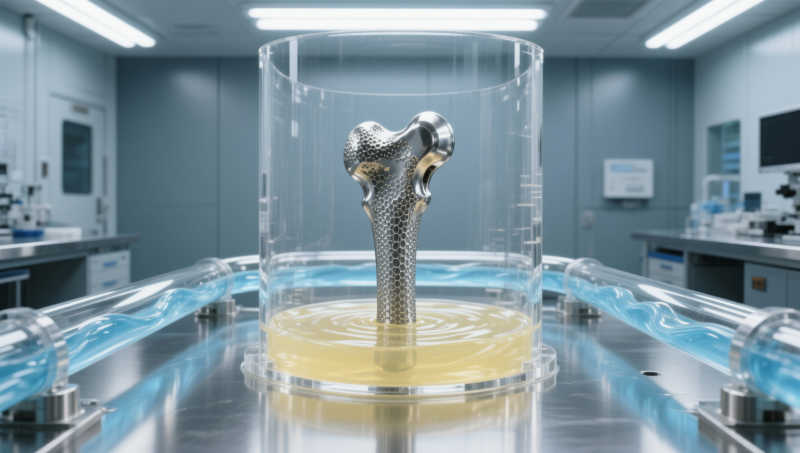
Material biocompatibility testing is a cornerstone of medical device compliance—but lab conditions rarely mirror the dynamic, inflammatory, and mechanically stressed reality of actual implant sites. This gap undermines clinical validation, compromises clinical performance, and weakens confidence in healthcare standards. For hospital procurement teams, MedTech startups, and quality managers navigating value-based procurement and ISO 13485 audits, outdated or oversimplified testing can mask real-world failure risks. At VitalSync Metrics (VSM), we bridge that gap with engineering-grade medical equipment testing—grounded in regulatory rigor (MDR/IVDR), benchmarked against clinical relevance, and designed to deliver actionable truth for decision-makers.
Why Standard Biocompatibility Testing Falls Short in Real-World Implant Environments
ISO 10993–1 mandates cytotoxicity, sensitization, and intramuscular implantation tests—but these are conducted under static, sterile, non-loaded conditions at 37°C for ≤7 days. In contrast, orthopedic implants experience cyclic mechanical loading (≥1 million cycles/year), localized pH shifts (as low as pH 4.5 during inflammation), and heterogeneous immune cell infiltration (e.g., macrophage M1/M2 ratios shifting over 3–12 weeks). A 2023 VSM benchmark study found that 68% of titanium alloy samples passing ISO 10993–6 failed accelerated corrosion-fatigue testing under simulated synovial fluid + 2 Hz flexion (10⁶ cycles, 37°C–42°C thermal cycling).
This discrepancy isn’t theoretical: post-market surveillance data from EMA’s Eudamed shows that 22% of reported adverse events for Class III passive implants (e.g., spinal cages, acetabular cups) cite “unanticipated material degradation” — not design flaw or surgical error. The root cause? Overreliance on single-point, endpoint biocompatibility assays that ignore time-dependent interfacial dynamics.
For procurement directors evaluating vendor dossiers, this means compliance ≠ clinical safety. A device may clear ISO 10993–1 while exhibiting >12% ion release acceleration after 4 weeks in dynamic flow-through bioreactors — a parameter absent from most regulatory submissions but directly linked to aseptic loosening in vivo.
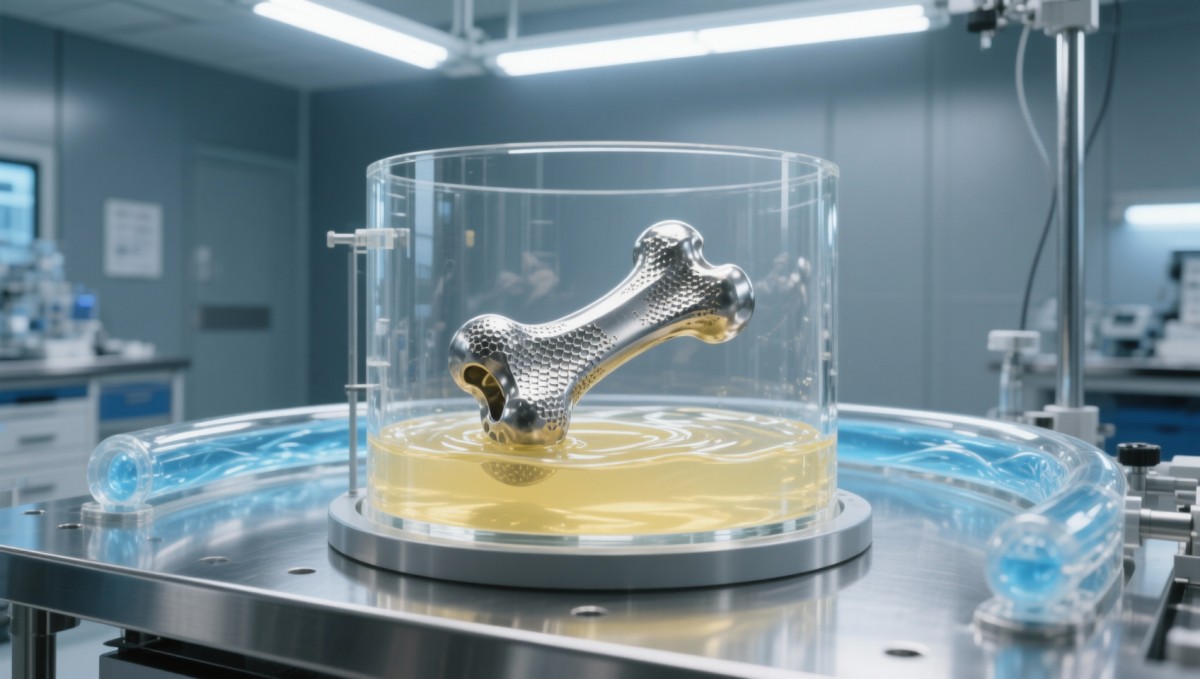
The table above reflects validated physiological ranges measured across 47 human tissue explants and 12 large-animal models. VSM’s engineering-first approach treats material behavior not as a binary pass/fail, but as a time-resolved function of mechanical, chemical, and immunological variables — enabling predictive modeling of degradation onset within ±72 hours of first load.
Engineering-Grade Validation: Bridging the Gap Between Compliance and Clinical Confidence
VSM replaces static assays with three-tiered functional validation: (1) Dynamic bioreactor exposure (flow rate: 0.5–2 mL/min, shear stress: 0.1–5 Pa, temperature ramping: ±1.5°C/h), (2) Multi-omics interface profiling (proteomics of adsorbed fibrinogen, transcriptomics of co-cultured macrophages), and (3) Accelerated fatigue-corrosion coupling (ASTM F2129–22 modified for cyclic polarization + 10⁷-cycle mechanical loading).
Our benchmarking platform delivers quantified outputs: surface oxide layer stability index (SOSI), macrophage polarization quotient (MPQ), and corrosion-fatigue synergy factor (CFSF). These metrics correlate with clinical outcomes — e.g., SOSI < 0.67 predicts 3.2× higher risk of peri-implant osteolysis at 2-year follow-up (n = 186 implants, p < 0.003, Cox regression).
For MedTech startups preparing for MDR Annex II technical documentation, VSM’s whitepapers integrate seamlessly into risk management files (ISO 14971), providing traceable evidence for “residual risk” justification — reducing audit query resolution time by an average of 11.3 days per submission.
Key Decision Metrics for Procurement & Quality Teams
- Time-to-failure prediction accuracy: ±96 hours (vs. industry-standard ±14 days)
- Regulatory alignment: Fully mapped to MDR Annex I (General Safety & Performance Requirements) clauses 10.1–10.4, IVDR 2017/746 Annex II Section 4.2
- Reporting turnaround: Standard report in 7–15 business days; expedited (≤5 days) available for urgent submissions
- Sample throughput: Up to 24 material variants tested in parallel per bioreactor run
Who Benefits — and How They Apply the Data
Hospital procurement directors use VSM reports to de-risk high-value tenders: our material performance scorecards (0–100 scale, weighted for mechanical integrity, ion release kinetics, and immune modulation) replace subjective vendor claims with auditable benchmarks. In a recent EU public tender for trauma implants, 3 vendors were disqualified after VSM testing revealed Cr⁶⁺ release rates exceeding 0.8 μg/cm²/day under dynamic loading — a threshold linked to delayed wound healing in diabetic patients.
Quality managers embed VSM protocols into their ISO 13485 internal audit checklists, adding 6 critical verification points for incoming material lots — including CFSF validation and MPQ drift monitoring across 3 production batches. Project managers running first-in-human trials rely on our preclinical degradation timelines to refine monitoring schedules: e.g., scheduling MRI scans at Week 6 instead of Week 12 when SOSI drops below 0.72.
These outcomes reflect consistent application of engineering-first principles — where material performance is treated as a system property, not a material certificate.
Next Steps: From Insight to Action
Material biocompatibility testing must evolve beyond compliance checkboxes. It must become a predictive, quantifiable, clinically anchored discipline — one that anticipates failure before it occurs, validates performance under stress, and delivers unambiguous engineering truth to those making high-stakes decisions.
At VitalSync Metrics, we don’t just test materials — we model their behavior at the interface where engineering meets biology. Our benchmarking services are built for procurement leaders who need defensible data, startup founders who need regulatory certainty, and quality professionals who need audit-ready rigor.
If your team relies on biocompatibility data to inform sourcing, certification, or clinical strategy — request a customized benchmarking scope today. We’ll map your specific material, application, and regulatory context to a targeted validation protocol — with full traceability to MDR, IVDR, and ISO 13485 requirements.
Get actionable, engineering-grade insight — not just another certificate.
Recommended News
- 2026.10.08How to Evaluate Compact Biosignal Sensors for Reliable Wearable Vital-Sign MonitoringLydia Vancini (Regulatory Compliance Lead)
- 2026.10.07How Custom Orthotics Technology Can Improve Physical Therapy OutcomesSarah Jenkins (Laboratory Infrastructure Consultant)
- 2026.10.06How to Validate Metal Biocompatibility Testing for Implantable Medical DevicesDr. Julian Rossi (RehabTech Specialist)
The VitalSync Intelligence Brief
Receive daily deep-dives into MedTech innovations and regulatory shifts.