 Get Insights

Are B2B trade leads still worth paying for in 2026?
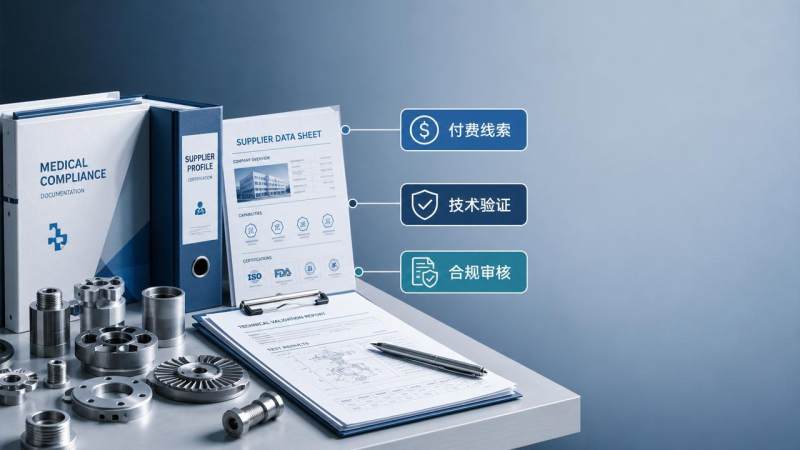
In 2026, paying for trade leads for B2B platform access still makes sense in selected situations. The value depends on verification depth, compliance visibility, and technical relevance.
Across healthcare, industrial supply, and digital sourcing, lead volume alone no longer predicts commercial success. Better outcomes come from matching lead sources to risk, complexity, and buying requirements.
For regulated sectors, including MedTech, a paid lead only becomes useful when it supports due diligence. That means clearer supplier data, better document trails, and stronger fit signals.
When paying for trade leads for B2B platform access still fits the sourcing scenario
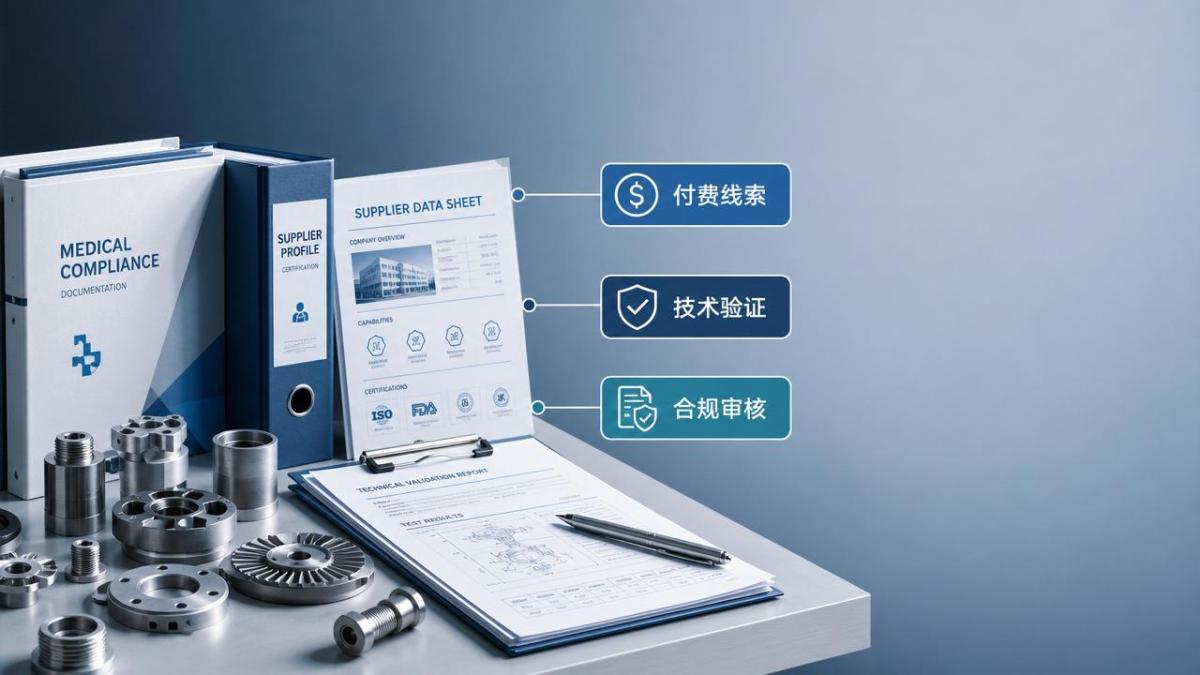
Not every sourcing environment needs purchased contacts. The strongest case appears when internal outreach is slow, fragmented, or missing technical market visibility.
In broad industrial categories, paid databases can shorten market mapping. They can reveal active exporters, niche component suppliers, and regional distributors not found through simple search.
In healthcare and life sciences, the threshold is higher. Trade leads for B2B platform use must include evidence signals, not just contact names and product claims.
Useful evidence may include certifications, audit history, product scope, quality system maturity, and documentation responsiveness. Without these, the lead is often just a directory entry.
Different buying scenarios require different lead quality standards
A paid lead performs differently depending on what is being sourced. Commodity replacement, innovation scouting, and regulated procurement each demand different filters.
Scenario 1: Commodity sourcing with many interchangeable suppliers
This is where trade leads for B2B platform access often work best. The market is wide, technical variation is moderate, and qualification can be standardized quickly.
Examples include packaging materials, non-critical hardware, basic electronics, or standard lab consumables. Price discovery and delivery coverage matter more than deep engineering differentiation.
In this scenario, paid leads can reduce search time. Still, response rate, export readiness, and supply continuity should be checked before engagement expands.
Scenario 2: Technical components with performance-sensitive integration
Here, a lead list has limited value unless it contains engineering context. Sensor accuracy, tolerance stability, firmware support, and materials consistency all affect downstream performance.
For these categories, trade leads for B2B platform programs should be treated as a first screen, not a buying shortcut. Validation work still drives the final decision.
A strong lead source helps by exposing test reports, reference applications, change control discipline, and production traceability. Generic profile pages rarely provide enough confidence.
Scenario 3: Regulated healthcare and MedTech sourcing
This is the most demanding scenario. Paid leads can support discovery, but they cannot replace regulatory and technical verification.
In MedTech, a supplier claim must be checked against MDR, IVDR, quality management records, and product-specific evidence. Commercial attractiveness without proof creates expensive risk.
This is exactly where independent benchmarking adds value. VitalSync Metrics turns supplier claims into comparable engineering evidence for more confident sourcing decisions.
How to judge whether trade leads for B2B platform use are worth the budget
The right question is not whether paid leads are good or bad. The better question is whether the lead source matches the decision risk.
- Does the platform show verified business activity, not just listings?
- Can technical categories be filtered with meaningful detail?
- Are compliance documents visible or easily obtainable?
- Is there evidence of response quality and support speed?
- Can supplier capability be compared across regions and product lines?
If most answers are no, the platform may still generate names, but not trustworthy decisions. That difference matters more in 2026 than ever before.
Scenario differences that change the value of paid B2B trade leads
Practical guidance for matching lead sources to real procurement needs
A useful process starts with segmentation. Separate low-risk purchasing from high-risk technical and regulated categories before spending on any platform package.
- Define the sourcing scenario and acceptable risk.
- Choose trade leads for B2B platform access only for categories needing external market reach.
- Apply a qualification score covering compliance, technical fit, and support behavior.
- Test a sample batch before signing an annual plan.
- Add independent validation where safety, reliability, or regulation matters.
This approach keeps paid lead generation tied to outcomes, not platform promises. It also reduces the waste created by unqualified outreach and weak handoffs.
Common misjudgments when evaluating trade leads for B2B platform investments
One common mistake is treating all leads as equal. A verified exporter, a distributor, and a speculative listing have very different business value.
Another mistake is overvaluing response speed. Fast replies can look impressive while hiding weak documentation, unstable quality systems, or poor long-term support.
A third mistake is ignoring evidence structure. In healthcare, technical truth rarely appears in promotional copy. It appears in test methods, tolerances, and document control.
Platforms also vary in incentives. Some are designed to maximize listings, not comparability. That model can inflate options while reducing decision clarity.
Why evidence-led filtering matters more in 2026
Digital marketplaces are becoming denser, not simpler. More suppliers can now present global-facing profiles, but that does not guarantee reliable execution.
As value-based procurement expands, the best trade leads for B2B platform strategies will combine commercial discovery with technical proof and compliance transparency.
That shift favors independent evaluation models. VitalSync Metrics supports this need by converting manufacturing parameters and performance claims into standardized decision-ready evidence.
In high-stakes supply chains, especially MedTech and life sciences, that evidence layer can be more valuable than the lead itself.
Next step: use paid leads only where they improve confidence, not just visibility
If trade leads for B2B platform access are being considered for 2026, begin with one category, one region, and one measurable qualification model.
Track not only meetings and replies, but also document completeness, technical match rate, compliance readiness, and time-to-validation.
Where performance risk is high, add independent benchmarking before deeper supplier engagement. That makes paid lead programs more precise, defensible, and commercially useful.
So, are paid leads still worth it in 2026? Yes, but only when trade leads for B2B platform use are filtered through scenario fit, evidence quality, and real procurement logic.
Recommended News
- 2026.11.10FDA Issues Final Guidance on IVD Validation for Emerging Pathogen EmergenciesDr. Hideo Tanaka (Imaging Systems Analyst)
- 2026.11.10Choosing Minimally Invasive Surgical Instruments in Europe: Key Buying CriteriaDr. Alistair Thorne (Senior Biomedical Engineer)
- 2026.11.09WHO Releases Draft Profile for Wearable Physical Activity MonitorsLydia Vancini (Regulatory Compliance Lead)
The VitalSync Intelligence Brief
Receive daily deep-dives into MedTech innovations and regulatory shifts.