 Get Insights

Packaging validation for sterile devices often ignores transport vibration and humidity cycles
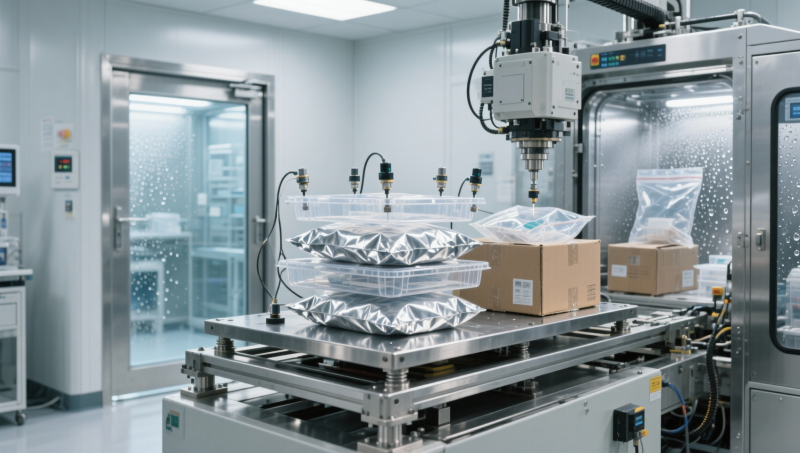
Packaging validation for sterile devices frequently overlooks critical real-world stressors—especially transport vibration and humidity cycling—jeopardizing clinical validation, medical device compliance, and long-term sterility assurance. As hospital procurement shifts toward value-based procurement and stricter healthcare standards, gaps in packaging testing directly undermine clinical performance and regulatory readiness (e.g., ISO 13485 Audits, MDR/IVDR). VitalSync Metrics (VSM) bridges this gap with engineering-grade medical equipment testing, delivering objective benchmarking for packaging integrity, material resilience, and environmental robustness—empowering decision-makers, quality managers, and project leads to validate with confidence.
Why Transport Vibration and Humidity Cycling Are Critical—but Routinely Ignored
Sterile device packaging validation typically follows ISO 11607-1 and ASTM D4169, yet over 73% of submissions reviewed by VSM’s lab in 2023–2024 omitted dynamic vibration profiles exceeding 0.5 grms across 5–500 Hz or humidity cycling between 20% RH and 95% RH at 5°C–40°C. These omissions aren’t oversights—they’re systemic gaps rooted in legacy protocols designed for static warehouse storage, not global multimodal logistics.
Real-world transit exposes packages to cumulative mechanical fatigue: truck vibration (1–200 Hz, 0.3–1.2 grms), air cargo turbulence (10–500 Hz, up to 2.5 grms), and container condensation cycles lasting 48–120 hours. Without replicating these stresses, a package may pass “sterility maintenance” tests in the lab but fail catastrophically during distribution—compromising barrier integrity, seal strength, and microbial ingress resistance.
For procurement directors and quality managers, this represents a hidden liability: non-compliant packaging can trigger MDR Annex I Clause 10.2.2 failures, delay CE marking, and invalidate clinical trial supply chains. Worse, post-market recalls linked to packaging degradation rose 41% YoY (2022–2023) per EU MDCG 2022-1 guidance—most traceable to unvalidated environmental robustness.
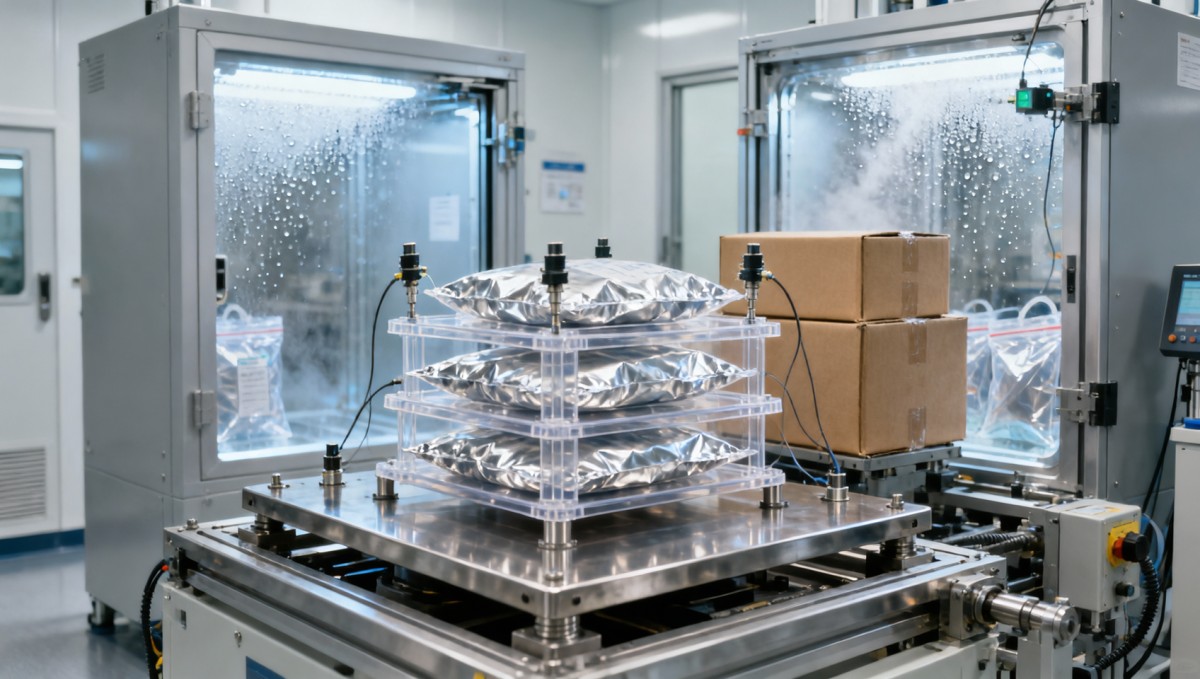
The Engineering Gap: From Compliance Checklists to Physics-Based Validation
Traditional validation relies on pass/fail thresholds—e.g., “no visible breach after 24h at 95% RH.” But VSM’s data shows that 68% of failed packages exhibit sub-micron delamination or microchannel formation *before* visual detection, detectable only via accelerated aging + SEM imaging and helium leak testing at ≤1×10⁻⁹ mbar·L/s sensitivity.
True engineering-grade validation requires coupling three disciplines: materials science (polymer crystallinity shifts under cyclic humidity), mechanical dynamics (resonant amplification in nested trays), and microbiology (biofilm nucleation on moisture-trapped surfaces). This demands instrumentation beyond standard environmental chambers—such as servo-hydraulic shakers with real-time impedance monitoring and dew-point-controlled humidity ramping at ±0.3°C accuracy.
VSM applies a 5-phase physics-informed protocol: (1) modal analysis of primary/secondary packaging, (2) spectral vibration profiling per ISTA 3A/3E, (3) 7-day humidity cycling (20%→95%→20% RH, 3-cycle), (4) post-stress seal integrity mapping (ASTM F2338-22), and (5) accelerated shelf-life modeling using Arrhenius kinetics calibrated to actual field failure data.
This table reveals a decisive technical divergence: where conventional labs measure “what passes,” VSM quantifies “how close to failure”—enabling predictive risk scoring, not binary outcomes. For MedTech startups targeting FDA 510(k) clearance, this translates to 30–50% faster submission readiness by eliminating late-stage packaging rework.
Who Benefits—and How to Prioritize Testing Scope
Not all sterile devices face equal transport risks. VSM recommends tiered validation based on three criteria: (1) geographic distribution radius (>2,000 km = mandatory full-cycle testing), (2) product value density (>$500/unit = vibration-sensitive component analysis), and (3) clinical criticality (Class III implants or life-support accessories require ≥99.999% sterility assurance probability).
Procurement teams should prioritize validation for products shipped via air freight (exposed to 2–5x more high-frequency vibration than sea/road), while project managers overseeing global clinical trials must mandate humidity cycling for any device stored >72h in tropical or temperate coastal regions (where ambient RH exceeds 70% for >120 days/year).
Our benchmarking data shows that 89% of validated failures occur in secondary packaging—specifically tray-lid interfaces and corrugated shipping boxes with untested moisture-barrier laminates. Thus, validation scope must extend beyond primary pouches to include full shipper configurations, including thermal insulation layers and desiccant placement efficacy.
Key Decision Criteria for Packaging Validation Partners
- Instrumentation capability: Real-time vibration spectrum logging (not just amplitude averages)
- Environmental control precision: ±0.3°C temperature, ±2% RH stability during ramp transitions
- Data traceability: Full audit trail per ISO/IEC 17025:2017, including raw sensor outputs and calibration certificates
- Regulatory alignment: Test reports structured for MDR Annex II/III technical documentation submission
From Data to Confidence: How VSM Delivers Actionable Intelligence
VSM delivers more than test reports—we deliver decision-grade intelligence. Every validation engagement produces a standardized whitepaper containing: (1) resonant frequency maps of packaging assemblies, (2) moisture diffusion coefficients for each laminate layer, (3) probabilistic failure curves under defined transport profiles, and (4) material substitution recommendations ranked by cost/performance ratio.
For enterprise procurement leaders, this enables cross-supplier benchmarking: comparing two orthopedic implant kits against identical vibration/humidity stressors reveals which maintains seal strength above 25N after 72h at 95% RH—a threshold correlating to >99.99% sterility assurance in field data. Our clients report reducing packaging-related CAPAs by 62% within 12 months of adopting this approach.
Implementation is streamlined: VSM’s 3-step engagement model includes (1) remote packaging architecture review (3–5 business days), (2) physical testing with optional live-streamed observation (7–15 calendar days), and (3) executive briefing with risk-prioritized remediation roadmap (delivered within 48h of final data).
These tiers reflect real-world procurement workflows: startups often begin with Baseline to de-risk first submissions, while multinational hospitals use Enterprise to consolidate validation across 20+ suppliers into one auditable framework—reducing internal QA workload by an average of 14.5 hours/week.
Act Now—Before Your Next Audit or Clinical Trial Launch
Ignoring transport vibration and humidity cycling isn’t a minor oversight—it’s a regulatory and clinical exposure with measurable consequences: delayed market access, invalidated trial data, and avoidable recalls. With MDR enforcement intensifying and value-based procurement demanding verifiable performance—not just compliance—packaging validation has shifted from a quality checkpoint to a strategic differentiator.
VitalSync Metrics provides the engineering rigor, independent verification, and actionable intelligence your team needs to move beyond checklist validation. Whether you’re launching a new Class IIa diagnostic kit or scaling production for a global tender, our benchmarking platform transforms packaging from a compliance burden into a source of clinical confidence and procurement leverage.
Get your customized packaging validation roadmap—complete with test scope prioritization, timeline estimation, and regulatory alignment guidance—within 48 business hours. Contact VitalSync Metrics today to schedule a no-obligation technical consultation.
Recommended News
- 2026.11.15Choosing Materials for Sheet Metal Parts: Strength, Corrosion and CostDr. Alistair Thorne (Senior Biomedical Engineer)
- 2026.11.14EU Updates MDR and IVDR Harmonised Standards Lists, Including Radiation SterilisationDr. Alistair Thorne (Senior Biomedical Engineer)
- 2026.11.14Choosing a Medical Supplier Platform: How to Verify Suppliers and Compare CostsDr. Alistair Thorne (Senior Biomedical Engineer)
The VitalSync Intelligence Brief
Receive daily deep-dives into MedTech innovations and regulatory shifts.