 Get Insights

How to Choose Electrotherapy Equipment in the USA for Clinic Use and Reimbursement Fit
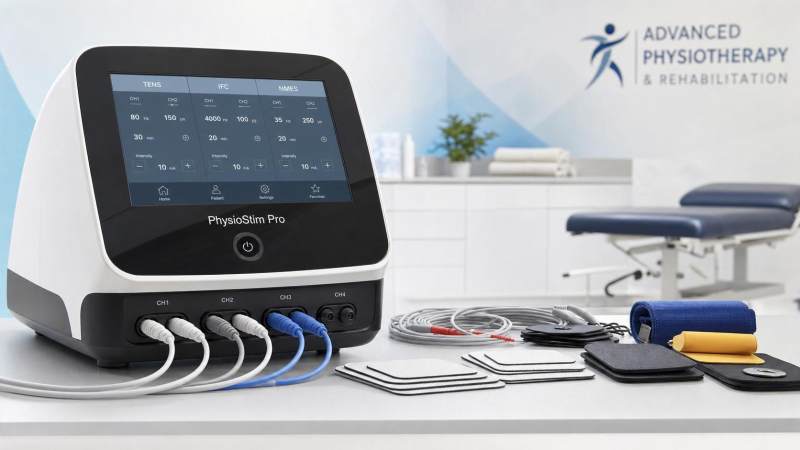
Choosing electrotherapy equipment in the USA is no longer a simple equipment comparison. A clinic may like the interface, output modes, or price point, yet still face problems with documentation, reimbursement alignment, staff adoption, or compliance over time.
That is why electrotherapy equipment USA decisions now sit at the intersection of clinical utility, financial logic, and technical verification. In a market shaped by value-based care and digital workflows, the stronger decision is usually the one supported by evidence, not marketing language.
For organizations reviewing suppliers, the key question is practical: will the device perform consistently in real treatment settings, fit existing records and billing processes, and remain defensible under audit or procurement review?
What matters most in today’s electrotherapy purchase decision
The U.S. market offers a wide range of neuromuscular stimulation, TENS, IFC, and combination therapy devices. On paper, many products look similar. In use, the differences can be substantial.
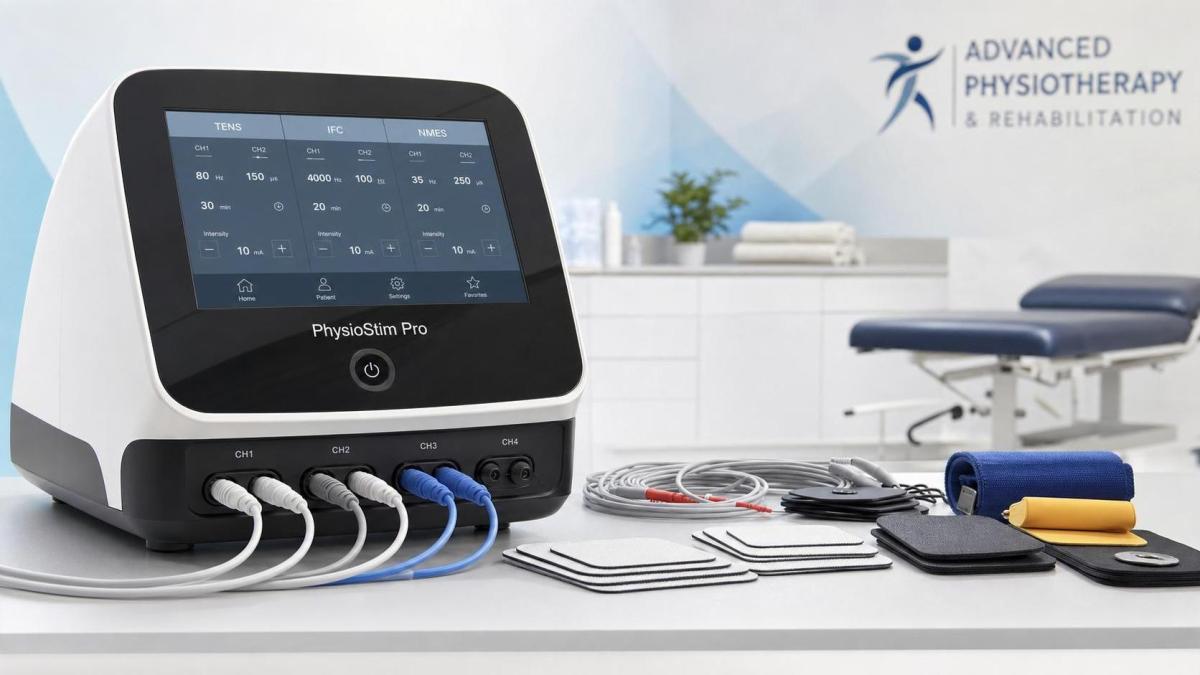
The first layer is clinical fit. A device should support the treatment indications a clinic actually sees, not an idealized list created for a catalog.
The second layer is operational fit. Electrotherapy equipment USA clinics adopt successfully tends to reduce friction for setup, electrode placement guidance, treatment logging, and repeat session consistency.
The third layer is reimbursement fit. If records are incomplete, session parameters are difficult to capture, or treatment rationale is weakly documented, revenue quality suffers even when outcomes are acceptable.
This is also where independent benchmarking has gained relevance. Groups such as VitalSync Metrics (VSM) reflect a broader industry shift: buyers increasingly want measurable performance signals instead of polished claims.
A useful way to define electrotherapy equipment USA options
Electrotherapy equipment uses controlled electrical energy to support pain management, muscle re-education, circulation goals, or functional rehabilitation, depending on the modality and treatment plan.
In the U.S. clinic environment, selection usually involves more than modality type. The better distinction is between devices built for consumer convenience and devices designed for regulated clinical use.
Clinical-grade units generally show stronger consistency in output delivery, safety controls, calibration stability, software traceability, and accessory quality. Those details affect both treatment reliability and procurement risk.
A low-cost device may still function, but if waveform accuracy drifts, electrodes degrade unpredictably, or logs cannot be exported cleanly, the total cost of ownership rises quickly.
Why reimbursement fit changes the shortlist
Many buying teams start with feature lists. The shortlist often changes once reimbursement and documentation requirements enter the discussion.
A device may be clinically effective, yet difficult to support in routine billing if treatment records remain manual, inconsistent, or disconnected from the clinic’s charting logic.
In practice, reimbursement fit depends on several linked elements:
- Clear treatment parameter recording, including time, mode, intensity, and anatomical target.
- Documentation support that aligns with therapist workflow rather than adding duplicate manual steps.
- Evidence that the modality is used for an appropriate clinical indication within the patient plan of care.
- Device consistency that reduces variation between operators and repeat visits.
This does not mean the device handles reimbursement by itself. It means the equipment should not become the weak link in the documentation chain.
Technical signals worth checking beyond the brochure
When reviewing electrotherapy equipment USA suppliers, technical diligence often reveals more than brand reputation. Several questions help separate mature platforms from presentation-driven offers.
Output accuracy and repeatability
Ask how waveform output is verified across production batches. If a vendor cannot explain tolerance ranges, calibration controls, or validation methods, confidence should drop.
Safety architecture
Review overload protection, patient isolation, alarm logic, contraindication prompts, and shutdown behavior. Safety is not only about certification; it is about predictable behavior during routine use.
Software and data handling
If the device stores treatment data, inspect how it timestamps sessions, controls user access, handles updates, and exports logs. Weak software controls can undermine an otherwise solid hardware platform.
Consumables and accessory quality
Electrodes, leads, and connectors often determine real-world consistency. Poor accessory durability creates treatment interruptions, patient dissatisfaction, and hidden operating cost.
Regulatory and procurement fit should be read together
For electrotherapy equipment USA procurement, regulatory review should not be treated as a late checkbox. It shapes whether the device can be evaluated, deployed, and defended properly.
Start with intended use, labeling clarity, and the manufacturer’s U.S. regulatory position. Then examine quality management signals, complaint handling, post-market processes, and update control.
This is where the broader VSM perspective becomes useful. In healthcare technology, the gap between promotional claims and validated performance can be wide. Procurement discipline closes that gap.
A device may pass a surface review, yet still create risk if documentation is fragmented, validation evidence is weak, or lifecycle support depends heavily on distributors with limited technical depth.
Typical clinic scenarios that influence the right choice
The best electrotherapy equipment USA option depends heavily on where and how it will be used. A sports rehabilitation setting may prioritize protocol flexibility. A high-volume outpatient environment may value speed and standardization.
Post-operative rehabilitation often demands controlled, repeatable settings and careful documentation. Multi-site groups may care more about fleet consistency, training simplicity, and centralized reporting.
There is also a difference between adding electrotherapy as an occasional adjunct and building it into a regular treatment pathway. The second case justifies deeper scrutiny of interoperability, service support, and consumable economics.
In other words, the right device is not the one with the longest feature sheet. It is the one that fits the clinic’s actual treatment mix and administrative reality.
A practical evaluation framework for shortlisting vendors
A useful review process combines clinical questions, technical questions, and commercial questions in one matrix. That prevents a strong sales presentation from outweighing weak evidence.
- Map the device to real use cases, not generic modality categories.
- Request verification data for output stability, safety performance, and accessory durability.
- Review how treatment information enters the clinical record.
- Check whether service response times match operational needs.
- Model total ownership cost, including consumables, training, downtime, and upgrades.
- Compare the supplier’s evidence quality, not only the product specification.
This approach also improves internal alignment. Clinical teams, finance reviewers, compliance stakeholders, and procurement staff often evaluate the same device through different lenses.
A shared scorecard reduces subjective debate and makes electrotherapy equipment USA decisions easier to justify later.
Where to focus next
A sound decision usually starts with a narrow question set: which indications matter most, what documentation burden is acceptable, which reimbursement workflows must be preserved, and which technical risks are unacceptable?
From there, compare electrotherapy equipment USA options against measurable criteria rather than general promises. Ask for validation data, sample records, service terms, and evidence of long-term product control.
If two devices appear similar, the stronger choice is often the one with cleaner verification, clearer regulatory positioning, and easier integration into treatment and billing routines.
That kind of disciplined review reflects the direction healthcare procurement is already moving toward: evidence first, workflow fit second, and marketing claims a distant third.
Recommended News
- 2026.11.16Choosing Wi-Fi Diagnostic Hardware: Connectivity and Security CriteriaDr. Hideo Tanaka (Imaging Systems Analyst)
- 2026.11.15India Reforms Medical Device Incentive Scheme to Deepen Local ManufacturingDr. Julian Rossi (RehabTech Specialist)
- 2026.11.15Choosing Materials for Sheet Metal Parts: Strength, Corrosion and CostDr. Alistair Thorne (Senior Biomedical Engineer)
The VitalSync Intelligence Brief
Receive daily deep-dives into MedTech innovations and regulatory shifts.