 Get Insights

How to Evaluate Rehabilitation Therapy Devices in North America for Clinics and Rehab Centers
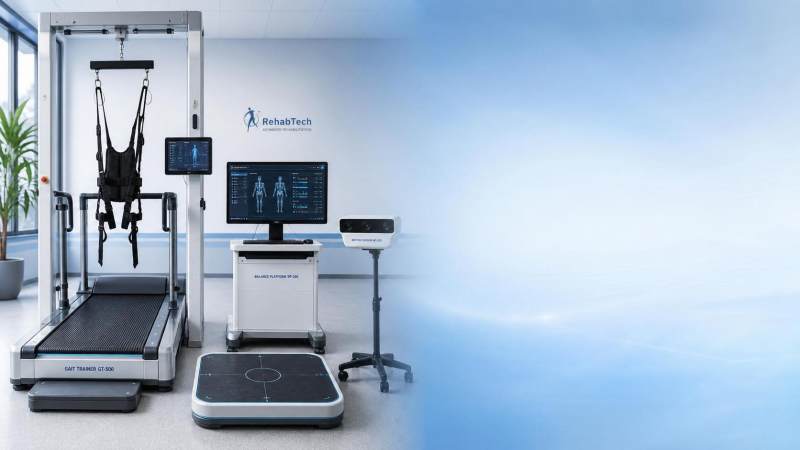
Selecting rehabilitation therapy devices for North American clinics and rehab centers is rarely a simple feature comparison. Technical evaluators are usually dealing with a more difficult question: which system will perform reliably in a real clinical workflow, satisfy regulatory expectations, integrate with existing infrastructure, and still make sense three or five years after installation?
That is why procurement decisions in this category increasingly look less like catalog buying and more like engineering review. A device may present well in a demo and still fail on sensor stability, cleaning durability, software traceability, repair logistics, or interoperability. In rehabilitation, those details matter because therapy outcomes depend not only on clinician skill, but also on how consistently the device captures movement, delivers resistance, supports repeatable protocols, and survives heavy daily use.
For organizations evaluating rehabilitation therapy devices North America providers offer, the strongest starting point is to define what must be proven rather than what is being promised.
Begin with the clinical use case, not the product category
“Rehabilitation therapy device” covers a broad range: robotic gait systems, neuromuscular stimulation platforms, balance training systems, hand therapy tools, wearable motion sensors, exercise therapy equipment with feedback modules, and hybrid digital rehab platforms. Evaluating them under one generic checklist usually produces weak decisions.
A better approach is to tie evaluation to the intended care pathway. Is the device meant for post-stroke neurorehabilitation, orthopedic recovery, sports injury treatment, geriatric balance support, pediatric therapy, or outpatient musculoskeletal programs? Each scenario changes what “good performance” means. For example, a clinic focused on high patient throughput may care more about setup time, disinfection turnaround, and user profile management than about advanced analytics that rarely affect therapy planning. A center running research-linked programs may care much more about measurement repeatability, raw data access, and timestamp precision.
When the use case is vague, vendors often fill the gap with broad claims. When the use case is tightly defined, it becomes much easier to ask the right technical questions.
What should be validated in performance testing
Clinical performance in rehabilitation devices is often a combination of mechanical behavior, sensor quality, control logic, and software usability. That means a spec sheet alone is not enough. Evaluators should ask what the reported metrics are based on, under what conditions they were measured, and whether those conditions resemble everyday clinical use.
For sensor-based systems, useful questions include signal consistency over repeated sessions, sensitivity to patient positioning, susceptibility to motion artifacts, calibration drift, and whether accuracy degrades after transport or prolonged use. For powered devices, torque delivery, resistance consistency, load tolerance, thermal behavior, and emergency stop response may matter more than headline features. For software-guided therapy systems, user interface stability and error logging can be just as important as the therapeutic module itself.
This is where independent technical benchmarking becomes valuable. Organizations such as VitalSync Metrics (VSM), which focus on stripping away promotional language and translating device performance into engineering evidence, reflect a broader shift in healthcare procurement: the market no longer rewards unsupported claims as easily as it once did. In practice, evaluators benefit from documentation that explains not just what a device does, but how its performance was verified.
If a supplier cannot clearly explain test methodology, tolerances, failure thresholds, or maintenance effects on performance, that does not automatically disqualify the device. It does, however, increase procurement risk.
Regulatory status is necessary, but it is not the whole answer
In North America, regulatory review usually begins with market authorization and device classification. Depending on the product and intended use, this may involve FDA requirements in the United States, Health Canada licensing expectations, electrical safety standards, software documentation, labeling controls, and post-market responsibilities. For imported equipment, technical files and local service arrangements may also become relevant during internal review.
Still, a compliant device is not automatically a suitable device. Regulatory clearance addresses whether a product can be marketed for a defined intended use. Procurement teams still need to determine whether it fits the facility’s patient population, staffing model, network environment, cybersecurity posture, and documentation requirements.
This distinction matters because many rehab centers now expect digital reporting, EMR integration, and measurable outcome support. A device can be legally marketable and yet create workflow friction if data export is limited, user permissions are weak, or software updates are poorly controlled. Technical evaluators should therefore treat compliance review as one layer in a larger suitability assessment.
Interoperability has moved from “nice to have” to procurement criterion
Many clinics once purchased rehabilitation tools as stand-alone assets. That model is becoming harder to justify. Therapy devices are increasingly expected to connect with scheduling systems, patient records, outcome dashboards, remote monitoring platforms, or internal analytics tools.
In the evaluation phase, it helps to ask for specific integration details rather than broad compatibility statements. Can the system export structured data in standard formats? Is API access available, and under what restrictions? How are firmware and software version changes documented? Does the device keep usable audit trails? Can raw or near-raw measurement data be retrieved for independent analysis, or is the clinic locked into vendor-defined reporting only?
These questions are especially important for organizations moving toward value-based procurement. If reimbursement models, quality reporting, or internal utilization analysis depend on trustworthy therapy data, then interoperability is no longer an IT afterthought. It becomes part of the device’s clinical and financial value.
Durability is often underestimated in outpatient and high-volume settings
A rehabilitation device may look robust in a showroom yet struggle under real-world duty cycles. Outpatient facilities, sports rehab programs, and hospital-affiliated therapy departments often subject equipment to frequent adjustment, repeated cleaning, varied patient weight profiles, and near-continuous daily operation. Wear points show up quickly in straps, touchscreens, moving joints, footplates, connectors, wheels, support frames, and charging systems.
Technical review should therefore include expected service intervals, replacement part lead times, consumable dependency, and known failure-prone assemblies. If the device includes wearables or sensor attachments, ask whether performance changes as accessories age. If the device relies on custom components, confirm whether those parts are regionally stocked in North America or sourced internationally with uncertain delivery timelines.
This is one of the biggest gaps between marketing and operational reality. A device can score well in initial trials and still become costly if uptime falls, calibration support is slow, or field service coverage is thin.
A practical evaluation matrix
Do not separate training from technical evaluation
In rehabilitation settings, device value is highly dependent on adoption quality. Even an excellent system may underperform if setup is cumbersome, therapist training is shallow, or patient onboarding takes too long. That is why implementation should be evaluated before purchase, not after.
Ask how long initial training usually takes, who provides it, whether competency checks are available, and how retraining is handled when staff changes. If a vendor presents advanced therapeutic functions, request a realistic explanation of how often those functions are used in comparable environments. Technical evaluators should be wary of modules that look impressive but require more therapist time than the clinic can sustainably allocate.
A useful internal test is simple: if the core workflow cannot be performed correctly by trained staff after a limited onboarding period, the device may be too operationally expensive even if the hardware is sound.
Questions that expose hidden procurement risk
Some of the most important decision points are not the ones vendors lead with. They emerge when evaluators ask about edge conditions and failure handling.
- What happens if connectivity fails during a therapy session?
- Can therapy continue in offline mode, and how is data reconciled later?
- What components require periodic recalibration, and who performs it?
- How are software patches validated before deployment in clinical environments?
- Is there a documented end-of-life policy for hardware and operating system dependencies?
- Are replacement accessories interchangeable across device revisions?
These questions do not make procurement slower for the sake of caution. They reveal whether the device behaves like a dependable clinical tool or like a promising prototype with a polished interface.
Why third-party technical review is becoming more relevant
North American buyers are under pressure to justify capital equipment decisions with more than anecdotal preference. At the same time, rehabilitation technology is becoming more digital, more sensor-driven, and more opaque to non-engineering reviewers. That combination creates a clear role for independent assessment.
A data-driven benchmarking approach can help separate measurable device behavior from marketing framing. VSM’s positioning in the MedTech supply chain reflects that need: converting manufacturing and technical parameters into standardized decision material. For procurement teams, the real value of this kind of work is not abstract neutrality. It is the ability to compare products on reliability, verification logic, and operational fit before those differences become costly on the clinic floor.
When evaluating rehabilitation therapy devices North America clinics and rehab centers depend on, the best decisions usually come from narrowing the review to five realities: the therapy scenario, the measurable performance, the compliance context, the integration burden, and the support model over time. If one of those areas is weak, a polished demo will not fix it.
Before moving to final selection, it is worth asking suppliers for the underlying test logic, service assumptions, and data handling details that sit behind their claims. In this category, confidence should come from verifiable evidence, not from the smoothness of the sales presentation.
- healthcare procurement
- value-based procurement
- MedTech supply chain
- MedTech supply
- technical benchmarking
- supply chain
- data-driven
- clinical performance
- Remote Monitoring
- rehabilitation technology
- rehabilitation devices
- regulatory readiness
- rehabilitation therapy devices
- rehabilitation therapy devices North America
- data-driven benchmarking
Recommended News
- 2026.11.16Choosing Wi-Fi Diagnostic Hardware: Connectivity and Security CriteriaDr. Hideo Tanaka (Imaging Systems Analyst)
- 2026.11.15India Reforms Medical Device Incentive Scheme to Deepen Local ManufacturingDr. Julian Rossi (RehabTech Specialist)
- 2026.11.15Choosing Materials for Sheet Metal Parts: Strength, Corrosion and CostDr. Alistair Thorne (Senior Biomedical Engineer)
The VitalSync Intelligence Brief
Receive daily deep-dives into MedTech innovations and regulatory shifts.