 Get Insights

Bionics Technology in North America: Market Drivers, Funding, and Adoption by Segment
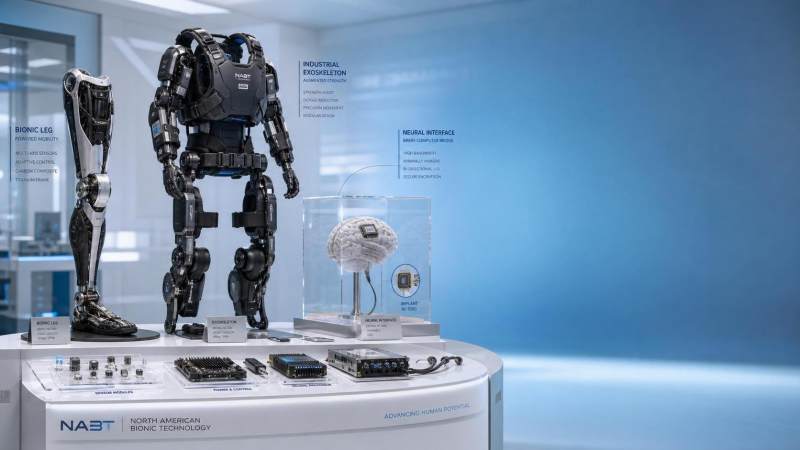
Bionics technology North America is moving from experimental promise to procurement reality. Growth is being shaped by defense-derived engineering, digital healthcare infrastructure, and a stronger demand for devices that prove clinical performance under real operating conditions.
That shift matters beyond healthcare alone. It affects rehabilitation systems, industrial exoskeletons, neuroprosthetics, advanced wearables, and implantable platforms that now sit at the intersection of medicine, data, manufacturing, and regulation.
For organizations evaluating this market, the central question is no longer whether innovation exists. The harder question is which technologies are funded well, validated properly, and capable of long-term deployment without hidden technical or compliance risk.
What the North American bionics market now includes
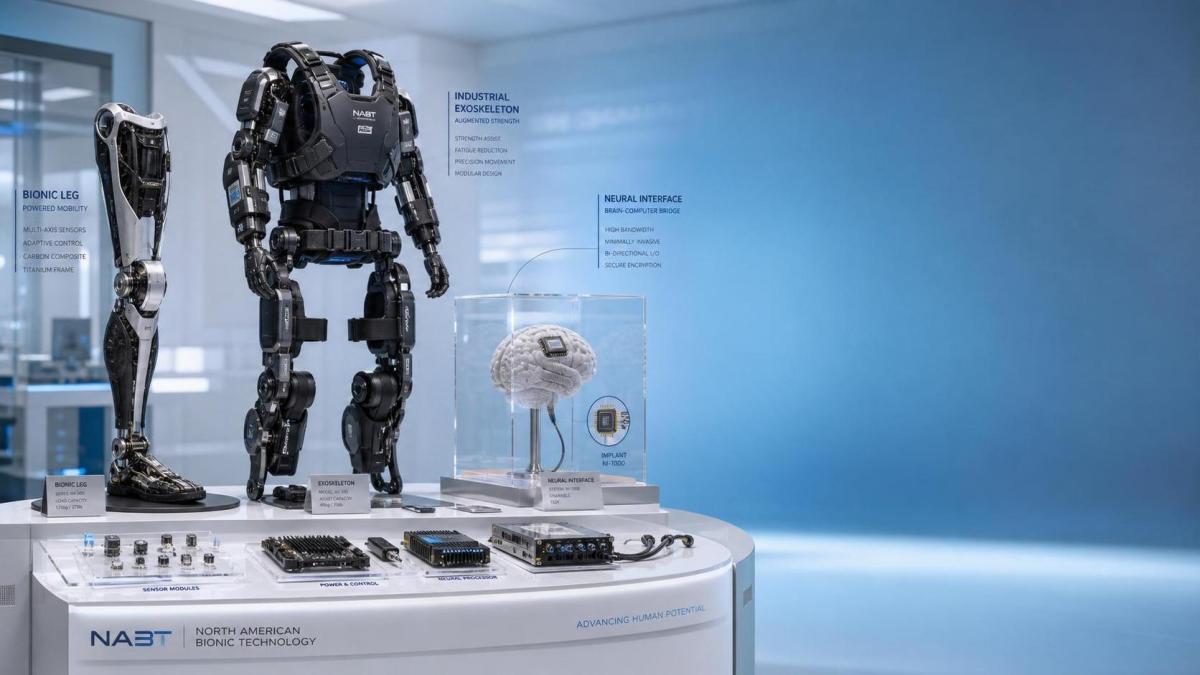
In practical terms, bionics technology North America covers systems that extend, restore, or augment human physical capability through engineered interfaces. That includes both external devices and implanted solutions.
The category now stretches across several technical layers. Mechanical design, sensor fusion, embedded software, materials science, AI-assisted control, wireless connectivity, and clinical workflow integration all influence market readiness.
This is why broad market headlines can be misleading. A powered prosthetic knee, a soft industrial exosuit, and a closed-loop neural interface may share the same narrative, but they do not share the same adoption path.
North America remains a focal region because research institutions, defense programs, venture capital, specialty manufacturing, and hospital innovation networks are unusually concentrated. That concentration shortens the path from prototype to field testing.
Why market momentum is accelerating
Several forces are reinforcing one another. Aging populations increase demand for mobility and rehabilitation support. Labor shortages encourage ergonomic augmentation in industrial settings. Digital care models reward measurable functional outcomes.
A second driver is the normalization of connected medical infrastructure. Devices are now expected to generate usable data, not just perform a mechanical function. In bionics technology North America, this changes product value and buying criteria.
More attention is also going to clinical-grade evidence. In earlier cycles, a strong prototype could win attention. Today, adoption depends more on durability, interoperability, reimbursement potential, cybersecurity posture, and documented patient benefit.
The funding environment reflects this change. Capital is still available, but it is becoming more selective. Investors increasingly favor platforms with defensible engineering, clearer regulatory routes, and data that can survive technical due diligence.
Funding quality matters more than funding volume
Large rounds can create visibility, but they do not automatically reduce execution risk. In this market, the source and structure of funding often reveal more than the headline amount.
Strategic capital from healthcare, robotics, or defense-adjacent partners may signal stronger validation. Grant-backed research can show scientific depth. Late-stage venture support may indicate confidence in commercialization, but not always readiness for scaled deployment.
A useful reading of bionics technology North America combines capital flow with evidence maturity. Products with disciplined test data and manufacturing repeatability tend to be more durable bets than media-visible concepts.
Adoption patterns differ sharply by segment
Market adoption is not moving at one speed. Clinical urgency, reimbursement logic, user training burden, and maintenance complexity all affect how quickly a segment converts interest into sustained demand.
Medical segments usually move first when patient outcomes can be measured clearly. Industrial segments often move when musculoskeletal risk or labor constraints create a more immediate operating case.
Assistive devices occupy a middle ground. They can scale quickly when cost and usability align, but weak signal quality or poor long-term wearability can slow adoption even after strong pilot interest.
Why evidence is becoming the real differentiator
The market is increasingly skeptical of performance claims without test discipline. This is especially true when devices combine sensors, software, biocompatible materials, and repetitive mechanical stress.
In bionics technology North America, engineering credibility now depends on what can be benchmarked. Signal-to-noise ratio, actuator consistency, battery stability, material fatigue, firmware reliability, and human-factor tolerance all shape deployability.
That is where independent evaluation has gained strategic value. Organizations such as VitalSync Metrics frame the market through technical benchmarking rather than promotional positioning, translating manufacturing and performance variables into comparable evidence.
This matters in a healthcare environment shifting toward value-based procurement and digital integration. Devices that cannot support verification, compliance review, and lifecycle reliability are less likely to remain competitive after the pilot phase.
Regulatory readiness is part of commercial readiness
A strong engineering concept can still fail commercially if the compliance path is weak. North American market entry often interacts with broader global requirements, especially when suppliers anticipate EU expansion under MDR or IVDR expectations.
Documentation quality, traceability, post-market surveillance planning, and software validation are no longer side tasks. They directly influence whether a product is viewed as investable and sourceable.
How to evaluate opportunity without being misled by hype
A disciplined review starts by separating technical novelty from operational value. Not every breakthrough improves deployment economics, and not every visually impressive product solves a high-priority workflow problem.
- Check whether outcomes are measured in clinically or operationally meaningful terms.
- Review durability data, not only first-use performance.
- Examine interoperability with hospital, lab, or industrial digital systems.
- Assess whether service, calibration, and maintenance models are realistic.
- Look for third-party validation instead of relying on internal claims.
This approach is especially useful in bionics technology North America, where public visibility can outpace operational maturity. The strongest opportunities usually show consistency across engineering, compliance, user fit, and support infrastructure.
Where the next wave of value is likely to emerge
Short term growth will likely remain strongest in rehabilitation, advanced prosthetics, and targeted assistive systems. These areas already have clearer medical need, stronger clinical pathways, and more defined outcome metrics.
Medium term expansion may come from industrial augmentation and hybrid human-machine interfaces. Adoption there depends less on novelty and more on injury reduction data, workforce acceptance, and measurable productivity stability.
Longer term upside sits in integrated platforms. These combine sensing, adaptive control, and remote performance analytics. As digital health ecosystems mature, such systems could turn bionics from devices into continuous performance services.
That future will favor organizations able to compare claims against real benchmarks. In bionics technology North America, the advantage increasingly belongs to those who can test deeply, document rigorously, and decide with evidence rather than narrative.
A practical next step for market assessment
The most useful next move is to build a decision frame before selecting a partner or platform. Focus on application fit, validation quality, compliance exposure, serviceability, and lifecycle economics in the same review process.
That discipline helps filter a fast-moving market into comparable options. It also aligns well with how bionics technology North America is actually being adopted: through evidence-backed use cases, not broad innovation claims.
Where uncertainty remains, independent technical benchmarking and standardized whitepaper analysis can clarify whether a solution is ready for sourcing, investment, or further observation. In this market, better judgment starts with better technical truth.
Recommended News
- 2026.11.15Choosing Materials for Sheet Metal Parts: Strength, Corrosion and CostDr. Alistair Thorne (Senior Biomedical Engineer)
- 2026.11.14EU Updates MDR and IVDR Harmonised Standards Lists, Including Radiation SterilisationDr. Alistair Thorne (Senior Biomedical Engineer)
- 2026.11.14Choosing a Medical Supplier Platform: How to Verify Suppliers and Compare CostsDr. Alistair Thorne (Senior Biomedical Engineer)
The VitalSync Intelligence Brief
Receive daily deep-dives into MedTech innovations and regulatory shifts.