 Get Insights

How Gait Analysis Orthotics Support Rehabilitation: Use Cases, Fit Factors, and Outcome Goals
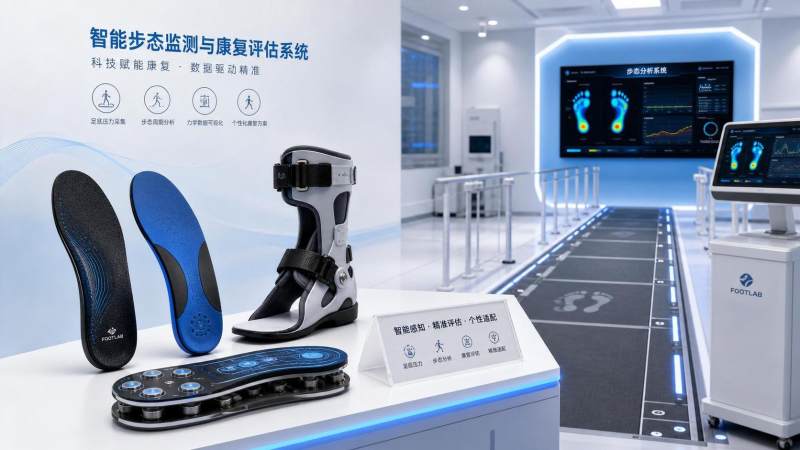
Where Gait Analysis Orthotics for Rehabilitation Create Real Clinical Value
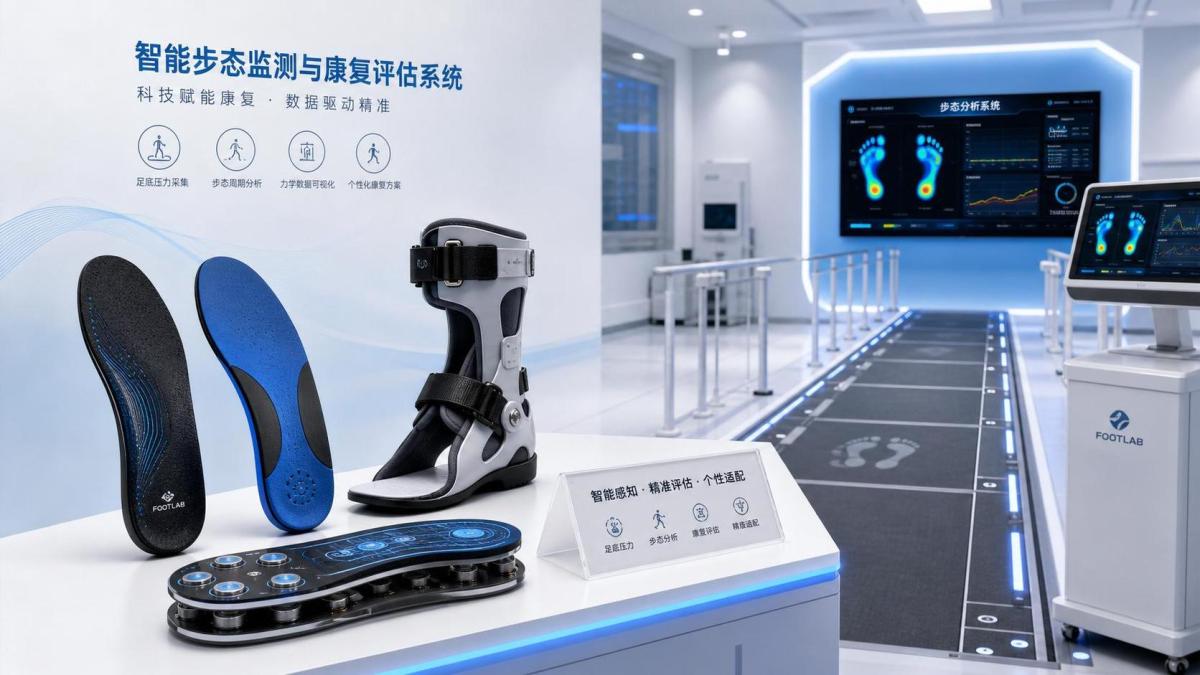
Gait analysis orthotics for rehabilitation are no longer limited to offloading pain or correcting alignment. In many care settings, they are used to translate walking behavior into measurable recovery signals.
That shift matters because rehabilitation decisions increasingly depend on evidence, repeatability, and long-term fit quality. A device that looks appropriate on paper may still underperform when stride asymmetry, fatigue, or surface variation are ignored.
In practice, gait analysis orthotics for rehabilitation sit at the intersection of biomechanics, sensor reliability, material performance, and workflow discipline. The same system will not serve a post-surgical pathway the way it serves neurological retraining.
That is why scenario-based evaluation matters. The useful question is not whether gait analysis orthotics are advanced, but whether they match the recovery pattern, loading profile, and measurement goal of the setting.
Different Rehabilitation Situations Need Different Judgement Criteria
The demand profile changes because rehabilitation is not one continuous activity. Early-stage recovery often needs protection and controlled motion, while later stages require dynamic feedback, endurance tracking, and clearer evidence of functional return.
A useful gait analysis orthotics for rehabilitation setup therefore depends on three variables: the movement deficit, the wearing context, and the outcome that must be verified.
Short indoor sessions create one type of data behavior. Full-day wear across ramps, transfers, and uneven flooring creates another. If the orthotic is tuned only for laboratory walking, its real-world value may be overstated.
This is where evidence-oriented evaluation becomes important. Groups such as VitalSync Metrics frame the issue well: technical claims should be tested against signal quality, material fatigue, repeatability, and compliance expectations, not only promotional language.
The same gait deviation can come from different causes
A shortened step length may reflect pain avoidance, muscle weakness, proprioceptive loss, or fear of loading. The orthotic response should change accordingly.
When the underlying driver is misread, gait analysis orthotics for rehabilitation may stabilize movement while delaying a more meaningful correction strategy.
Post-Surgical Recovery Often Prioritizes Protection Before Performance
After joint reconstruction, fracture fixation, or tendon repair, the first goal is usually controlled loading. Here, gait analysis orthotics for rehabilitation are most valuable when they show whether unloading targets are actually being respected during walking.
Pressure distribution, stance time, and side-to-side asymmetry become more relevant than athletic-looking gait patterns. A visually smooth gait can still hide compensations that increase stress on healing structures.
Fit factors also behave differently in this stage. Post-operative swelling, dressing bulk, and short-term volume changes can alter interface pressure within days. Rigid correction without adjustment capacity often creates secondary irritation.
A better approach is to favor orthotic designs with measurable pressure tolerance, modular adjustment, and stable sensor capture under partial weight-bearing conditions.
What matters most in this setting
- Consistency of loading data across repeated sessions
- Tolerance to edema-related fit changes
- Comfort during short but frequent walking intervals
- Clear linkage between orthotic adjustment and clinical progression
Neurological Rehabilitation Usually Demands More Than Alignment Control
In stroke, spinal injury, or neurodegenerative rehabilitation, movement variability is often the main challenge. Gait analysis orthotics for rehabilitation must therefore support pattern training, not just joint positioning.
These cases often involve spasticity fluctuation, inconsistent foot clearance, and fatigue-driven changes over time. A fitting that works in the first five minutes may lose value after repeated trials.
This is one of the more common scenarios where static assessments lead to poor decisions. An orthotic may look aligned during bench fitting, yet fail when cadence changes or turning tasks are added.
For neurological recovery, the stronger indicator is whether the system improves repeatable step initiation, safer limb advancement, and confidence during transitional movement.
Useful checks before wider use
- Does the orthotic preserve function during fatigue, not only fresh trials?
- Can gait analysis data distinguish true motor improvement from compensation?
- Is donning manageable without creating inconsistent setup conditions?
- Are sensor outputs stable during turns, stops, and transfer tasks?
For Chronic Pain and Overuse, Small Fit Errors Often Drive Large Outcome Gaps
Not every rehabilitation pathway is acute. In plantar fasciopathy, knee overload, low back compensation, or repetitive strain patterns, gait analysis orthotics for rehabilitation are often used over longer periods with lower clinical supervision.
That changes the judgement criteria. Durability, wear compliance, thermal comfort, and shoe compatibility matter much more because the intervention succeeds only when it remains usable in daily routines.
A frequent mistake is to focus on peak correction in a controlled visit. Long-term benefit usually depends on whether the orthotic reduces cumulative stress without creating new hotspots, gait guarding, or user rejection.
In these cases, gait analysis orthotics for rehabilitation should be reviewed not only for immediate pressure redistribution, but for whether they sustain a tolerable walking pattern across workdays and repeated loading cycles.
Different Settings Change What “Good Outcomes” Really Mean
Outcome goals look similar on reports, but they often mean different things in use. The table below helps separate those priorities before selecting or comparing a gait analysis orthotics for rehabilitation pathway.
This kind of distinction helps keep evaluation grounded. Without it, teams may compare systems against the wrong target and miss the true performance question.
Fit Factors Usually Decide Whether the Data Can Be Trusted
In actual deployment, the orthotic shell, insole interface, fastening method, and footwear coupling all affect the quality of gait data and the quality of movement support.
Even advanced gait analysis orthotics for rehabilitation can produce misleading conclusions when sensor drift, slippage, or inconsistent donning changes the mechanical relationship between foot and device.
This is why technical benchmarking matters. It is not enough to ask whether a system captures pressure or kinematics. The stronger question is whether it captures them repeatably across time, users, surfaces, and maintenance cycles.
Where compliance frameworks such as MDR or IVDR are relevant, documentation quality also becomes part of fit evaluation. Traceable calibration, material records, and validation protocols support safer long-term use.
Fit elements worth checking early
- Interface pressure at bony landmarks
- Stability during turning, stairs, and uneven surfaces
- Sensor repeatability after cleaning or component replacement
- Material fatigue under repeated loading
- Ease of re-fitting when limb volume changes
Common Misjudgments Appear When Similar Cases Are Treated as Identical
One common error is to judge gait analysis orthotics for rehabilitation by static specifications alone. Angle ranges, sensor counts, or material names do not explain real performance without context.
Another is to assume that successful short-session fitting predicts durable daily use. In reality, heat, moisture, fatigue, and repeated donning often reveal weaknesses that the first assessment misses.
A third misjudgment is cost-related. Lower acquisition cost may lead to higher recalibration frequency, earlier material failure, or weaker documentation. Over a rehabilitation cycle, that can reduce both reliability and comparability.
More careful programs avoid these traps by testing across realistic walking tasks, confirming maintenance demands, and separating comfort impressions from objective movement improvement.
A Practical Way to Decide What to Use Next
The most useful next step is to define the rehabilitation scenario before evaluating the solution. That means clarifying whether the priority is protection, retraining, long-duration wear, or return to higher-demand mobility.
From there, map the essential outcome measures. For one pathway, that may be stance symmetry. For another, it may be foot clearance consistency, pressure relief durability, or tolerance over a full day.
Then review fit variables with the same discipline used for data variables. Gait analysis orthotics for rehabilitation only support confident decisions when biomechanical support, signal integrity, and implementation burden are considered together.
A grounded evaluation usually includes real walking conditions, adjustment history, maintenance expectations, and evidence quality. That approach makes outcome goals more realistic and keeps rehabilitation choices aligned with measurable recovery.
Recommended News
- 2026.11.16Choosing Wi-Fi Diagnostic Hardware: Connectivity and Security CriteriaDr. Hideo Tanaka (Imaging Systems Analyst)
- 2026.11.15India Reforms Medical Device Incentive Scheme to Deepen Local ManufacturingDr. Julian Rossi (RehabTech Specialist)
- 2026.11.15Choosing Materials for Sheet Metal Parts: Strength, Corrosion and CostDr. Alistair Thorne (Senior Biomedical Engineer)
The VitalSync Intelligence Brief
Receive daily deep-dives into MedTech innovations and regulatory shifts.