 Get Insights

How Rehabilitation & Bionics products are evaluated today?
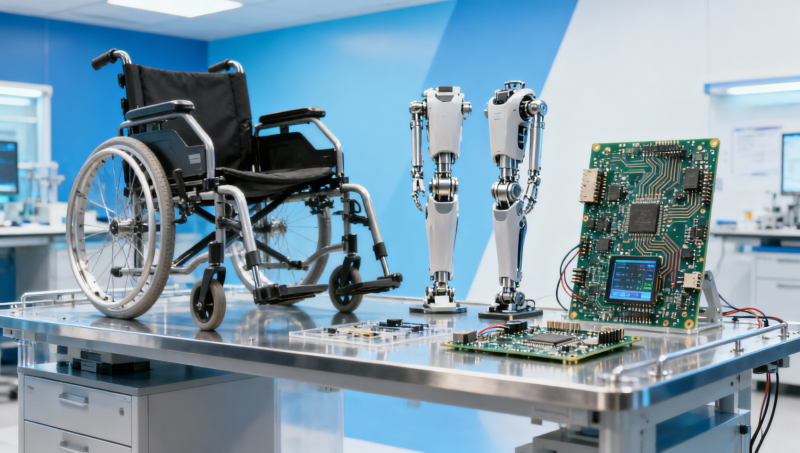
How are Rehabilitation & Bionics products truly evaluated today? Beyond marketing claims, buyers now demand medical technology verification grounded in healthcare engineering, supply chain verification, and IVDR certification. For procurement teams, operators, and decision-makers sourcing from a smart wheelchair manufacturer, oxygen concentrator factory, or patient monitor pcba manufacturer, independent think tank insights help separate compliant, reliable healthcare equipment from costly risk.
That shift has changed the evaluation model across rehabilitation engineering, assistive mobility, respiratory support, monitoring electronics, and human-machine interface systems. In the past, many buyers relied on brochures, distributor assurances, and limited pilot demonstrations. Today, hospital groups, care networks, and MedTech investors increasingly ask a harder set of questions: Does the product perform consistently under load, across 8–12 hour operating cycles, under repeated disinfection, and within the required regulatory framework?
For organizations comparing a prosthetic component supplier, a rehabilitation robot integrator, or a medical electronics manufacturer, evaluation is now multidisciplinary. It combines clinical usability, engineering validation, documentation integrity, manufacturability, lifecycle cost, and post-market support. This article explains how Rehabilitation & Bionics products are assessed today, what metrics actually matter, and how independent technical benchmarking helps procurement teams reduce risk before contracts are signed.
Why evaluation has moved beyond product brochures
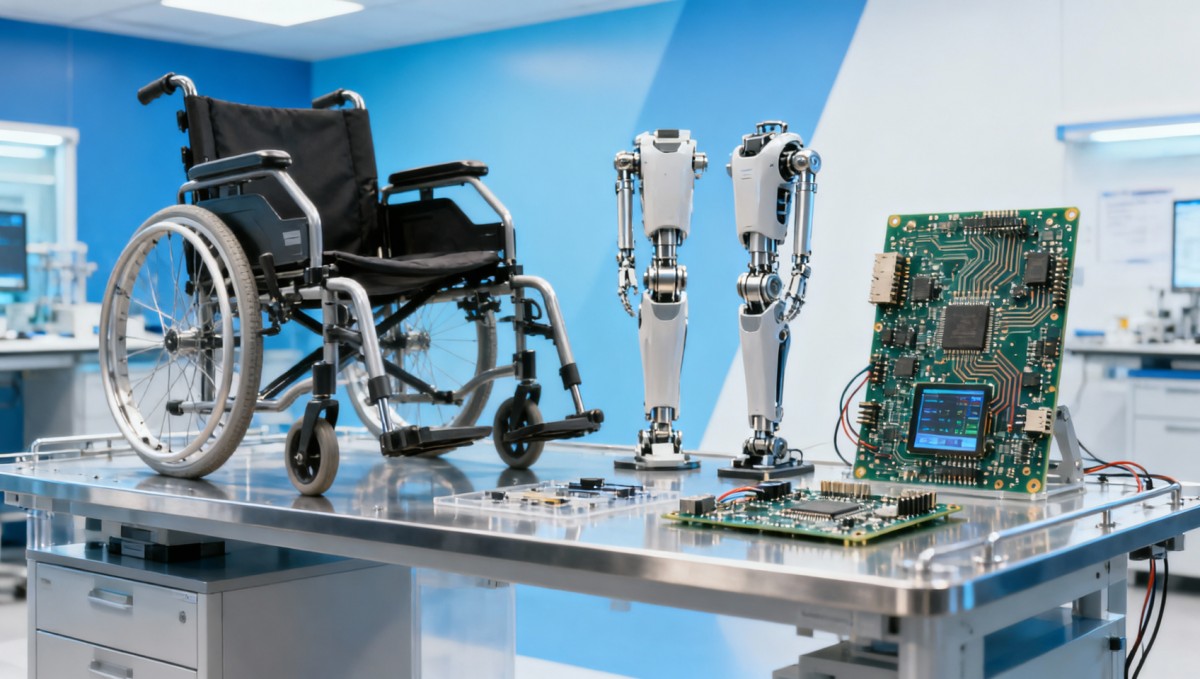
Rehabilitation & Bionics products now sit at the intersection of hardware, software, biomechanics, electronics, and regulatory control. A powered orthosis, for example, may include embedded sensors, rechargeable batteries, firmware logic, structural materials, and patient-contact surfaces. A smart wheelchair may depend on motor control boards, obstacle detection, battery management, and safety braking. Evaluating only the advertised feature list is no longer enough.
Modern buyers typically review at least 4 layers of evidence: functional performance, manufacturing consistency, compliance documentation, and long-term serviceability. A unit that works well in a showroom can still fail procurement review if spare parts lead time exceeds 6–8 weeks, if component traceability is weak, or if sterilization and cleaning exposure shorten service life faster than expected.
This is especially important in value-based procurement, where the lowest purchase price may account for only 25%–40% of the total decision. Energy consumption, calibration intervals, preventive maintenance workload, board-level reliability, software update control, and operator training requirements can have a larger cost impact over 3–5 years than the initial invoice.
For healthcare operators, evaluation has also become more use-case specific. A rehabilitation device used in a high-throughput center handling 20–40 patient sessions per day faces different stress patterns than the same device in a private clinic with 5–8 sessions. The same applies to oxygen systems, patient monitors, and wearable rehabilitation sensors. Context now matters as much as specification.
The new evidence stack used by serious buyers
A more mature evaluation process usually includes the following checkpoints before shortlist approval:
- Verification of critical parameters such as load capacity, signal stability, battery cycle life, and tolerance under repetitive use.
- Document review for MDR/IVDR relevance, risk management records, labeling consistency, and test protocol completeness.
- Supply chain visibility, including component origin, PCB assembly quality control, and replacement part availability.
- Operator-focused review covering interface clarity, alarm logic, cleaning workflow, and training time, often within 2–5 working days of technical assessment.
What changed is not just the number of criteria, but the need to connect them. A rehabilitation platform with excellent motion control but unstable firmware update management may create unacceptable service risk. Likewise, a low-cost oxygen concentrator with acceptable flow performance may still fail a serious review if compressor life data, thermal stress handling, and electronics sourcing remain opaque.
Core evaluation criteria for Rehabilitation & Bionics products
The most effective product evaluations use a weighted model rather than a single pass/fail judgment. For most B2B healthcare procurement cases, teams assess at least 5 major dimensions: clinical suitability, engineering performance, regulatory status, manufacturing quality, and lifecycle support. The exact weight differs by product class, but each dimension must be examined with evidence, not assumptions.
Clinical suitability asks whether the product can serve the intended patient population and care workflow. For prosthetic liners, orthotic structures, and motion-assist devices, this may include fit consistency, skin-contact material behavior, gait support range, or repetitive movement accuracy. For monitoring-enabled rehabilitation systems, signal fidelity and false alarm behavior can be just as important as comfort and ergonomics.
Engineering performance focuses on measurable thresholds. Typical checks include load-bearing range, fatigue endurance over 100,000 or more simulated cycles, battery runtime of 4–10 hours depending on use profile, ingress protection where relevant, thermal behavior, and response latency for electronic control systems. In sensor-enabled systems, signal-to-noise ratio and drift over time are common review points.
Manufacturing quality then determines whether the tested sample is representative of full-scale output. Buyers increasingly request process controls, lot traceability, inspection criteria, and evidence of repeatability between batches. A strong prototype means little if PCB solder quality, actuator sourcing, or material hardness varies significantly from one production run to the next.
A practical decision matrix
The table below shows a practical framework used by many procurement and technical review teams when comparing rehabilitation and bionics suppliers.
A balanced matrix prevents one strong feature from hiding two weak foundations. In practice, suppliers that score well across all 4 dimensions above often outperform “feature-rich” alternatives whose documentation, quality systems, or service readiness remain immature.
Minimum questions buyers should ask
- What are the validated operating limits under real duty cycles, not just ideal lab conditions?
- How many critical components have single-source dependency, and what is the fallback plan?
- What is the preventive maintenance interval: every 3 months, 6 months, or 12 months?
- Can the supplier provide traceability from raw material or PCB lot to finished medical unit?
These questions are simple, but they often reveal whether a manufacturer is prepared for institutional healthcare procurement or still operating with consumer-grade assumptions.
How technical benchmarking and compliance review are performed
Independent benchmarking typically starts with a protocol definition phase. This usually takes 3–7 working days and sets the scope: which performance parameters matter, what test environment will be used, what documentation must be reviewed, and how results will be normalized across competing suppliers. Without a clear protocol, side-by-side comparison is often misleading because each vendor presents different data under different conditions.
For a smart wheelchair manufacturer, benchmarking may include incline handling, braking stability, turning radius, battery consistency after repeated charge cycles, vibration resistance, and control-board behavior under temperature variation. For an oxygen concentrator factory, the benchmark may prioritize oxygen output stability, alarm response, compressor endurance, filter replacement burden, and thermal management during continuous use over 8–24 hours.
For a patient monitor PCBA manufacturer or sensor module supplier supporting rehabilitation equipment, evaluation often moves deeper into electronics. Reviewers may assess solder joint consistency, board cleaning quality, electromagnetic stability, connector durability, and data signal integrity. These details matter because rehabilitation and bionics products increasingly depend on embedded electronics rather than purely mechanical systems.
Compliance review runs in parallel. It does not mean assigning a legal opinion without context; rather, it means checking whether the supplier’s technical documentation, intended use statement, labeling, performance claims, and risk controls are aligned enough to support procurement confidence. For European-facing products, MDR or IVDR relevance can strongly affect importer acceptance, distributor onboarding, and long-term market viability.
Typical benchmarking workflow
A structured workflow helps technical teams avoid subjective decisions. The following sequence is common in independent review projects.
The key advantage of this approach is comparability. Instead of reviewing 3 suppliers through 3 incompatible claims packages, buyers receive a normalized view of performance, documentation quality, and operational risk. That is especially valuable when the procurement decision must serve both technical users and executive approval committees.
Common compliance blind spots
- Performance claims that are broader than the documented intended use.
- Incomplete risk-control linkage between hazards, mitigation steps, and labeling.
- Insufficient clarity on software version control for connected rehabilitation systems.
- Weak supplier traceability for high-failure-risk components such as batteries, sensors, or connectors.
Any one of these gaps can delay approval, increase warranty exposure, or force costly requalification after deployment.
Procurement factors that matter after the lab results
Lab validation is only one part of the decision. Procurement teams also need to judge whether the product can be deployed, maintained, and scaled without hidden operational friction. This is where many Rehabilitation & Bionics purchases succeed or fail. A technically promising system may still be a poor fit if onboarding takes 4 weeks, replacement modules ship in 45 days, or service documentation is too vague for field engineers.
Buyers should translate technical findings into ownership realities. For example, if an exoskeleton battery supports only 3–4 hours of intensive use, a center running two daily therapy blocks may need extra battery inventory. If a patient monitoring subsystem requires quarterly recalibration, biomedical teams must factor labor cost, downtime windows, and spare-device reserve into the total acquisition plan.
After-sales depth matters as much as product build quality. Operators need troubleshooting guides, cleaning instructions, firmware update controls, and predictable service escalation. Enterprise decision-makers need visibility on warranty terms, component discontinuation policy, and expected service life. In many tenders, these factors determine whether a shortlist becomes a signed contract.
A practical way to assess suppliers is to review both direct and indirect cost drivers over a 36–60 month window. That includes maintenance interval, consumables use, replacement part pricing, operator training time, expected downtime, and upgrade path. Products with a 10% lower purchase price can become 15%–20% more expensive over the lifecycle if service demands are high.
Operational procurement checklist
The checklist below helps procurement teams convert engineering results into contract-ready questions.
- Confirm standard lead time for production and spare parts, ideally expressed as separate windows such as 2–4 weeks for standard units and 4–8 weeks for critical replacements.
- Review service structure: remote triage, field support, depot repair, and software maintenance responsibilities.
- Ask for cleaning and disinfection compatibility across at least 3 common chemical categories used in hospitals or rehabilitation clinics.
- Define acceptance criteria before delivery, including functional inspection, documentation review, and operator sign-off.
What different stakeholders care about
Because the target audience is mixed, procurement documentation should answer different needs at once. Operators want reliability and ease of use. Purchasing managers want traceability and service clarity. Executives want risk reduction, scalability, and defensible supplier selection. A strong evaluation package addresses all three groups with the same evidence base, rather than separate sales narratives.
This is also why independent technical whitepapers are increasingly useful. They translate engineering parameters into procurement language without losing technical precision. For B2B healthcare buyers, that bridge is often what turns complex benchmark data into a practical sourcing decision.
Frequent mistakes, market trends, and a smarter sourcing path
One common mistake is overvaluing a demo unit. A single successful demonstration does not prove production consistency, service resilience, or long-term fatigue behavior. Another mistake is assuming that regulatory language on a brochure equals documentation maturity. Serious buyers need to verify whether test records, labeling logic, and intended-use claims are coherent and reviewable.
A second major error is evaluating devices in isolation from their supply chain. Rehabilitation & Bionics products increasingly rely on motors, controllers, batteries, sensors, and PCBAs sourced through multi-tier networks. If even 1 or 2 critical components have unstable sourcing, delivery schedules and service commitments can become unreliable. Supply chain verification is therefore no longer optional for medium- and high-value medical procurements.
The market trend is clear: buyers are moving toward evidence-led sourcing. Over the next 12–24 months, more tenders are expected to require structured technical comparison, maintenance visibility, and product lifecycle planning rather than simple feature matching. Devices that can demonstrate measurable durability, documentation maturity, and service readiness will be better positioned than products that compete mainly on headline pricing.
For organizations navigating this shift, the smarter path is to use independent benchmarking early—before technical assumptions become contractual risk. That is where a data-driven think tank and technical benchmarking laboratory such as VitalSync Metrics (VSM) adds value: translating engineering truth into procurement confidence across MedTech and Life Sciences sourcing decisions.
FAQ for buyers and technical reviewers
How should buyers compare two similar rehabilitation products?
Use a weighted scorecard with at least 5 dimensions: clinical use, engineering reliability, compliance status, manufacturing control, and service readiness. Review not just peak performance, but consistency over repeated use, expected maintenance every 3–12 months, and spare part support over a 3–5 year horizon.
What is a realistic evaluation timeline?
For a structured review, 2–5 weeks is common depending on sample access, documentation quality, and test scope. Straightforward document-plus-benchmark comparisons can move faster, while multi-site or electronics-heavy systems may require longer technical review.
Why is supply chain verification so important?
Because reliability is not determined by final assembly alone. If batteries, sensors, motors, or PCBAs come from unstable or weakly controlled sources, the finished device may show batch variation, delayed service, or inconsistent field performance. Verifying upstream controls lowers those risks before deployment.
When should an independent benchmark be used?
It is most useful when there are 2–4 shortlisted suppliers, when product claims are difficult to compare, or when the procurement has regulatory, technical, or financial consequences beyond a simple purchase order. In these cases, benchmarking can prevent costly misalignment between procurement expectations and real-world performance.
Rehabilitation & Bionics products are now evaluated through a far more disciplined lens: measurable performance, documentation integrity, supply chain transparency, and lifecycle practicality. For information researchers, operators, procurement specialists, and enterprise leaders, the winning choice is rarely the loudest product claim. It is the option that can prove repeatable engineering quality, regulatory readiness, and operational fit.
VitalSync Metrics (VSM) supports that decision process by converting complex technical variables into clear benchmarking insight and procurement-ready evidence. If you are comparing a smart wheelchair manufacturer, oxygen concentrator factory, patient monitor PCBA manufacturer, or another healthcare technology supplier, contact us to get a tailored evaluation framework, review product details, and explore a more reliable sourcing strategy.
- healthcare procurement
- value-based procurement
- medical technology
- technical benchmarking
- signal-to-noise ratio
- life sciences
- supply chain
- engineering truth
- independent think tank
- data-driven
- healthcare engineering
- IVDR certification
- healthcare technology
- healthcare equipment
- medical technology verification
- supply chain verification
- patient monitor pcba manufacturer
- oxygen concentrator factory
- smart wheelchair manufacturer
- life sciences sourcing
Recommended News
- 2026.10.08How to Evaluate Compact Biosignal Sensors for Reliable Wearable Vital-Sign MonitoringLydia Vancini (Regulatory Compliance Lead)
- 2026.10.07How Custom Orthotics Technology Can Improve Physical Therapy OutcomesSarah Jenkins (Laboratory Infrastructure Consultant)
- 2026.10.06How to Validate Metal Biocompatibility Testing for Implantable Medical DevicesDr. Julian Rossi (RehabTech Specialist)
The VitalSync Intelligence Brief
Receive daily deep-dives into MedTech innovations and regulatory shifts.