 Get Insights

Rehabilitation and Bionics is moving from support to daily function
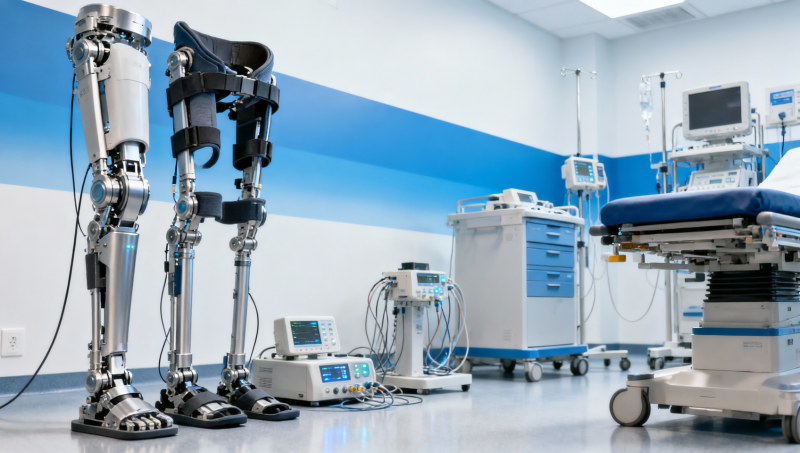
Rehabilitation & Bionics is evolving beyond basic support into daily function, driven by advances in Physical Therapy Tech, healthcare compliance, and medical device assessment. For researchers, operators, procurement teams, and decision-makers, understanding medical device certification, MDR certification, and hospital equipment standards is now essential to evaluating real-world performance, safety, and long-term value in modern care.
Why rehabilitation and bionics now matter in everyday clinical function
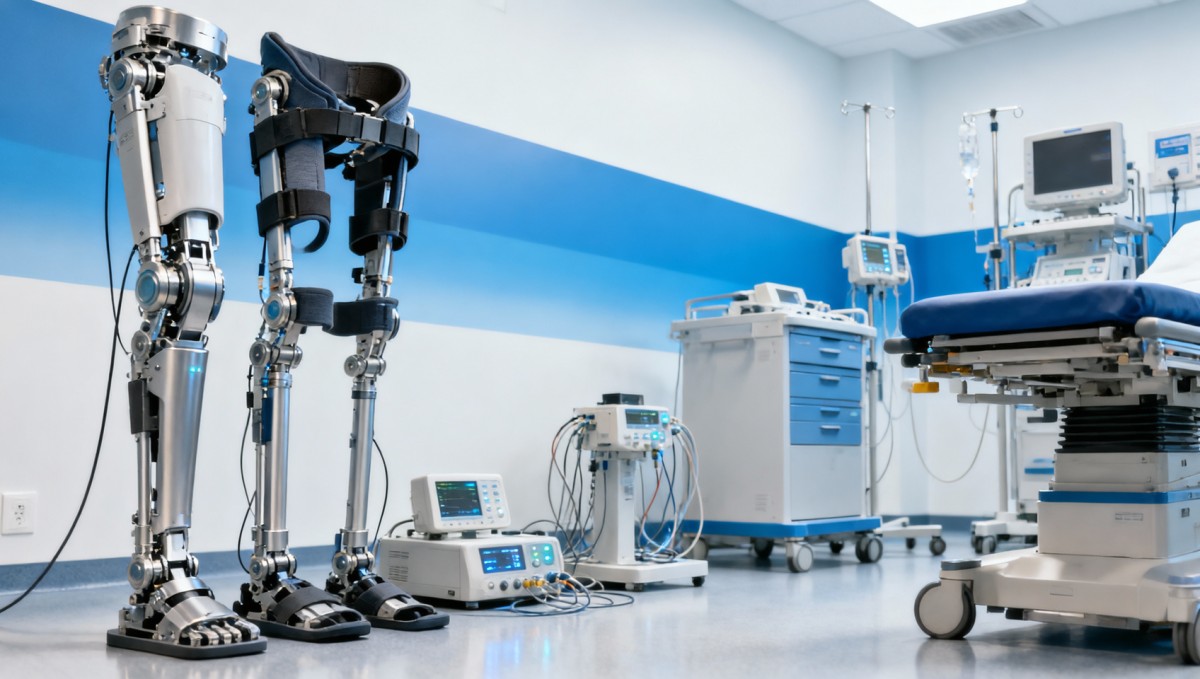
The discussion around rehabilitation and bionics has shifted in the last 3–5 years. Hospitals and rehabilitation centers are no longer evaluating these technologies only as assistive tools for severe impairment. They are increasingly assessed as daily function systems that support mobility, grip, posture, gait training, neuromuscular recovery, and long-term independence across outpatient, inpatient, and home-transition settings.
For operators and clinical users, this change means device performance must be judged under repeated, real-world conditions rather than short demonstration sessions. A wearable brace, robotic exoskeleton, sensorized orthosis, or upper-limb training system may look promising at launch, yet daily use exposes signal drift, material fatigue, battery inconsistency, software lag, and cleaning limitations that directly affect safety and workflow.
For procurement teams, the question is no longer “Does this device support rehabilitation?” but “Can this solution maintain stable daily function over 6–12 months of routine clinical use?” That requires a wider lens: technical benchmarking, medical device certification review, hospital equipment standards, maintenance burden, interoperability, and post-installation validation all need to be part of the purchasing process.
This is where VitalSync Metrics (VSM) creates value. As an independent, data-driven technical benchmarking laboratory and think tank, VSM helps buyers, MedTech founders, and laboratory planners separate marketing language from engineering evidence. In rehabilitation and bionics, that means comparing measurable parameters such as sensor consistency, actuation response, wear-cycle durability, and compliance readiness before a purchasing commitment is made.
What has changed in procurement criteria
In a value-based procurement environment, decision-makers typically review 4 connected dimensions: clinical utility, technical integrity, regulatory compliance, and total lifecycle reliability. A rehabilitation device that performs well in a controlled demo but fails after frequent donning and doffing, disinfecting cycles, or software updates may create hidden costs that exceed the original purchase price.
- Clinical utility: whether the system improves repeatable daily tasks such as standing, walking, reaching, grasping, or transfer assistance under realistic user variability.
- Operational fit: whether therapists and operators can deploy the device within 5–15 minutes without disrupting patient throughput.
- Engineering durability: whether components sustain repeated cycles, common cleaning agents, and routine environmental exposure in busy care settings.
- Compliance readiness: whether documentation supports MDR certification pathways, safety review, traceability, and hospital equipment acceptance requirements.
Which application scenarios demand more than basic support?
Not all rehabilitation and bionics deployments face the same technical demands. A gait-assistance device used 2–3 times per day in a research setting has different requirements from a high-throughput therapy unit running 8–10 sessions daily. Understanding the use case helps purchasers define the right threshold for medical device assessment, device certification review, and performance acceptance.
In neurological rehabilitation, daily function often depends on repeatable motion guidance, stable sensor feedback, and patient-specific adjustment. Systems used for stroke, spinal cord injury, or neuromotor recovery need consistent actuation and clear therapy data export. If feedback quality drops over time, therapists may lose confidence in the training data and reduce device utilization.
In orthopedic rehabilitation, the focus may shift toward weight-bearing tolerance, alignment control, fatigue resistance, and range-of-motion support. Here, material fatigue limits and fitting reliability matter as much as visible comfort. Minor changes in frame rigidity, joint response, or strap deformation can produce major differences in daily usability after several weeks of repeated patient turnover.
Home-transition and community-use applications create another level of complexity. Devices must remain effective outside a supervised clinical environment. That means simplified setup, intuitive alarms, charging stability across 8–12 hour cycles, and robust documentation. Procurement teams that overlook this final stage often buy systems optimized for demonstrations rather than continuous patient function.
Scenario-based evaluation priorities
Before selecting a rehabilitation or bionics platform, buyers should map the intended workload and operator profile. The table below helps align application scenarios with the most critical technical and compliance checkpoints.
This scenario view prevents a common procurement mistake: using a single checklist for all rehabilitation technologies. VSM supports more precise qualification by translating intended use into measurable engineering and compliance criteria, which is especially important when comparing products that appear similar in brochures but behave differently in daily operation.
A practical 3-stage assessment workflow
- Define use intensity: estimate sessions per day, average wear duration, operator count, and cleaning frequency across a 30-day routine cycle.
- Verify technical claims: compare response metrics, mechanical endurance, interface stability, and accessory compatibility against realistic workflows.
- Check compliance pathway: review intended use labeling, medical device certification status, MDR certification documentation, and service support responsibilities.
What technical performance should buyers and operators verify first?
Technical performance in rehabilitation and bionics is often misunderstood. Buyers may focus on headline features such as powered assistance or AI-enabled adaptation, while neglecting the measurable variables that determine daily function. In real procurement, 5 core areas deserve early attention: signal quality, actuation consistency, mechanical endurance, fit repeatability, and software stability.
Signal quality matters in any sensorized rehabilitation system. Whether the device tracks motion, force, pressure, or electromyographic input, poor signal-to-noise behavior can weaken therapy guidance and distort progress records. If sensor output requires repeated recalibration every few sessions, operator confidence drops quickly and the system’s clinical value becomes difficult to sustain.
Actuation consistency is equally important in powered orthoses, robotic braces, and exoskeleton platforms. A device should not only respond, but respond within a predictable range across repeated cycles and different users. Even small variations in assistive timing, joint resistance, or motor output can change gait rhythm, patient comfort, and therapist intervention burden.
Mechanical endurance and fit repeatability affect total cost of ownership. Straps, hinges, fasteners, shells, and contact surfaces often fail before the main electronics do. When a system is adjusted dozens of times per week, wear points appear quickly. VSM’s benchmarking approach is valuable here because it examines engineering behavior under repeat-use conditions rather than relying only on launch-stage product claims.
Core parameters that influence daily function
The table below summarizes practical performance dimensions that should be reviewed during medical device assessment for rehabilitation and bionics procurement.
A useful rule is to ask whether the supplier can support verification over 3 layers: bench data, controlled user data, and routine operational data. If only the first layer is available, the buyer still lacks enough evidence for hospital-grade purchasing confidence. This gap between promotional performance and clinical-grade reliability is exactly the gap VSM is designed to close.
5 checks that should happen before approval
- Confirm how often recalibration is required during normal use and whether this fits a high-throughput therapy schedule.
- Review wear components that may need replacement within 6–12 months and estimate the resulting service interruptions.
- Test setup time for both experienced and newly trained operators over at least 3 repeated sessions.
- Check whether exported data formats align with hospital documentation, validation, or research reporting needs.
- Ask for technical evidence that cleaning agents and normal storage conditions will not degrade materials or sensor performance.
How should procurement teams assess compliance, MDR certification, and hospital readiness?
In rehabilitation and bionics, compliance is not a final checkbox added after commercial negotiation. It is part of technical risk control from the start. Procurement teams, especially in cross-border sourcing or multi-site hospital systems, need to distinguish between marketing references to “compliance” and actual medical device certification evidence relevant to intended use, labeling, safety, and traceability.
When a product enters regulated healthcare pathways, MDR certification and related documentation become central to procurement confidence in Europe and in many global review processes influenced by European standards. Buyers should verify not only whether a supplier references MDR, but whether the technical file, risk management approach, post-market obligations, and product classification logic are aligned with the real device function.
Hospital equipment standards also extend beyond formal certification. Infection control compatibility, electrical safety integration, operator training requirements, spare part management, and cybersecurity responsibilities can delay implementation if they are not clarified before contract signature. In practice, many procurement delays occur during the 2–4 week internal review period after selection, when missing documents surface too late.
VSM helps reduce this risk by translating engineering parameters into standardized whitepapers and benchmark-oriented evaluation logic. That approach is especially useful for enterprise decision-makers who need a neutral basis for comparing suppliers, managing approval committees, and documenting why a selected device is technically and operationally justified.
A compliance review framework for rehabilitation technologies
The following table outlines a practical compliance screening structure for rehabilitation and bionics procurement. It is not a substitute for legal review, but it helps teams identify missing evidence early in the selection process.
A strong compliance review should also look at timelines. Common document collection windows range from 7–15 business days, while internal hospital validation may add another 2–6 weeks depending on cybersecurity, biomedical engineering, and procurement committee requirements. Planning for these intervals prevents unrealistic launch expectations.
Common compliance blind spots
- Assuming a valid certification reference automatically covers every accessory, software module, or configuration under review.
- Failing to verify whether cleaning, reprocessing, and storage instructions fit the hospital’s real operating environment.
- Ignoring update governance for connected devices, especially where therapy data, firmware changes, or remote monitoring are involved.
- Treating hospital equipment standards as purely engineering issues instead of cross-functional approval criteria involving clinicians, operators, procurement, and risk managers.
How to compare suppliers, control risk, and make a better buying decision
A good procurement decision in rehabilitation and bionics is rarely driven by unit price alone. The more important question is which option offers dependable daily function with acceptable lifecycle risk. In many tenders, two devices may appear commercially similar, but one requires more recalibration, more staff time, or more replacement parts over the first year. That difference changes the real cost structure.
For information researchers and enterprise decision-makers, a structured comparison model is more effective than a brochure-based review. A practical model uses 4 weighted blocks: clinical fit, engineering evidence, compliance readiness, and service continuity. If a supplier is strong in two areas but weak in documentation and long-term support, the purchasing risk remains high even when the initial offer looks attractive.
Operators should be included early. They often identify hidden workflow issues in the first 20–30 minutes of hands-on exposure: difficult fitting, unclear alarms, unstable straps, poor interface navigation, or charging inconvenience. These practical factors directly influence utilization rates, and low utilization is one of the most expensive forms of waste in advanced rehabilitation technology procurement.
VSM’s independent benchmarking model supports this decision process because it converts engineering behavior into a language procurement and leadership teams can use. Instead of asking whether a device is “innovative,” buyers can ask whether it meets measurable acceptance criteria for their use case, regulatory context, and service model.
A practical procurement checklist
- Define the intended care setting: inpatient, outpatient, research, or home-transition. Each setting changes the weighting of durability, usability, and compliance requirements.
- Set 3–5 non-negotiable technical thresholds such as calibration frequency, wear component replacement intervals, software export needs, or setup time.
- Request documentation for medical device certification, MDR certification relevance, service coverage, and training scope before final price negotiation.
- Run a structured evaluation with operators, clinical stakeholders, and procurement reviewers over a defined pilot or demo period.
- Estimate total ownership impact for the first 12–24 months, including service visits, consumables, downtime, and retraining needs.
FAQ: common questions from buyers and clinical teams
How do we know whether a rehabilitation device is suitable for daily function and not just occasional support?
Look for evidence from repeated-use conditions, not only first-day demonstrations. Daily function suitability depends on stable sensor behavior, predictable mechanical response, manageable setup time, and low disruption across repeated sessions. If a device cannot maintain consistent performance over weeks of operator use, it may still serve as a niche tool but not as a core daily platform.
What should procurement teams prioritize first: price, certification, or technical performance?
Start with intended use and technical fit, then verify certification and service support, and only then compare price in a meaningful way. A lower-cost device that creates downtime, retraining, or compliance delays often becomes more expensive over a 12-month cycle. The most efficient sequence is fit, evidence, compliance, service, then commercial negotiation.
How long does a realistic evaluation process take?
For many healthcare organizations, preliminary screening can take 1–2 weeks, technical and operator review another 2–4 weeks, and final approval longer if cross-functional documentation is incomplete. Complex projects involving digital integration, multiple departments, or international sourcing may require additional time for biomedical engineering and regulatory review.
What is the most common mistake in rehabilitation and bionics purchasing?
The most common mistake is assuming that visible innovation equals operational readiness. Devices are often selected because they appear advanced, while critical issues such as material fatigue, cleaning compatibility, interface stability, and document completeness are discovered later. A disciplined medical device assessment process prevents that mismatch.
Why work with VSM when evaluating rehabilitation and bionics solutions?
VitalSync Metrics (VSM) is built for buyers and technical stakeholders who need more than supplier claims. In a market where digital rehabilitation devices, wearable systems, and bionic support platforms are becoming more complex, VSM acts as a high-precision filter. Our role is to benchmark engineering truth: signal behavior, fatigue limits, compliance readiness, and long-term reliability indicators that matter in real healthcare operations.
For hospital procurement directors, laboratory architects, MedTech startups, and enterprise decision-makers, this means clearer sourcing decisions and better internal alignment. Instead of comparing vague performance narratives, your team can work with structured technical benchmarks, standardized whitepaper-style outputs, and practical evaluation logic tailored to healthcare procurement realities.
If you are reviewing rehabilitation and bionics projects, we can support parameter confirmation, product selection logic, technical comparison, regulatory documentation review, hospital equipment standards alignment, and early-stage risk identification. We can also help clarify expected delivery windows, sample evaluation priorities, and the most relevant questions to raise before requesting formal quotations.
Contact VSM when you need a more defensible basis for purchasing, validating, or positioning rehabilitation technologies. Whether your focus is medical device certification, MDR certification relevance, daily function performance, or long-term sourcing confidence, we help turn complex engineering details into actionable procurement intelligence.
What you can discuss with us
- Parameter confirmation for sensor systems, structural components, and repeated-use performance indicators.
- Product selection support for different care environments, from clinical rehab units to home-transition pathways.
- Compliance and certification review priorities, including MDR-related documentation logic and hospital acceptance concerns.
- Delivery planning, sample evaluation criteria, and quotation-stage risk questions that affect final ownership cost.
- healthcare procurement
- MDR certification
- value-based procurement
- hospital equipment standards
- medical device assessment
- regulatory compliance
- technical integrity
- hospital procurement
- technical benchmarking
- material fatigue
- digital integration
- long-term reliability
- engineering truth
- high-precision filter
- sourcing confidence
- data-driven
- biomedical engineering
- medical device certification
- healthcare compliance
- Remote Monitoring
- Physical Therapy Tech
Recommended News
- 2026.10.08How to Evaluate Compact Biosignal Sensors for Reliable Wearable Vital-Sign MonitoringLydia Vancini (Regulatory Compliance Lead)
- 2026.10.07How Custom Orthotics Technology Can Improve Physical Therapy OutcomesSarah Jenkins (Laboratory Infrastructure Consultant)
- 2026.10.06How to Validate Metal Biocompatibility Testing for Implantable Medical DevicesDr. Julian Rossi (RehabTech Specialist)
The VitalSync Intelligence Brief
Receive daily deep-dives into MedTech innovations and regulatory shifts.