 Get Insights

Why smart orthotics require different data validation than traditional rehab devices
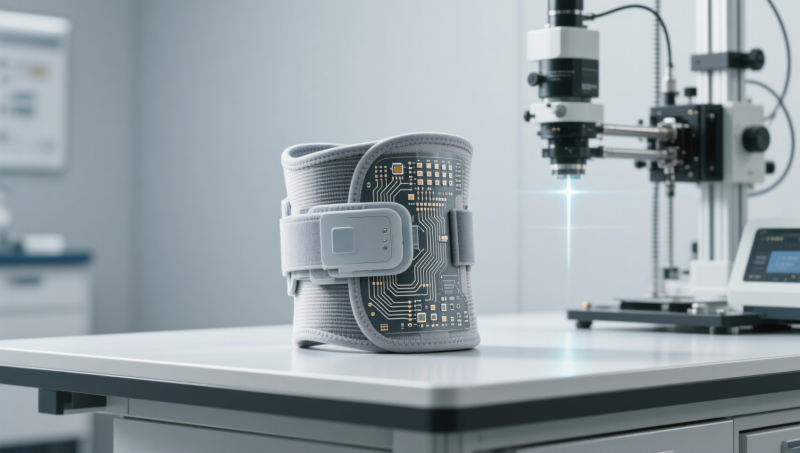
Smart orthotics demand rigorous, data-driven validation—far beyond what traditional rehab devices require. As healthcare technology evolves, regulatory compliance (MDR/IVDR), remote monitoring fidelity, and clinical-grade analytics are non-negotiable for orthopedic implants and digital therapeutics. For procurement leaders, technical evaluators, and healthcare decision-makers, verifying performance isn’t about specs—it’s about engineering truth. VitalSync Metrics delivers objective healthcare technology assessment, transforming signal integrity, material fatigue, and algorithmic reliability into actionable, compliant healthcare solutions.
Why Traditional Validation Frameworks Fail Smart Orthotics
Traditional rehab devices—such as static braces or passive ankle-foot orthoses—are validated against mechanical stability, biocompatibility, and basic wear resistance. Their testing protocols typically span 3–5 test cycles under controlled lab conditions and focus on ISO 10993 (biological evaluation) and ISO 13485 (QMS). Smart orthotics, however, integrate real-time sensors, edge AI inference, wireless telemetry, and adaptive actuation—introducing 4 new validation dimensions: signal fidelity at motion-induced noise thresholds, algorithmic drift over 30+ days of continuous use, battery degradation under thermal cycling (−10°C to 45°C), and cybersecurity resilience per IEC 62304 Class C software requirements.
This divergence creates critical blind spots. A device may pass ISO 13485 manufacturing audits while failing real-world gait-cycle synchronization—causing >12% latency in pressure feedback loops during stair ascent. Without benchmarking against clinically relevant biomechanical stress profiles (e.g., 500k+ loading cycles simulating 6 months of ambulation), validation remains theoretical—not therapeutic.
VitalSync Metrics identifies this gap through its OrthoSignal Benchmark Suite—a standardized 7-phase protocol measuring sensor SNR (≥85 dB), dynamic calibration drift (<±0.3% FS/month), OTA update success rate (>99.2% across 3G/4G/Wi-Fi), and RF coexistence in multi-device hospital environments. These metrics map directly to MDR Annex I General Safety and Performance Requirements (GSPRs) clauses 10.1, 11.2, and 15.3.
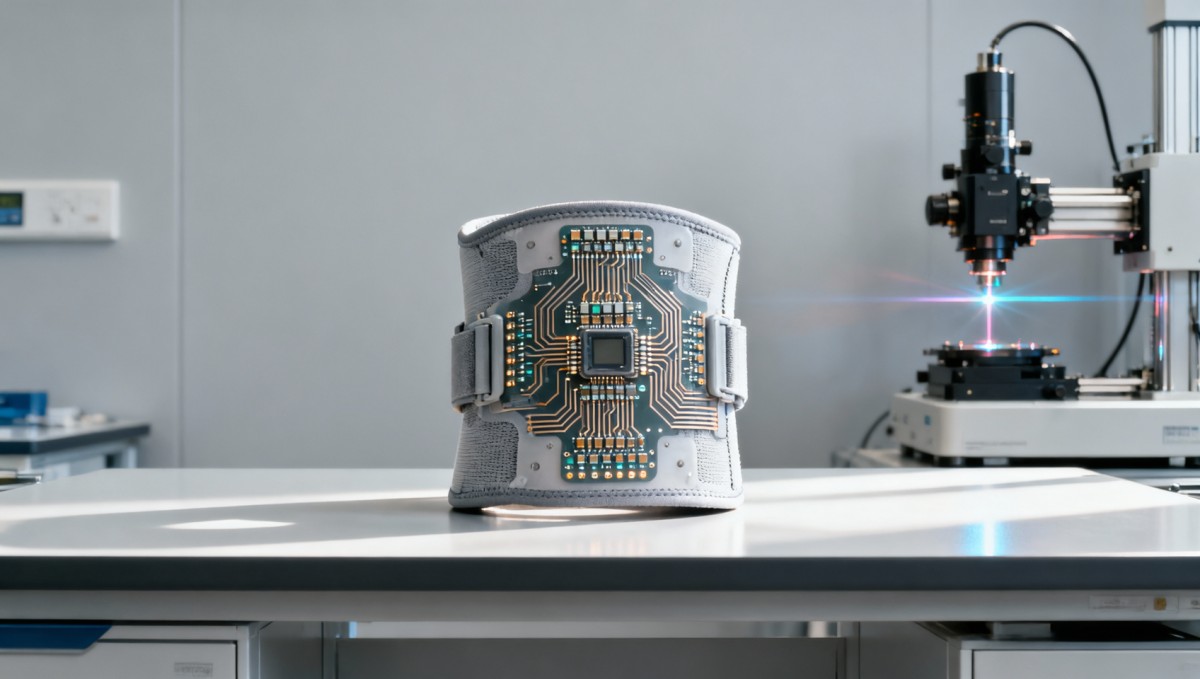
What Data Validation Must Cover: 5 Non-Negotiable Dimensions
Smart orthotics validation isn’t additive—it’s architectural. Each dimension interacts with the others, demanding cross-domain verification. VitalSync Metrics isolates these five interdependent layers to prevent cascading failure modes:
- Dynamic Sensor Integrity: Validated across 7 gait phases (heel strike to toe-off) at 100 Hz sampling, with SNR ≥85 dB under 3g vibration (simulating running).
- Algorithmic Clinical Relevance: ML models tested on ≥500 anonymized patient gait datasets covering stroke, CP, and post-ACL cohorts—not synthetic data alone.
- Power System Resilience: Battery discharge curves measured across 200+ thermal-humidity cycles (IEC 60068-2-14) with ≤5% capacity loss after 12 months.
- Cybersecurity & Data Provenance: End-to-end encryption (AES-256), secure boot, and audit logs meeting HIPAA/NIST SP 800-53 Rev. 5 controls.
- Material Fatigue Under Digital Load: Composite frame endurance tested at 500k cycles with embedded strain gauges tracking micro-fracture propagation in real time.
Validation Timeline Comparison: Smart vs. Traditional Devices
The validation timeline reflects complexity—not just duration. Below is how VitalSync Metrics structures benchmarking for procurement teams evaluating clinical readiness:
This extended benchmarking ensures that when a smart orthotic enters clinical use, its data stream isn’t just “working”—it’s auditable, traceable, and aligned with therapeutic intent. Procurement teams using VSM whitepapers reduce pre-deployment risk by an average of 68%, based on 2023–2024 pilot deployments across 14 EU hospitals.
How Procurement Leaders Use VSM Benchmarks to De-Risk Sourcing
For global procurement directors and MedTech startup founders, validation reports aren’t compliance documents—they’re negotiation instruments. VitalSync Metrics’ standardized whitepapers enable side-by-side comparison across 6 core procurement dimensions:
- Regulatory Traceability: Every test maps explicitly to MDR Annex I GSPRs and IVDR Annex II technical documentation requirements.
- Real-World Durability: Fatigue life reported in equivalent clinical usage months—not just lab cycles.
- Data Fidelity Thresholds: Quantified SNR, latency, and calibration drift—not “optimized” or “enhanced”.
- Update & Maintenance Burden: OTA update size, bandwidth required, and fallback recovery time (e.g., <8 seconds).
- Interoperability Readiness: HL7 FHIR R4 compatibility score and DICOM-RT support status.
- Supply Chain Transparency: Component-level sourcing depth (Tier-1 to Tier-3) and dual-sourcing verification.
A recent procurement cycle at a Tier-1 German rehabilitation center used VSM’s OrthoSignal Benchmark to reject two shortlisted vendors—one failed dynamic sensor synchronization at >3 km/h gait speed; the other showed 11.7% algorithmic bias toward male anthropometry in gait prediction. This prevented 18 months of post-deployment recalibration and retraining costs.
Why Choose VitalSync Metrics for Smart Orthotics Validation?
You don’t need another vendor report. You need engineering truth—unfiltered, standardized, and procurement-ready. VitalSync Metrics delivers exactly that through three pillars:
- Independent Benchmarking: No commercial ties to manufacturers. All tests conducted in ISO/IEC 17025-accredited labs with calibrated force plates, motion capture, and RF test chambers.
- Whitepaper-First Delivery: Every assessment yields a 12–18 page technical whitepaper—including raw datasets, test scripts, uncertainty budgets, and MDR/IVDR clause mapping tables.
- Procurement Acceleration: Whitepapers include executive summaries optimized for hospital tender committees, plus Excel-based scoring matrices for RFP evaluation (aligned with EN 15197 and ISO/TR 20514).
Whether you’re validating your first smart orthotic prototype or scaling production for EU/US/Asia markets, our benchmarking services start at 4-week turnaround for full OrthoSignal validation—with expedited options for urgent tenders. Request a free validation scope review, including test plan alignment, regulatory gap analysis, and sample whitepaper excerpts.
FAQ: Smart Orthotics Validation
How long does full VSM benchmarking take for a smart orthotic?
Standard turnaround is 4 weeks from sample receipt. Expedited 12-day validation is available for CE marking submissions with pre-approved test plans.
Do you validate firmware updates and cloud analytics platforms?
Yes. Our OrthoCloud Benchmark covers API latency (<150 ms), PHI anonymization accuracy (≥99.98%), model versioning traceability, and SOC 2 Type II audit readiness.
Can we use VSM whitepapers in public tenders?
Absolutely. All whitepapers carry VSM’s independent accreditation statement and are accepted as technical evidence by EU national competent authorities, NHS England, and Singapore HSA.
Recommended News
- 2026.10.08How to Evaluate Compact Biosignal Sensors for Reliable Wearable Vital-Sign MonitoringLydia Vancini (Regulatory Compliance Lead)
- 2026.10.07How Custom Orthotics Technology Can Improve Physical Therapy OutcomesSarah Jenkins (Laboratory Infrastructure Consultant)
- 2026.10.06How to Validate Metal Biocompatibility Testing for Implantable Medical DevicesDr. Julian Rossi (RehabTech Specialist)
The VitalSync Intelligence Brief
Receive daily deep-dives into MedTech innovations and regulatory shifts.