 Get Insights

Scaffolding Caster Wheels Wholesale: How to Compare Load Rating, Brake Type, and Wheel Material
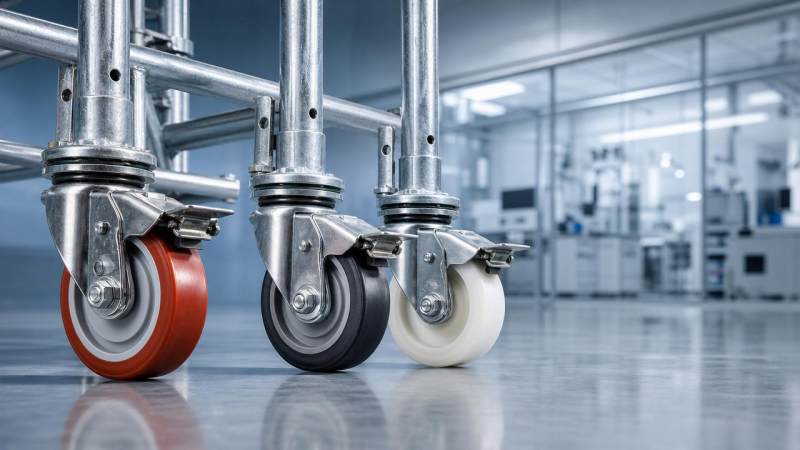
Scaffolding caster wheels wholesale decisions often look simple at first glance. A catalog lists size, price, and a few load numbers. In practice, the real comparison is more technical.
Load rating, brake type, and wheel material directly affect stability, service life, and maintenance cost. They also shape safety performance in hospitals, laboratories, clean build-outs, and general industrial projects.
That is why buyers increasingly ask for test data instead of broad claims. The wider shift toward value-based procurement has made engineering evidence more important than promotional language.
From the perspective of VitalSync Metrics (VSM), this is a familiar pattern. Whether benchmarking medical components or mobility hardware, the principle stays the same: reliable sourcing begins with measurable performance.
Why this category deserves closer comparison
Scaffold mobility systems carry people, tools, and structural load at the same time. A wheel failure can interrupt work, damage flooring, or create a serious fall risk.
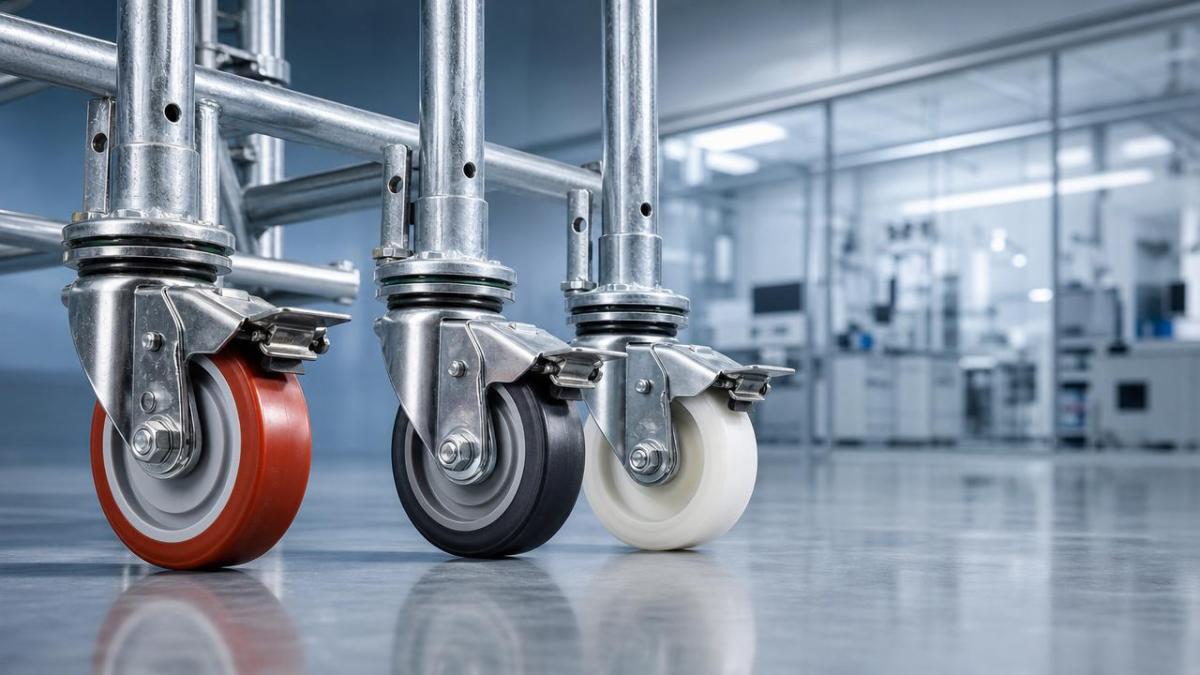
In scaffolding caster wheels wholesale sourcing, a lower upfront price can hide weaker bearings, thinner brackets, or inconsistent brake engagement. Those details rarely appear in a short quotation sheet.
This matters even more in controlled environments. Healthcare renovations, laboratory installations, and life sciences facilities often demand smooth movement, low contamination risk, and predictable locking performance.
In other words, the wheel is not just an accessory. It is a load-bearing, motion-control, and safety component.
What load rating really means in daily use
Load rating is usually the first figure compared in scaffolding caster wheels wholesale reviews. It is also one of the most misunderstood specifications.
A published rating may reflect static load, dynamic load, or a test under ideal conditions. The number alone is not enough without the test basis behind it.
Static and dynamic loads are not interchangeable
Static load refers to weight held while the scaffold remains still. Dynamic load reflects movement, rolling resistance, turns, floor joints, and impact during operation.
A caster that performs well in static conditions may degrade faster when pushed across uneven concrete or threshold transitions. This is where fatigue strength becomes more relevant than headline capacity.
Safety margin matters more than maximum claim
A useful comparison starts with total scaffold weight, expected live load, accessory weight, and floor condition. Then a practical safety margin is added.
For many applications, buyers should avoid selecting a caster whose rating only just matches the expected load. Real-world use rarely mirrors a perfect laboratory setup.
VSM-style benchmarking would treat these values as linked variables, not isolated numbers. That approach helps separate robust products from well-worded datasheets.
Brake type changes the risk profile
Brake design often becomes a deciding factor after a site incident or near miss. It deserves attention much earlier in the sourcing process.
In scaffolding caster wheels wholesale comparisons, two products can share similar load ratings but differ sharply in locking reliability and operator control.
Side brake, total lock, and directional lock
A basic wheel brake stops rotation of the wheel. A total lock usually restricts both wheel rotation and swivel movement. A directional lock helps maintain straight travel.
For elevated work platforms, total lock systems often provide better positional stability. In narrow corridors or equipment staging areas, directional control may improve handling.
Brake performance is about repeatability
A brake should engage consistently under load, not only when the scaffold is empty. Pedal force, contact area, spring quality, and contamination resistance all influence that result.
Dust, cleaning fluid, and floor debris can reduce locking effectiveness over time. In healthcare-adjacent projects, surfaces are cleaned frequently, so corrosion resistance also becomes relevant.
- Ask whether the brake is tested under full rated load.
- Check if lock performance changes after repeated cycles.
- Review pedal accessibility when operators wear safety footwear.
- Confirm whether replacement brake parts are available.
Wheel material affects more than floor contact
Wheel material shapes rolling resistance, noise, floor protection, chemical tolerance, and wear behavior. It should never be selected on hardness alone.
This is another area where scaffolding caster wheels wholesale buyers benefit from a use-case view rather than a generic specification view.
Common materials and their trade-offs
Polyurethane wheels usually balance load capacity, floor protection, and moderate noise control. They are widely used where mixed surfaces are expected.
Rubber wheels tend to roll quietly and absorb vibration well. They can be useful indoors, but heavy loads and aggressive chemicals may shorten service life.
Nylon or cast iron options tolerate high loads and harsh abrasion. However, they may transmit more vibration and increase floor marking risk.
Where sterile build-outs or laboratory environments are involved, material cleanliness and cleanability may matter almost as much as raw load performance.
How to compare suppliers beyond the catalog
A strong scaffolding caster wheels wholesale decision often comes from the quality of supporting evidence. Good suppliers can explain how their numbers were generated.
That evidence may include cycle testing, salt spray data, material certificates, dimensional tolerances, and traceable quality controls.
Questions that sharpen the comparison
- Was the caster tested as a component or as part of a full scaffold assembly?
- What floor conditions were used during dynamic testing?
- Are wheel compounds consistent across production batches?
- How are brake failures tracked and corrected?
- Is there documentation aligned with regulated project environments?
This evidence-driven approach aligns with the VSM mindset. In technical procurement, confidence comes from verification, not from the broadest product claim.
Matching the wheel to the operating environment
The best scaffolding caster wheels wholesale option depends on where the scaffold will move, stop, and remain parked. Context changes the decision more than many buyers expect.
A hospital retrofit may favor non-marking wheels, stable brakes, and easier sanitation. A warehouse maintenance site may prioritize impact resistance and high dynamic capacity.
Laboratory construction often sits between those extremes. It can require clean movement, low vibration, and reliable locking near sensitive installations.
Simple alignment between environment and wheel specification prevents expensive overbuying as well as risky underspecification.
A practical path for the next sourcing round
Start with a comparison sheet that combines load profile, floor condition, brake requirement, material preference, and maintenance expectations. Then ask suppliers to map their product data to that sheet.
When reviewing scaffolding caster wheels wholesale offers, give more weight to test transparency, repeatable brake function, and realistic service conditions than to headline capacity alone.
If several options appear similar, request sample validation or third-party benchmark data. That extra step usually clarifies which product is engineered for long-term value rather than short-term pricing.
A disciplined evaluation framework makes future purchases easier as well. It turns one-off buying into a repeatable sourcing standard grounded in evidence.
Recommended News
- 2026.11.16Choosing Wi-Fi Diagnostic Hardware: Connectivity and Security CriteriaDr. Hideo Tanaka (Imaging Systems Analyst)
- 2026.11.15India Reforms Medical Device Incentive Scheme to Deepen Local ManufacturingDr. Julian Rossi (RehabTech Specialist)
- 2026.11.15Choosing Materials for Sheet Metal Parts: Strength, Corrosion and CostDr. Alistair Thorne (Senior Biomedical Engineer)
The VitalSync Intelligence Brief
Receive daily deep-dives into MedTech innovations and regulatory shifts.