 Get Insights

Clinic Supplier Comparison: Evaluating Cost, Delivery Reliability, and Support
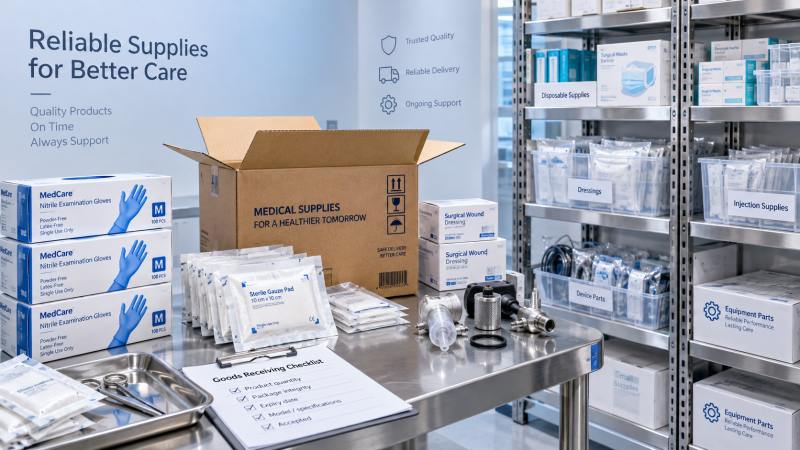
A supplier’s quotation can look attractive until an essential consumable arrives late, a replacement part is unavailable, or a product issue leaves clinic staff waiting for a response. The purchase price then becomes only one part of the cost: emergency orders, additional inventory, staff time, and disrupted appointments can outweigh the original saving.
A useful clinic supplier comparison starts with mandatory product and compliance requirements, then evaluates total cost, documented delivery performance, and usable support. Apply the same evidence requirements to every vendor, separate verified records from promises, and give greater weight to continuity of supply where shortages could interrupt care. The lowest compliant quotation is not automatically the lowest-risk purchase.
Define the purchase before comparing suppliers
Suppliers cannot be compared fairly when their quotations cover different specifications, pack sizes, accessories, or service responsibilities. Begin with a common requirement sheet that defines the intended use, order quantities, delivery locations, storage conditions, and acceptance criteria. For equipment, include installation, training, maintenance, software dependencies, and any interfaces needed for existing systems.
Separate requirements into two groups. Mandatory conditions determine whether a supplier qualifies at all; preferences help rank suppliers that pass. A missing required regulatory document should not be offset by a low price or a responsive account manager.
- Product suitability: Confirm the exact model or item code, intended purpose, compatible accessories, and any clinical performance requirements.
- Supply conditions: Specify normal order volume, demand variability, minimum remaining shelf life, and whether partial deliveries are acceptable.
- Operational responsibilities: Identify who handles receiving checks, installation, staff training, defective goods, and service visits.
- Contract boundaries: Define the purchase period, delivery destination, payment terms, and which costs must appear in the quotation.
Keep clinical equivalence separate from purchasing convenience. Two products with similar descriptions may differ in fit, measurement performance, sterilization status, or compatibility. Where those differences affect care, have the relevant clinical or technical team approve the specification before treating the products as interchangeable.
Build a cost comparison that reflects actual use
Normalize every quotation to the same usable unit. A box price is not comparable until pack quantity, expected usage, and unavoidable wastage are accounted for. Equipment prices require a different approach: compare the cost of operating each option over the same planned ownership period, not simply the invoice issued at delivery.
A practical cost model includes acquisition, freight, installation, recurring consumables, maintenance, necessary software fees, and disposal where applicable. Add staff time for supplier-specific tasks when it is material and can be estimated consistently. Keep uncertain costs visible rather than hiding them inside an apparently precise total.
Run a normal-use scenario and a disruption scenario. The latter might involve an urgent replenishment order, delayed repair, or a rejected shipment. These are planning assumptions, not predictions; label them accordingly and avoid presenting estimated disruption costs as measured supplier outcomes.
Volume discounts deserve particular scrutiny. A lower unit price may require buying more than the clinic can use before expiry. Likewise, a low equipment price can be offset by proprietary consumables or mandatory service arrangements. Ask whether pricing changes with order size, whether annual increases are constrained, and whether the clinic can exit without stranded stock or unusable equipment.
Read delivery records, not just lead-time promises
A quoted lead time describes an expectation. Delivery reliability describes what actually happened. Request order-level performance records covering a representative period, preferably for comparable products and delivery regions. Where confidentiality prevents disclosure, aggregated records can still help if the definitions, sample size, and exclusions are clear.
Use a small set of metrics that expose different failure modes:
- On-time, in-full delivery: Were all required items delivered by the agreed date?
- Lead-time variation: How widely did delivery times vary around the normal expectation?
- Backorder duration: How long did unavailable items remain outstanding?
- Receiving acceptance: Did shipments arrive with correct items, acceptable condition, required documentation, and sufficient remaining shelf life?
Agree on the measurement basis before comparing percentages. A supplier may measure dispatch punctuality while the clinic needs arrival punctuality. Another may count each shipment separately, making repeated partial deliveries appear successful. Preserve the original requested date alongside any agreed revision so repeated postponements do not disappear from the record.
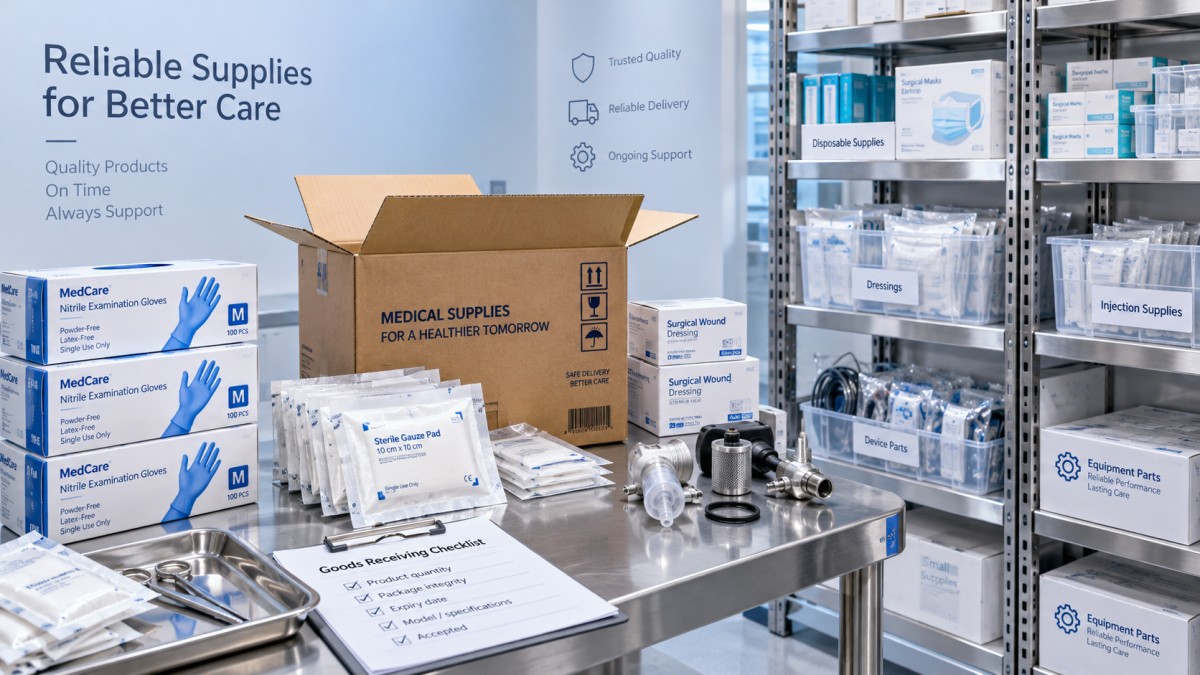
For temperature-sensitive goods, confirm who is responsible for transport conditions, what evidence accompanies the shipment, and how excursions are handled. For routine consumables, inspect stock availability claims: inventory held locally is different from inventory available through an upstream distributor with an uncertain replenishment date.
Match resilience to the consequence of a shortage
Not every item needs the same supply arrangement. A noncritical item with an approved substitute may tolerate longer replenishment times. A consumable required for a scheduled procedure may justify reserved stock, stronger escalation arrangements, or a qualified backup source.
Ask suppliers how they allocate constrained stock, communicate shortages, and manage upstream manufacturing changes. Two vendors may depend on the same manufacturer or distribution hub, so adding a second account does not necessarily create independent supply. Check those dependencies before treating dual sourcing as a resilience measure.
Make support commitments specific enough to test
“Dedicated support” has little purchasing value without defined coverage, ownership, and escalation. Compare what happens after the clinic reports a problem: who receives it, who can make a technical decision, and who remains responsible until the issue is resolved.
Separate response time from resolution time. An automated acknowledgment is not a technical assessment, and a technician’s visit does not necessarily restore equipment to service. For operationally important equipment, request contractual definitions for initial response, remote troubleshooting, on-site attendance, repair, and replacement where applicable.
- Confirm support hours and whether they overlap with the clinic’s operating schedule.
- Identify the route for urgent issues and the escalation contact when the first response is inadequate.
- Check spare-part availability, technician coverage, and any restrictions on third-party servicing.
- Clarify replacement eligibility, shipping responsibility, loan-equipment availability, and warranty exclusions.
- For connected devices, define responsibility for updates, integration faults, and security-related support.
Use a structured pre-award inquiry to assess support quality. Send each shortlisted supplier the same realistic technical question and evaluate accuracy, completeness, and ownership—not speed alone. This provides limited evidence of responsiveness; it should supplement service records and contractual commitments rather than substitute for them.
Consumable suppliers also need an effective complaint process. Confirm how they identify affected lots, investigate defects, provide replacements or credits, and communicate corrective action. A quick replacement may solve an immediate stock problem without addressing a recurring quality concern.
Verify documentation at product level
Supplier approval and product approval are different tasks. Confirm that the supplier is authorized to supply the proposed goods where relevant, then verify documentation for the exact product and intended market. A general certificate, brochure, or document for a related model does not establish that the quoted item meets the clinic’s requirements.
For devices supplied into the European Union, assess applicable MDR or IVDR requirements according to the product type and regulatory status. Request the relevant declaration of conformity and, where required, notified-body documentation, together with appropriate labeling and instructions for use. Do not assume that every medical device requires the same certificate or assessment route.
Check that model identifiers, manufacturer details, document scope, and relevant validity information align. Confirm traceability through lot or serial records and establish how recalls or safety notices reach the clinic. In other markets, verify the corresponding local requirements rather than treating European documentation as universally sufficient.
Technical claims also need a defined evidence basis. When sensor performance, material durability, or another engineering characteristic affects suitability, request the test method, conditions, acceptance limits, and relationship between tested samples and supplied products. Bench results under one set of conditions should not be treated as proof of performance across every clinical setting.
Use a weighted decision without disguising uncertainty
After mandatory checks, score cost, delivery, and support against written criteria. Set the weighting before reviewing final bids. Otherwise, the scoring model can drift toward whichever supplier initially appears most attractive.
The weighting should follow the purchase risk. Routine, readily substitutable supplies may place greater emphasis on normalized cost and ordering efficiency. Equipment that could halt a clinical service needs stronger emphasis on repair capability, parts access, and recovery arrangements. Avoid applying one organization-wide weighting to every category.
Alongside each score, record the evidence source and confidence level. Distinguish contractual commitments, verifiable performance records, limited trial observations, and unsupported claims. Missing evidence is not proof of poor performance, but it is a decision uncertainty that may justify further verification or a restricted initial award.
Test whether modest changes in assumptions alter the ranking. If one supplier wins only when demand is unusually high or disruption costs are ignored, the decision is fragile. If two suppliers remain close, prioritize the factor with the greatest operational consequence rather than manufacturing a distinction through extra decimal places.
Turn the shortlist into an enforceable supply arrangement
Before awarding the contract, close unresolved gaps in writing. Capture the agreed specifications, pricing basis, delivery measures, substitution rules, remaining shelf-life requirements, support commitments, and complaint handling. Specify reporting frequency and the action required when performance falls below the agreed standard.
A limited initial order can help verify receiving quality, documentation, ordering accuracy, and communication. An equipment acceptance process can check installation and agreed functions. Neither replaces regulatory review or proves long-term reliability; use each to answer the specific uncertainties it can realistically address.
Control substitutions explicitly. A supplier should not replace an approved item merely because a similar product is available. Require advance approval when changes could affect clinical suitability, compatibility, training, or regulatory documentation.
Finally, retain a practical exit route: access to necessary records, clear handling of outstanding orders, and an approved alternative for critical items where feasible. If the preferred supplier cannot resolve a mandatory documentation gap or commit to workable recovery arrangements, keep the award conditional or select another qualified option. Commercial savings should not be used to excuse an unresolved requirement that could prevent the clinic from using the product safely and reliably.
Recommended News
- 2026.11.15India Reforms Medical Device Incentive Scheme to Deepen Local ManufacturingDr. Julian Rossi (RehabTech Specialist)
- 2026.11.15Choosing Materials for Sheet Metal Parts: Strength, Corrosion and CostDr. Alistair Thorne (Senior Biomedical Engineer)
- 2026.11.14EU Updates MDR and IVDR Harmonised Standards Lists, Including Radiation SterilisationDr. Alistair Thorne (Senior Biomedical Engineer)
The VitalSync Intelligence Brief
Receive daily deep-dives into MedTech innovations and regulatory shifts.