 Get Insights

What to check before choosing a medical device supplier in Germany
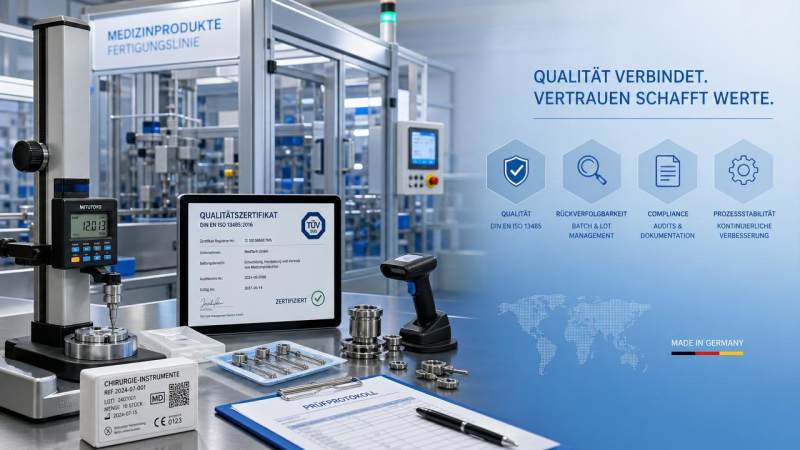
Choosing an Industrial & Manufacturing equipment supplier in Germany for medical devices requires more than comparing catalogs or prices. For business evaluators, the real test is whether a supplier can prove engineering consistency, MDR/IVDR compliance, product traceability, and long-term reliability. Before making a sourcing decision, it is essential to examine the technical evidence behind performance claims and the supplier’s ability to support risk-controlled procurement.
Germany remains a strategic sourcing market for medical technology because of its strong manufacturing base, mature quality systems, and close alignment with European regulatory frameworks. Yet even in a highly industrialized market, supplier quality varies widely across machining partners, electronics assemblers, cleanroom processors, and system integrators.
For business evaluators, the challenge is not simply identifying an Industrial & Manufacturing equipment supplier in Germany, but determining whether that supplier can support clinical-grade production over 3 to 7 years, withstand audit pressure, and maintain stable output when volumes rise from pilot batches to serial manufacturing.
This article breaks down the checks that matter before shortlisting or approving a supplier, with emphasis on regulatory readiness, engineering evidence, process control, service continuity, and procurement risk reduction in the medical device supply chain.
Why supplier screening in Germany needs a medical-device lens
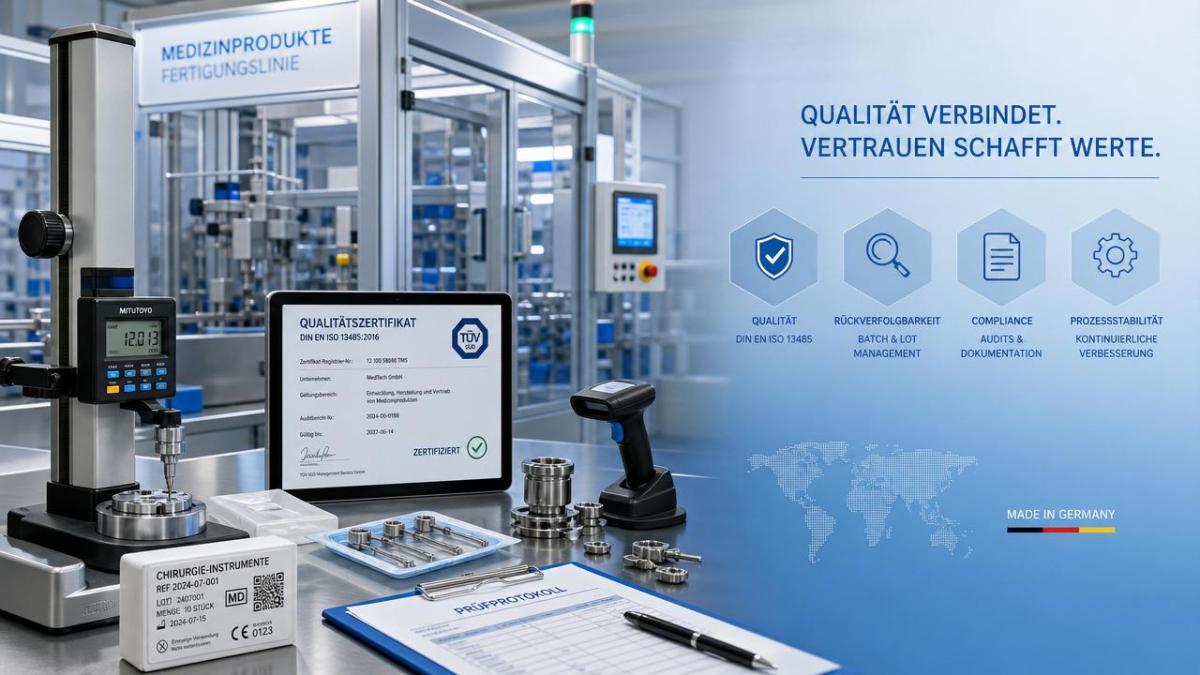
A general industrial vendor may be excellent at precision fabrication or automation assembly, but medical device sourcing introduces additional requirements that typical industrial procurement does not. Tolerance control, batch traceability, biocompatibility documentation, and validation support often determine whether a project moves forward or stalls during regulatory review.
An Industrial & Manufacturing equipment supplier in Germany serving the medical sector should be evaluated differently from a standard manufacturing partner. Business evaluators should look beyond basic capacity and ask whether the supplier can provide documented process windows, change control records, inspection repeatability, and retention of production data for periods that may extend 5 to 10 years.
What makes medical sourcing different
In medical devices, one weak link can affect patient safety, product registration, or market access. A sensor housing with a dimensional drift of only ±0.2 mm, a sterilization packaging defect, or an undocumented resin substitution can create nonconformities that are far more costly than a 3% to 5% purchase price difference.
- Regulatory files must align with actual manufacturing conditions.
- Incoming materials need lot-level traceability and controlled specifications.
- Validation records may require IQ, OQ, and PQ support across 3 phases.
- Complaint handling and CAPA response times should be clearly defined.
Core risks business evaluators should map early
During early screening, four risk zones usually deserve attention: regulatory gaps, unstable process capability, poor documentation discipline, and weak after-sales technical support. If any one of these areas is underdeveloped, a promising supplier may still become a high-friction partner once audits, scale-up, or field issues begin.
The table below shows a practical screening framework that can help evaluators compare suppliers on more than headline pricing.
A structured matrix like this helps a business evaluator distinguish a capable Industrial & Manufacturing equipment supplier in Germany from a vendor that is strong in general industry but underprepared for regulated healthcare production.
Technical evidence to request before approval
The safest sourcing decisions are built on evidence, not brochures. Before approving a supplier, request documents that show how performance is achieved and maintained. In most cases, 6 to 10 core document sets are enough to reveal whether the supplier operates with disciplined engineering control.
Documentation that should be available on request
A qualified supplier should be able to provide controlled records without excessive delay. If critical documents take more than 7 to 10 business days to gather, that can indicate weak document management or poor ownership across quality and production teams.
- Process flow diagrams with critical control points.
- Material specifications and incoming inspection criteria.
- Calibration schedules, often on 6- or 12-month cycles.
- Validation protocols or test method summaries where relevant.
- Nonconformance handling and CAPA workflow records.
- Change notification procedure with defined approval thresholds.
Look for consistency, not document volume
A supplier may send hundreds of pages, yet still fail to prove control. What matters is whether drawings, inspection plans, batch records, and test results match each other. A recurring issue in supplier assessment is documentation that appears complete but contains mismatched revision levels, undefined tolerances, or unapproved deviations.
Critical engineering questions for evaluators
When assessing an Industrial & Manufacturing equipment supplier in Germany, technical interviews are often as important as paper review. Ask how the supplier controls variation during line startup, after maintenance, and during raw material changeovers. The quality of these answers often reveals whether process knowledge is institutional or person-dependent.
The following table outlines the most useful technical checkpoints and what a strong answer usually looks like in a medical sourcing context.
If a supplier can answer these questions clearly, with records and controlled methods, the probability of stable long-term cooperation increases materially. If the answers remain vague, evaluators should assume hidden execution risk until evidence proves otherwise.
Regulatory and traceability checks that should never be skipped
For medical devices placed in the European market, supplier selection cannot be separated from MDR or IVDR obligations. Even when the supplier is not the legal manufacturer, its documentation, process controls, and component history can affect conformity assessment, post-market investigations, and field corrective actions.
Traceability depth matters more than traceability claims
Many suppliers say they offer traceability, but evaluators should define what level is actually needed. For some components, batch-level linkage is enough. For implants, diagnostic assemblies, or serialized electronic subsystems, traceability may need to connect raw material lot, machine, operator, inspection result, and shipment record in a single chain.
As a practical rule, ask the supplier to run a backward and forward trace exercise on one recent batch within 24 to 48 hours. If the supplier struggles to reconstruct the record, the system may not be robust enough for regulated supply.
Change control is a major procurement risk point
One of the most common causes of sourcing disruption is uncontrolled change. A tooling adjustment, firmware update, packaging modification, or subcontractor switch may look minor operationally but trigger validation and documentation impacts downstream. Business evaluators should confirm that change categories, review steps, and notification timelines are documented in advance.
- Define which changes require prior written approval.
- Set notification windows, often 30 to 90 days before implementation.
- Require sample submission when function, fit, or form may shift.
- Link approved changes to revised drawings and version history.
Audit readiness indicators
A reliable Industrial & Manufacturing equipment supplier in Germany should be able to demonstrate audit discipline through controlled training records, deviation logs, supplier qualification files, and retention practices. Even if your organization performs only a desktop review at first, these indicators help estimate how the supplier will perform under customer or notified body scrutiny.
Capacity, service, and lifecycle support after the first order
Many sourcing decisions focus too heavily on first-order fit and too little on year-2 and year-3 realities. A supplier may deliver acceptable pilot lots, yet fail when demand doubles, a component reaches end of life, or field feedback requires rapid engineering updates. For business evaluators, post-award resilience is a core part of supplier quality.
Questions to ask about scale and continuity
Capacity is not only about how many units a supplier can make per month. It also includes labor flexibility, test fixture availability, cleanroom slotting, critical spare parts, and second-source planning. In regulated manufacturing, expanding output from 500 units to 5,000 units often requires more than extra shifts; it may require process requalification and updated control plans.
- What is the standard lead time for prototypes, pilot lots, and serial orders?
- How many production lines or equivalent work cells support this product family?
- What is the average engineering response time for a deviation or complaint?
- How are obsolete components monitored and communicated?
Commercial evaluation should include service depth
The lowest quote is rarely the lowest total cost if technical support is slow or incomplete. Evaluate whether the supplier provides onboarding support, inspection alignment, periodic review meetings, and escalation contacts across quality, engineering, and logistics. A useful target is a defined response matrix with urgent technical issues acknowledged within 24 hours and root-cause updates within 5 business days.
For organizations sourcing through an Industrial & Manufacturing equipment supplier in Germany, service depth can be the difference between a manageable deviation and a month-long delay affecting validation, release, or customer delivery commitments.
A practical approval workflow for business evaluators
A staged approval model usually reduces risk more effectively than a single yes-or-no decision. For most medical sourcing projects, a 5-step workflow offers enough control without slowing procurement unnecessarily.
This phased approach allows evaluators to verify real execution before granting full approval. It also creates a documented basis for comparing multiple suppliers in a consistent and audit-friendly way.
How independent benchmarking strengthens supplier decisions
In complex categories such as sensors, diagnostic assemblies, implant-related components, or precision medical subassemblies, internal procurement teams do not always have enough neutral data to judge competing technical claims. That is where independent benchmarking becomes useful.
VitalSync Metrics supports decision-makers by translating manufacturing variables into structured technical evidence. Instead of relying on supplier narratives alone, evaluators can compare measurable indicators such as signal stability, material fatigue behavior, dimensional repeatability, or test consistency under standardized review criteria.
Where external validation adds the most value
Independent analysis is especially valuable in three situations: when the product is technically novel, when supplier quotations differ sharply without clear engineering explanation, and when procurement teams need stronger justification for board-level or cross-functional approval. In these cases, an external evidence layer can reduce uncertainty before contracts are signed.
- Benchmarking pilot-build consistency across candidate suppliers.
- Reviewing whether performance claims match process capability.
- Assessing long-term sourcing risk for regulated product categories.
Selecting an Industrial & Manufacturing equipment supplier in Germany for medical devices is ultimately a risk-management decision shaped by engineering facts, regulatory discipline, and supply continuity. The strongest suppliers prove capability through documented controls, stable traceability, transparent change management, and dependable lifecycle support rather than through price alone.
For business evaluators, the most reliable path is to combine document review, technical questioning, pilot verification, and structured comparison criteria before awarding long-term volume. If you need a more evidence-based way to assess supplier claims, compare technical readiness, or filter manufacturing partners for regulated healthcare projects, contact VitalSync Metrics to get a tailored evaluation framework or explore more benchmarking solutions.
Recommended News
- 2026.11.15Choosing Materials for Sheet Metal Parts: Strength, Corrosion and CostDr. Alistair Thorne (Senior Biomedical Engineer)
- 2026.11.14EU Updates MDR and IVDR Harmonised Standards Lists, Including Radiation SterilisationDr. Alistair Thorne (Senior Biomedical Engineer)
- 2026.11.14Choosing a Medical Supplier Platform: How to Verify Suppliers and Compare CostsDr. Alistair Thorne (Senior Biomedical Engineer)
The VitalSync Intelligence Brief
Receive daily deep-dives into MedTech innovations and regulatory shifts.