 Get Insights

What to check before ordering surgical instrument kits OEM?
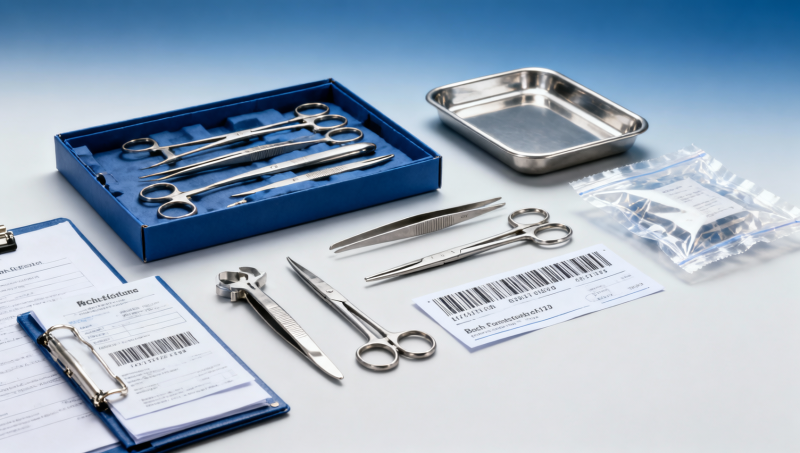
Before choosing a surgical instrument kits OEM, buyers should verify more than price lists and samples. In today’s healthcare equipment market, supply chain verification, IVDR certification awareness, and medical technology verification are essential to reduce procurement risk. For hospitals, operators, and decision-makers managing digital integration and clinical performance, understanding what to check first helps ensure long-term reliability, compliance, and sourcing confidence.
An OEM partner for surgical instrument kits affects more than packaging and unit cost. It influences sterilization compatibility, traceability, lot consistency, training burden, service continuity, and even how well an instrument set supports digital procurement records. In practical terms, one weak link in materials control, cleaning validation, or regulatory documentation can create delays of 2–8 weeks, extra inspection workload, or nonconformity findings during audits.
For procurement teams, MedTech startups, and operating-room users, the goal is not simply to find a factory that can assemble kits. The goal is to confirm whether that OEM can repeatedly deliver clinically suitable, compliant, and verifiable kits across pilot runs, scale-up batches, and long-term contracts. That requires a structured review of technical files, manufacturing controls, supplier quality systems, and post-delivery support.
Start with regulatory scope, intended use, and documentation depth
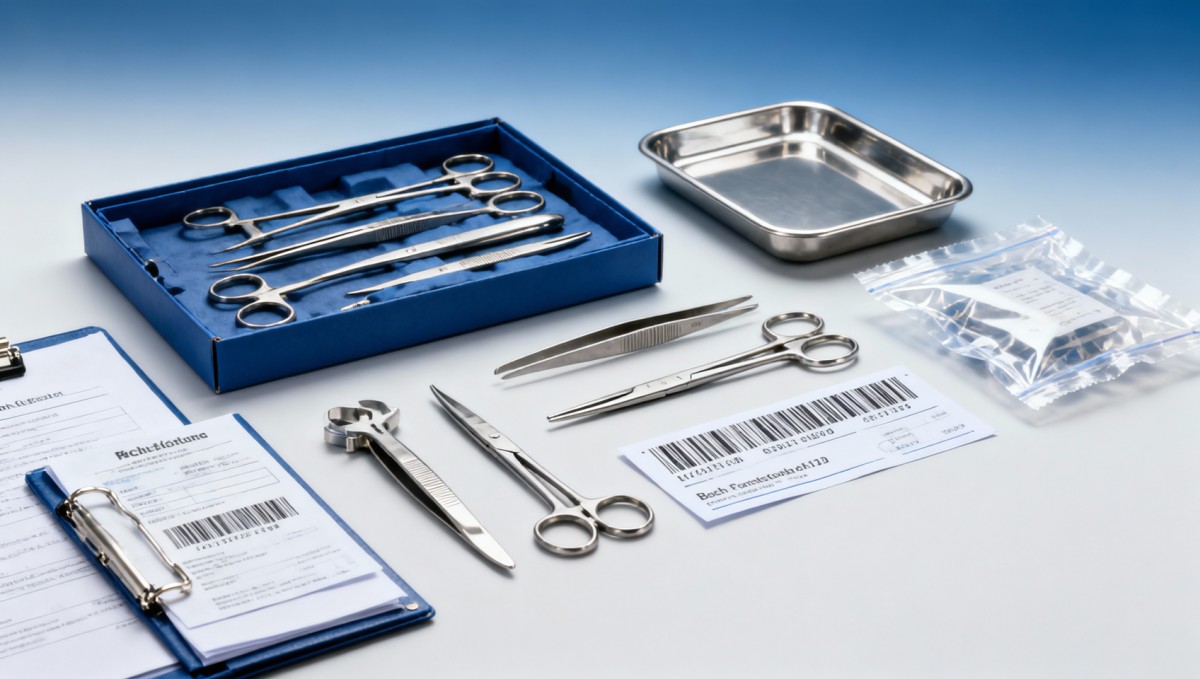
The first check is whether the OEM understands the exact intended use of the surgical instrument kits. A kit used for general surgery, orthopedic preparation, minor procedure packs, or single-specialty workflows may fall under different documentation expectations. Buyers should ask for a document map showing product description, intended use, risk controls, sterilization status, labeling logic, and traceability records for at least the last 12 months.
Regulatory alignment matters even when the OEM is not the legal manufacturer on every market filing. In the EU environment, MDR and IVDR awareness can still affect component selection, packaging information, clinical rationale, and document retention. A capable OEM should explain which parts of the file are under its control, which are customer-controlled, and how updates are managed across engineering changes within 5–10 working days.
Documentation quality is often a stronger indicator than polished samples. A sample kit can look acceptable while the batch records behind it are incomplete. Buyers should verify whether the OEM can provide device master records, incoming inspection criteria, revision history, and nonconformance handling logs. If the response is fragmented or delayed beyond 1–2 weeks, that is an early risk signal for future scaling.
For operators and clinical users, documentation depth also affects usability. Missing IFU details, weak component identification, or poor lot coding can slow instrument preparation and create confusion during receiving, reprocessing, or stock rotation. A strong OEM should support both compliance and frontline practicality.
Core regulatory checks before RFQ approval
- Confirm whether the OEM has a documented quality management system and whether the scope clearly includes surgical instrument kit assembly, packaging, or sterile barrier operations.
- Request a controlled document list covering specifications, bills of materials, inspection plans, and change notification procedures.
- Check retention periods for production and quality records; 5–10 years is commonly expected depending on market and product class.
- Verify labeling content rules, UDI readiness where relevant, and the process for multilingual artwork review.
The table below helps buyers distinguish between superficial document readiness and robust OEM documentation capability during supplier qualification.
A supplier that can quickly produce these records usually has better process discipline. In contrast, repeated claims such as “documents can be arranged later” often lead to procurement friction, especially when hospital systems require vendor onboarding, digital traceability, and technical review before first delivery.
Evaluate materials, manufacturing controls, and kit consistency
After documentation, the second priority is process integrity. Surgical instrument kits are not only lists of components; they are controlled assemblies where steel grade, hardness range, passivation quality, surface finish, packaging condition, and count accuracy all matter. If one clamp, forceps, drape, or accessory deviates from specification, the entire kit can become harder to use, reprocess, or accept into hospital inventory.
Ask the OEM to explain its incoming inspection plan. Practical questions include sampling levels, dimensional tolerance checks, burr inspection, corrosion screening, and supplier approval criteria. For reusable metal instruments, buyers should ask about material certificates, typical hardness verification, and passivation control. For packaged kits, ask how count verification is performed and whether there is a second-person review on high-risk assemblies.
Consistency is especially important when annual demand grows from 500 sets to 5,000 sets. Some factories perform well during low-volume sample runs but struggle once they have to manage multiple SKUs, substitute suppliers, or compressed lead times. Review historical performance over at least 3 production batches if available, including defect categories, rework rates, and on-time shipment percentages.
Users in operating environments also benefit from tighter manufacturing discipline. Better edge finishing, cleaner marking, stable instrument alignment, and complete accessory counts reduce setup time, lower confusion, and improve acceptance by sterile processing or OR teams.
What process questions reveal real OEM capability
- How many approved raw material or component suppliers exist for each critical item, and what happens if one source fails?
- What is the normal lead time for pilot production, first article approval, and repeat orders: 2–4 weeks, 4–8 weeks, or longer?
- How are mixed-lot risks controlled when one kit includes 10–30 individual components?
- What final inspection checkpoints are mandatory before release, and which are sample-based versus 100% checked?
Key manufacturing indicators to compare
Even when suppliers use different internal terminology, buyers can normalize comparison through a shared checklist. The table below focuses on production control points that directly affect kit reliability and acceptance.
When comparing OEM quotes, these control points explain why two kits with similar appearance may have very different risk profiles. Lower price can be reasonable, but only if material traceability, batch discipline, and release inspection are equally strong.
Verify sterilization, packaging, and logistics readiness
Sterilization and packaging are often underestimated during OEM selection. Some buyers focus heavily on instrument appearance but fail to ask whether the tray, pouch, wrap, carton, and transport configuration are suitable for the intended supply model. A kit shipped internationally may experience 2–3 logistics handoffs, climate variation, and warehouse dwell times of 30–90 days before final use.
If the kit is supplied sterile, validation scope becomes critical. Buyers should confirm the sterilization modality, packaging compatibility, shelf-life rationale, and seal integrity controls. If the OEM provides non-sterile kits for downstream sterilization, then packaging cleanliness, bioburden awareness, and protection against mix-ups still matter. Either way, the OEM should explain what is validated, what is customer-validated, and where responsibilities split.
Logistics readiness is also a quality issue. Ask about export packaging, humidity controls where relevant, carton labeling, pallet configuration, and damage claim procedures. In many projects, a 1% to 3% packaging damage rate can erase perceived cost savings by triggering urgent replenishment, incoming inspection burden, and delayed case preparation.
For hospital and laboratory procurement teams working in digitally integrated environments, shipping labels and batch identifiers should align with ERP or inventory workflows. That makes receiving faster and improves traceability during recalls, stock checks, or shelf-life review.
Packaging and delivery checkpoints
- Confirm whether sterile barrier or protective packaging has documented seal checks and transport suitability testing.
- Review shelf-life assumptions, storage conditions, and whether labeling includes lot number, manufacturing date, and expiry where applicable.
- Ask for standard lead times by order type: sample orders may take 10–20 days, while production orders may require 4–8 weeks depending on kit complexity.
- Verify replenishment planning for critical components to avoid shortages during quarterly or annual contract peaks.
A well-structured OEM will not treat packaging as an afterthought. It should be tied to product protection, regulatory clarity, warehouse handling, and end-user usability. This is particularly important for mixed kits that combine metal instruments, consumables, labels, and documentation inserts in one finished pack.
Assess supplier transparency, service model, and post-market responsiveness
An OEM relationship continues long after the first shipment. Buyers should evaluate how the supplier handles deviations, complaints, replacement requests, engineering revisions, and demand changes. A technically capable OEM that responds slowly can still become a procurement risk, especially when a hospital network or distribution partner requires issue containment within 24–72 hours.
Transparency is one of the strongest indicators of long-term reliability. Ask how the OEM reports nonconformities, whether it shares root-cause analysis, and what corrective action timelines are realistic. Mature suppliers can usually define response tiers, such as initial acknowledgement within 1 business day, containment plan within 3 business days, and formal CAPA closure in 10–30 days depending on complexity.
Commercial flexibility should also be reviewed carefully. MOQ, forecast windows, safety stock, and tooling ownership all affect total procurement value. A low per-kit price may look attractive until the buyer discovers rigid MOQ levels, slow engineering changes, or expensive label revision fees. Decision-makers should compare total lifecycle cost rather than quote price alone.
This is where independent benchmarking adds value. A technical review framework similar to the approach promoted by VitalSync Metrics helps translate supplier claims into measurable checkpoints, making it easier to compare OEMs across engineering depth, documentation discipline, and post-market support rather than sales presentation quality.
A practical OEM scorecard for procurement teams
The following matrix can be used during vendor screening, pilot qualification, or annual supplier review. It converts broad promises into operational decision criteria.
This kind of scorecard helps align procurement, quality, and operations teams. Instead of debating isolated issues, stakeholders can compare suppliers across 4–6 weighted dimensions and make a more resilient sourcing decision.
Common mistakes, FAQ, and a smarter sourcing path
One common mistake is approving an OEM based on samples only. A polished sample may come from hand-selected components, extra inspection, or temporary packaging that does not reflect routine production. Another mistake is treating all surgical instrument kits as low-complexity assemblies. In reality, complexity rises quickly when kits include multiple component types, sterile packaging requirements, custom branding, or market-specific labeling.
Another frequent error is separating quality review from commercial review. Procurement teams may negotiate price first and check records later, only to discover longer lead times, hidden validation gaps, or weak traceability controls. A better approach is a 3-step filter: first document review, then pilot batch assessment, then commercial negotiation tied to service-level commitments.
For organizations operating under value-based procurement, the strongest OEM is not always the cheapest. The better choice is the supplier that reduces total risk across compliance, usability, inspection workload, logistics stability, and issue response. Over a 12–24 month contract period, those factors often matter more than a small unit-price gap.
How should buyers compare two similar OEM quotes?
Use at least 5 comparison points: regulatory file readiness, process controls, packaging validation, lead time stability, and CAPA responsiveness. If one supplier is 6% cheaper but has weak change control and slower issue closure, the lower quote may create higher operational cost later.
What lead time is realistic for OEM surgical instrument kits?
For straightforward kits, samples may take 10–20 days and repeat production 4–6 weeks. More complex kits with custom trays, multilingual labels, or sterile packaging can require 6–10 weeks, especially if validation or artwork approval is still open.
Which three documents should never be skipped?
At minimum, ask for the controlled product specification, traceability or batch record template, and change-control procedure. These three documents reveal whether the OEM can reproduce the same kit reliably over time and communicate deviations before they reach the customer.
Selecting a surgical instrument kits OEM is ultimately a technical and operational decision, not just a purchasing exercise. Buyers who verify documentation depth, manufacturing discipline, packaging readiness, and service transparency are far more likely to secure stable deliveries and fewer downstream surprises. If your team needs a more rigorous supplier evaluation framework, technical benchmarking support, or a structured review of OEM claims, contact VitalSync Metrics to discuss a customized sourcing assessment, request a practical checklist, or explore broader healthcare supply chain verification solutions.
- value-based procurement
- medical technology
- technical benchmarking
- digital integration
- supply chain
- long-term reliability
- sourcing confidence
- clinical performance
- healthcare supply chain
- IVDR certification
- healthcare equipment
- medical technology verification
- supply chain verification
- Packaging
- surgical instrument kits oem
Recommended News
- 2026.10.08How to Evaluate Compact Biosignal Sensors for Reliable Wearable Vital-Sign MonitoringLydia Vancini (Regulatory Compliance Lead)
- 2026.10.07How Custom Orthotics Technology Can Improve Physical Therapy OutcomesSarah Jenkins (Laboratory Infrastructure Consultant)
- 2026.10.06How to Validate Metal Biocompatibility Testing for Implantable Medical DevicesDr. Julian Rossi (RehabTech Specialist)
The VitalSync Intelligence Brief
Receive daily deep-dives into MedTech innovations and regulatory shifts.