 Get Insights

What to know before buying wholesale medical endoscopes China?
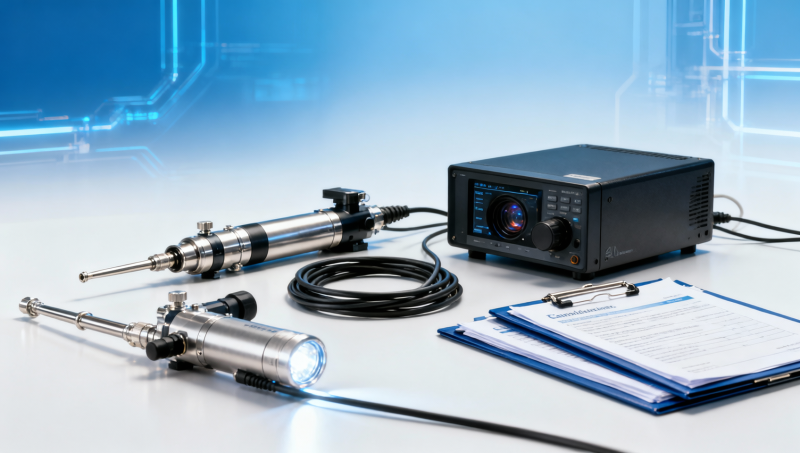
Before sourcing wholesale medical endoscopes China, buyers must look beyond price and focus on supply chain verification, IVDR certification, and real healthcare engineering performance. For procurement teams, operators, and decision-makers navigating digital integration, independent think tank insights can reduce risk, validate healthcare equipment quality, and help compare suppliers across Surgical & Clinical Tech with greater confidence.
In practice, buying endoscopy systems from China is no longer a simple factory-to-buyer transaction. It involves clinical usability, optical consistency, sterilization durability, repair logistics, software compatibility, and documentation quality. A low unit cost can quickly become expensive if image latency, insertion tube lifespan, or after-sales response fails under daily hospital workloads.
For hospital procurement leaders, MedTech startups, and clinical operators, the right question is not only “Which supplier is cheapest?” but “Which supplier can prove repeatable engineering performance across 12 to 36 months of use?” That is where structured benchmarking, pre-shipment validation, and regulatory document review become essential.
Why wholesale medical endoscopes from China require deeper technical due diligence
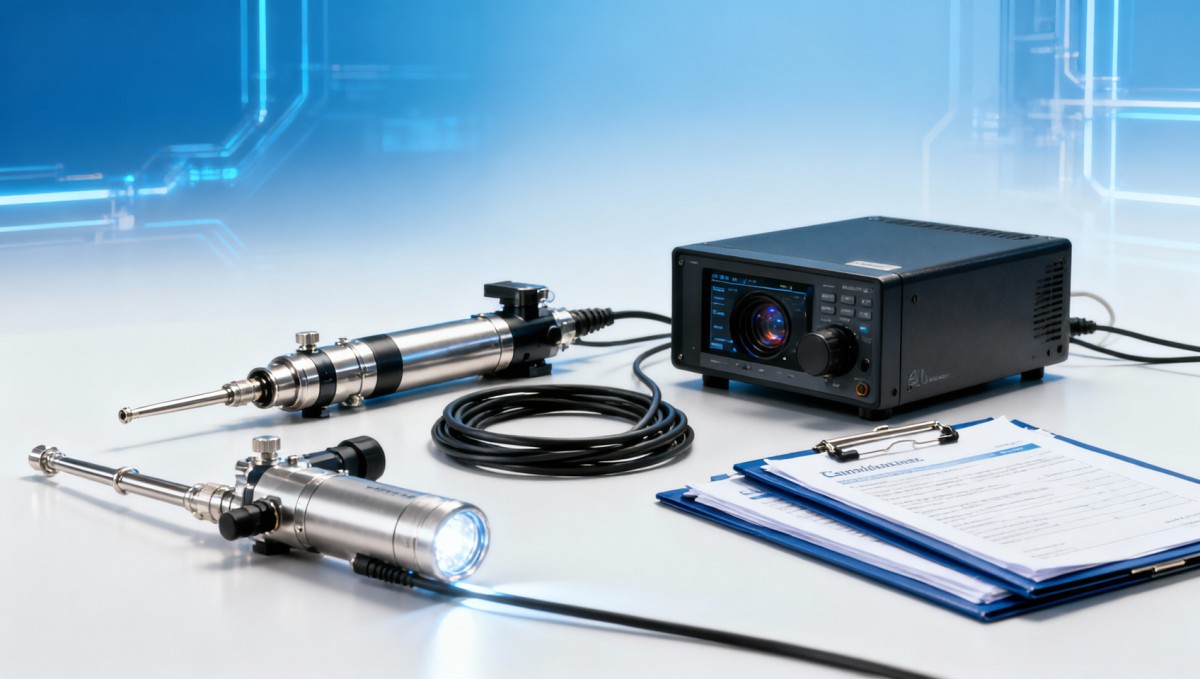
China remains a major sourcing base for rigid endoscopes, flexible endoscopes, camera systems, light sources, and video processors. Buyers often gain access to broader product ranges, OEM/ODM flexibility, and shorter manufacturing lead times, commonly within 4 to 10 weeks depending on complexity. However, endoscopy is a precision clinical category where optical, mechanical, and software reliability directly affect patient safety and workflow efficiency.
A supplier may present attractive brochures, but procurement teams should request evidence covering image resolution consistency, illumination stability, insertion tube bending cycle endurance, leakage resistance, and compatibility with sterilization routines. In high-use departments, an endoscope may go through dozens of insertion and reprocessing cycles each week, so small design weaknesses can emerge quickly in real operation.
Independent evaluation is especially important when buyers compare multiple Chinese manufacturers with similar price points. Two systems may look comparable on paper, yet differ significantly in distal tip articulation feel, image noise in low-light conditions, or repair turnaround time. These details affect operator fatigue, diagnostic confidence, and total cost of ownership over 2 to 5 years.
For value-based procurement, a wholesale medical endoscopes China project should be treated as a technical sourcing program rather than a commodity purchase. The most reliable supplier is usually the one that can provide transparent manufacturing controls, traceable quality records, and realistic support commitments instead of vague “premium quality” claims.
Key risk categories before vendor shortlisting
Before requesting final quotations, buyers should map at least 4 risk layers: regulatory risk, performance risk, service risk, and supply continuity risk. This reduces the chance of selecting a supplier based only on sample appearance or trade-show impressions.
- Regulatory risk: incomplete technical files, inconsistent declarations, or unclear intended use statements.
- Performance risk: poor optical clarity, unstable white balance, leakage failure, or reduced bending precision after repeated use.
- Service risk: spare parts shortages, repair lead times longer than 15 to 30 business days, or limited operator training.
- Supply continuity risk: unstable component sourcing, inconsistent batch quality, or weak packaging for international shipping.
A practical screening rule
If a supplier cannot provide a clear document pack within 5 to 7 business days, or cannot explain testing methods for optical and mechanical performance, that is an early warning sign. Responsive documentation is often a strong indicator of process maturity.
What documents, certifications, and compliance evidence should buyers request
When evaluating wholesale medical endoscopes China suppliers, documentation should be reviewed in layers rather than as a single checklist. A quote and product catalog are not enough. Buyers should request regulatory declarations, quality management evidence, sterilization or reprocessing instructions, electrical safety information where relevant, packaging validation details, and traceability records for critical components.
For teams selling into Europe or working with European healthcare networks, MDR relevance is especially important. If the procurement scope includes in vitro workflows or lab-linked imaging pathways, IVDR alignment around connected systems and intended use descriptions may also matter. The goal is to confirm that the supplier understands how its product is classified, documented, and maintained across the target market.
The quality of the technical file often reveals more than the marketing deck. Serious manufacturers can usually provide structured information on material specifications, leakage testing, image sensor source, reprocessing compatibility, shelf packaging, and complaint handling processes. Missing revision control or inconsistent translations may indicate weak internal controls.
Below is a practical document review matrix that procurement teams can use before moving to samples, audits, or pilot orders.
The key takeaway is that compliance review should be operational, not symbolic. A supplier with complete, internally consistent documentation is usually better positioned to support import registration, distributor onboarding, and hospital acceptance testing.
Questions procurement teams should ask during compliance review
- What is the intended use statement, and is it consistent across labeling, IFU, and quotation?
- Which components are sourced externally, and how are supplier changes controlled?
- What are the recommended reprocessing limits, and how were they validated?
- How long are quality and complaint records retained: 2 years, 5 years, or longer?
- Can the supplier support translated documents within 7 to 14 days for destination-market review?
How to evaluate clinical-grade performance, not just catalog specifications
The technical gap between a marketable endoscope and a clinically dependable one is often hidden in details that are difficult to detect during a short demo. Resolution claims, for example, mean little without examining image stability under motion, color consistency across multiple units, and low-light performance after repeated use. For operators, smooth articulation and ergonomic handling are equally important because they influence procedural confidence and fatigue.
A practical evaluation should cover at least 6 performance domains: optics, illumination, articulation, sealing integrity, reprocessing tolerance, and serviceability. If possible, request 2 to 3 sample units from different batches rather than a single showroom sample. Batch-level consistency matters more than one carefully prepared demo device.
Buyers should also define realistic use scenarios. A tertiary hospital with high procedure volume may prioritize durability over initial price, while a startup integrating endoscopy into a new platform may prioritize data output compatibility, video latency, and integration APIs. A rural or secondary facility may place greater value on simple maintenance, spare part access, and operator training time under 1 to 2 days.
The following comparison table can help teams score suppliers using a more grounded, engineering-oriented framework.
This type of matrix helps distinguish between a supplier that merely sells equipment and one that supports sustained clinical operations. In many tenders, the winning decision comes from lower lifecycle risk rather than the lowest initial quotation.
Field validation steps before bulk purchase
A disciplined pilot process often saves significant cost later. For wholesale medical endoscopes China sourcing, buyers can use a 5-step validation path:
- Desktop review of technical file and compliance package.
- Remote engineering Q&A with supplier quality or product team.
- Sample testing on image quality, leakage, and handling performance.
- Pilot batch order, often 3 to 10 units depending on project size.
- Post-pilot review covering operator feedback, defect rate, and service responsiveness.
What operators should report
Operators should document insertion feel, tip responsiveness, image lag, brightness stability, ease of cleaning, and any observed wear after reprocessing. Even a small sample size can reveal recurring weaknesses within 2 to 6 weeks.
Procurement planning: cost structure, lead time, and supplier comparison strategy
One of the most common mistakes in wholesale medical endoscopes China sourcing is comparing only ex-works price. In reality, landed and operational cost includes validation time, import handling, packaging adequacy, warranty terms, spare parts coverage, and expected maintenance frequency. A supplier that is 8% cheaper on invoice may become 15% to 25% more expensive over two years if failure rates or repair delays are higher.
Lead time should also be separated into at least 3 phases: document readiness, production cycle, and logistics transit. For example, compliance document preparation may take 5 to 14 business days, production may take 4 to 8 weeks, and international shipping may add 7 to 30 days depending on route and customs process. Buyers should build procurement calendars around these stages rather than one quoted date.
For enterprise decision-makers, supplier comparison works best when weighted by risk. A common approach is to score technical performance at 35% to 40%, documentation and compliance at 20% to 25%, service support at 15% to 20%, and price at 20% to 25%. This prevents low-price bias from overriding critical clinical and operational requirements.
The table below shows a practical procurement framework for comparing suppliers beyond headline quotation.
This framework is particularly useful for hospitals, distributors, and digital health ventures that need to defend sourcing decisions internally. It turns supplier comparison into a documented business case rather than a negotiation based only on pricing pressure.
Common buyer mistakes to avoid
- Approving a supplier after reviewing only one polished sample unit.
- Ignoring reprocessing instructions and cleaning compatibility during evaluation.
- Assuming all documentation can be “fixed later” after import planning starts.
- Overlooking repair logistics, especially when cross-border service takes more than 20 business days.
- Failing to involve operators, biomedical engineers, and regulatory staff in the same review cycle.
How independent benchmarking improves sourcing confidence and long-term outcomes
As endoscopy systems become more digitally connected, buyers need more than supplier self-reporting. Independent benchmarking adds a neutral layer between marketing claims and real-world engineering performance. For organizations working across multiple product categories, this approach creates a repeatable sourcing method that can be applied not only to endoscopes but also to imaging accessories, sensors, and adjacent clinical technologies.
VitalSync Metrics (VSM) operates in this space by turning technical parameters into clearer decision inputs for procurement directors, operators, and healthcare innovators. Instead of relying on subjective sales narratives, buyers can compare evidence such as component traceability, endurance testing logic, signal stability, material limits, and process transparency. This is especially valuable when evaluating suppliers in fast-moving manufacturing ecosystems where presentation quality may outpace engineering rigor.
For B2B healthcare sourcing, independent review can shorten decision cycles by identifying weak candidates earlier. It can also reduce hidden costs related to failed pilots, compliance gaps, or unstable long-term supply. In many cases, the savings come not from negotiating a lower unit price, but from avoiding a poor supplier that would create higher failure, retraining, or service overhead later.
A robust sourcing program for wholesale medical endoscopes China should therefore combine 4 elements: supplier document review, engineering performance checks, pilot validation, and lifecycle support assessment. When these steps are aligned, procurement decisions become more defensible and easier to scale across regions and healthcare networks.
FAQ for buyers and technical teams
How long does a typical sourcing cycle take?
A structured cycle often takes 6 to 12 weeks for document review, supplier comparison, sample testing, and pilot planning. Larger tenders or multi-country compliance checks may extend beyond 12 weeks, especially if translations and import registration are involved.
Is the lowest-priced Chinese endoscope supplier ever the right choice?
Sometimes, but only when technical evidence, service terms, and document quality are also acceptable. A lower price should be treated as an advantage only after optical performance, reprocessing durability, and warranty support have passed review.
What is the minimum technical evidence a buyer should request?
At minimum, request quality management evidence, intended use documentation, IFU, test records for leakage and durability, and a defined service process. If the supplier cannot explain how products are tested or maintained, the sourcing risk remains high regardless of price.
Who should be involved in supplier evaluation?
The best reviews involve at least 4 roles: procurement, clinical operators, biomedical or technical support, and regulatory or quality staff. This cross-functional review reduces blind spots and improves post-purchase adoption.
Buying wholesale medical endoscopes from China can deliver strong commercial and operational value, but only when supplier selection is anchored in evidence, not assumptions. The most reliable decisions come from comparing documentation quality, clinical-grade performance, pilot results, and long-term service readiness as one integrated package.
For procurement teams, operators, and healthcare decision-makers seeking a more rigorous path, independent technical benchmarking helps separate credible manufacturing capability from polished sales language. If you need support comparing suppliers, validating technical files, or building a lower-risk sourcing framework, contact VitalSync Metrics to discuss a tailored evaluation approach and explore more healthcare technology sourcing solutions.
- value-based procurement
- hospital procurement
- technical benchmarking
- digital integration
- supply chain
- sourcing confidence
- independent think tank
- technical verification
- healthcare engineering
- IVDR certification
- healthcare technology
- healthcare equipment
- supply chain verification
- Packaging
- wholesale medical endoscopes china
Recommended News
- 2026.10.08How to Evaluate Compact Biosignal Sensors for Reliable Wearable Vital-Sign MonitoringLydia Vancini (Regulatory Compliance Lead)
- 2026.10.07How Custom Orthotics Technology Can Improve Physical Therapy OutcomesSarah Jenkins (Laboratory Infrastructure Consultant)
- 2026.10.06How to Validate Metal Biocompatibility Testing for Implantable Medical DevicesDr. Julian Rossi (RehabTech Specialist)
The VitalSync Intelligence Brief
Receive daily deep-dives into MedTech innovations and regulatory shifts.