 Get Insights

Why machinery price lists rarely match the final project budget
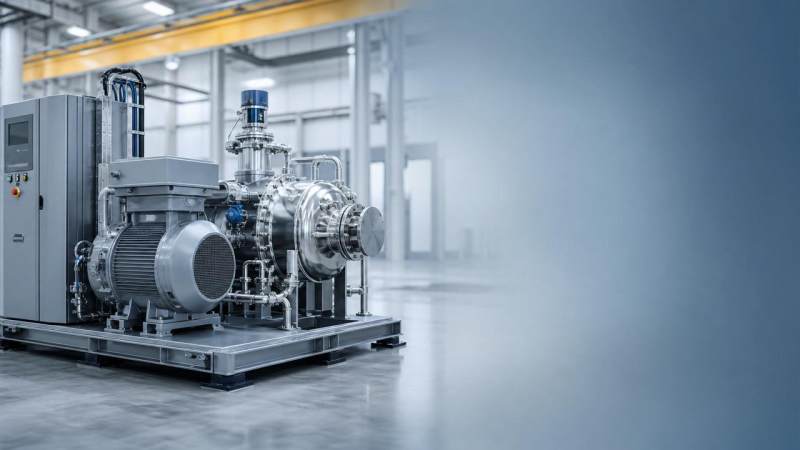
An Industrial & Manufacturing machinery price list may appear exact, yet real budgets move far beyond the quoted figure. In today’s regulated, data-heavy operating environment, capital equipment costs are shaped by integration, validation, compliance, training, and lifecycle exposure.
This gap matters more as healthcare, life sciences, and cross-industry production systems become digitally connected. A line item on an Industrial & Manufacturing machinery price list captures the machine. It rarely captures project reality.
For organizations comparing suppliers, the central question is no longer “What is the price?” It is “What must be true for this machine to perform safely, compliantly, and reliably over time?”
The market is shifting from sticker-price buying to total-budget scrutiny
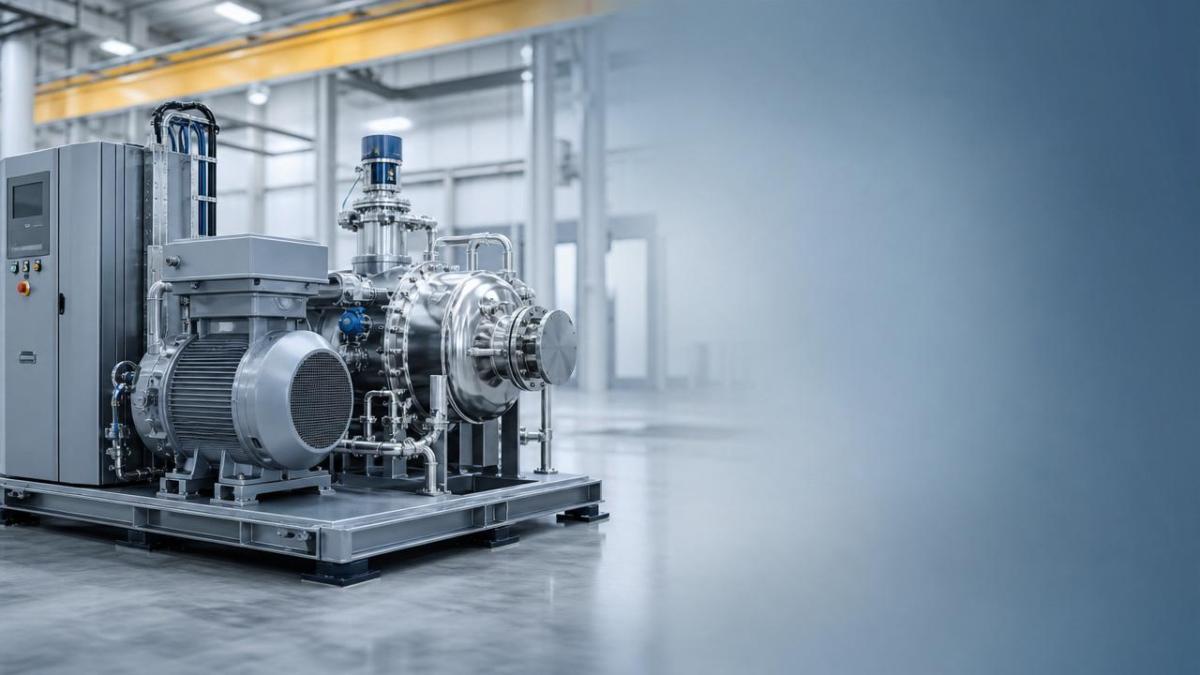
Across industries, equipment evaluation has changed. Buyers once treated an Industrial & Manufacturing machinery price list as a near-final budget marker. That assumption is weakening fast.
Digital controls, traceability demands, software dependencies, and stricter qualification standards now expand project scope. In healthcare-linked environments, that expansion is especially visible.
A packaging unit, machining center, clean utility skid, or test station may fit the quoted amount. Yet site acceptance, protocol execution, and documentation harmonization can reshape the spend profile.
This is why an Industrial & Manufacturing machinery price list often works better as a starting signal than a budgeting endpoint. It indicates equipment value, not full project exposure.
Why the pricing gap is widening now
Several converging forces explain why quoted machinery numbers and approved budgets increasingly diverge. Most of them sit outside the equipment base price.
The result is simple. The more technical and regulated the use case, the less likely a basic Industrial & Manufacturing machinery price list reflects the true approved budget.
Quoted machinery costs usually exclude the most expensive project layers
Many equipment quotations are not misleading. They are narrow by design. They define machine scope, then leave adjacent obligations to engineering, operations, IT, or compliance teams.
Common cost layers outside the quoted machine price
- Facility modifications, utility routing, structural reinforcement
- Packaging, insurance, customs, specialized freight, rigging
- Installation supervision, commissioning, line balancing
- Validation protocols, execution records, deviation handling
- Operator training, maintenance training, multilingual work instructions
- Cybersecurity hardening, user management, audit trail setup
- Spare parts packages, preventive maintenance kits, service contracts
- Downtime buffers during changeover and process stabilization
In life sciences and advanced healthcare manufacturing, even material certificates and software revision controls can influence acceptance. Those items rarely appear clearly on an early Industrial & Manufacturing machinery price list.
This is where independent technical benchmarking adds value. It turns supplier claims into measurable performance boundaries and makes non-obvious cost drivers easier to quantify.
The impact reaches far beyond procurement spreadsheets
When project teams rely too heavily on a simple Industrial & Manufacturing machinery price list, the consequences extend into schedule, quality, and risk governance.
Underbudgeted projects often face rushed approvals, late design changes, and fragmented accountability. Small omissions then become major delays once installation or validation begins.
For regulated output, the stakes are higher. A machine that technically runs may still fail documentation expectations, data integrity rules, or repeatability targets needed for clinical-grade or laboratory-linked operations.
Where the budget mismatch shows up first
- Capital approval delays caused by revised total-cost assumptions
- Unexpected site engineering requests after delivery planning
- Longer startup periods due to qualification and training gaps
- Higher maintenance costs from under-scoped service support
- Reduced ROI when throughput claims fail real operating conditions
The lesson is practical. The quoted number may be accurate within its boundary. The problem is that the boundary is often much smaller than the project itself.
What deserves closer attention before accepting any price list
A more reliable review process starts by challenging what the Industrial & Manufacturing machinery price list does not say. Omitted assumptions matter as much as listed components.
- Define whether software licenses are perpetual, limited, or subscription-based
- Confirm if FAT, SAT, IQ, and OQ are included, optional, or customer-owned
- Check utility specifications against actual site conditions
- Review calibration traceability and measurement uncertainty limits
- Identify consumables, wear parts, and annual service dependencies
- Assess data export formats and integration responsibilities
- Verify document packages for MDR, IVDR, or equivalent quality frameworks
- Stress-test throughput claims against real material and operator variability
These checks convert a sales quote into an engineering decision. They also reduce the chance that an Industrial & Manufacturing machinery price list becomes a misleading anchor during budget reviews.
A better budgeting model connects purchase price with lifecycle evidence
The strongest capital planning methods now combine base quotation data with technical evidence, implementation assumptions, and lifecycle cost modeling.
This structure supports value-based decisions. It also fits the direction of organizations that need defensible records, especially where engineering performance must match clinical or laboratory expectations.
VitalSync Metrics reflects this shift. By benchmarking technical claims against measurable operating criteria, VSM helps translate an Industrial & Manufacturing machinery price list into a more realistic budget narrative.
Next-step decisions should be based on scope clarity, not quote comfort
The safest response is not to distrust every quote. It is to widen the review lens. A strong machinery decision tests scope completeness before budget commitment.
- Build a side-by-side scope comparison before price comparison
- Separate machine cost from implementation and validation cost
- Assign ownership for utilities, data integration, and acceptance criteria
- Request evidence for performance claims under realistic operating conditions
- Model five-year service, downtime, and spare-part exposure
- Use independent technical review where regulated reliability matters
An Industrial & Manufacturing machinery price list remains useful. It just cannot carry the full burden of project forecasting on its own.
The better path is evidence-led budgeting. When scope, compliance, and lifecycle risk are visible early, final approvals become faster, more accurate, and far easier to defend.
Recommended News
- 2026.11.10FDA Issues Final Guidance on IVD Validation for Emerging Pathogen EmergenciesDr. Hideo Tanaka (Imaging Systems Analyst)
- 2026.11.10Choosing Minimally Invasive Surgical Instruments in Europe: Key Buying CriteriaDr. Alistair Thorne (Senior Biomedical Engineer)
- 2026.11.09WHO Releases Draft Profile for Wearable Physical Activity MonitorsLydia Vancini (Regulatory Compliance Lead)
The VitalSync Intelligence Brief
Receive daily deep-dives into MedTech innovations and regulatory shifts.