 Get Insights

Why some machinery exporters in India quote low but cost more later
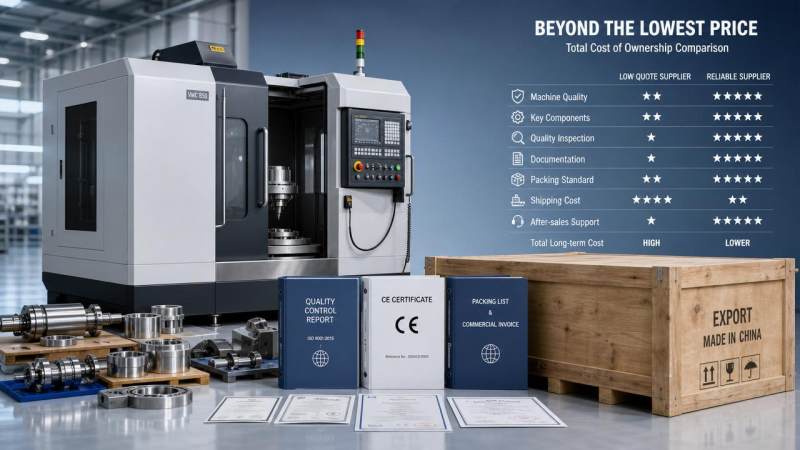
At first glance, choosing an Industrial & Manufacturing machinery exporter in India based on the lowest quote may seem like a smart procurement move.
Yet the lowest number on paper rarely reflects the full landed cost of ownership.
In machinery trade, underpriced offers often shift cost into quality variation, weak documentation, delayed commissioning, and expensive downtime.
This matters across industries, but it becomes especially critical where validation, traceability, and long service life shape project success.
For organizations influenced by healthcare-grade standards, technical truth matters more than sales language.
That is why a capable Industrial & Manufacturing machinery exporter in India should be evaluated through engineering evidence, not quote comparison alone.
Understanding why a low quote can become a high-cost purchase
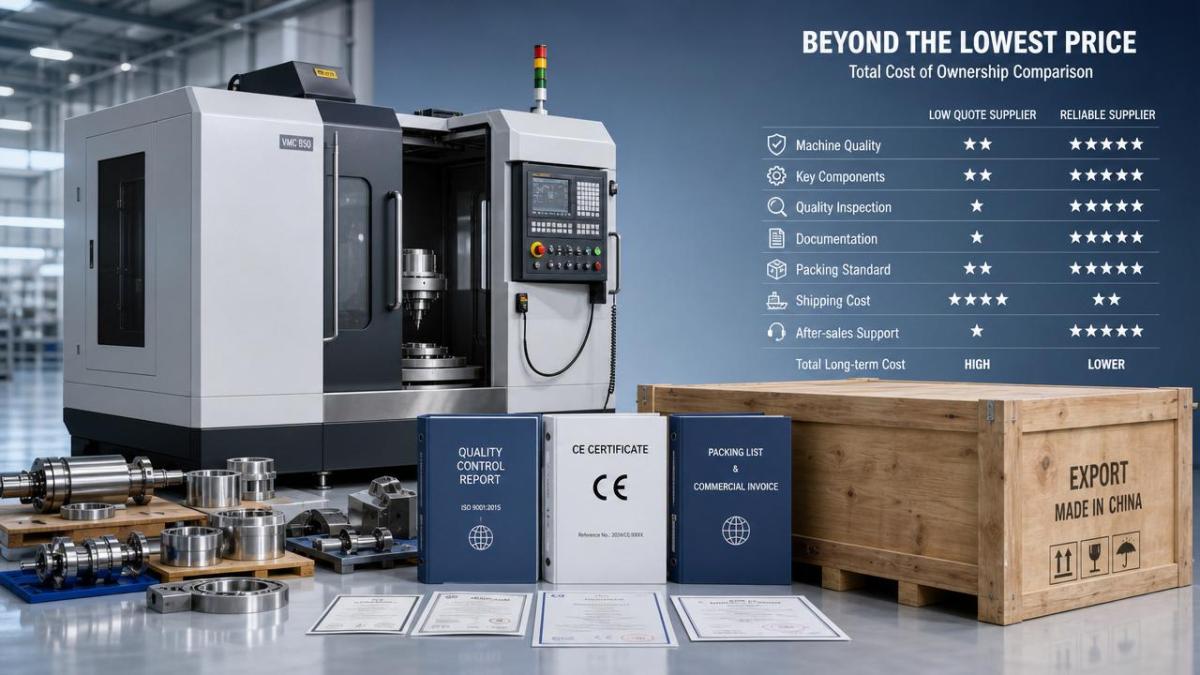
A low quote usually reflects a narrower scope, not a genuine efficiency advantage.
Some exporters reduce visible price by excluding tooling, software licenses, testing, packaging upgrades, training, or spare parts.
Others quote base materials or standard components that do not match the operating environment.
The result is a later stream of change orders, rework, replacement parts, and field adjustments.
An Industrial & Manufacturing machinery exporter in India may also optimize for shipment value instead of lifecycle value.
That creates a gap between quoted price and usable system performance after installation.
What often gets omitted from low quotations
- Factory acceptance testing beyond basic run checks
- Calibration records, material certificates, and traceability files
- Export-grade packing for humidity, shock, and transit duration
- Site commissioning, operator training, and maintenance manuals
- Local compliance adaptation and electrical standard matching
- Critical wear parts and response commitments for service
Current market signals in machinery exports from India
India remains a major sourcing base for process equipment, fabrication systems, automation modules, and engineered assemblies.
Price competitiveness is real, but exporter capability varies widely across engineering depth and process discipline.
This is why the same category can contain both reliable partners and hidden-risk suppliers.
A dependable Industrial & Manufacturing machinery exporter in India should show stable process control, transparent bill of materials, and evidence-backed testing.
Without that, low pricing becomes a risk transfer mechanism.
Where hidden cost usually appears after purchase
Hidden cost rarely arrives as one large invoice.
It accumulates through small technical failures that interrupt operations and consume internal resources.
Quality inconsistency
Surface finish, weld integrity, dimensional tolerance, vibration levels, and electrical stability can vary across production lots.
Even minor deviation can affect throughput, calibration, and maintenance intervals.
Compliance and documentation weakness
Low-cost offers may overlook country-specific safety standards, test records, or validation expectations.
In regulated environments, missing documents can stop acceptance even when the machine physically works.
Delivery and integration delays
Inadequate project planning often appears through late drawings, incomplete interfaces, and packaging damage during transport.
Then the installation schedule slips, affecting production launch and revenue timing.
After-sales limitations
A low quote may come from an exporter without structured service engineering.
When failures occur, response may depend on one salesperson rather than a documented support process.
Why technical benchmarking matters more than headline price
For complex equipment, evaluation should resemble clinical-grade verification rather than commodity buying.
The strongest exporters can explain performance using measurable data, process capability, and failure-mode controls.
This approach aligns with the discipline promoted by VitalSync Metrics.
Engineering truth reduces uncertainty before shipment, not after breakdown.
- Request actual test protocols, not summary claims
- Compare rated performance against duty cycle requirements
- Check material traceability and component brand consistency
- Review preventive maintenance burden over three years
- Validate spare availability and support turnaround time
An Industrial & Manufacturing machinery exporter in India with strong benchmarking evidence often looks more expensive at first.
In practice, that exporter may deliver lower cost per operating hour and lower compliance friction.
Common exporter profiles and their risk patterns
Not every low-priced supplier carries the same risk.
Understanding exporter profiles helps interpret quotations more accurately.
When selecting an Industrial & Manufacturing machinery exporter in India, quotation style often reveals operating maturity.
Detailed assumptions usually indicate better engineering governance.
Practical evaluation steps before accepting the lowest quote
A disciplined review process protects both budget and timeline.
- Normalize scope across all quotations line by line.
- Ask for performance data under real operating conditions.
- Review inspection plans, FAT criteria, and acceptance thresholds.
- Confirm compliance files, manuals, and drawing package content.
- Check service structure, spare lead times, and escalation paths.
- Estimate three-year ownership cost, not purchase price only.
This method makes it easier to compare any Industrial & Manufacturing machinery exporter in India on a like-for-like basis.
It also exposes whether a low quote comes from efficiency, omission, or uncontrolled risk.
A more reliable next step for sourcing decisions
The best sourcing decision is rarely the cheapest quote and rarely the most expensive one.
It is the offer backed by the clearest engineering evidence, the strongest documentation discipline, and the most predictable operating outcome.
If an Industrial & Manufacturing machinery exporter in India cannot explain how price was achieved, the savings may be temporary.
A structured technical review, supported by independent benchmarking logic, helps separate true value from low-price illusion.
Use quotations as the starting point, then verify materials, process capability, compliance readiness, and lifecycle support before commitment.
That step usually costs less than correcting the consequences later.
Recommended News
- 2026.11.10FDA Issues Final Guidance on IVD Validation for Emerging Pathogen EmergenciesDr. Hideo Tanaka (Imaging Systems Analyst)
- 2026.11.10Choosing Minimally Invasive Surgical Instruments in Europe: Key Buying CriteriaDr. Alistair Thorne (Senior Biomedical Engineer)
- 2026.11.09WHO Releases Draft Profile for Wearable Physical Activity MonitorsLydia Vancini (Regulatory Compliance Lead)
The VitalSync Intelligence Brief
Receive daily deep-dives into MedTech innovations and regulatory shifts.